
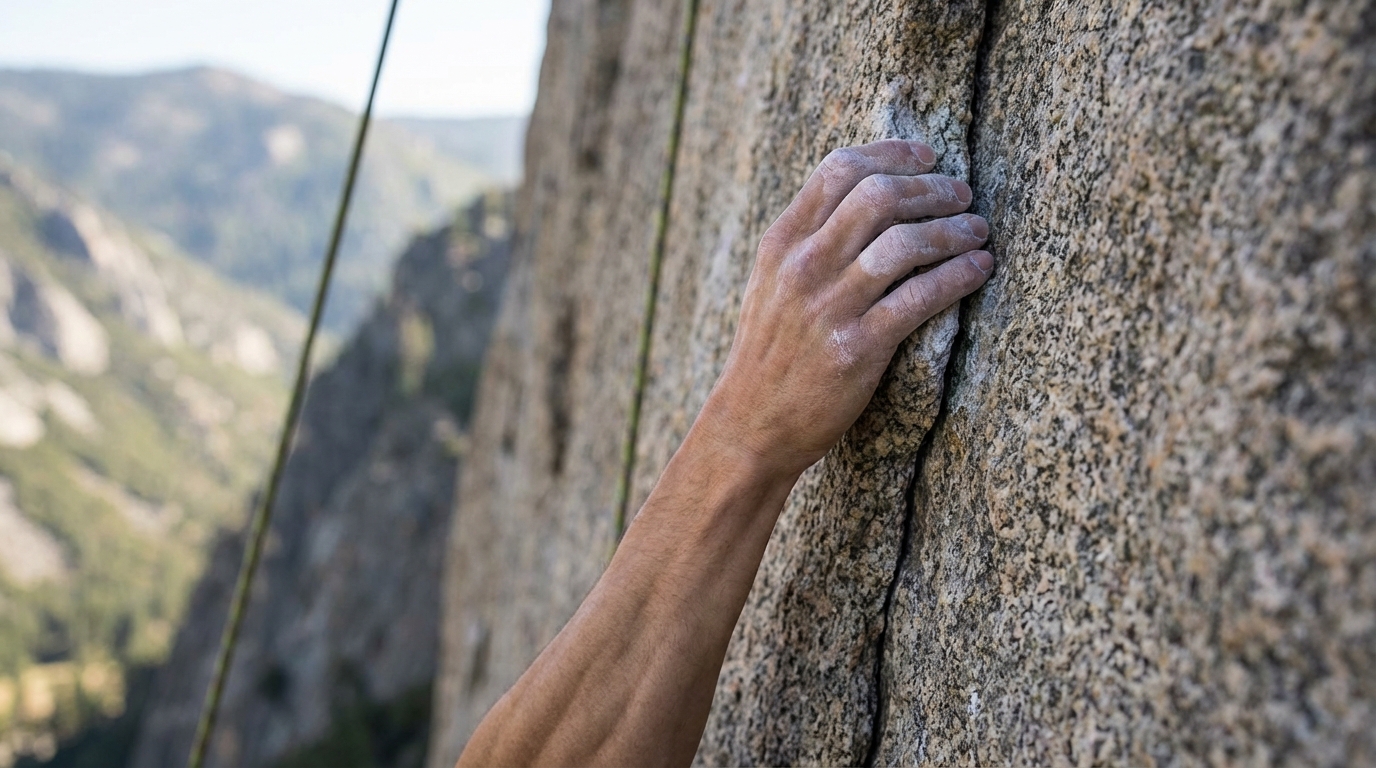
The Unseen Grip: Why Finger Strength is Pivotal in Rock Climbing
Rock climbing is a dynamic sport that demands a complex interplay of physical and mental attributes. While general body strength, flexibility, balance, and mental fortitude are universally recognized as crucial, there’s one element that often serves as the silent workhorse behind every successful ascent: finger strength. It’s the often-underestimated foundation that dictates a climber’s ability to stay on the wall, execute difficult moves, and progress through challenging routes. Understanding its significance is not just academic; it’s fundamental for anyone looking to improve their climbing performance and reduce the risk of injury.The Anatomy of Grip: A Microcosm of Power
The ability to hold onto small, awkward shapes with immense force originates from a sophisticated network of muscles, tendons, and ligaments in the hand and forearm. Unlike many other muscle groups, the fingers themselves contain no muscles; instead, they are controlled by an intricate system originating in the forearms. * **Forearm Muscles:** These are the primary movers, housing the flexor muscles responsible for curling the fingers and thumb. These muscles are powerful and undergo significant development in climbers. * **Tendons:** Long, cord-like structures extend from the forearm muscles, through the wrist, and attach to the bones of the fingers. These tendons transmit the force generated by the forearm muscles to articulate the finger joints. * **Pulleys:** A series of fibrous bands, known as annular pulleys (A1-A5) and cruciform pulleys (C1-C4), form tunnels along the fingers. Their critical role is to hold the flexor tendons close to the bone, preventing them from “bowstringing” – lifting away from the bone when the fingers flex. This mechanical advantage is vital for efficient force transmission and powerful gripping. When a climber grabs a hold, these components work in concert. The forearm muscles contract, pulling on the tendons, which in turn flex the fingers. The pulleys ensure that this force is applied effectively, allowing the climber to generate immense gripping power relative to the size of the contact area.The Fundamental Role in Climbing Movement
Fingers are a climber’s primary interface with the rock or artificial holds. Every move, from the initial lift-off to the final clip, relies on the ability of the fingers to securely latch onto and manipulate holds of various shapes and sizes. * **Staying on the Wall:** Simply put, without adequate finger strength, a climber cannot maintain contact with the holds. This is particularly evident on steeper terrain or with smaller, more challenging features. * **Grip Types:** Climbing involves several distinct grip configurations, each demanding specific aspects of finger strength: * **Crimp Grip:** Involves hyperextension of the DIP (distal interphalangeal) joint and flexion of the PIP (proximal interphalangeal) joint, with the thumb often wrapping over the index finger for added security. This grip allows climbers to hold very small edges but places significant stress on the finger pulleys. * **Open Hand Grip:** Characterized by maintaining some bend in all finger joints, distributing pressure more evenly across the hand. This grip is generally considered less prone to injury and is effective on larger, more rounded holds (slopers). * **Pinch Grip:** Engages the thumb in opposition to the fingers, squeezing the hold. This requires significant strength in the muscles that adduct the thumb and flex the fingers. * **Sloper Grip:** A variation of the open hand, where the climber relies on friction and the broad surface area of their hand to adhere to rounded, often angle-downward holds. While friction is key, underlying finger strength to maintain the “cup” of the hand and engage the flexors is crucial. Each of these grips requires substantial and often specialized finger strength to be executed effectively and safely.Performance Enhancement and Progression
Developing robust finger strength directly translates into noticeable improvements in a climber’s capabilities and allows for progression to more advanced routes. * **Holding Smaller Holds:** Stronger fingers can exert greater force on tiny edges and shallow pockets, opening up a wider range of potential handholds on a route. * **Executing Difficult Moves:** Moves like dynamic lunges (dynos) where a climber momentarily leaves the wall, or precise lock-offs where a single arm supports the body, become more feasible when fingers can securely latch onto the target hold. * **Improved Endurance:** While often associated with raw power, finger strength also plays a role in endurance. Stronger fingers mean less effort is required to hold a given grip, delaying fatigue in the forearms and allowing climbers to sustain their efforts for longer periods on a route. * **Efficiency:** When fingers are strong, other muscle groups don’t have to work as hard to compensate for a weak grip. This can lead to more relaxed and efficient climbing, conserving energy throughout an ascent.Injury Prevention: Building Resilient Fingers
The intricate anatomy of the fingers makes them susceptible to specific injuries in climbing, particularly if strength is not developed progressively or if proper technique is neglected. Common climbing-related finger injuries include: * **Pulley Sprains/Ruptures:** Overloading the finger pulleys (especially A2 and A4) can cause them to strain or even rupture, leading to pain, swelling, and significant downtime. * **Tendonitis:** Inflammation of the flexor tendons due to repetitive strain or sudden overload. * **Lumbrical Tears:** Injuries to the small muscles within the hand, often occurring with specific crimping techniques. Gradual and consistent development of finger strength, coupled with intelligent training practices, is a vital component of injury prevention. Stronger tendons and pulleys are more resilient to the stresses of climbing. However, it’s crucial to balance strength gains with adequate rest, proper warm-ups, and listening to the body’s signals to avoid overtraining and acute injuries.Training Principles for Finger Strength
While specific training methods are varied, fundamental principles apply to safely and effectively enhance finger strength for climbing. These principles focus on adaptation, gradual progression, and holistic care. * **Gradual Progression:** The body adapts to stress over time. Finger strength training should always start light and slowly increase in intensity or duration. Rushing the process significantly increases the risk of injury. * **Structured Sessions:** Incorporating dedicated finger strength training sessions, such as those involving specific grip exercises or various hanging protocols, can be highly effective. These sessions should be distinct from general climbing sessions, allowing for focused effort. * **Warm-up and Cool-down:** Always begin with a thorough warm-up to prepare the tendons and muscles for exertion, and follow with a cool-down that includes gentle stretching to promote flexibility and recovery. * **Rest and Recovery:** Finger tissues, especially tendons and pulleys, adapt slowly. Adequate rest days between intensive finger training sessions are crucial for repair and growth. Overtraining can lead to chronic fatigue and increased injury risk. * **Technique Integration:** While raw strength is important, integrating it with proper climbing technique is paramount. Strong fingers used poorly are still inefficient and prone to injury. Focus on precise footwork, body positioning, and efficient movement to maximize the utility of your finger strength.Conclusion
Finger strength is more than just a physical attribute in rock climbing; it is a foundational element that underpins performance, facilitates progression, and contributes significantly to injury prevention. From enabling basic adherence to the wall to unlocking advanced movement sequences, the power residing in a climber’s fingertips is indispensable. By understanding the biomechanics of grip, acknowledging its multifaceted role in climbing, and adopting a smart, progressive approach to its development, climbers can unlock new levels of capability and enjoy a safer, more fulfilling experience on the rock.Frequently Asked Questions (FAQs)
Q1: Is finger strength the only important factor in climbing?
A1: No, while crucial, finger strength is one component within a broader spectrum of essential climbing attributes. Overall body strength, core stability, flexibility, balance, technique, and mental fortitude all play significant roles in a climber’s success. Finger strength acts as a foundation, allowing other attributes to be effectively utilized.Q2: How long does it take to develop significant finger strength?
A2: The timeline for developing significant finger strength varies greatly among individuals, depending on factors like starting fitness level, consistency of training, age, and genetics. Generally, noticeable improvements can be seen within several months of consistent and smart training, but substantial adaptations can take years due to the slow adaptation rate of tendons and ligaments.Q3: Can I train finger strength every day?
A3: Training finger strength every day is generally not recommended, especially for intensive sessions. The connective tissues in the fingers require adequate rest for recovery and adaptation. Overtraining can lead to chronic fatigue, decreased performance, and an increased risk of injury. Most training protocols recommend 2-3 finger strength sessions per week, with ample rest in between.Q4: What are the signs of overtraining finger strength?
A4: Signs of overtraining finger strength can include persistent aching or pain in the fingers, forearms, or wrists that doesn’t subside with rest; decreased grip performance or inability to hold previously achievable grips; chronic fatigue in the forearms; swelling or tenderness around finger joints; and a general feeling of malaise or reduced motivation.Q5: Do beginners need to specifically train finger strength?
A5: For absolute beginners, the primary focus should be on developing fundamental climbing technique, body awareness, and general strength through consistent climbing. Once a solid technical foundation is established (typically after 6-12 months of regular climbing), introducing specific, low-intensity finger strength training can be beneficial. Starting too early or too intensely can increase the risk of injury before the connective tissues have adapted to the demands of climbing.
Diana Miller, is a dedicated nature enthusiast and an outdoor adventurer. She began leading groups for excursions in her teens and never stopped. Following her passion for nature, she gathers her friends for outdoor trips every now and then. And for the last 10 years, she has executed workshops on backpacking, snow kayaking and traveling that included her main motive of lightweight packing while outdoors. During leisure, she loves planning for her next adventure.