
The Art of Movement: How Body Positioning Enhances Climbing Efficiency
Climbing is a complex activity that demands a blend of physical strength, mental focus, and technical skill. While brute force might seem paramount, the reality is that efficient movement and strategic body positioning are often the distinguishing factors between struggling and succeeding on the rock or wall. Understanding how to precisely place and orient the body can dramatically conserve energy, extend endurance, and facilitate smoother ascents, transforming a strenuous battle into a more graceful and sustainable effort. This exploration delves into the fundamental principles of body positioning and how their application can significantly improve a climber’s efficiency.Understanding the Fundamentals of Efficient Movement
At its core, efficient climbing is about working with gravity rather than against it. Every movement should be calculated to minimize wasted energy and maximize leverage. This involves a constant interplay between balance, stability, and the effective use of the skeletal structure to support weight, rather than relying solely on muscular strength. * **Gravity’s Influence:** Gravity is a constant force pulling climbers downwards. Efficient positioning aims to direct this force through strong, stable points of contact, allowing the body to maintain equilibrium with minimal muscular exertion. * **Leverage and Balance:** Utilizing the body as a system of levers allows climbers to maximize mechanical advantage. By positioning the hips, shoulders, and limbs correctly, a climber can generate significant power and reach with less effort, or maintain a stable position without excessive strain. * **Energy Conservation Principle:** Every unnecessary movement, every strained muscle contraction, expends valuable energy. Efficient body positioning seeks to eliminate these inefficiencies, allowing climbers to sustain their efforts over longer periods and tackle more challenging sequences.Core Principles of Strategic Body Positioning
Several key principles govern efficient body positioning in climbing. Mastering these techniques allows climbers to move with greater fluidity and power.Maintaining a Center of Gravity (CoG)
The center of gravity is a crucial concept. For climbers, the CoG is typically located around the hips. Keeping this point close to the wall is paramount for stability and reducing outward pull. * **Hips to the Wall:** By actively pushing the hips towards the climbing surface, a climber minimizes the lever arm created by the body, reducing strain on the arms and core. This allows the legs to bear more weight. * **Dynamic CoG Shifts:** Rather than remaining static, the CoG is constantly shifted to align with the current holds and direction of movement. For instance, leaning into a foot, or swiveling the hips, adjusts the CoG to maintain balance during reaches or transitions.Utilizing Opposition and Counterbalance
Climbing is rarely about moving a single limb in isolation. Instead, it often involves a sophisticated dance of opposing forces and counterbalancing actions. * **Pushing and Pulling:** Simultaneously pushing with a leg and pulling with an arm creates a stable, powerful platform for movement. This distributed effort reduces the load on any single limb. * **Opposite Limb Stability:** Using an opposite hand and foot combination (e.g., right hand, left foot) often provides a more balanced and stable foundation, facilitating reaches or maintaining control. * **Counterbalancing Body Weight:** When reaching for a hold, the non-reaching limbs and torso can be subtly positioned to counterbalance the weight shift, preventing swings and maintaining stability. This might involve flagging a leg out to the side or shifting the torso slightly.Straight Arms and Locked-Off Positions
One of the cornerstones of energy conservation in climbing is the strategic use of straight arms. * **Skeletal Support:** When arms are straight, the body’s weight hangs primarily from the skeletal structure (bones and ligaments) rather than relying on constant muscle contraction in the forearms and biceps. This allows climbers to “rest” on holds, conserving crucial grip strength. * **Strategic Bending:** While straight arms are generally preferred for resting, bent-arm positions (or “lock-offs”) are vital for dynamic movements, pulling up to new holds, or maintaining tension through powerful sequences. The key is to use them purposefully and briefly, returning to a straight-arm position whenever possible.Efficient Footwork and Leg Drive
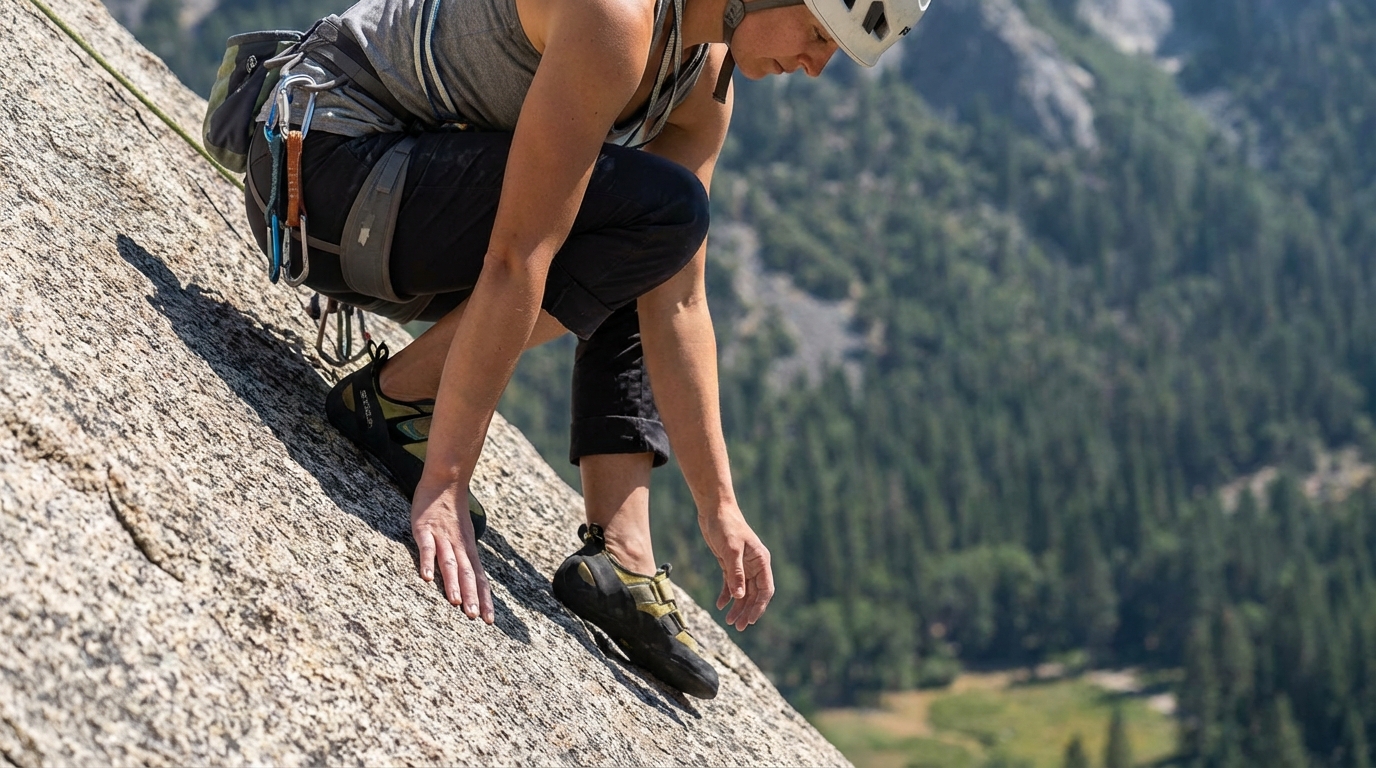
The legs are the strongest muscles in the body, and efficient climbing leverages this strength to its fullest. Over-relying on arm strength is a common pitfall for beginners. * **Precise Foot Placement:** Feet should be placed deliberately and accurately on holds, ensuring maximum purchase and stability. Aim for the edge of the shoe on small holds or the sole for smearing. * **Pushing Through the Legs:** The primary power for upward movement should come from pushing through the legs, akin to standing up. This drives the body upwards and forwards, often making the reach for the next handhold feel significantly easier. * **Flagging Techniques:** When one foot lacks a hold, flagging involves extending the free leg out to the side or crossing it behind/in front of the standing leg. This acts as a counterbalance, preventing the body from swinging wildly and maintaining tension through the core. * **Smearing:** On featureless or slabby sections, smearing involves pressing the sole of the climbing shoe firmly against the rock or wall, relying on friction to provide purchase. Effective smearing requires significant weight transfer and core tension.Hip Movement and Rotation
The hips are the engine of climbing movement, connecting the powerful legs to the upper body. Agile hip rotation can unlock greater reach and provide stronger positions. * **Opening the Hips:** Rotating the hips “open” towards the side where a hand is reaching allows for a longer, more natural extension of the arm, often enabling a reach that would be impossible with square hips. * **Swiveling on Feet:** As the hips rotate, the feet often need to swivel or pivot on their holds to maintain contact and allow the body to turn. This fluid motion ensures the CoG remains aligned and stable. * **Driving Through the Hips:** Initiating movement from the hips, rather than simply pulling with the arms, allows for a more integrated and powerful ascent, engaging the full kinetic chain of the body.Dynamic vs. Static Movement Considerations
Body positioning also dictates the effectiveness of dynamic versus static movement. * **Static Movement:** This involves controlled, slow, and precise movements, maintaining three points of contact (two hands, one foot or two feet, one hand) at all times. Efficient body positioning for static climbing emphasizes maintaining a stable CoG, straight arms where possible, and deliberate weight transfers. * **Dynamic Movement:** Characterized by explosive, momentum-driven motions where contact points might momentarily drop to one or two. Efficient body positioning for dynamic moves requires a strong, compact starting position, precise timing of the launch, and the ability to absorb momentum upon catching the next hold, often using a “soft catch” with bent limbs to distribute impact. While appearing less controlled, well-executed dynamic moves are highly efficient, covering large distances quickly and conserving energy over short bursts.Breathing and Body Awareness
Beyond the purely mechanical aspects, effective body positioning is deeply intertwined with breathing and overall body awareness. * **Connecting Breath to Movement:** Conscious breathing helps to regulate energy levels, reduce tension, and promote a steady rhythm of movement. Exhaling during exertion and inhaling during moments of relative rest can optimize muscle function. * **Listening to the Body:** Developing a keen sense of proprioception—awareness of the body’s position and movement in space—allows climbers to instinctively adjust their posture, weight distribution, and limb placement for maximal efficiency and stability. This awareness helps in identifying tension, anticipating fatigue, and making subtle corrections that prevent energy waste.Conclusion
Mastering body positioning is not merely a refinement of technique; it is a fundamental shift in how one approaches climbing. By understanding and applying principles such as maintaining a close center of gravity, leveraging opposition, utilizing skeletal support, driving with the legs, and rotating through the hips, climbers can unlock significant improvements in their efficiency. This translates directly into greater endurance, increased power, and the ability to tackle more challenging climbs with greater confidence and reduced energy expenditure. Ultimately, refined body positioning transforms climbing from a battle of strength into a graceful and strategic dance with gravity.Frequently Asked Questions (FAQs)
What is the “center of gravity” in climbing and why is it important?
The center of gravity (CoG) is the imaginary point where the total weight of the body is concentrated. In climbing, it’s typically around the hips. Keeping your CoG close to the wall minimizes the lever arm that gravity can act upon, reducing the outward pull on your arms and allowing your stronger leg muscles to bear more weight, thereby conserving upper body energy.How do straight arms help with climbing efficiency?
When your arms are straight, your body’s weight is primarily supported by your skeletal structure (bones and ligaments) rather than your muscles. This allows your forearm and bicep muscles to rest and recover, conserving vital grip strength and endurance. You should aim to hang on straight arms whenever possible.What does “flagging” mean in climbing and how does it improve balance?
Flagging is a technique where a climber extends a free leg (one without a foot hold) out to the side, across, or behind the standing leg. This action acts as a counterbalance, preventing the body from swinging away from the wall or losing tension. It helps maintain stability and allows for controlled reaches without using excessive arm strength to stabilize.Why is good footwork considered so crucial for efficient climbing?
Good footwork is paramount because the legs contain the body’s strongest muscles. By precisely placing feet on holds and pushing through the legs, climbers drive their body upwards, reducing reliance on arm strength. This conserves energy, allows for greater endurance, and often enables reaches that would be impossible with only arm pulls.How does hip rotation contribute to climbing efficiency and reach?
Hip rotation allows climbers to open up their body towards the direction of a hold, significantly increasing their reach without over-stretching. By swiveling the hips, a climber can change the angle of their body relative to the wall, creating a more advantageous position for extending an arm or moving into a new sequence, all while maintaining stability and tension.
Diana Miller, is a dedicated nature enthusiast and an outdoor adventurer. She began leading groups for excursions in her teens and never stopped. Following her passion for nature, she gathers her friends for outdoor trips every now and then. And for the last 10 years, she has executed workshops on backpacking, snow kayaking and traveling that included her main motive of lightweight packing while outdoors. During leisure, she loves planning for her next adventure.