
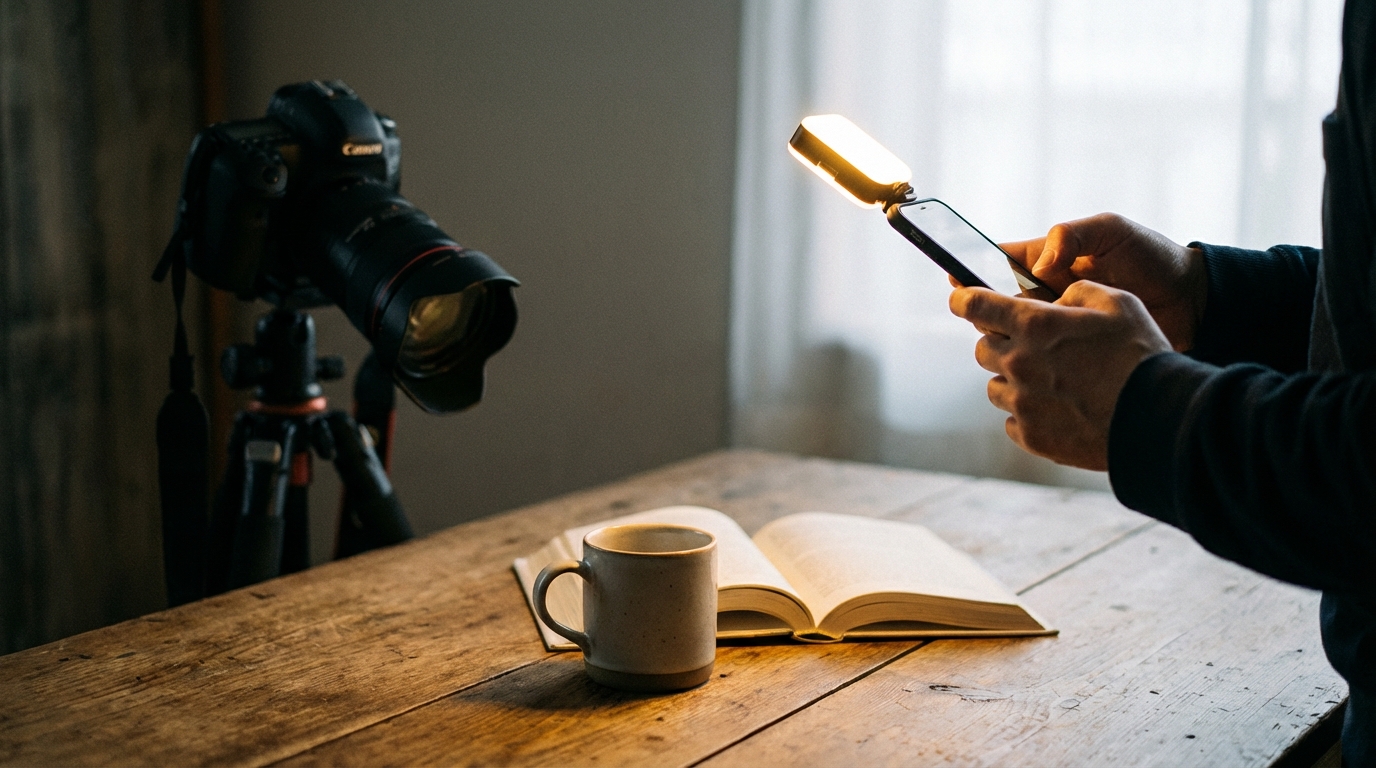
In the vast and evolving world of visual creation, from casual snapshots to professional productions, there’s a common perception that the quality of the camera dictates the outcome. Many aspiring creators invest heavily in the latest camera bodies, believing that superior equipment is the sole pathway to visually compelling results. While camera technology undoubtedly plays a role, this perspective often overshadows a more fundamental truth: the profound and often overlooked impact of lighting. Understanding and mastering light is not merely an auxiliary skill; it is often the single most critical factor that elevates an image, irrespective of the camera used to capture it.
This post will delve into why lighting holds such a paramount position in visual capture, exploring its multifaceted influence on exposure, mood, detail, and overall aesthetic. By dissecting how light interacts with subjects and how different types of illumination shape perception, we can appreciate its foundational importance.
The Foundational Role of Light in Visual Perception
Light is, quite literally, what allows us to see. In the context of photography and videography, it’s the raw material that a camera sensor interprets. Without light, there is no image. However, it’s not just the presence of light that matters, but its characteristics and how it is manipulated.
Understanding Light’s Characteristics
- Intensity: The brightness or dimness of light. It directly affects exposure and can influence the detail and clarity captured.
- Direction: Where the light originates relative to the subject and camera. This creates shadows, highlights, and defines shape and texture.
- Quality (Hard vs. Soft): Hard light creates sharp, well-defined shadows, often associated with drama or contrast. Soft light produces gentle, diffused shadows, creating a more flattering and even illumination.
- Color Temperature: The perceived color of the light source, measured in Kelvin (K). This ranges from warm (reddish-orange, like candlelight) to cool (bluish, like overcast sky). It significantly impacts the color rendition in an image.
A camera, regardless of its specifications, is merely a tool for recording these light characteristics. Its ability to perform is intrinsically linked to the quality and control of the light it receives.
How Lighting Shapes the Visual Narrative
The way light falls upon a scene dictates almost every aspect of the final visual. It’s the primary sculptor of what we see.
Exposure and Clarity
Proper exposure is the bedrock of any discernible image. Insufficient light leads to underexposed images that are dark and lack detail, often necessitating high ISO settings which introduce digital noise. Conversely, excessive light can blow out highlights, losing critical information. Skillful lighting ensures that the scene is illuminated evenly and adequately, allowing the camera’s sensor to capture a balanced image with minimal noise and maximum detail. Even a high-end camera will struggle to produce a clean, well-exposed image in poorly lit conditions, whereas a basic camera with carefully managed lighting can yield surprisingly clear results.
Form, Dimension, and Texture
Light direction is pivotal in defining a subject’s form and revealing its texture. Flat, frontal lighting tends to minimize shadows, making subjects appear two-dimensional and lacking depth. By contrast, light coming from the side (side lighting) or behind (backlighting) creates shadows that sculpt the subject, emphasizing its contours, adding volume, and highlighting surface textures. This play of light and shadow is what gives an image its perceived depth and three-dimensionality, regardless of the lens or sensor resolution.
Mood and Atmosphere
Lighting is an incredibly powerful tool for conveying emotion and establishing atmosphere.
- High-key lighting: Bright, uniform, and minimal shadows often evokes feelings of lightness, optimism, or innocence.
- Low-key lighting: Characterized by dominant shadows and limited bright areas, it often creates a sense of mystery, drama, or solemnity.
- Warm or cool tones: Can evoke feelings of comfort and nostalgia (warm) or sterility and detachment (cool).
A simple change in the color or intensity of light can completely transform the emotional impact of a scene, a feat that no camera upgrade alone can achieve.
Color Accuracy and White Balance
The color of the light source directly influences the colors captured by the camera. Our eyes automatically adjust for different color temperatures, but camera sensors require explicit instruction or automatic calculation via white balance. If the lighting is inconsistent or has a strong color cast (e.g., strong yellow incandescent light), the camera will struggle to render true-to-life colors, leading to undesirable color shifts. Understanding and controlling the color temperature of your light sources simplifies the camera’s job and ensures more accurate and pleasing color reproduction.
Camera Limitations and Lighting’s Solutions
While cameras have varying capabilities, especially concerning low-light performance and dynamic range, proper lighting can mitigate many of these limitations and enhance even the most advanced equipment.
Overcoming Sensor Size Challenges
Larger camera sensors generally perform better in low light, producing less noise at higher ISO settings. However, even a camera with a smaller sensor can produce stunning, noise-free images if the scene is adequately and thoughtfully lit. Good lighting means you can keep your camera’s ISO low, regardless of sensor size, resulting in cleaner, more detailed captures. Relying on a camera’s low-light capabilities without considering light quality often leads to noisy, less appealing visuals.
Managing Dynamic Range
Dynamic range refers to a camera’s ability to capture detail in both the brightest highlights and the darkest shadows of a single scene. High-contrast scenes (e.g., a bright window and a dark interior) challenge even sophisticated cameras. Strategic lighting can reduce the overall contrast within a scene, by adding fill light to shadows or diffusing harsh highlights, thereby bringing the entire scene within the camera’s manageable dynamic range. This makes it easier for any camera to capture a balanced exposure without losing crucial information in extreme tones.
Enabling Creative Control
Ample and controlled lighting provides greater flexibility in camera settings. With sufficient light, you have the freedom to choose a smaller aperture for greater depth of field, or a faster shutter speed to freeze motion, without having to compensate by drastically increasing ISO. This creative freedom is often curtailed in poorly lit environments, where technical compromises must be made to achieve basic exposure.
Practical Application of Lighting Principles
Mastering lighting doesn’t necessarily require a studio full of expensive equipment. Many principles can be applied using accessible tools and natural light.
- Utilizing Natural Light: Windows can be powerful light sources. Position subjects near windows for soft, directional light. Overcast days provide large, natural diffusers. Reflectors (even a simple white card) can bounce light into shadowed areas.
- Understanding Artificial Light Sources: Even a single lamp can be used effectively. Learn about key light (main light source), fill light (softens shadows), and back light (separates subject from background). Diffusers (like softboxes or umbrellas) soften light, while grids or barn doors control its spread.
- Observing and Experimenting: Pay attention to how light falls on everyday objects. Practice identifying hard vs. soft light, light direction, and color temperature. Experiment with moving your subject or light source to see how it changes the scene.
By focusing on these fundamental lighting principles, creators can achieve professional-looking results with even basic equipment, demonstrating that knowledge and skill often outweigh technological specifications.
Conclusion
While advancements in camera technology continually push the boundaries of image capture, the immutable principles of light remain the ultimate determinant of visual quality. A powerful camera cannot compensate for poor lighting, just as a masterful chef cannot create a gourmet meal from inferior ingredients. Lighting dictates exposure, shapes form, sets mood, and defines clarity. It is the language through which a scene communicates its essence. By prioritizing the understanding and manipulation of light, creators empower themselves to craft compelling visuals that transcend the limitations of their equipment, proving that insight into illumination is often more valuable than the most sophisticated camera sensor.
Frequently Asked Questions (FAQs)
Q1: Does a more expensive camera automatically mean better photos?
A1: Not necessarily. While higher-end cameras often offer more features, better low-light performance, and greater flexibility, the quality of a photograph is profoundly influenced by the photographer’s skill, particularly in understanding and utilizing light. A well-lit scene captured with a basic camera can look significantly better than a poorly lit scene captured with a premium camera.
Q2: Can I achieve good lighting with just natural light?
A2: Absolutely. Natural light, such as sunlight filtering through a window or the diffused light on an overcast day, can be incredibly versatile and beautiful. Understanding how to position your subject relative to a natural light source, and using simple tools like reflectors or diffusers, can produce professional-quality results without any artificial lighting equipment.
Q3: What are the absolute fundamental aspects of lighting I should focus on first?
A3: Begin by understanding light intensity (brightness), direction (where it comes from), and quality (hard vs. soft). These three aspects fundamentally alter how your subject appears, influencing exposure, shadows, and perceived texture. Experimenting with these will quickly demonstrate their impact.
Q4: Does poor lighting always result in a noisy image?
A4: Poor lighting often *contributes* to noisy images because cameras compensate for insufficient light by increasing the ISO sensitivity. Higher ISO settings amplify the signal from the sensor but also amplify digital noise. With adequate and controlled lighting, you can keep your ISO lower, resulting in cleaner, less noisy images, regardless of your camera’s low-light capabilities.
Q5: Is it possible to fix bad lighting in post-production?
A5: While post-production tools can help adjust exposure, contrast, and color balance to some extent, they cannot fundamentally recreate light and shadow that weren’t captured well initially. You can brighten dark areas or recover some highlights, but you cannot introduce new light, reshape shadows to create dimension, or remove noise perfectly if it was generated due to severe underexposure. Good lighting is always preferable to relying on post-production fixes.

Diana Miller, is a dedicated nature enthusiast and an outdoor adventurer. She began leading groups for excursions in her teens and never stopped. Following her passion for nature, she gathers her friends for outdoor trips every now and then. And for the last 10 years, she has executed workshops on backpacking, snow kayaking and traveling that included her main motive of lightweight packing while outdoors. During leisure, she loves planning for her next adventure.