
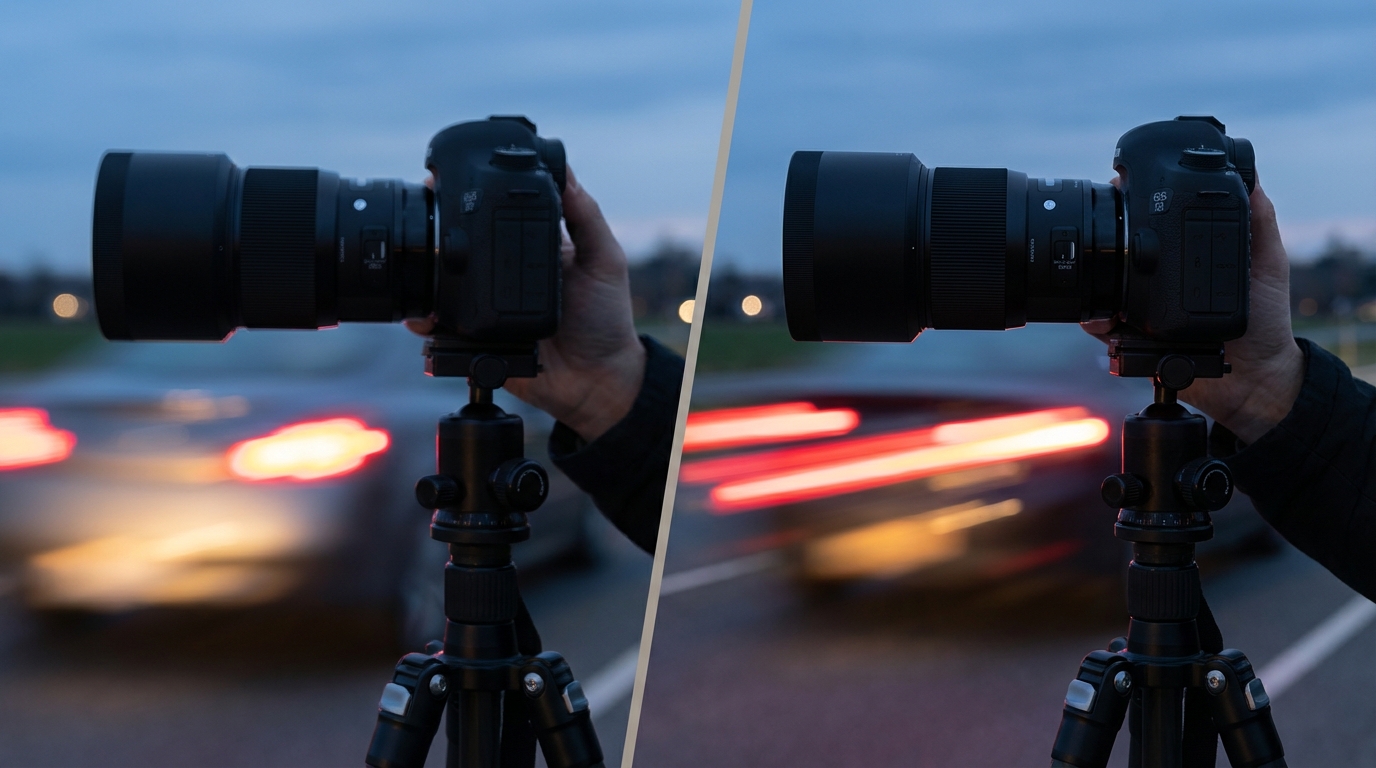
Motion blur is a ubiquitous challenge for photographers and videographers, often diminishing the clarity and impact of an otherwise compelling image. It manifests as a streaking or smearing effect, obscuring fine details and creating a sense of softness where sharpness is desired. While various factors can contribute to this phenomenon, camera movement during exposure is a primary culprit. Fortunately, advancements in imaging technology have introduced sophisticated mechanisms designed to counteract this specific issue: image stabilization. This technology plays a pivotal role in expanding the creative possibilities for capturing sharp images and smooth video, particularly in challenging shooting conditions. This discussion will delve into the fundamental principles and various implementations of image stabilization, explaining how these systems meticulously work to mitigate motion blur.
The Challenge of Motion Blur
To appreciate the significance of image stabilization, it’s crucial to first understand motion blur itself. Motion blur occurs when either the subject or the camera moves relative to one another during the period the camera’s sensor is gathering light for an exposure. The light from a moving point is spread across multiple pixels on the sensor, rather than being concentrated on a single point, resulting in a blurred streak.
- Causes of Motion Blur:
- Camera Shake: Inadvertent movements of the camera, especially when handholding at slower shutter speeds, cause the entire scene to shift across the sensor.
- Subject Movement: A rapidly moving subject, even with a perfectly still camera, can appear blurred if the shutter speed isn’t fast enough to “freeze” its motion.
- Longer Exposure Times: The longer the shutter remains open, the greater the opportunity for relative movement between the camera and the subject to occur, increasing the likelihood and severity of blur.
While motion blur can sometimes be used creatively, in most instances, it represents an undesirable loss of detail and image fidelity. It is a particularly prevalent issue when shooting in low light, where slower shutter speeds are often necessary to achieve adequate exposure, or when using long telephoto lenses, which amplify even the slightest camera movements.
Core Principles of Image Stabilization
At its heart, image stabilization (IS) is a compensatory technology. Its fundamental goal is to detect and then counteract unwanted camera movements during the exposure period, ensuring that the image projected onto the camera’s sensor remains as stationary as possible. It’s important to differentiate that IS primarily addresses blur caused by camera shake, not by the movement of the subject itself. The technology works by introducing a counter-movement that precisely matches and negates the camera’s unintentional motion, thereby maintaining a steady light path to the sensor.
There are two primary mechanical approaches to achieving this stabilization, each with distinct advantages and operational methods:
- Optical Image Stabilization (OIS): Implemented within the lens assembly.
- Sensor-Shift Image Stabilization (IBIS): Implemented within the camera body, moving the image sensor itself.
While their locations differ, both systems rely on advanced sensory input and rapid mechanical adjustments to achieve their stabilizing effect, allowing photographers to utilize slower shutter speeds than would otherwise be possible while maintaining sharpness.
Optical Image Stabilization (Lens-Based)
Optical Image Stabilization, often found in camera lenses, was one of the earliest widely adopted forms of mechanical stabilization. It functions by manipulating the path of light before it even reaches the camera’s imaging sensor.
Mechanism of OIS
An OIS system typically comprises several key components working in concert:
- Gyroscopic Sensors: These miniaturized sensors are embedded within the lens. They continuously detect and measure the angular velocity and direction of any camera movement, specifically pitch (up-down tilt) and yaw (side-to-side swivel).
- Microprocessor: The data from the gyroscopic sensors is fed into a high-speed microprocessor. This unit analyzes the detected movements in real-time and calculates the precise counter-movements required to stabilize the image.
- Floating Lens Elements: Within the lens barrel, a specific group of optical elements is mounted on a movable platform. These are the “floating” elements.
- Electromagnetic Coils/Actuators: Based on the microprocessor’s calculations, these tiny coils generate magnetic fields that precisely shift the floating lens elements perpendicular to the optical axis.
When the camera shakes, the sensors detect the movement. The processor instantly determines how to shift the floating lens elements to redirect the incoming light path. This redirection ensures that the image projected onto the sensor remains relatively stationary, even as the camera body and the rest of the lens move. It’s akin to adjusting a projector lens to keep an image centered on a screen, even if the projector itself is slightly bumped.
Advantages and Considerations of OIS
- Viewfinder Stabilization: A notable advantage of OIS is that it stabilizes the image seen through the optical viewfinder (in DSLRs) or the electronic viewfinder (in mirrorless cameras). This provides a steadier view for composition and focusing, especially helpful with long telephoto lenses.
- Effective at Longer Focal Lengths: OIS tends to be particularly effective with telephoto lenses, where even minor camera shakes are greatly magnified.
- System Integration: The stabilization is designed specifically for the optical characteristics of that particular lens, often allowing for optimized performance.
However, OIS adds complexity, size, and cost to lenses, and not every lens offers this feature. If a lens does not have OIS, it cannot benefit from lens-based stabilization.
Sensor-Shift Image Stabilization (In-Body)
Sensor-shift image stabilization, often referred to as In-Body Image Stabilization (IBIS), takes a different approach by moving the camera’s imaging sensor itself to compensate for camera movement.
Mechanism of Sensor-Shift IS
In an IBIS system, the core components are similar to OIS but integrated into the camera body:
- Gyroscopic Sensors and Accelerometers: These sensors are located within the camera body and detect camera movements across multiple axes. Modern IBIS systems commonly offer “5-axis stabilization,” compensating for pitch, yaw, roll (rotation around the optical axis), and translational movements along the X and Y axes (side-to-side and up-down shifts).
- Microprocessor: As with OIS, a dedicated processor analyzes the sensor data and calculates the necessary counter-movements in real-time.
- Movable Sensor Platform: The camera’s image sensor is not rigidly fixed but mounted on a miniature, highly precise electromagnetic suspension system.
- Magnetic Actuators: Based on the processor’s commands, these actuators precisely move the entire image sensor. The sensor is shifted minutely in the opposite direction of the detected camera movement.
The objective is to keep the projected image “still” on the sensor’s surface for the duration of the exposure. If the camera tilts up, the sensor moves down a corresponding amount. If the camera moves slightly to the left, the sensor shifts slightly to the right. This precise dance keeps the light falling on the same pixels, preventing blur.
Advantages and Considerations of Sensor-Shift IS
- Lens Compatibility: A major advantage of IBIS is that it works with virtually any lens attached to the camera, including older, non-stabilized lenses or prime lenses that typically do not feature OIS. This makes the stabilization universally available to the photographer’s lens collection.
- Multi-Axis Stabilization: IBIS systems are often capable of compensating for more types of movement (up to 5 axes), including rotational and translational shifts, which can be beneficial.
- Cost Efficiency: While adding to the camera body’s cost, it means photographers don’t need to purchase multiple stabilized lenses.
While highly versatile, IBIS might be marginally less effective at extremely long focal lengths compared to OIS specifically designed for such lenses, as the range of sensor movement is finite. However, this is often mitigated by advanced algorithms and hybrid systems.
Digital and Hybrid Stabilization
Beyond the mechanical methods, there are also software-based and combined approaches to stabilization.
Digital Image Stabilization (DIS)
Digital Image Stabilization is primarily a software-based technique used predominantly in video recording, especially in smartphones and some action cameras. Instead of physical movement, DIS analyzes successive frames of video. When camera shake is detected, the software digitally shifts, crops, and sometimes warps the frames to create a smoother output. While effective for smoothing video, DIS often comes with drawbacks:
- Loss of Field of View: Cropping is typically involved, which narrows the visible frame.
- Resolution Reduction: Shifting pixels can sometimes lead to a slight loss of effective resolution.
- “Jello” Effect: In severe cases of movement, digital interpolation can sometimes introduce unnatural distortions.
Hybrid Stabilization
Many modern camera systems, particularly in mirrorless cameras, feature hybrid stabilization that combines both OIS and IBIS. When a stabilized lens (OIS) is mounted on a camera body with IBIS, the two systems can work together. Typically, the lens-based OIS handles the larger pitch and yaw movements, especially beneficial at longer focal lengths, while the in-body IBIS system complements this by managing other axes of movement, such as roll and translational shifts, or fine-tuning the overall stabilization. This collaborative approach can deliver a significantly higher degree of stabilization than either system could achieve independently, often allowing for even slower shutter speeds handheld.
Understanding Stabilization Limits
While image stabilization is a powerful tool, it’s essential to understand its capabilities and limitations:
- Camera Shake, Not Subject Motion: IS effectively reduces blur caused by your hands or camera moving. It will not, however, freeze a fast-moving subject like a running child or a soaring bird if the shutter speed is too slow. For that, a faster shutter speed is indispensable.
- Not a Magic Fix: IS greatly reduces the likelihood of blur from camera shake, but it cannot completely eliminate blur in all situations. Extreme camera movements or very long exposures will still result in some degree of blur.
- Power Consumption: Mechanical stabilization systems require power to operate, which can contribute to faster battery drain.
- Effectiveness Varies: The degree of stabilization (often measured in “stops” of light, indicating how much slower a shutter speed can be used) varies significantly between different lenses and camera bodies, as well as generations of the technology.
Conclusion
Image stabilization has profoundly impacted photography and videography, liberating creators from the constraints of needing excessively fast shutter speeds or constantly relying on tripods. By precisely counteracting unwanted camera movements during exposure, both optical (lens-based) and sensor-shift (in-body) systems empower photographers to capture sharper images in challenging conditions, such as low light or when using long telephoto lenses. While not a panacea for all forms of motion blur, understanding the mechanisms behind these sophisticated systems reveals how they effectively mitigate camera shake, opening up new avenues for creative expression and technical excellence. As technology continues to evolve, image stabilization will undoubtedly remain a crucial feature for achieving consistently high-quality visual content.
Frequently Asked Questions (FAQs)
Q1: Does image stabilization work for video?
A1: Yes, image stabilization is highly effective for video recording. Both optical and sensor-shift systems continuously stabilize the image, resulting in smoother, less shaky footage, particularly noticeable when handholding the camera or filming while walking. Many cameras also incorporate digital image stabilization specifically for video to further enhance smoothness.
Q2: Is image stabilization always on?
A2: No, image stabilization is typically a feature that can be toggled on or off via a switch on the lens (for OIS) or through the camera’s menu system (for IBIS). It’s generally recommended to turn IS off when the camera is mounted on a stable tripod or solid surface to prevent the system from trying to correct for non-existent movements, which can sometimes introduce slight blur in very still scenarios.
Q3: Can image stabilization affect sharpness?
A3: Under normal operating conditions, image stabilization enhances sharpness by reducing motion blur from camera shake. However, if IS is left on when the camera is perfectly still (e.g., on a sturdy tripod), some older or less sophisticated systems might occasionally introduce a very subtle softening or slight misregistration as they attempt to correct for movements that aren’t there. Modern systems are generally smart enough to detect tripod use and minimize this effect, or even automatically disable themselves.
Q4: What is 5-axis stabilization?
A4: 5-axis stabilization refers to the ability of an image stabilization system (most commonly sensor-shift IBIS) to compensate for five distinct types of camera movement: pitch (up-down rotation), yaw (side-to-side rotation), roll (rotation around the optical axis), and translational movements along the X-axis (horizontal shift) and Y-axis (vertical shift). This comprehensive compensation allows for a very high degree of stability, particularly beneficial for handheld shooting.
Q5: Does a tripod make image stabilization unnecessary?
A5: When a camera is mounted on a solid, stable tripod, image stabilization is generally unnecessary and often recommended to be turned off. A tripod provides a far more stable platform than any IS system can replicate, completely eliminating camera shake. Keeping IS active on a tripod can sometimes lead to minor issues, as the system might attempt to correct for imperceptible vibrations, potentially introducing a slight amount of blur or instability that wouldn’t otherwise be present.

Diana Miller, is a dedicated nature enthusiast and an outdoor adventurer. She began leading groups for excursions in her teens and never stopped. Following her passion for nature, she gathers her friends for outdoor trips every now and then. And for the last 10 years, she has executed workshops on backpacking, snow kayaking and traveling that included her main motive of lightweight packing while outdoors. During leisure, she loves planning for her next adventure.