
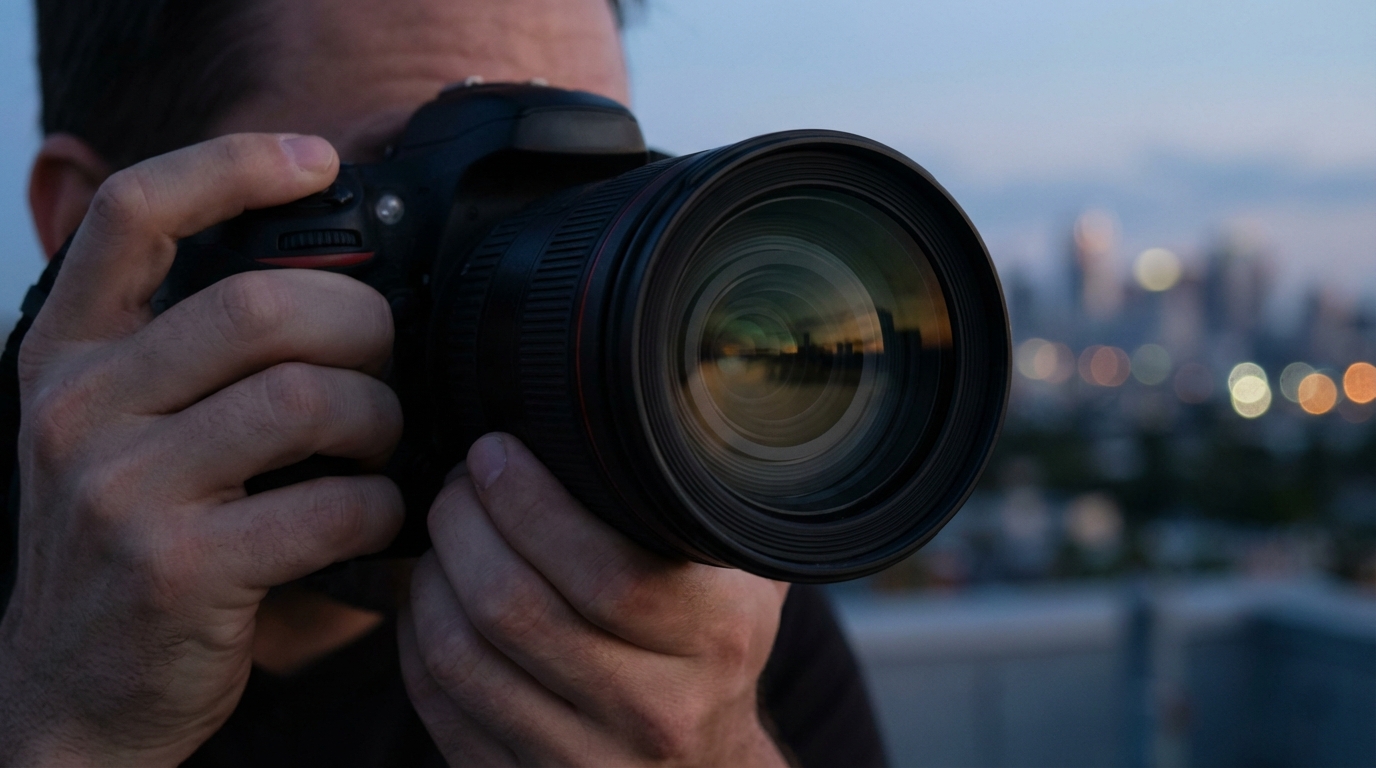
The ability to capture a moment with precise clarity is fundamental to photography. While early cameras relied on the photographer’s eye and manual adjustments for focus, modern cameras are equipped with sophisticated autofocus (AF) systems that automate this critical task. These systems have evolved significantly, transforming from basic mechanisms to highly advanced technologies capable of instantly locking onto subjects, even in challenging conditions. Understanding how these intricate systems operate can provide photographers with deeper insight into their equipment and help them make more informed decisions when composing images.
Autofocus essentially works by detecting when a subject is sharp and then adjusting the lens elements to achieve that sharpness. This involves a complex interplay of optics, sensors, and processing power, all working in harmony to deliver images that are in perfect focus, enhancing both the technical quality and artistic impact of a photograph.
The Fundamental Principles of Autofocus
At its core, autofocus is about contrast detection and distance measurement. A camera’s autofocus system needs to identify the point at which the subject appears sharpest. This is primarily achieved by analyzing the contrast within the image. When an object is out of focus, details appear blurry, meaning there’s less abrupt change in tone or color at the edges of objects. As the lens moves closer to precise focus, these edges become sharper, resulting in higher contrast.
The system continuously evaluates this contrast as the lens elements are adjusted. The goal is to find the position of the lens that yields the highest possible contrast for the selected focus area, indicating that the subject is in focus. Different technologies employ varying methods to achieve this, but the underlying principle of contrast analysis remains central to most autofocus operations.
Primary Autofocus Technologies
Modern cameras primarily utilize two main types of autofocus technologies, often combining them for enhanced performance:
Contrast Detection Autofocus (CDAF)
Contrast Detection Autofocus is a widely adopted method, particularly prevalent in mirrorless cameras and for live view focusing on DSLRs. It operates directly using the camera’s main imaging sensor.
- How it Works: The camera’s sensor analyzes the contrast within the image data it receives. When the lens is out of focus, the edges of objects appear soft and blurry, resulting in low contrast. As the lens elements move, the system continually measures the contrast.
- The Process: The camera moves the lens slightly, measures the contrast, moves it again in the same direction, and measures contrast again. If contrast increased, it knows it’s moving in the correct direction towards focus. It continues this process until it detects that contrast starts to decrease, meaning it has passed the point of sharpest focus. It then reverses direction slightly to pinpoint the peak contrast. This back-and-forth movement is sometimes referred to as “hunting.”
-
Characteristics:
- Accuracy: Generally very accurate, as it directly evaluates the image being captured by the main sensor.
- Speed: Can be slower than phase detection, especially in low light or on subjects with low contrast, due to the iterative “hunting” process.
- Versatility: Works well for static subjects and in controlled lighting conditions.
Phase Detection Autofocus (PDAF)
Phase Detection Autofocus is renowned for its speed and accuracy, especially with moving subjects. Traditionally, this technology was a hallmark of DSLR cameras, utilizing a dedicated autofocus sensor. More recently, it has been integrated directly onto the imaging sensors of many mirrorless cameras, leading to “on-sensor phase detection.”
- How it Works: Instead of measuring contrast directly, PDAF splits the incoming light into two separate images. These images are then directed to a pair of microlenses or sensor pixels that are precisely spaced apart. By comparing the “phase difference” (or displacement) between these two images, the system can instantly determine not only whether the subject is in focus but also the exact direction and distance the lens needs to move to achieve focus.
-
The Process:
- Light passes through the main lens.
- A small portion of this light is diverted (via a sub-mirror in DSLRs, or directly by specific pixels on the main sensor in mirrorless cameras).
- This light reaches a dedicated AF sensor or phase-detection pixels.
- The AF sensor/pixels split the light into two distinct images.
- The system compares these two images. If the subject is out of focus, the images will be misaligned (out of phase).
- The degree and direction of misalignment tell the camera precisely how much and in which direction the lens needs to adjust.
-
Characteristics:
- Speed: Significantly faster than CDAF because it can immediately calculate the required lens adjustment without “hunting.” This makes it ideal for tracking moving subjects.
- Performance in Low Light: Generally performs better in low light and on low-contrast subjects compared to pure CDAF, as it relies on phase shifts rather than peak contrast detection.
- Complexity: Requires precise calibration and alignment between the main lens and the dedicated AF sensor (in DSLRs) or complex algorithms for on-sensor implementation.
Hybrid Autofocus Systems
Many modern mirrorless cameras employ hybrid autofocus systems, which combine the strengths of both contrast detection and phase detection. This approach aims to deliver the speed of PDAF with the accuracy of CDAF.
- How it Works: The camera uses phase detection pixels on the main imaging sensor for initial, rapid focus acquisition. This quickly gets the lens into the approximate focus range. Once the lens is close to focus, the system switches to contrast detection for fine-tuning, ensuring pinpoint accuracy.
- Advantages: This synergy allows for very fast and precise autofocus performance across a wide range of shooting conditions and subject types, making it a highly versatile solution for photographers.
Autofocus Modes and Area Selection
Beyond the underlying technology, cameras offer various autofocus modes and area selection options to give photographers control over how and where focus is acquired.
Autofocus Modes:
- Single-Shot AF (AF-S / One-Shot AF): Designed for static subjects. The camera focuses once when the shutter button is half-pressed and locks focus. If the subject or camera moves, focus will no longer be accurate.
- Continuous AF (AF-C / AI Servo AF): Ideal for moving subjects. The camera continuously adjusts focus as long as the shutter button is half-pressed, tracking the subject’s movement.
- Automatic AF (AF-A / AI Focus AF): The camera automatically switches between single-shot and continuous AF depending on whether it detects subject movement.
Autofocus Area Modes:
- Single-Point AF: The photographer manually selects a very small, specific autofocus point. This offers the highest precision for focusing on a particular detail.
- Zone AF: The photographer selects a small group or “zone” of autofocus points. The camera then focuses on the closest or most prominent subject within that zone.
- Wide Area AF / Auto Area AF: The camera automatically selects the focus point(s) across a broad area, or even the entire frame, attempting to identify and focus on the main subject.
- Tracking AF: Once a subject is identified and focused upon (often initiated with a single point), the camera will attempt to follow that subject across the frame, even if it moves. Many modern systems incorporate advanced subject detection (e.g., face, eye, animal detection) within their tracking capabilities.
Factors Influencing Autofocus Performance
Several environmental and technical factors can impact the speed and accuracy of an autofocus system:
- Lighting Conditions: Autofocus systems generally perform better in bright, well-lit environments. In low light, especially extreme darkness, contrast can be difficult for the camera to detect, leading to slower performance or “hunting.” Many cameras employ AF assist lights to project a pattern onto the subject in dark conditions to aid focusing.
- Subject Contrast: Subjects with clear, defined edges and textures are easier for autofocus systems to lock onto. Flat, uniformly colored surfaces or subjects with very low contrast can be challenging.
- Subject Speed and Predictability: Fast and erratically moving subjects are harder to track than slow or predictably moving ones. Continuous AF modes and phase detection are designed to handle these scenarios more effectively.
- Lens Aperture: Lenses with wider maximum apertures (e.g., f/1.4, f/2.8) allow more light to reach the AF sensor, which can improve low-light autofocus performance. However, wider apertures also result in shallower depth of field, making precise focus more critical and unforgiving of slight errors.
- Lens Quality and AF Motor: The speed and precision of the autofocus motor within the lens itself play a significant role. Faster, more sophisticated lens motors can achieve focus more quickly and quietly.
- Camera Sensor and Processor: The density and sensitivity of AF points on the sensor, along with the camera’s image processor, directly influence the speed and intelligence of the autofocus calculations.
Conclusion
Autofocus systems are intricate marvels of engineering that have profoundly shaped modern photography. From the early days of contrast detection to today’s advanced hybrid and AI-powered tracking systems, the evolution has consistently aimed at making focus acquisition faster, more accurate, and more reliable. By understanding the principles behind contrast and phase detection, the functionalities of different AF modes, and the factors that influence performance, photographers can harness these technologies to consistently capture sharp, compelling images, ultimately allowing them to concentrate more on composition and creative expression.
As camera technology continues to advance, we can anticipate even more sophisticated autofocus capabilities, driven by further integration of artificial intelligence and machine learning, making the act of achieving perfect focus an increasingly effortless and intelligent process.
Frequently Asked Questions (FAQs)
What is the fundamental difference between Contrast Detection and Phase Detection AF?
The core difference lies in how they determine focus. Contrast Detection AF works by analyzing the contrast in the image from the main sensor, iteratively moving the lens until peak contrast is found. Phase Detection AF, on the other hand, splits incoming light and compares the phase difference between two images, allowing it to directly calculate the exact direction and distance the lens needs to move to achieve focus, making it generally faster.
Why does my camera sometimes “hunt” for focus?
“Hunting” for focus, where the lens moves back and forth repeatedly, is typically characteristic of Contrast Detection AF. It occurs when the system struggles to find a clear point of highest contrast. This can be due to low light conditions, low-contrast subjects (like a plain wall), or a subject that is too far away or too close for the lens’s focusing range. Phase Detection AF systems are less prone to hunting because they can directly calculate the necessary lens movement.
Can autofocus work in complete darkness?
Autofocus systems require some level of light or contrast to function. In complete darkness, without any light source, autofocus typically cannot work. Many cameras, however, include an AF assist lamp that projects a pattern of light onto the subject in low-light conditions, providing enough contrast for the autofocus system to lock on. Some advanced systems also boast impressive low-light sensitivity, capable of focusing in conditions that are almost imperceptible to the human eye.
How does a camera know what to focus on?
A camera knows what to focus on based on the autofocus area mode selected by the photographer. In single-point AF, the photographer designates the exact area. In wider modes, the camera uses internal algorithms to identify prominent subjects, often prioritizing objects in the foreground, faces, or objects with high contrast within the selected area. Many modern cameras also incorporate advanced subject detection (e.g., eye, face, animal, vehicle) to intelligently identify and prioritize specific subjects.
Is manual focus still relevant with modern autofocus systems?
Yes, manual focus remains highly relevant. While autofocus systems are incredibly advanced, there are situations where manual focus is still advantageous or even necessary. These include extreme low-light photography, macro photography where precise control is paramount, deliberately blurring a subject, shooting through obstacles, or when the subject lacks sufficient contrast for AF to engage. Many photographers also prefer manual focus for creative reasons or for situations where AF might be prone to errors.

Diana Miller, is a dedicated nature enthusiast and an outdoor adventurer. She began leading groups for excursions in her teens and never stopped. Following her passion for nature, she gathers her friends for outdoor trips every now and then. And for the last 10 years, she has executed workshops on backpacking, snow kayaking and traveling that included her main motive of lightweight packing while outdoors. During leisure, she loves planning for her next adventure.