
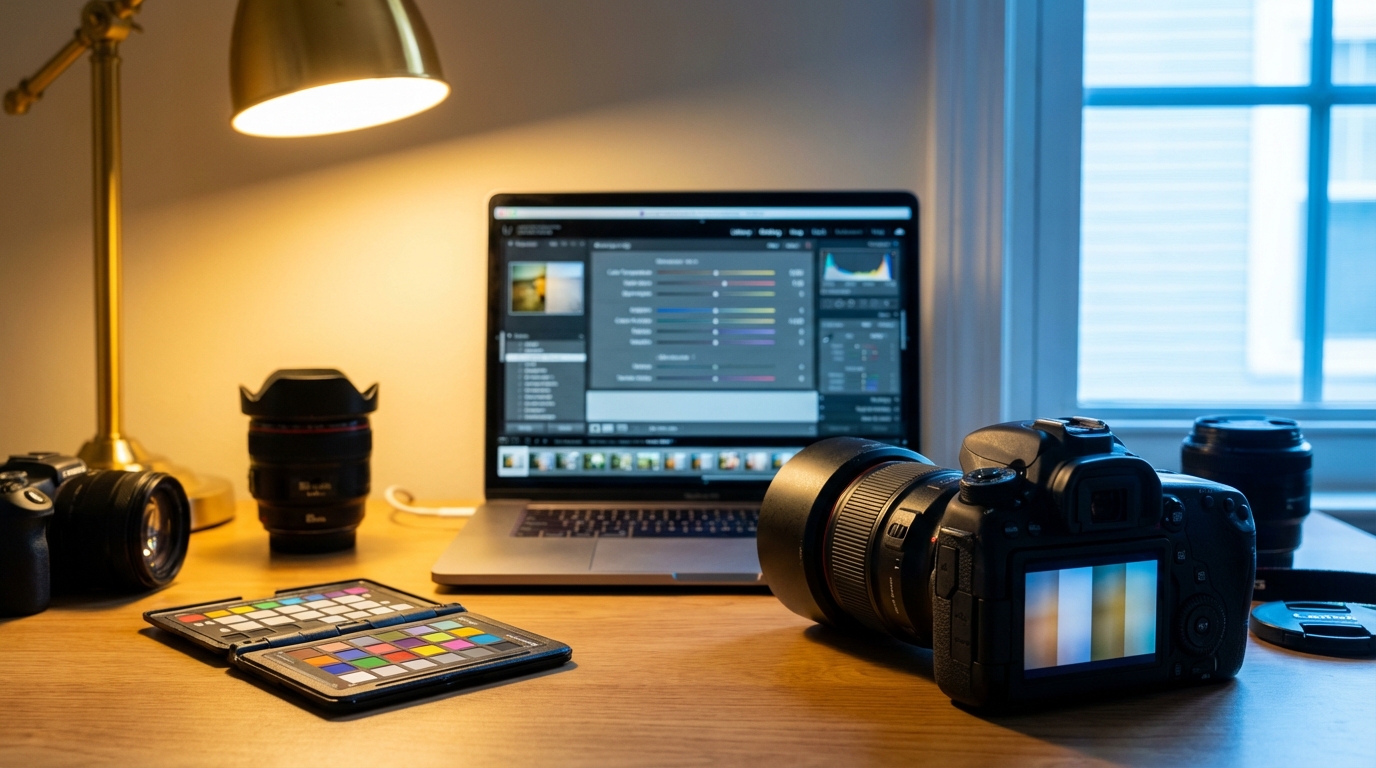
In the vast world of photography, mastering various technical aspects is crucial for achieving compelling visual results. Among these, white balance stands as a fundamental concept often overlooked, yet profoundly impacting the color accuracy and overall mood of an image. Far from being a mere technicality, understanding and effectively utilizing white balance empowers photographers to render colors truthfully or creatively, ensuring subjects appear as intended under diverse lighting conditions.
This exploration delves into the mechanics of white balance, its importance in photography, and the various methods available for precise control, equipping you with the knowledge to consistently capture images with accurate and pleasing color renditions.
The Foundation: What is White Balance?
White balance refers to the process of removing unrealistic color casts from images, ensuring that objects which appear white in person are rendered white in the photograph. Our eyes and brain automatically adjust to different lighting conditions, perceiving a white sheet of paper as white whether it’s viewed under warm incandescent bulbs or cool fluorescent lights. Cameras, however, do not possess this innate ability without assistance.
Color Temperature Explained
Light itself has a color, known as color temperature, which is measured on the Kelvin (K) scale. Different light sources emit light with varying color temperatures:
- **Warm Light:** Lower Kelvin values (e.g., candlelight around 1,800K, tungsten bulbs around 2,700-3,200K) tend to have an orange or yellow tint.
- **Cool Light:** Higher Kelvin values (e.g., daylight around 5,500K, shade around 7,000-8,000K, clear blue sky around 10,000K) tend to have a blue tint.
When a camera is not properly adjusted for the ambient color temperature, these inherent tints can become visible as an unwanted color cast across the entire image.
Why It Matters
Accurate white balance is paramount for several reasons:
- Color Fidelity: It ensures that the colors in your photograph are true to life, preventing, for example, a subject’s skin from appearing too orange or too blue.
- Mood and Emotion: While neutrality is often the goal, intentionally adjusting white balance can also be used to enhance the mood of a scene, making it feel warmer or cooler.
- Consistency: For a series of images taken under similar lighting, consistent white balance helps maintain visual continuity.
Navigating White Balance Settings
Digital cameras offer various ways to set white balance, ranging from fully automatic to highly specific manual adjustments. Understanding each option allows photographers to choose the appropriate setting for any given scenario.
Automatic White Balance (AWB)
Most cameras default to AWB, which attempts to analyze the scene and automatically select the appropriate white balance. AWB is generally effective in straightforward lighting conditions, such as outdoors on a sunny day or in well-lit indoor environments with a single, consistent light source.
However, AWB can struggle in complex or mixed lighting situations, or when a scene contains a dominant color that might mislead the camera into misinterpreting the true white point, resulting in inaccurate color casts.
Preset White Balance Modes
Cameras typically provide several preset white balance modes, each designed to compensate for the specific color temperature of common light sources. Selecting the appropriate preset tells the camera how to adjust its color rendition to neutralize the dominant light color. Here are common presets:
- Daylight / Sunny: Calibrated for bright sunlight (around 5,200K), it adds a slight amount of blue to compensate for the warm nature of direct sun.
- Cloudy: Designed for overcast conditions (around 6,000K), which produce cooler light. This preset adds more warmth (yellow/red) to the image than the Daylight setting.
- Shade: For subjects in open shade (around 7,000K), where light is very cool and blue. This preset adds significant warmth to counteract the blue cast.
- Tungsten / Incandescent: Used for traditional household incandescent bulbs (around 2,700-3,200K), which emit very warm, yellowish light. This preset adds a substantial amount of blue to neutralize the yellow/orange.
- Fluorescent: For fluorescent lighting, which can vary greatly (from 4,000K to 6,500K) and often has a green or magenta cast. Cameras usually have a general fluorescent preset, sometimes with multiple options (e.g., warm white, cool white) to address different types. It typically adds magenta to counteract green.
- Flash: For electronic flash (around 5,500K), which produces light similar in color temperature to daylight.
Using these presets correctly can significantly improve color accuracy compared to AWB in challenging conditions.
Custom White Balance
For situations demanding the highest level of color accuracy, custom white balance is the most precise method. It involves telling the camera exactly what a neutral white or gray object looks like under the specific lighting conditions of your scene.
The process typically involves:
- Placing a neutral gray card (18% gray) or a truly white object (like a white balance filter or a specific type of white card) in the scene, under the same light illuminating your subject.
- Taking a reference shot of this neutral object, filling the frame.
- Instructing the camera to use this reference image to set its white balance. The camera analyzes the image, identifies the neutral point, and adjusts its color profile accordingly.
This method is particularly valuable in mixed lighting, studio environments with complex setups, or when critical color reproduction is essential.
Manual Kelvin Setting
Many advanced cameras allow photographers to manually input a specific Kelvin temperature value. This method offers ultimate control but requires an understanding of color temperatures and how different values affect the image.
By directly setting the Kelvin value, you can fine-tune the color balance to exactly match the light source or even to create a specific artistic effect. For instance, if you know the light source is 3,200K, you can set your camera to that value for an accurate rendition. Alternatively, you might set it slightly lower or higher to intentionally warm or cool the image.
The Role of White Balance in Post-Processing
While setting white balance correctly in-camera saves time and effort, modern digital workflows also allow for significant adjustments during post-processing.
Shooting in RAW
Capturing images in RAW format is highly advantageous for white balance control. RAW files contain all the uncompressed data captured by the camera sensor, including a wide range of color information. This means that white balance can be adjusted non-destructively in post-processing software (like Adobe Lightroom or Capture One) without any loss of image quality.
When you change the white balance of a RAW file, you are essentially re-interpreting the color data, rather than applying a destructive edit to an already processed image. This flexibility makes RAW an invaluable format for photographers who prioritize ultimate control over color.
Adjusting White Balance
In post-processing, you can use an eyedropper tool to click on a neutral gray or white area within the image to automatically set the white balance. Alternatively, you can use sliders to manually adjust the color temperature (warmth/coolness) and tint (green/magenta) until the colors appear natural and pleasing. While JPEG files can also be adjusted, they have a more limited dynamic range and color depth, meaning extensive white balance changes can lead to noticeable image degradation, such as color banding or artifacts.
Practical Approaches to White Balance
Developing a practical approach to white balance involves observation, conscious decision-making, and leveraging your camera’s capabilities.
Observing Light Sources
Before even raising your camera, take a moment to observe the quality and color of the light illuminating your scene. Is it warm sunlight, cool shade, the yellowish glow of indoor lamps, or the greenish tint of fluorescent tubes? This initial assessment will guide your choice of white balance setting.
Using Neutral References
For critical work, always carry a neutral gray card or a white balance filter. Taking a reference shot ensures perfect color accuracy, especially when shooting products, portraits where skin tones are paramount, or any scenario where precise color reproduction is essential.
Experimentation and Learning
Don’t be afraid to experiment. Try different white balance presets or Kelvin values to see how they affect the mood and colors of your image. What might be technically “correct” isn’t always artistically “preferable.” Learning to see color temperature and understanding how your camera responds will refine your intuition over time.
White balance, at its core, is about color management. By understanding how light color impacts your photographs and utilizing the various settings your camera provides, you gain immense control over the final look and feel of your images. Whether striving for absolute color accuracy or aiming for a particular creative mood, a mindful approach to white balance is an indispensable skill for any photographer seeking to elevate their craft.
Frequently Asked Questions (FAQs)
1. What does it mean when my photos have a “color cast”?
A color cast refers to an unwanted tint of color that appears across an entire image. This typically happens when the camera’s white balance setting does not match the color temperature of the ambient light source, leading to subjects appearing too warm (yellow/orange) or too cool (blue/green).
2. Should I always aim for perfectly neutral white balance?
Not necessarily. While a neutral white balance ensures accurate color reproduction, sometimes a slightly warmer or cooler white balance can enhance the mood or artistic intent of a photograph. For instance, a sunset might look more dramatic with a warmer white balance, even if it’s not strictly “accurate.”
3. Is it possible to fix white balance in all photo formats?
White balance can be adjusted in both RAW and JPEG formats during post-processing. However, RAW files offer significantly greater flexibility and preserve more image quality during extensive adjustments because they contain more unprocessed color data. JPEGs, being compressed and already processed, have a more limited tolerance for significant white balance changes without degradation.
4. When should I use custom white balance over presets or AWB?
Custom white balance is advisable in situations where precise color accuracy is crucial, or when dealing with complex or mixed lighting conditions that confuse automatic or preset modes. Examples include product photography, studio portraits, or scenes lit by multiple artificial light sources with different color temperatures.
5. Does using an external flash affect white balance settings?
Yes, an external flash typically emits light with a color temperature similar to daylight (around 5,500K). When using flash as the primary light source, setting your camera’s white balance to the “Flash” preset or “Daylight” preset, or a Kelvin value around 5,500K, will generally yield accurate colors. If mixing flash with ambient light, custom white balance or careful post-processing might be needed.

Diana Miller, is a dedicated nature enthusiast and an outdoor adventurer. She began leading groups for excursions in her teens and never stopped. Following her passion for nature, she gathers her friends for outdoor trips every now and then. And for the last 10 years, she has executed workshops on backpacking, snow kayaking and traveling that included her main motive of lightweight packing while outdoors. During leisure, she loves planning for her next adventure.