
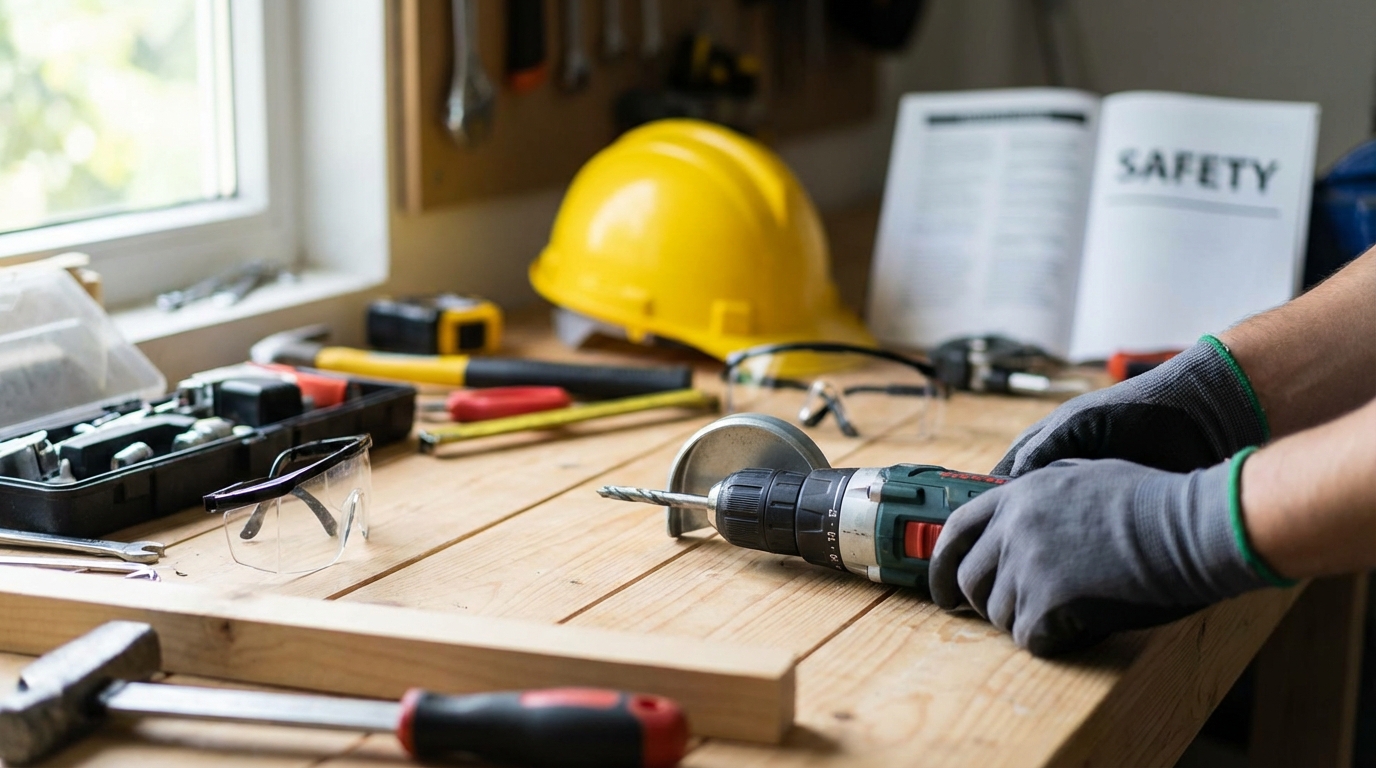
Understanding Tool Safety Standards
Tools are indispensable in countless industries and households, facilitating tasks from simple repairs to complex construction projects. While their utility is undeniable, the potential for injury without proper precautions is significant. This is where tool safety standards become critically important. These standards are a foundational framework designed to minimize hazards, protect users, and ensure the reliable performance of tools across their lifecycle. They represent a collective effort to establish benchmarks for design, manufacturing, testing, and usage, ultimately fostering safer environments for everyone who interacts with tools.What are Tool Safety Standards?
Tool safety standards are a comprehensive set of guidelines, rules, and specifications established by various organizations to ensure the safe design, construction, operation, and maintenance of tools. Their primary purpose is to mitigate risks associated with tool use, such as cuts, abrasions, electrical shocks, repetitive strain injuries, and other serious accidents. These standards are typically developed through a consensus-based process, involving experts from manufacturing, engineering, occupational safety, government, and consumer advocacy groups. They address a wide array of tools, ranging from basic hand tools like hammers and wrenches to complex power tools, machinery, and specialized industrial equipment.Key Principles Behind Tool Safety Standards
The development of tool safety standards is guided by several core principles aimed at comprehensively addressing potential hazards: * **Risk Assessment and Mitigation:** This involves identifying potential hazards associated with a tool’s design or use and implementing measures to eliminate or reduce those risks to an acceptable level. * **Ergonomics:** Standards often include ergonomic considerations to ensure tools are designed for comfortable and efficient use, minimizing physical strain and reducing the likelihood of repetitive stress injuries. * **Material Quality and Design Integrity:** Specifications dictate the types of materials to be used, their strength, durability, and resistance to environmental factors, ensuring the tool can withstand intended stresses without failing. * **Safety Features:** Tools are often required to incorporate specific safety features, such as guards, interlocks, emergency stop buttons, and insulation, to prevent accidental activation or contact with moving parts or live electrical components. * **Clear Labeling and Warnings:** Standards mandate prominent and understandable labeling, including operational instructions, warning symbols, power ratings, and maintenance requirements, to inform users of potential hazards and safe operating procedures. * **Maintenance and Inspection Requirements:** Guidelines are provided for routine maintenance, inspection schedules, and proper storage to ensure tools remain in safe working condition throughout their service life.Major Regulatory and Standardization Bodies
The landscape of tool safety standards is shaped by various entities, broadly categorized into governmental regulatory bodies and voluntary consensus standards organizations. * **Governmental Regulatory Bodies:** These organizations are typically empowered by law to enforce safety regulations within their jurisdictions. They set mandatory requirements that manufacturers and employers must follow. Non-compliance can lead to legal penalties. Their focus is often on occupational safety and health, ensuring workplaces provide a safe environment, which includes the safe use and maintenance of tools. * **Voluntary Consensus Standards Organizations:** These independent organizations develop and publish standards based on broad consensus among stakeholders. While adherence to these standards is often voluntary, they are widely adopted by industries due to their technical expertise, ability to promote interoperability, and provide a benchmark for quality and safety. In many cases, regulatory bodies may reference or adopt these voluntary standards into their mandatory regulations. These bodies operate at national, regional, and international levels, developing standards that can be specific to certain tool types or general to manufacturing and safety practices.Types of Standards and Their Focus
Tool safety standards encompass several distinct categories, each addressing a particular aspect of a tool’s lifecycle and use: * **Design and Construction Standards:** These standards specify the fundamental requirements for how a tool must be built. They cover aspects such as: * Material specifications (e.g., strength of steel, type of plastics). * Dimensional requirements and tolerances. * Electrical insulation and grounding for power tools. * Enclosure integrity to protect internal components. * Integration of protective guards and shields. * **Performance Standards:** Once designed and constructed, tools must perform safely and effectively. Performance standards dictate how a tool should function under specific conditions, including: * Operating temperature ranges. * Vibration levels. * Noise emission limits. * Cutting efficiency or torque output under load. * Durability and lifespan expectations under normal use. * **Testing and Certification Standards:** To ensure compliance with design and performance criteria, tools undergo rigorous testing. These standards outline: * The specific test methods and procedures to be followed. * The equipment required for testing. * Criteria for passing or failing tests. * Processes for certification, often involving third-party laboratories that verify a tool meets the applicable standards. * **Usage and Maintenance Standards:** Beyond the tool itself, how it is used and maintained is crucial for safety. These standards provide guidance on: * Safe operating procedures, including proper posture and handling techniques. * Requirements for personal protective equipment (PPE) such as safety glasses, gloves, and hearing protection. * Guidelines for routine inspection, cleaning, lubrication, and part replacement. * Procedures for safe storage and transportation of tools. * Training requirements for operators to ensure they are competent in the safe use of specific tools.The Importance of Compliance for Users and Manufacturers
Adherence to tool safety standards carries significant implications for both those who manufacture tools and those who use them. * **For Manufacturers:** * **Legal Liability:** Compliance helps protect manufacturers from legal challenges, lawsuits, and regulatory fines that can arise from tool-related injuries or product failures. * **Market Acceptance:** Tools that meet recognized safety standards are more likely to be accepted in the market, as consumers and businesses prioritize safety. Certification marks act as a credible indicator of safety and quality. * **Product Integrity and Reputation:** Adhering to standards ensures a higher quality product, which builds a strong brand reputation and fosters customer trust. * **Innovation:** Standards often drive innovation by challenging manufacturers to develop safer and more efficient designs. * **For Users (Individuals and Workplaces):** * **Personal Safety:** The most direct benefit is the reduction of injuries and fatalities. Safe tools protect operators from inherent hazards. * **Operational Efficiency:** Safe tools that are well-maintained and used correctly contribute to fewer accidents, less downtime, and greater productivity. * **Legal Compliance (Workplaces):** Employers are often legally obligated to provide a safe working environment, which includes ensuring tools meet safety standards and that employees are trained in their safe use. Non-compliance can result in substantial fines and legal repercussions. * **Reduced Costs:** Fewer accidents mean lower medical expenses, reduced insurance premiums, and less time lost due to injury or equipment damage.Understanding Tool Markings and Labels
Tool safety standards also stipulate the types of markings and labels that must be present on tools. These are not merely decorative; they convey critical information to the user. * **Warning Symbols:** Pictograms and symbols alert users to specific hazards (e.g., electrical shock risk, pinch points, eye injury risk). * **Ratings:** Information such as voltage, amperage, wattage, RPM, or pressure ratings specifies the tool’s operating parameters and capabilities. * **Instructions:** Brief operational guidelines or references to more detailed manuals are often included. * **Certification Marks:** These marks (e.g., a specific organization’s logo) indicate that a tool has been tested and certified by a recognized body as meeting applicable safety standards. They serve as a quick visual confirmation of a tool’s compliance. Users should always look for these marks when acquiring tools.Conclusion
Tool safety standards are a cornerstone of modern manufacturing and occupational safety. They are meticulously developed frameworks designed to protect individuals from harm, ensure product reliability, and foster environments where tools can be utilized effectively and without undue risk. Understanding and adhering to these standards, whether as a manufacturer designing a tool or an individual operating one, is not merely a recommendation but a fundamental responsibility. Prioritizing safety through compliance with these established guidelines is paramount for preventing accidents and ensuring the well-being of all who interact with tools. —Frequently Asked Questions (FAQs)
**Q1: What is the primary purpose of tool safety standards?** A1: The primary purpose is to minimize the risk of injury or harm to users by ensuring tools are designed, manufactured, tested, and used in a manner that mitigates inherent hazards. **Q2: Who develops tool safety standards?** A2: Tool safety standards are developed by a combination of governmental regulatory bodies (which mandate compliance) and voluntary consensus standards organizations (which develop detailed technical specifications based on expert input). **Q3: Do safety standards apply to all types of tools?** A3: Yes, safety standards apply to virtually all types of tools, from simple hand tools and accessories to complex power tools, machinery, and specialized industrial equipment, with specific standards tailored to different tool categories. **Q4: How can individuals identify if a tool meets safety standards?** A4: Individuals can look for specific certification marks or labels on the tool or its packaging from recognized safety organizations. These marks indicate that the tool has been tested and certified to meet relevant safety standards. **Q5: What are the consequences of not adhering to tool safety standards?** A5: For manufacturers, consequences can include legal liability, product recalls, damage to reputation, and market rejection. For users and workplaces, non-adherence can lead to personal injury, property damage, legal fines, increased insurance costs, and reduced productivity.
Diana Miller, is a dedicated nature enthusiast and an outdoor adventurer. She began leading groups for excursions in her teens and never stopped. Following her passion for nature, she gathers her friends for outdoor trips every now and then. And for the last 10 years, she has executed workshops on backpacking, snow kayaking and traveling that included her main motive of lightweight packing while outdoors. During leisure, she loves planning for her next adventure.