
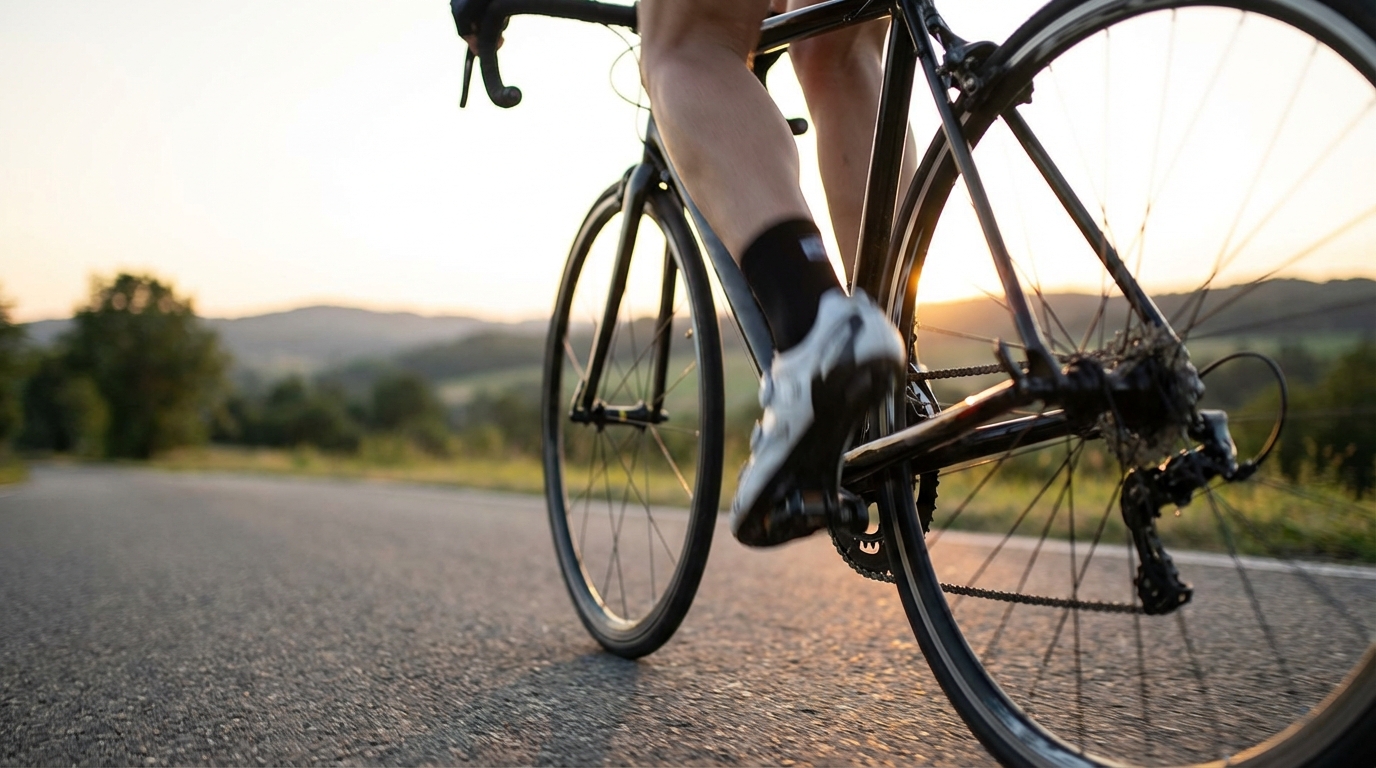
Cycling cadence, often described as the rhythm of a pedal stroke, is a fundamental metric that significantly influences a cyclist’s efficiency, power output, and overall speed. It refers to the rate at which a cyclist turns the pedals, typically measured in revolutions per minute (RPM). Understanding how cadence interacts with various physiological and mechanical factors can empower cyclists to optimize their riding strategy, conserve energy, and improve performance across different terrains and conditions. This exploration delves into the intricate relationship between cadence and the multifaceted aspects of cycling.
What is Cycling Cadence?
In simple terms, cycling cadence is the number of times your pedals complete a full rotation in one minute. If your left foot pushes down 90 times in a minute, your cadence is 90 RPM. It’s a direct measure of how quickly a cyclist is pedaling, independent of the gear chosen or the speed achieved.
While some experienced cyclists can estimate their cadence, many utilize electronic sensors, often integrated with cycling computers or smartwatches, to receive real-time data. These sensors attach to the crank arm or chainstay and provide precise readings, allowing riders to monitor and adjust their pedaling rate consciously.
The concept of cadence is crucial because it acts as a primary lever in managing the effort exerted and how that effort translates into forward motion. A cyclist can maintain the same speed at vastly different cadences by adjusting their gearing, highlighting cadence as a key variable in performance optimization.
The Relationship Between Cadence, Gearing, and Power Output
Cadence does not exist in isolation; it is intrinsically linked with gearing and, consequently, power output. Power, measured in watts, is the rate at which energy is produced. In cycling, it’s a product of the force applied to the pedals (torque) and the angular velocity (cadence).
-
Gearing: When a cyclist selects a gear, they are choosing a specific mechanical advantage. A “harder” gear (larger front chainring, smaller rear cog) requires more force per pedal stroke to move the bike forward at a given speed. Conversely, an “easier” gear (smaller front chainring, larger rear cog) requires less force per pedal stroke.
-
Power Output: To maintain a consistent power output:
-
Higher Cadence, Easier Gear: A cyclist can achieve the same power output by pedaling at a higher cadence in an easier gear. This involves applying less force with each pedal stroke but doing so more frequently. This approach often feels smoother and places less strain on individual muscles.
-
Lower Cadence, Harder Gear: Alternatively, the same power can be generated by pedaling at a lower cadence in a harder gear. This requires significantly more force per pedal stroke but fewer strokes per minute. This method can feel more demanding on the muscles and joints.
-
Effectively, gearing allows a cyclist to choose the combination of force and frequency (cadence) that feels most sustainable or efficient for a given power demand. Mastering gear selection in relation to desired cadence is a fundamental skill for efficient cycling.
Physiological Factors Influencing Cadence Choice
The human body’s response to different cadences is complex, involving both muscular and cardiovascular systems. A cyclist’s chosen cadence reflects a balance between these physiological demands.
Muscular Fatigue
The rate at which muscle fatigue sets in is strongly influenced by cadence:
-
High Cadence: Pedaling at a higher RPM typically involves applying less peak force during each pedal stroke. This can delay the onset of localized muscular fatigue, particularly in the quadriceps and glutes. It tends to engage more slow-twitch muscle fibers, which are more resistant to fatigue and rely heavily on aerobic metabolism.
-
Low Cadence: A lower cadence in a harder gear requires significant muscular force with each stroke. This quickly accumulates metabolic byproducts, such as lactic acid, leading to quicker localized muscle fatigue. It also places greater stress on the fast-twitch muscle fibers, which are powerful but fatigue more rapidly.
Cyclists often find that high-force, low-cadence riding rapidly depletes their muscular reserves, especially during long rides or climbs.
Cardiovascular Strain
Cadence also impacts the cardiovascular system:
-
High Cadence: To maintain a given power output, a higher cadence generally requires a higher heart rate. The heart and lungs work harder to deliver oxygen to the working muscles and remove waste products. This emphasizes the aerobic system.
-
Low Cadence: For the same power output, a lower cadence might result in a lower heart rate, as the primary limitation becomes muscular strength rather than oxygen delivery. However, the perceived effort can be very high due to the intense muscular strain.
An individual’s aerobic fitness level plays a significant role in their ability to sustain higher cadences without excessive cardiovascular strain.
Neuromuscular Efficiency
This refers to the coordination between the nervous system and muscles to produce smooth, powerful, and controlled movements. An efficient pedal stroke is not just about pushing down; it involves a continuous application of force throughout the entire rotation. Developing the ability to maintain a consistent pedal stroke at various cadences is a learned skill that improves with practice. Jerky or erratic pedaling, often seen at unaccustomed high cadences, indicates a lack of neuromuscular efficiency and wastes energy.
Cadence and Cycling Efficiency
Efficiency in cycling relates to how effectively a rider converts their metabolic energy into mechanical work (moving the bike forward). Cadence plays a substantial role here.
Energy Expenditure
There is considerable debate and individual variation regarding the metabolically efficient cadence. Some studies suggest that for many individuals, there exists an optimal cadence range where the body expends the least amount of oxygen to produce a given power output. Pedaling too slowly (grinding) or too quickly (spinning excessively without resistance) can be less efficient for different reasons. Grinding increases muscle effort and potentially lactic acid accumulation, while excessive spinning can lead to wasted energy through unnecessary upper body movement or a less effective power application throughout the pedal stroke.
Force Application
An efficient pedal stroke involves applying force smoothly throughout the entire 360-degree rotation, minimizing “dead spots” where little to no force is applied. While this is a complex skill, a higher cadence can sometimes make it easier to maintain a more continuous application of force, as the momentum of the stroke helps to carry the foot through the weaker parts of the pedal circle. Conversely, a very low cadence might exacerbate dead spots, requiring surges of power to overcome them.
Joint Stress
High forces applied at low cadences place significant stress on the knees, hips, and other joints. This can contribute to overuse injuries, especially for cyclists with pre-existing joint issues or those who are not accustomed to such high loads. Pedaling at a higher cadence, with less force per stroke, generally reduces the peak forces on the joints, potentially offering a more sustainable and injury-preventive approach for many riders, particularly over long distances.
Cadence and Cycling Speed
Ultimately, a cyclist’s speed is determined by a combination of factors, with cadence being a primary driver alongside gear selection and wheel circumference. To increase speed, a cyclist must either increase their cadence, shift into a harder gear, or ideally, achieve a combination of both.
-
Maintaining Momentum: On flat terrain or descents, maintaining a higher cadence allows for quicker acceleration and the ability to respond to changes in gradient or pace without excessive muscular effort. If a cyclist is “spinning out” (pedaling so fast they can no longer apply effective power), they need to shift into a harder gear to convert that high cadence into more speed.
-
Climbing: When climbing, speed often decreases, and maintaining a sustainable cadence becomes crucial. Shifting into easier gears allows riders to maintain a reasonable cadence, preventing muscle fatigue and enabling them to continue ascending for longer periods, albeit at a slower speed.
-
Sprinting: During sprints, cyclists often reach very high cadences in hard gears for short bursts of maximal power. The ability to spin rapidly while still applying significant force is essential for generating explosive speed.
Therefore, a cyclist’s ability to effectively manage and adapt their cadence across various gears is directly proportional to their capacity to control and maximize their speed in diverse riding scenarios.
Developing and Adapting Cadence
There is no universally applicable “ideal” cadence. What works for one cyclist may not work for another, and the optimal cadence for an individual can vary based on numerous factors:
-
Terrain: A higher cadence is often preferred for climbing to reduce muscular strain, while a slightly lower cadence in a harder gear might be efficient on flat, steady stretches.
-
Fitness Level: More aerobically fit riders may comfortably sustain higher cadences. Less experienced riders might initially feel more comfortable with a lower cadence due to underdeveloped leg speed or cardiovascular capacity.
-
Cycling Discipline: Road cyclists often maintain cadences in the 80-100 RPM range, while mountain bikers might see wider fluctuations due to technical terrain. Time trialists often aim for a steady, slightly higher cadence to maximize aerodynamic efficiency.
-
Fatigue: As fatigue sets in, a rider’s ability to maintain a higher cadence might diminish, prompting a natural shift to a lower RPM.
To develop a versatile and effective cadence, cyclists can incorporate specific training methods:
-
Cadence Drills: Practice pedaling at artificially high RPMs (100-120+) in a very easy gear on flat terrain. Focus on smoothness and minimizing bouncing in the saddle. These drills improve neuromuscular coordination and leg speed.
-
Gear Selection Practice: Consciously choose gears that allow you to maintain a target cadence for different sections of your ride, such as aiming for 85-95 RPM on flats and 70-80 RPM on climbs.
-
Varying Cadence: Avoid sticking to one fixed cadence. Deliberately vary your cadence during rides to make your body adaptable to different demands.
-
Listen to Your Body: Pay attention to what feels sustainable and powerful. While numbers are useful, your body’s feedback on comfort and effort is paramount.
Conclusion
Cadence is more than just a number; it is a dynamic indicator of a cyclist’s effort, efficiency, and physiological engagement. Its intricate relationship with gearing, power output, muscular fatigue, and cardiovascular strain means that understanding and consciously managing cadence is fundamental to optimizing cycling performance. There is no singular magic number, but rather a spectrum of effective cadences that vary based on individual physiology, terrain, and riding goals. By developing a nuanced awareness of cadence and incorporating training to enhance leg speed and adaptability, cyclists can unlock greater efficiency, reduce the risk of fatigue and injury, and ultimately achieve their desired speeds with more control and endurance.
Frequently Asked Questions
Q1: What is a typical or common cadence for many cyclists?
While there’s no single ideal, many experienced road cyclists typically ride in a cadence range of 80 to 100 revolutions per minute (RPM) on flat to rolling terrain. Less experienced riders might start lower, around 60-70 RPM, and gradually increase it with practice.
Q2: Is a higher cadence always more efficient than a lower one?
Not necessarily. While a higher cadence generally reduces muscular strain and joint stress per pedal stroke, excessive spinning without adequate resistance can be metabolically inefficient for some, leading to wasted energy. Conversely, a very low cadence (grinding a hard gear) can quickly lead to muscle fatigue and higher joint stress. The most efficient cadence is often individual and depends on the rider’s fitness, the terrain, and the specific power output required.
Q3: Can I improve my cycling cadence, and how?
Yes, absolutely. Cadence is a skill that can be developed. Incorporate “cadence drills” into your rides by spinning at higher RPMs (e.g., 100-120) in an easy gear on flat ground, focusing on a smooth pedal stroke. Practice consciously varying your cadence during rides and use a cadence sensor to monitor your progress. Over time, your body will adapt to higher leg speeds and improved neuromuscular efficiency.
Q4: Does cadence matter for all types of cycling (e.g., mountain biking vs. road cycling)?
Yes, cadence matters for all cycling disciplines, though the typical ranges and the importance of adapting cadence might differ. Road cyclists often aim for a relatively consistent high cadence, while mountain bikers might experience wider fluctuations due to technical terrain, steep climbs, and sudden changes in speed. However, in all forms of cycling, managing cadence effectively is crucial for controlling power, managing fatigue, and optimizing speed.
Q5: How do I know my current cycling cadence if I don’t have a sensor?
You can estimate your cadence by counting the number of times one pedal (e.g., your left foot) completes a full revolution in 15 seconds, then multiply that number by four. For a more accurate and real-time measurement, a dedicated cadence sensor (which often pairs with a cycling computer or smartphone app) is a practical tool.

Diana Miller, is a dedicated nature enthusiast and an outdoor adventurer. She began leading groups for excursions in her teens and never stopped. Following her passion for nature, she gathers her friends for outdoor trips every now and then. And for the last 10 years, she has executed workshops on backpacking, snow kayaking and traveling that included her main motive of lightweight packing while outdoors. During leisure, she loves planning for her next adventure.