
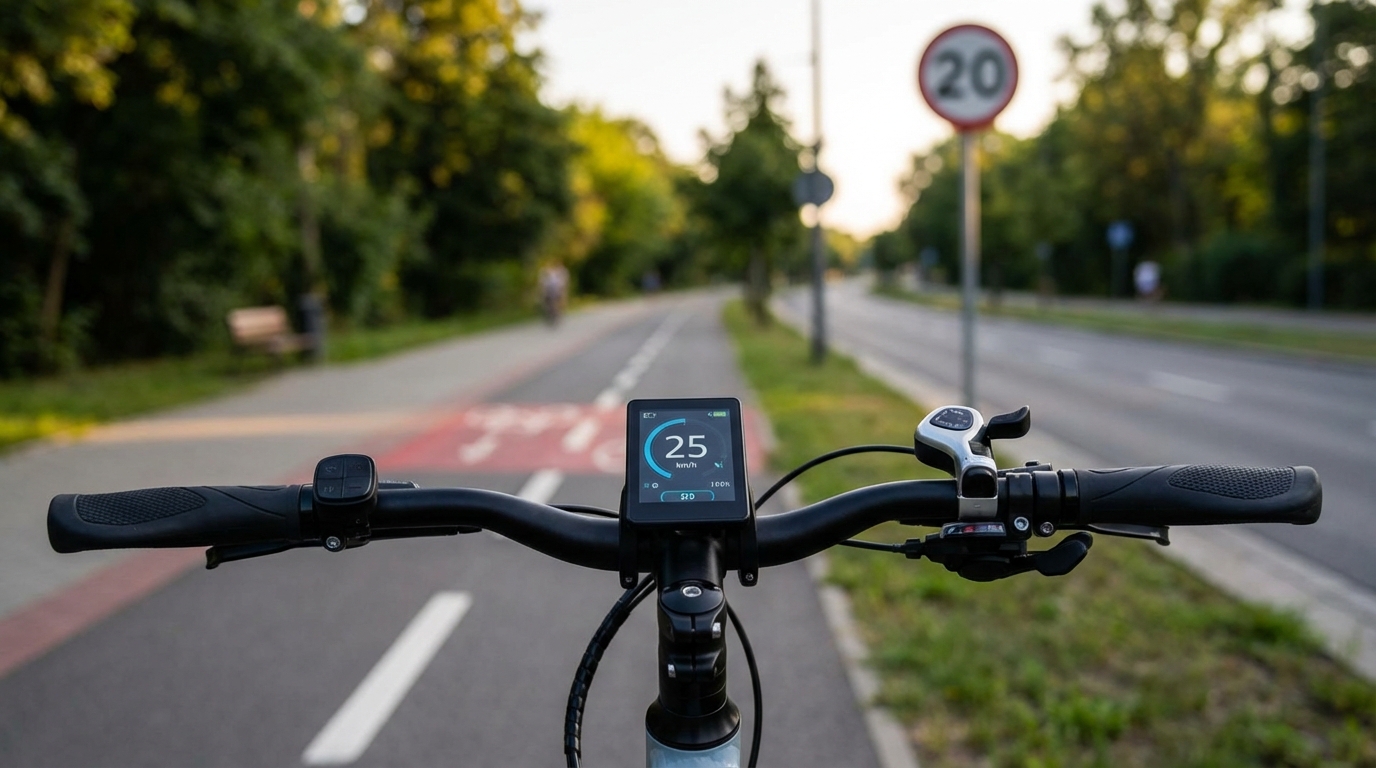
Electric bicycles, often referred to as e-bikes, have grown significantly in popularity as a versatile and accessible mode of transportation and recreation. They offer the benefit of traditional cycling with the added assistance of an electric motor, making commutes easier, hills less daunting, and longer distances more achievable for a wider range of riders. However, the integration of motor assistance introduces a layer of regulation that traditional bicycles do not have: speed limits. Understanding these regulations is crucial for every e-bike rider, not just for legal compliance but also for safety, maintaining public access to trails, and ensuring a harmonious experience for all road and trail users. Navigating the varying classifications and rules can seem complex, but grasping the fundamental principles empowers riders to make informed choices and contribute to a positive e-bike environment.
Defining Electric Bicycles and Their Assistance
Before delving into specific speed limits, it’s important to understand what defines an electric bicycle from a regulatory standpoint. Generally, an e-bike is a bicycle equipped with an integrated electric motor that can be used for propulsion. The motor’s primary function is to assist the rider, not fully replace human power, distinguishing e-bikes from mopeds or motorcycles. This assistance typically comes in two forms:
- Pedal-Assist (Pedelec): The motor provides power only when the rider is pedaling. The level of assistance often depends on the effort the rider exerts. This is the most common form of e-bike assistance globally.
- Throttle: The motor can provide power on demand, even without pedaling, activated by a throttle mechanism similar to a motorcycle or scooter. Some e-bikes offer both pedal-assist and throttle functionality.
A key characteristic that often defines an e-bike, especially in regulatory contexts, is that the motor assistance cuts off at a specific speed. This means that while a rider can pedal faster than this cut-off speed, the motor will no longer contribute power beyond that threshold. This distinction is central to how e-bikes are categorized and regulated.
Common E-Bike Classification Systems and Their Speed Limits
Regulations surrounding e-bikes, particularly concerning their speed limits, can vary significantly depending on geographic location. Many regions have adopted classification systems to differentiate e-bikes based on their power output, type of assistance, and the speed at which motor assistance ceases. Two prominent examples include frameworks widely used in the United States and the European Union.
United States E-Bike Classification
In the U.S., a three-class system has been adopted by many states, providing a framework for regulating e-bikes on roads and multi-use paths. This classification primarily focuses on the maximum speed at which the motor provides assistance and whether a throttle is present.
-
Class 1 Electric Bicycle
Class 1 e-bikes are defined by:
- Motor assistance that only engages when the rider is pedaling.
- Motor assistance that ceases when the bicycle reaches a speed of 20 mph (approximately 32 km/h).
These e-bikes are generally permitted anywhere traditional bicycles are allowed, including bike lanes and multi-use paths, though local regulations can vary.
-
Class 2 Electric Bicycle
Class 2 e-bikes are characterized by:
- A motor that can be used exclusively to propel the bicycle (throttle-actuated).
- Motor assistance that ceases when the bicycle reaches a speed of 20 mph (approximately 32 km/h), whether by throttle or pedal-assist.
Similar to Class 1, Class 2 e-bikes are often allowed on most bike paths and roads where conventional bicycles are permitted, but again, local rules may differ.
-
Class 3 Electric Bicycle
Class 3 e-bikes are designed for higher-speed commuting and are defined by:
- Motor assistance that only engages when the rider is pedaling (pedal-assist only).
- Motor assistance that ceases when the bicycle reaches a speed of 28 mph (approximately 45 km/h).
- Often required to be equipped with a speedometer.
Due to their higher assisted speed, Class 3 e-bikes may have more restrictions regarding where they can be ridden. They are typically permitted on roads and bike lanes, but may be restricted from multi-use paths or trails where Class 1 and 2 e-bikes are allowed.
It is important to remember that while this three-class system provides a common regulatory structure, individual states and local municipalities can implement their own specific laws regarding e-bike use, including age restrictions or additional equipment requirements.
European Union EPAC (Pedelec) Regulations
In the European Union, the primary regulation for electric bicycles falls under the EPAC (Electrically Power Assisted Cycles) standard, often referred to as “Pedelec” bikes. This framework is generally simpler than the U.S. system but has strict parameters to ensure e-bikes are considered bicycles rather than motor vehicles.
-
EPAC (Pedelec) Standard
To be classified as an EPAC, an e-bike must meet the following criteria:
- The motor’s continuous rated power output must not exceed 250 watts.
- Motor assistance must only be provided when the rider is pedaling.
- Motor assistance must cease when the bicycle reaches a speed of 25 km/h (approximately 15.5 mph).
E-bikes meeting these specifications are treated legally as conventional bicycles and can generally be ridden wherever traditional bicycles are permitted. E-bikes that exceed these power or speed limits, such as those with motors over 250W or assistance beyond 25 km/h (often called ‘speed pedelecs’), are typically classified as mopeds or light motorcycles and are subject to different, more stringent regulations including registration, licensing, insurance, and mandatory helmet use.
Factors Influencing E-Bike Speed Limits
The establishment of speed limits for electric bicycles is influenced by a range of considerations aimed at safety, fair access, and compatibility with existing infrastructure.
- Safety for All Users: Higher speeds can reduce reaction time, increase stopping distances, and escalate the severity of accidents. Limiting assisted speeds helps mitigate risks for e-bike riders, pedestrians, and other cyclists, particularly on shared paths.
- Preserving Trail Access: Regulators often balance the desire to allow e-bikes on trails with the need to prevent conflicts with traditional cyclists and pedestrians. Uniform speed limits help maintain a predictable environment and prevent calls for widespread e-bike bans.
- Motor Power and Assistance Type: While speed limits dictate where motor assistance cuts off, the motor’s power output (e.g., 250W, 500W, 750W) and the type of assistance (pedal-assist vs. throttle) also factor into classification. A higher power motor might allow an e-bike to reach its assisted speed limit more quickly or climb hills more easily, influencing its classification and permitted use.
- Infrastructure Compatibility: The design and capacity of existing cycling infrastructure, such as bike lanes and multi-use paths, are built with certain speeds and user volumes in mind. E-bike speed limits help ensure compatibility and prevent overloading or rapid deterioration of these facilities.
The Importance of Adhering to Speed Limits
Compliance with e-bike speed limits extends beyond simply avoiding penalties; it impacts safety, legal standing, and the future of e-biking as a whole.
- Legal Compliance: Riding an e-bike that exceeds the permitted speed limit for a given area can result in fines, confiscation of the bicycle, or other legal consequences, similar to traffic violations.
- Enhanced Safety: Operating within defined speed limits significantly enhances safety for the rider and for others sharing paths and roads. It allows for adequate reaction time, reduces the impact force in potential collisions, and fosters a more predictable environment.
- Maintaining Public Access: Consistent adherence to speed limits by the e-bike community helps build trust and demonstrates responsible use. Non-compliance by a segment of riders can lead to stricter regulations, restrictions, or even bans on e-bikes in certain popular areas, impacting all riders.
- Insurance Considerations: In the event of an accident, operating an e-bike outside of legal parameters could potentially complicate insurance claims or affect liability assessments.
Locating and Understanding Local Regulations
Given the variability in e-bike laws, it is essential for riders to actively seek out and understand the specific regulations applicable to their riding area. General guidelines, like the U.S. class system or EU EPAC standard, provide a foundation, but local jurisdictions often have additional nuances.
- State and Provincial Websites: Begin by consulting the official websites of your state’s or province’s Department of Motor Vehicles (DMV) or transportation agency. These often provide comprehensive guides to e-bike laws.
- Local City and County Ordinances: Many cities and counties have their own ordinances that supplement or specify state laws, particularly regarding the use of e-bikes on local parks, trails, and specific bike paths. Check the websites of your local government.
- Trail Signage: When riding on multi-use paths, dedicated bike trails, or in parks, pay close attention to posted signage. These signs often clearly indicate which classes of e-bikes are permitted and any specific speed limits or rules that apply to that particular stretch of infrastructure.
- E-Bike Advocacy Groups: Local cycling and e-bike advocacy organizations often compile and disseminate information on current regulations, and can be a valuable resource for riders.
Conclusion
Electric bicycles offer tremendous benefits, merging the joy of cycling with helpful motor assistance. However, their unique characteristics necessitate a clear understanding of associated speed limits and classifications. Whether navigating the three-class system in the United States or adhering to the EPAC standard in the European Union, knowing the legal maximum assisted speed for your e-bike and riding location is fundamental. Adhering to these regulations is not just about avoiding legal repercussions; it’s about fostering a safe riding environment for everyone, ensuring continued access to shared spaces, and promoting the responsible integration of e-bikes into our transportation and recreation landscapes. By staying informed and riding responsibly, e-bike users can contribute positively to the cycling community and enjoy the full advantages of this evolving technology.
Frequently Asked Questions (FAQs)
1. What is the difference between an e-bike’s top speed and its assisted speed limit?
The assisted speed limit refers to the maximum speed at which the electric motor will provide power assistance to the rider. For example, a Class 1 e-bike has an assisted speed limit of 20 mph (32 km/h). This does not mean the bicycle cannot go faster than 20 mph. A rider can pedal beyond this speed using only human power, but the motor will no longer contribute to propulsion once that limit is reached.
2. Are there any age restrictions for riding e-bikes with certain speed limits?
Yes, age restrictions can vary significantly by jurisdiction and e-bike class. For instance, in some U.S. states, Class 3 e-bikes (with higher assisted speeds of 28 mph) may have a minimum age requirement, such as 16 years old. Class 1 and 2 e-bikes often do not have age restrictions beyond what applies to conventional bicycles, but it is crucial to check local laws.
3. Can I modify my e-bike to go faster than its regulated speed limit?
Modifying an e-bike to exceed its factory-set assisted speed limit is generally not recommended and can have significant legal and safety implications. Such modifications can change the e-bike’s classification, potentially subjecting it to stricter regulations (e.g., reclassifying it as a moped or motorcycle), which could require licensing, registration, or specific safety gear. It can also void warranties, affect insurance coverage, and increase safety risks for the rider and others.
4. Do all e-bikes have the same speed limits globally?
No, e-bike speed limits are not uniform globally. Regulations vary significantly between countries, and even within countries, there can be differences at state, provincial, or local levels. Common frameworks like the U.S. three-class system and the EU’s EPAC standard represent prominent approaches, but specific maximum assisted speeds and classification criteria differ.
5. Where can I find the specific speed limits and regulations for e-bikes in my area?
The most reliable sources for local e-bike regulations are official government websites. Check your state’s (or province’s) Department of Motor Vehicles or transportation agency website. Additionally, consult your city or county’s official website for local ordinances, especially concerning parks, trails, and specific bike paths. E-bike advocacy groups in your region can also be a valuable resource.

Diana Miller, is a dedicated nature enthusiast and an outdoor adventurer. She began leading groups for excursions in her teens and never stopped. Following her passion for nature, she gathers her friends for outdoor trips every now and then. And for the last 10 years, she has executed workshops on backpacking, snow kayaking and traveling that included her main motive of lightweight packing while outdoors. During leisure, she loves planning for her next adventure.