
Understanding Regenerative Braking in eBikes
Electric bikes, commonly known as eBikes, have transformed personal mobility, offering assistance that makes cycling accessible to a wider audience. While the motor and battery are often the primary focus, the braking system plays an equally critical role in safety, control, and, in some advanced models, energy management. This post will delve into how regenerative braking functions in specific eBikes, a technology that not only slows the bike but also contributes to its efficiency.Conventional eBike Braking
Before exploring regenerative braking, it’s helpful to understand the traditional methods employed in most eBikes. * **Friction-Based Systems:** The vast majority of eBikes utilize conventional friction brakes, typically disc brakes (mechanical or hydraulic). These systems operate by applying pressure to brake pads, which in turn squeeze a rotor attached to the wheel hub. * **Energy Dissipation:** When friction brakes are engaged, the kinetic energy of the moving eBike is converted into heat due. This heat is then dissipated into the atmosphere. While highly effective at stopping, this process represents a loss of energy that was originally put into motion by the rider and the motor. In contrast to this energy dissipation, regenerative braking offers an alternative approach, aiming to recapture some of this otherwise lost energy.The Core Mechanics of Regenerative Braking
Regenerative braking is a sophisticated system that allows the eBike’s electric motor to operate in reverse, effectively turning it into a generator. This process captures kinetic energy that would typically be lost during deceleration and converts it back into electrical energy to recharge the battery.The Motor as a Generator
The fundamental principle behind regenerative braking lies in the dual functionality of the electric motor. An electric motor works by using electrical energy to create a magnetic field that interacts with other magnets, causing rotation. * **Electromagnetic Induction:** The same physical principles that allow a motor to turn electrical energy into mechanical energy (motion) also permit it to do the reverse. When an external force (like the momentum of a moving eBike) causes the motor’s rotor to spin while current flow is reversed or controlled, the motor acts like a generator. * **Generating Electricity:** As the motor’s coils cut through magnetic fields, an electric current is induced within the windings. This induced current is the recaptured energy.The Process of Energy Conversion
When regenerative braking is activated, a precisely orchestrated sequence of events occurs: 1. **Input Signal:** The system receives a signal, typically from the brake levers or when the rider ceases pedaling and releases the throttle. 2. **Controller Intervention:** The eBike’s motor controller, the “brain” of the electrical system, interprets this signal. Instead of sending power from the battery to the motor, it manipulates the motor’s electrical phase or reverses the direction of current flow. 3. **Resistance and Generation:** This action forces the motor to resist its rotation. This resistance provides the braking force, slowing the eBike down. Simultaneously, as the motor is mechanically driven by the spinning wheel against this electrical resistance, it generates electricity. 4. **Battery Recharge:** The generated electrical current is then directed by the controller back to the eBike’s battery pack, where it is stored for later use.Key Components Involved
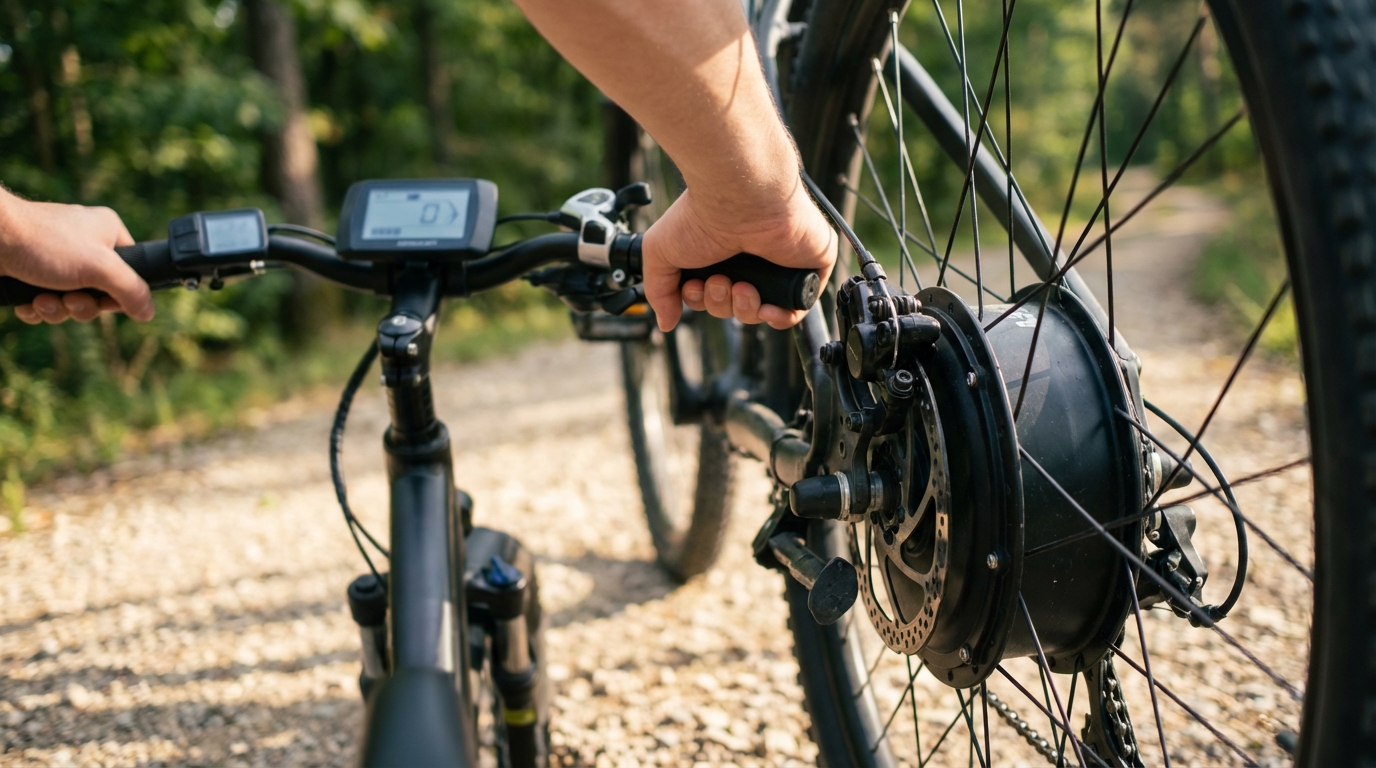
Several integrated components work in harmony to enable regenerative braking: * **Electric Motor:** Specifically designed or capable of acting as both a motor (propelling the bike) and a generator (recharging the battery). Hub motors are frequently utilized for this purpose due to their direct connection to the wheel. * **Motor Controller:** A crucial electronic component that manages the flow of electricity. It switches the motor’s operation from propulsion to regeneration and regulates the charging current sent back to the battery. * **Battery Pack:** The energy storage unit of the eBike. It must be designed to safely accept the incoming charge from the regenerative braking system. * **Brake Levers/Sensors:** Equipped with sensors that detect when the brakes are applied. These sensors send a signal to the motor controller to initiate the regenerative process. In some systems, simply releasing the throttle or coasting can also trigger regeneration.How Regenerative Braking is Initiated and Controlled
The activation and management of regenerative braking are critical for a smooth and effective rider experience.Trigger Mechanisms
Regenerative braking can be initiated through various means, depending on the eBike’s design: * **Brake Lever Activation:** This is a common method. When the rider pulls the brake levers, sensors detect the action and immediately signal the motor controller. The controller then reduces power to the motor and begins the regeneration process. Often, the regenerative braking engages before the mechanical brakes make full contact, providing a preliminary slowdown. * **Throttle Release or Coasting:** Some eBikes are programmed to initiate a degree of regenerative braking when the rider releases the throttle completely or stops pedaling and coasts. This provides a subtle, natural deceleration and passive energy recovery, particularly useful on long descents. * **Downhill Riding:** In more advanced systems, regenerative braking can automatically engage when the eBike detects it is traveling downhill, helping to manage speed and continuously recover energy without constant rider input.Control System Role
The motor controller is central to the intelligent operation of regenerative braking: * **Variable Braking Force:** The controller can adjust the intensity of the regenerative braking force based on factors like speed, battery charge level, and rider input. This ensures a consistent and controlled deceleration. * **Battery Management:** It monitors the battery’s state of charge to prevent overcharging. If the battery is full, the system may reduce or halt regeneration to protect the battery, relying solely on mechanical brakes. * **Seamless Integration:** The aim is to integrate regenerative braking smoothly with the conventional mechanical brakes, so the rider experiences a cohesive and effective stopping mechanism.Advantages of Regenerative Braking in eBikes
The implementation of regenerative braking offers several noteworthy benefits for eBike riders and the overall system.Extended Riding Range
Perhaps the most frequently cited advantage, regenerative braking can noticeably extend the distance an eBike can travel on a single charge. By recapturing kinetic energy during deceleration and storing it back in the battery, less power needs to be drawn from the battery over time. While the percentage of energy recovered varies, it can provide a valuable boost, particularly during rides involving frequent stops, starts, or descents.Reduced Wear on Mechanical Brakes
With the motor contributing to the deceleration, the mechanical friction brakes (pads and rotors) are subjected to less stress and wear. This can lead to: * **Longer Component Lifespan:** Brake pads and rotors may last longer, requiring less frequent replacement. * **Reduced Maintenance:** Fewer replacements translate to lower maintenance costs and less time spent on servicing the braking system. * **Consistent Performance:** Less wear helps maintain the consistent performance of the conventional brakes over a longer period.Enhanced Control and Riding Experience
Regenerative braking can provide a distinct feel and improved control: * **Smoother Deceleration:** The gradual electrical resistance provided by the motor can lead to a smoother, more controlled slowdown compared to sudden applications of friction brakes. * **Motor Braking Effect:** Similar to engine braking in other vehicles, it offers a continuous, subtle braking effect when coasting or descending, allowing the rider to maintain speed without constantly engaging the mechanical brakes. * **Improved Stability:** By distributing braking force, it can contribute to a more balanced and stable deceleration, especially at higher speeds.Increased Energy Efficiency
At its core, regenerative braking is about efficiency. It transforms kinetic energy, which would otherwise be lost as waste heat, into usable electrical energy. This intelligent energy management contributes to a more sustainable and efficient operation of the eBike.Considerations and Limitations
While regenerative braking offers compelling advantages, it’s important to understand its practical limitations and specific considerations.Complementary, Not Sole, Braking
Regenerative braking is typically a secondary or complementary braking system, working in conjunction with conventional mechanical brakes. * **Insufficient for Emergency Stops:** It alone cannot provide the rapid, powerful stopping force required for emergency situations. Mechanical brakes remain essential for quick and forceful deceleration. * **Efficiency Varies:** The amount of energy recovered is not 100% and depends on many factors, including speed, deceleration rate, system design, and battery state.Impact on Motor Design
Not all eBike motors are equally suited for regenerative braking. * **Specific Motor Types:** Motors that are generally more robust and designed to handle sustained operation as a generator, such as certain direct-drive hub motors, are often employed for regenerative systems. Mid-drive motors, while powerful for propulsion, can be less straightforward to integrate with effective regeneration due to their gearing and internal mechanisms. * **Thermal Management:** The motor must be capable of dissipating any heat generated during the regenerative process, though typically less than under high power output.Complexity and Cost
Integrating regenerative braking adds layers of complexity to an eBike’s electrical and control systems. * **More Advanced Components:** Requires a more sophisticated motor controller and potentially specialized motors and batteries. * **Higher Manufacturing Cost:** The additional technology and engineering can contribute to a higher manufacturing cost, which may reflect in the retail price of eBikes featuring this technology.Battery State of Charge
The effectiveness of regenerative braking is directly tied to the battery’s ability to accept a charge. * **Full Battery Limitation:** If the eBike’s battery is already fully charged, it cannot accept any more energy. In this scenario, the regenerative braking system will either significantly reduce its output or disengage entirely, relying solely on the mechanical brakes for stopping. * **Temperature Sensitivity:** Battery temperature can also influence charging efficiency, including during regeneration.Conclusion
Regenerative braking represents an advanced feature found in some electric bikes, offering a sophisticated method of enhancing efficiency and rider experience. By converting the kinetic energy of deceleration back into usable electrical energy, it contributes to extended riding ranges, reduced wear on mechanical braking components, and a refined sense of control. While it works as a valuable complement to traditional friction brakes, it is important to recognize that it does not replace their critical role, especially for rapid stopping. Understanding the mechanics and implications of regenerative braking provides insight into the ongoing innovations aimed at making eBikes even more efficient and capable for varied riding conditions.Frequently Asked Questions (FAQs)
Q1: Do all eBikes have regenerative braking?
A: No, it is a feature found in specific eBike models, often those with more advanced motor controllers and compatible motors. Many eBikes rely solely on conventional mechanical braking systems for deceleration and stopping.Q2: How much energy can regenerative braking recover?
A: The amount of energy recovered varies significantly based on factors like terrain, rider weight, riding style, speed, and the system’s efficiency. While it doesn’t fully recharge the battery from empty, it can contribute an appreciable extension to riding range, particularly on hilly routes or during rides with frequent stopping and starting.Q3: Does regenerative braking affect the motor’s lifespan?
A: When properly designed and implemented, regenerative braking should not negatively impact the motor’s lifespan. Motors capable of regeneration are typically engineered to handle this dual function (motor and generator) without undue stress. The system’s controller also manages current flow to protect components.Q4: Can regenerative braking be turned off?
A: In some eBike systems, the level of regenerative braking might be adjustable or can be disabled via the eBike’s display or control settings, allowing riders to customize their experience. However, in other systems, it may be an integrated, always-on feature when applicable.Q5: Is regenerative braking effective at low speeds?
A: Regenerative braking is generally less effective at very low speeds. The amount of kinetic energy available for conversion decreases significantly as speed drops, meaning minimal energy is recovered when an eBike is almost stopped or moving slowly. It is most impactful at higher speeds and during significant deceleration events.
Diana Miller, is a dedicated nature enthusiast and an outdoor adventurer. She began leading groups for excursions in her teens and never stopped. Following her passion for nature, she gathers her friends for outdoor trips every now and then. And for the last 10 years, she has executed workshops on backpacking, snow kayaking and traveling that included her main motive of lightweight packing while outdoors. During leisure, she loves planning for her next adventure.