
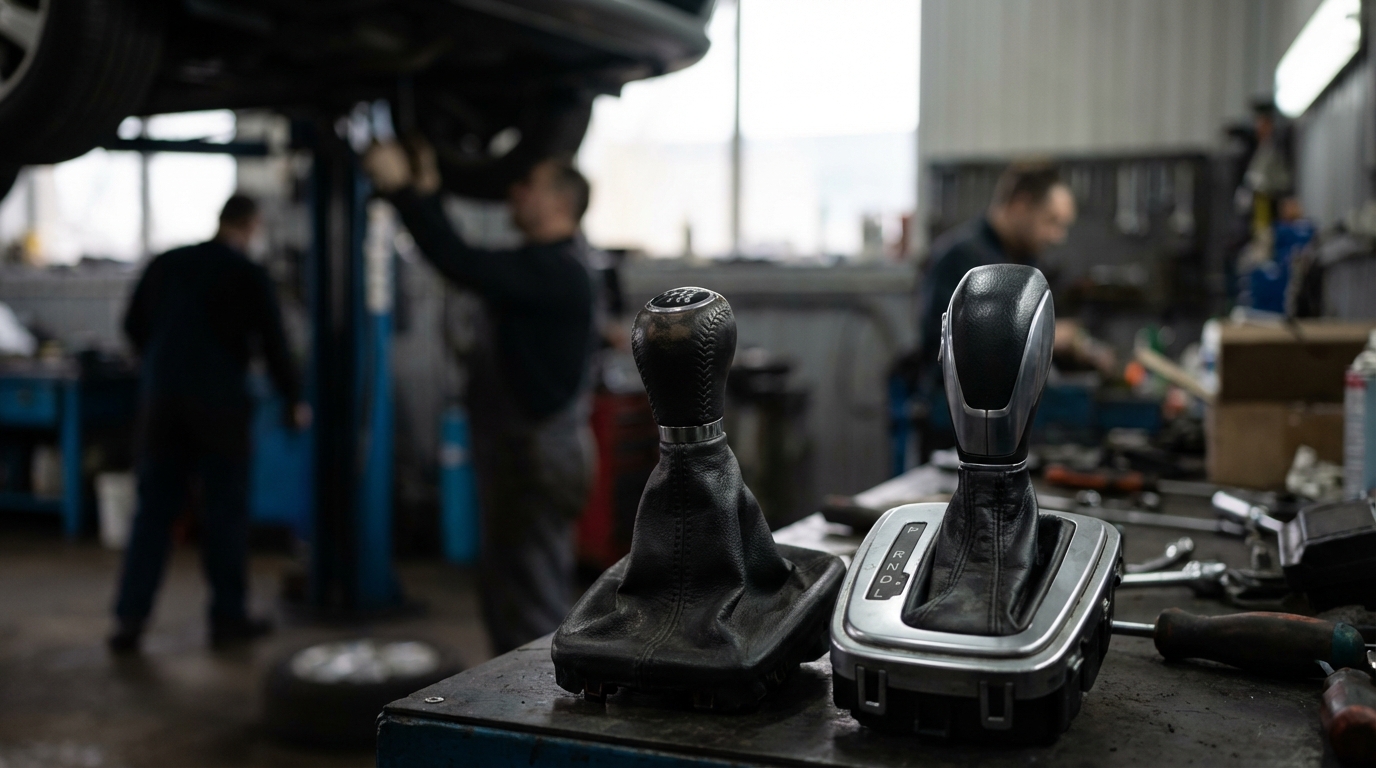
Understanding Manual vs Automatic Transmissions
The transmission is a fundamental component of any internal combustion engine vehicle, playing a pivotal role in how power generated by the engine is delivered to the wheels. It acts as the intermediary, translating the engine’s high rotational speed into usable torque and varying it to suit different driving conditions. This core function is achieved through various designs, with manual and automatic transmissions representing the two primary categories. Both systems aim to optimize engine performance and vehicle speed, yet they employ distinct mechanical principles and offer unique operational experiences. This discussion will explore the inner workings, characteristics, and operational considerations of each type, providing a comprehensive understanding of their contributions to vehicle dynamics.The Role of a Vehicle Transmission
At its core, a vehicle transmission is designed to manage the transfer of power from the engine to the drive wheels. An internal combustion engine typically operates efficiently within a specific range of revolutions per minute (RPM) and produces a limited range of torque. However, a vehicle needs a wide range of torque and speed variations to move from a standstill, accelerate, climb hills, and cruise at high speeds. This is where the transmission becomes indispensable: * **Gear Ratio Adjustment:** It allows the engine to operate within its efficient RPM range while the vehicle’s speed and load requirements vary significantly. By changing gear ratios, the transmission multiplies torque at lower speeds for acceleration and climbing, and reduces torque while increasing wheel speed at higher speeds for cruising. * **Direction Control:** Most transmissions also incorporate a reverse gear, enabling the vehicle to move backward. * **Neutral State:** They provide a neutral position, disconnecting the engine from the drive wheels, allowing the engine to run without moving the vehicle. Without a transmission, an engine would struggle to provide sufficient torque to start moving a vehicle, and would be unable to accelerate effectively or maintain various speeds efficiently.Manual Transmissions: Mechanical Engagement
Manual transmissions represent a direct and mechanically intricate approach to power transfer. They empower the driver with direct control over gear selection, requiring coordination between several driver inputs.How a Manual Transmission Operates
The operational sequence of a manual transmission involves a coordinated effort from the driver: * **Clutch Engagement/Disengagement:** The driver uses a clutch pedal to mechanically connect or disconnect the engine from the transmission. Pressing the pedal disengages the clutch, interrupting power flow and allowing for a gear change without grinding gears. Releasing the pedal gradually re-engages the clutch, smoothly transferring power. * **Gear Shifter:** A gear lever, manipulated by the driver, moves a system of shift forks inside the transmission. These forks slide collars (synchronizers) to engage different gear sets within the gearbox. * **Gear Selection:** Each gear set consists of specific-sized gears that provide a particular ratio. By selecting different gears, the driver alters the amount of torque and speed delivered to the drive shaft.Key Components of a Manual Transmission
* **Clutch Assembly:** Comprising a flywheel, clutch disc, pressure plate, and release bearing. The clutch disc, splined to the transmission input shaft, is pressed against the flywheel by the pressure plate when engaged. * **Gearbox:** A casing containing multiple shafts (input, counter, and output) and various gears that mesh together. * **Synchronizers:** Devices that match the rotational speeds of the gears and shafts before they engage, allowing for smooth, non-grinding shifts.Driver Engagement and Characteristics
Driving a vehicle equipped with a manual transmission demands a higher level of driver involvement and skill. The driver must develop a feel for the engine’s RPM, vehicle speed, and load to select the appropriate gear and execute smooth shifts. This direct control can offer a distinct connection to the vehicle’s mechanics. Operational characteristics include: * **Direct Mechanical Connection:** A more direct transfer of power from the engine to the wheels when the clutch is fully engaged. * **Maintenance Profile:** Requires periodic inspection and eventual replacement of the clutch assembly due to wear. Transmission fluid typically needs less frequent changes compared to some automatic systems. * **Learning Curve:** Requires dedicated practice to master clutch and shifter coordination.Automatic Transmissions: Automated Power Management
Automatic transmissions are designed to simplify the driving experience by automating the gear selection process. They eliminate the need for a clutch pedal and manual gear shifting, allowing the driver to focus primarily on steering and braking.How an Automatic Transmission Operates
The internal workings of an automatic transmission are more complex than those of a manual, typically relying on hydraulics and electronics: * **Torque Converter:** Instead of a clutch, automatics use a torque converter, a fluid coupling device. It transfers power from the engine to the transmission via hydraulic fluid, allowing the engine to spin while the vehicle is stationary (like a clutch slip) and providing some torque multiplication. * **Planetary Gear Sets:** Automatic transmissions utilize sophisticated planetary gear sets, which can achieve multiple gear ratios within a compact space through the selective engagement of various components. * **Hydraulic System and Electronic Control:** A pump circulates transmission fluid under pressure. This fluid is directed by a valve body (controlled by the vehicle’s computer, or ECU) to apply clutches and bands, which then engage specific components of the planetary gear sets to achieve the desired gear ratio. The ECU monitors vehicle speed, engine load, throttle position, and other parameters to determine the optimal shift points.Key Components of an Automatic Transmission
* **Torque Converter:** A donut-shaped component filled with fluid, connecting the engine’s crankshaft to the transmission’s input shaft. * **Planetary Gear Sets:** Interlocking sets of gears (sun gear, planet gears, ring gear) that create different ratios. * **Clutches and Bands:** Friction elements that, when engaged by hydraulic pressure, hold or drive specific components of the planetary gear sets. * **Valve Body:** A complex hydraulic control unit that directs fluid pressure to the appropriate clutches and bands. * **Transmission Fluid:** Serves multiple functions: power transfer in the torque converter, lubrication, cooling, and hydraulic pressure for control.Driver Experience and Characteristics
The primary benefit of an automatic transmission is its ease of use, particularly in stop-and-go traffic. The driver simply selects “Drive” and the transmission handles all gear changes seamlessly. Operational characteristics include: * **Ease of Use:** No clutch pedal, automatic gear selection, simplifying driving for many. * **Smooth Shifts:** Generally designed for smooth, often imperceptible gear changes. * **Complexity:** Internally more complex with numerous hydraulic and electronic components. * **Maintenance Profile:** Requires regular transmission fluid changes and filter replacements to ensure proper lubrication and hydraulic function. Over time, components like the torque converter can also require attention.Variations of Automatic Transmissions
Beyond the traditional hydraulic automatic, technological advancements have led to other forms of automatic power delivery: * **Continuously Variable Transmissions (CVTs):** These automatics use a system of pulleys and a belt (or chain) to provide an infinite number of gear ratios within a range, rather than fixed steps. This allows the engine to operate at its most efficient RPM for a given speed. * **Dual-Clutch Transmissions (DCTs):** These systems, while automating gear changes, use two separate clutches – one for odd-numbered gears and one for even-numbered gears. This design allows for pre-selection of the next gear, leading to very rapid shifts.Key Distinctions and Operational Considerations
The fundamental differences between manual and automatic transmissions extend beyond the presence of a clutch pedal, influencing various aspects of vehicle operation and ownership. * **Driver Input and Control:** * **Manual:** Demands active driver participation for every gear change. This provides a direct connection to the vehicle and allows the driver to precisely control engine RPM and torque delivery. * **Automatic:** Automates gear selection, reducing driver fatigue and simplifying operation. The transmission’s computer determines shift points based on driving conditions, though some automatics offer manual shift modes for driver intervention. * **Efficiency Mechanisms:** * **Manual:** Characterized by a direct mechanical connection, which generally translates to minimal power loss when engaged. * **Automatic:** Traditional automatics with torque converters experience some inherent slippage in the fluid coupling, particularly at low speeds, which can lead to minor power losses. Modern automatics, CVTs, and DCTs have evolved to mitigate these losses significantly through technologies like lock-up torque converters and more efficient designs. * **Maintenance Profiles:** * **Manual:** Primary wear item is the clutch assembly, which will eventually need replacement depending on driving style and conditions. Transmission fluid changes are typically less frequent. * **Automatic:** Requires regular maintenance of the transmission fluid and filter to ensure proper hydraulic function, lubrication, and cooling. The complexity of internal components means that service can sometimes be more involved. * **Learning Curve:** * **Manual:** Requires significant practice and skill development to operate smoothly, especially concerning clutch engagement and gear shifting timing. * **Automatic:** Generally easier for new drivers to learn, as it eliminates the complexity of clutch and gear coordination.Conclusion
Manual and automatic transmissions represent two distinct philosophies in vehicle power management. The manual transmission provides the driver with explicit control over gear selection, fostering a direct mechanical relationship with the vehicle through coordinated inputs. Its design emphasizes mechanical efficiency and a specific type of driving experience that prioritizes driver engagement. In contrast, the automatic transmission prioritizes convenience and ease of use, employing sophisticated hydraulic and electronic systems to manage gear changes seamlessly. While traditional automatics introduced the concept of fluid coupling and automated shifting, modern variations like CVTs and DCTs continue to refine the efficiency and responsiveness of self-shifting systems. Each transmission type serves its purpose effectively, influencing not only the operational dynamics of a vehicle but also the overall driving experience and maintenance considerations. —Frequently Asked Questions (FAQs)
**1. What is the primary function of a vehicle transmission?** The primary function of a vehicle transmission is to manage and transfer power from the engine to the drive wheels. It adjusts the gear ratios, allowing the engine to operate efficiently across various vehicle speeds and loads, providing necessary torque for acceleration and appropriate speeds for cruising. **2. How does a manual transmission engage and disengage power?** A manual transmission uses a clutch assembly, which the driver operates via a clutch pedal. Pressing the pedal disengages the clutch, temporarily disconnecting the engine from the transmission. This allows the driver to change gears smoothly without resistance. Releasing the pedal gradually re-engages the clutch, reconnecting the engine’s power to the transmission. **3. What is a torque converter in an automatic transmission?** A torque converter is a fluid coupling device found in most traditional automatic transmissions. It replaces the mechanical clutch of a manual transmission. Filled with transmission fluid, it transfers rotational energy from the engine to the transmission’s input shaft, allowing the engine to run while the vehicle is stationary without stalling, and providing some torque multiplication. **4. Do manual transmissions always require more maintenance?** Not necessarily “more” maintenance, but different types of maintenance. Manual transmissions require periodic inspection and eventual replacement of the clutch assembly, which is a significant wear item. Transmission fluid changes are typically less frequent. Automatic transmissions require regular transmission fluid and filter changes due to the fluid’s multiple roles in power transfer, lubrication, cooling, and hydraulic control. **5. Are there different types of automatic transmissions?** Yes, beyond the traditional hydraulic automatic transmission that uses a torque converter and planetary gears, there are other types. Continuously Variable Transmissions (CVTs) use a belt or chain and pulleys to offer an infinite range of gear ratios. Dual-Clutch Transmissions (DCTs) use two separate clutches to pre-select the next gear, allowing for very fast and efficient shifts, and are also considered a type of automatic transmission due to their automated gear changing.
Diana Miller, is a dedicated nature enthusiast and an outdoor adventurer. She began leading groups for excursions in her teens and never stopped. Following her passion for nature, she gathers her friends for outdoor trips every now and then. And for the last 10 years, she has executed workshops on backpacking, snow kayaking and traveling that included her main motive of lightweight packing while outdoors. During leisure, she loves planning for her next adventure.