
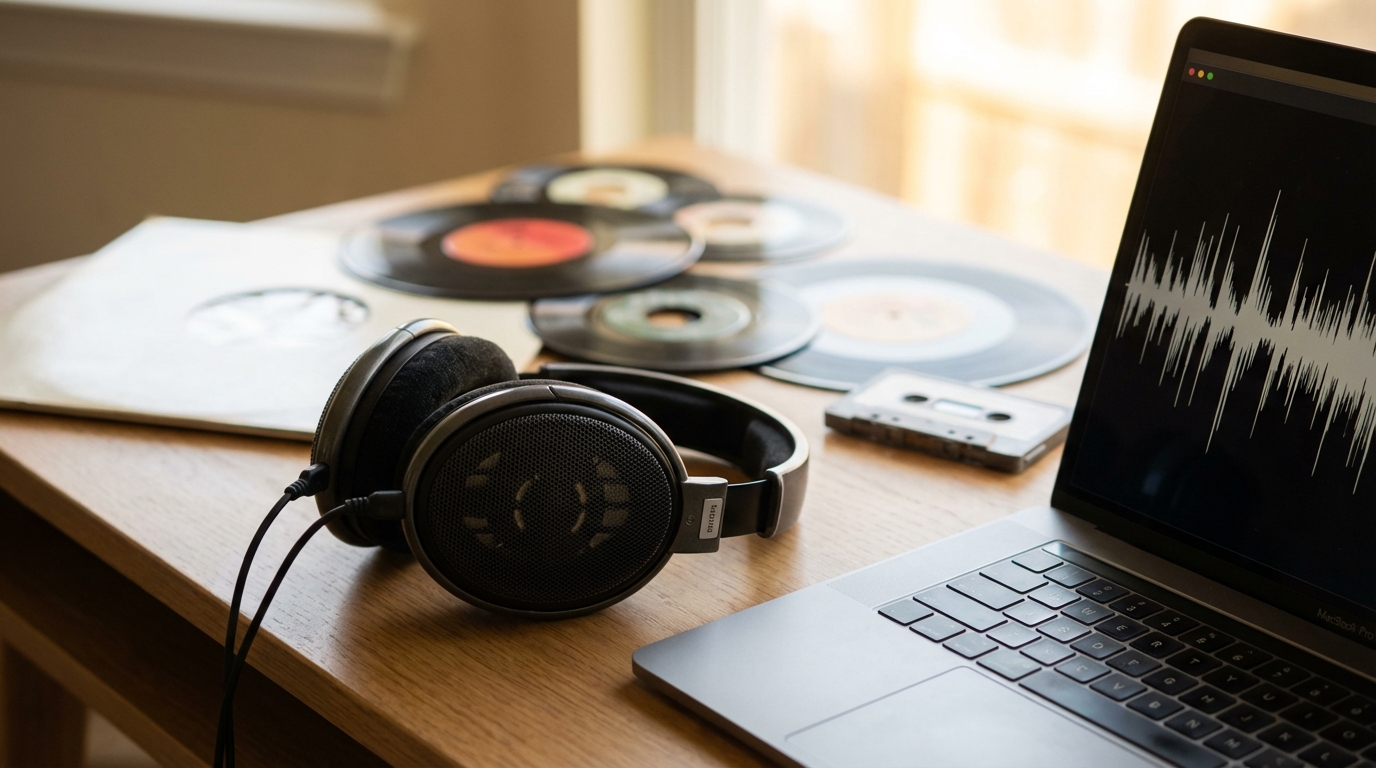
Audio compression is a term frequently encountered in discussions about music, often leading to confusion due to its dual meaning. It can refer to two entirely different processes that both significantly impact the perceived quality and characteristics of sound. Understanding these distinctions is crucial for anyone interested in how music is recorded, produced, distributed, and consumed.
This explanation will delve into both forms of audio compression: dynamic range compression and data compression. We will explore their underlying principles, the mechanisms by which they operate, and the specific ways each affects the sonic experience of music. By dissecting these processes, we aim to provide a clear understanding of their respective roles and consequences in the world of audio.
Understanding Audio Compression: Two Distinct Concepts
The term “audio compression” is a source of frequent misunderstanding because it refers to two fundamentally different operations:
- Dynamic Range Compression: This process modifies the loudness levels within an audio signal. Its goal is to reduce the difference between the loudest and quietest parts of a sound, making the overall signal more consistent in volume.
- Data Compression: This process reduces the file size of digital audio. It involves encoding the audio data more efficiently, which can be done either without losing any information (lossless) or by selectively discarding information deemed less important to human hearing (lossy).
While both affect how we experience music, their methods and primary objectives are distinct.
Dynamic Range Compression
Dynamic range compression is an integral part of audio production, used in virtually all stages from recording to mastering. Its primary function is to control the volume fluctuations in an audio signal, making it sound more cohesive and often louder.
The Mechanics of Dynamic Range Compression
A dynamic range compressor operates by reducing the gain (volume) of a signal once it exceeds a specific threshold. Key parameters govern its behavior:
- Threshold: The level at which the compressor begins to reduce gain. Signals below this threshold are unaffected.
- Ratio: Determines how much the signal is compressed once it crosses the threshold. For example, a 4:1 ratio means that for every 4 dB the input signal exceeds the threshold, the output signal will only increase by 1 dB.
- Attack Time: How quickly the compressor reacts and applies gain reduction after the signal exceeds the threshold.
- Release Time: How quickly the compressor stops reducing gain once the signal falls below the threshold.
- Make-up Gain: Since compression reduces the overall loudness of the peaks, make-up gain is often applied to compensate, bringing the average loudness back up.
Impact on Sonic Characteristics
The application of dynamic range compression profoundly alters the sonic characteristics of music:
- Reduced Dynamics: The most direct effect is a narrower dynamic range. The difference between the quietest and loudest moments becomes smaller. This can make music sound more “controlled” or “punchy,” but can also remove a sense of natural ebb and flow.
- Increased Perceived Loudness: By bringing up quieter sounds and taming louder ones, and then applying make-up gain, the overall perceived loudness of a track can be significantly increased without clipping. This is a common practice in modern music production aiming for louder masters.
- Loss of Impact and Energy: Excessive compression can flatten the transients (the initial, sharp attacks of sounds like drums or plucked strings), reducing their impact and making the music sound less lively or “smeared.”
- Fatigue: Music that is heavily compressed dynamically can sometimes lead to listener fatigue over longer periods, as the constant high loudness provides little dynamic contrast for the ear to rest.
- Pumping and Breathing: In extreme cases, the compressor’s gain reduction and release can become audible, creating undesirable “pumping” (the overall volume level audibly rising and falling with dominant sounds) or “breathing” (audible noise floor fluctuations) artifacts.
When used skillfully, dynamic range compression enhances clarity, consistency, and impact. When overused, it can strip music of its natural life and dynamic expression.
Data Compression: Reducing File Size
Data compression, in the context of audio, refers to techniques used to reduce the digital file size of audio recordings. This is essential for storage, streaming, and faster transmission of music over networks. There are two main categories: lossless and lossy.
Lossless Data Compression
Lossless compression algorithms reduce file size without discarding any of the original audio data. When a lossless file is decompressed, it is an exact, bit-for-bit replica of the original uncompressed audio file. The reduction in file size is achieved by identifying and encoding redundant information more efficiently, similar to how a ZIP file works for general data.
- How it Works: These algorithms look for repetitive patterns in the audio data and represent them with shorter codes. No information is removed; it is merely re-represented in a more compact form.
- Effect on Quality: Theoretically, there is no degradation in audio quality compared to the original uncompressed source. The decompressed audio is identical to the original.
- File Size: Lossless files are significantly smaller than uncompressed files (e.g., WAV or AIFF), often reducing them by 30-60%. However, they are still considerably larger than lossy compressed files.
Lossy Data Compression
Lossy compression techniques achieve much smaller file sizes by permanently discarding certain parts of the audio data. This is done based on psychoacoustic models, which exploit the limitations and characteristics of human hearing.
How Lossy Compression Works
Lossy codecs analyze the audio signal and identify information that is considered less perceptible to the human ear. This typically involves:
- Masking: Louder sounds can “mask” (hide) quieter sounds occurring at similar frequencies or immediately before/after. The masked sounds are then removed.
- Frequency Range Reduction: Information in very high or very low-frequency ranges, which some listeners may not perceive or are less sensitive to, might be reduced or removed.
- Stereo Redundancy: Identical information in both stereo channels can be encoded more efficiently (e.g., joint stereo).
The degree of data removal, and thus the file size and potential impact on quality, is determined by the bitrate.
Common Artifacts of Lossy Compression
While designed to be imperceptible, lossy compression can introduce artifacts, especially at lower bitrates or with complex audio material:
- Pre-echo/Post-echo: Audible “swish” or “ringing” sounds that occur before or after a sharp transient, particularly noticeable with percussive sounds.
- Spectral Holes/Loss of Detail: Certain frequencies or subtle details in the audio might be completely removed, leading to a less rich or “hollow” sound.
- “Underwater” Sound: At very low bitrates, the audio can lose clarity and presence, sounding muffled or distorted.
- Phase Distortion: Alterations to the phase relationships between frequencies can subtly change the sonic image or perceived spatial characteristics.
- Harshness/Fizziness: High frequencies might develop an unnatural, brittle, or “fizzy” quality.
These artifacts become more pronounced as the bitrate decreases, making the compression more aggressive.
The Role of Bitrate
Bitrate (measured in kilobits per second, kbps) dictates the amount of data used per second of audio. It is the primary factor determining the file size and the degree of perceived quality retention in lossy compression:
- Higher Bitrate: More data is retained, resulting in larger file sizes and generally fewer, less noticeable artifacts. Quality approaches that of the original source. Common high bitrates for lossy audio are 256 kbps or 320 kbps.
- Lower Bitrate: Less data is retained, leading to smaller file sizes but a greater likelihood of audible artifacts and a more noticeable departure from the original sound. Bitrates below 128 kbps are often associated with significant quality degradation.
- Constant Bitrate (CBR): Maintains a fixed bitrate throughout the file.
- Variable Bitrate (VBR): Adjusts the bitrate dynamically, allocating more data to complex sections of music and less to simpler ones. This often yields a smaller file size for comparable perceived quality to CBR.
The perception of quality loss is highly subjective and depends on factors like the listener’s hearing acuity, the playback equipment, the listening environment, and the complexity of the music itself. A highly compressed track might sound acceptable on basic earbuds but reveal its flaws on a high-fidelity sound system.
Interplay Between Compression Types
It’s important to recognize that dynamic range compression and data compression often interact within the production and distribution chain. Music is usually dynamically compressed during mixing and mastering long before it is data compressed for distribution (e.g., for streaming or digital downloads).
A track that has already undergone significant dynamic range compression—resulting in reduced peak-to-average ratios and increased overall loudness—may react differently to lossy data compression. With fewer dynamics for the psychoacoustic models to work with, some subtle details might already be minimized, potentially making certain lossy artifacts more or less noticeable depending on the specific codec and bitrate. Conversely, heavily dynamic material with sharp transients can be more challenging for lossy codecs to encode transparently without introducing artifacts.
Factors Influencing Perceived Quality
The perceived impact of audio compression on music quality is not solely determined by the technical specifications of the compression method. Several factors contribute to the overall listening experience:
- The Listener: Individual hearing capabilities, age, and listening experience play a significant role in discerning subtle differences.
- Playback System: High-fidelity headphones or speakers can reveal compression artifacts that might be imperceptible on casual playback devices.
- Listening Environment: A quiet, controlled environment allows for more critical listening than a noisy, distracting one.
- Music Genre and Complexity: Simpler music with fewer instruments and dynamics might tolerate more compression (both types) without obvious degradation, whereas complex, highly dynamic, or instrumentally rich music can be more susceptible to noticeable quality reduction.
- The Original Source Material: The quality of the original recording and mix before any compression is applied sets the absolute ceiling for potential sound quality.
Conclusion
Audio compression, in its dual forms, profoundly shapes how we experience recorded music. Dynamic range compression is a creative and technical tool that manipulates the loudness envelope of a sound, aiming to achieve consistency, impact, or a particular aesthetic. When judiciously applied, it can enhance music; when overused, it can diminish its natural vibrancy and cause listener fatigue.
Data compression, on the other hand, is a necessity in the digital age, enabling efficient storage and distribution of audio. Lossless data compression provides a perfect replica of the original audio at a reduced file size, while lossy data compression achieves significantly smaller files by strategically discarding perceptually less critical information. The trade-off with lossy compression lies in the potential introduction of subtle to overt artifacts, depending on the bitrate and complexity of the music.
Understanding these distinct processes allows for a more informed appreciation of the technical decisions made in music production and distribution. Ultimately, the “quality” of compressed audio is a complex interplay of technical parameters, artistic intent, and subjective human perception.
Frequently Asked Questions
What is the difference between dynamic range compression and data compression?
Dynamic range compression alters the loudness levels within an audio signal to reduce its dynamic range, making it more consistent in volume. Data compression, conversely, reduces the file size of digital audio, either losslessly (without losing any information) or lossy (by discarding perceptually less important information).
Does lossless data compression affect music quality?
No, lossless data compression (e.g., FLAC, ALAC) does not theoretically affect music quality. When a lossless file is decompressed, it is an exact, bit-for-bit identical copy of the original uncompressed audio file, meaning no audio information is lost.
What are common signs of excessive dynamic range compression?
Excessive dynamic range compression can lead to reduced impact of transients, a flattened or “brick-walled” sound, listener fatigue over time, and sometimes audible “pumping” or “breathing” artifacts where the volume noticeably fluctuates with the music.
Why do streaming services use lossy compression?
Streaming services primarily use lossy compression to reduce bandwidth requirements and storage space. Smaller file sizes allow for faster loading, smoother playback, and less data usage for the listener, making music more accessible to a wider audience with varying internet speeds.
Is higher bitrate always better for lossy audio?
Generally, a higher bitrate for lossy audio results in a larger file size but fewer noticeable compression artifacts and a closer approximation to the original audio quality. However, there reaches a point where further increases in bitrate become imperceptible to most listeners, especially depending on playback equipment and listening environment.

Diana Miller, is a dedicated nature enthusiast and an outdoor adventurer. She began leading groups for excursions in her teens and never stopped. Following her passion for nature, she gathers her friends for outdoor trips every now and then. And for the last 10 years, she has executed workshops on backpacking, snow kayaking and traveling that included her main motive of lightweight packing while outdoors. During leisure, she loves planning for her next adventure.