
In the dynamic world of road cycling, the battle against resistance is a constant pursuit of efficiency. While factors like power output, endurance, and strategy are widely discussed, one crucial element often dictates performance, especially at higher speeds: aerodynamics. Understanding how air interacts with a moving cyclist and their bicycle is not merely a concern for elite athletes; it offers valuable insights for any rider seeking to improve their speed, conserve energy, or simply gain a deeper appreciation for the physics of cycling.
This post delves into the fundamental principles of aerodynamics in road cycling, exploring the forces at play, the factors that influence them, and general strategies to minimize air resistance. By demystifying this complex topic, we aim to provide a clearer picture of why shape, position, and specific design considerations are paramount in the quest for an efficient ride.
The Fundamentals of Aerodynamics in Cycling
Aerodynamics is the study of how air flows around moving objects. In cycling, it specifically examines the forces generated by the interaction between the cyclist and the surrounding air. As a cyclist moves forward, they displace air, and this displacement creates resistance, commonly known as aerodynamic drag.
The primary force resisting a cyclist’s forward motion, particularly at speeds exceeding approximately 20 km/h, is aerodynamic drag. At lower speeds, rolling resistance and mechanical friction might be more dominant, but as velocity increases, drag quickly becomes the most significant hurdle. This resistance requires the rider to expend more energy to maintain a given speed or to accelerate.
Types of Aerodynamic Drag
Aerodynamic drag is not a singular force but a composite of several components, each contributing to the overall resistance experienced by the cyclist. Understanding these different types provides a more nuanced view of how drag can be minimized.
Form Drag (Pressure Drag)
- **Definition:** This is the most significant component of drag for a cyclist. It arises from the pressure difference created as air flows around an object. Air pushes against the front of the cyclist (high pressure zone) and pulls from behind (low pressure zone due to turbulence and flow separation).
- **Impact in Cycling:** Form drag is primarily determined by the frontal area and the shape of the object. A larger frontal area, such as a cyclist sitting upright, presents more surface for the air to push against, creating greater pressure differences and therefore more drag. Objects with blunt or irregular shapes tend to create more turbulence and larger low-pressure wakes behind them.
- **Reduction Strategy:** Streamlining, which involves shaping objects to encourage smooth airflow and minimize turbulence in the wake, is the main method to reduce form drag.
Skin Friction Drag
- **Definition:** Skin friction drag occurs due to the viscosity of the air rubbing against the surface of the moving object. It’s the resistance caused by the friction between the layers of air near the surface and the surface itself.
- **Impact in Cycling:** While generally less significant than form drag for a cyclist, skin friction drag is still present. It’s influenced by the smoothness of the surfaces (e.g., clothing, frame materials) and the extent of the wetted surface area.
- **Reduction Strategy:** Super-smooth surfaces or, conversely, strategically textured surfaces (like dimples) can sometimes manipulate the boundary layer of air, delaying flow separation and indirectly reducing overall drag by influencing form drag. Form-fitting, smooth fabrics also play a role.
Interference Drag
- **Definition:** Interference drag arises when the airflow around different parts of an object (or multiple objects in close proximity) interacts in a detrimental way, creating additional turbulence and increasing overall drag beyond the sum of the individual parts’ drag.
- **Impact in Cycling:** In cycling, this can occur where the airflow around the rider’s legs interacts with the airflow around the bicycle frame, or where components are poorly integrated, leading to eddies and disrupted flow patterns.
- **Reduction Strategy:** Careful design and integration of bicycle components, as well as considering the rider’s position in relation to the bike, can help mitigate interference drag.
Key Factors Influencing Aerodynamic Drag in Cycling
Several variables contribute to the magnitude of aerodynamic drag experienced by a cyclist. Recognizing these factors allows for a more holistic approach to improving efficiency.
Rider Position and Body Shape
The cyclist’s body accounts for a substantial majority (often 70-80%) of the total aerodynamic drag. Consequently, the rider’s position and shape are the most influential factors. A lower, more compact, and narrower position significantly reduces frontal area and promotes smoother airflow over the body.
- **Frontal Area Reduction:** Tucking elbows in, lowering the head, flattening the back, and adopting a general “aero” posture minimizes the cross-sectional area presented to the wind.
- **Flow Management:** A streamlined body shape allows air to flow around the rider with less turbulence, reducing the low-pressure wake behind them.
Frontal Area
This is the cross-sectional area of the rider and bike when viewed from the front. It is directly proportional to drag. A larger frontal area means more air needs to be pushed aside, resulting in greater resistance. Rider height, width, and bike setup all contribute to this dimension.
Air Density
The density of the air through which the cyclist is moving has a direct impact on drag. Denser air offers more resistance. Air density is influenced by:
- **Temperature:** Colder air is denser than warmer air.
- **Altitude:** Air is less dense at higher altitudes.
- **Humidity:** Humid air is slightly less dense than dry air at the same temperature and pressure.
Speed
The relationship between speed and aerodynamic drag is critical: drag increases with the square of the velocity. This means if a cyclist doubles their speed, the aerodynamic drag they experience quadruples. This exponential relationship highlights why aerodynamics becomes increasingly dominant at higher speeds and why small aerodynamic improvements yield significant benefits in terms of power savings or speed gains.
Surface Roughness and Flow Separation
The texture of surfaces (e.g., clothing, helmet, frame) can influence how the air flows over them. In some cases, a slightly textured surface can trip the boundary layer (the thin layer of air closest to the object’s surface) from laminar (smooth) to turbulent flow. Paradoxically, a turbulent boundary layer can sometimes be beneficial as it tends to cling to the surface longer, delaying flow separation and thus reducing the size of the turbulent wake and the associated form drag.
Minimizing Aerodynamic Drag
Optimizing for aerodynamics involves a combination of rider adjustments and considered equipment choices. It’s about achieving a harmonious balance between efficiency, comfort, and control.
Rider Optimization
The most impactful and often most accessible way to reduce drag is through adjustments to the rider’s body position.
- **Low and Compact Position:** Aim for a low torso angle, bringing the head down in line with the back, and tucking the elbows in to narrow the profile.
- **Consistent Positioning:** Maintaining a stable and repeatable aerodynamic position over time is important for sustained efficiency.
- **Form-Fitting Apparel:** Wearing snug, unwrinkled clothing reduces skin friction drag and prevents fabric from flapping, which can create additional turbulence.
Bicycle Component Considerations
While the rider is the largest factor, various bicycle components are designed with aerodynamic principles in mind to complement the rider’s efforts.
- **Frame Shapes:** Bicycle frames often feature aerofoil tube shapes (like a wing profile) to cut through the air more efficiently.
- **Wheel Design:** Wheels with deeper rims and fewer, bladed spokes are designed to reduce turbulence and maintain smooth airflow.
- **Integrated Components:** Components such as handlebars, seatposts, and even brakes can be designed to integrate seamlessly, reducing their individual drag and minimizing interference drag.
- **Aerodynamic Helmets:** Helmets with smooth, elongated shapes are designed to guide air efficiently over the rider’s head and shoulders.
Testing and Measurement
For those deeply committed to aerodynamic optimization, various methods exist to quantify drag and test the effectiveness of different setups. These methods include:
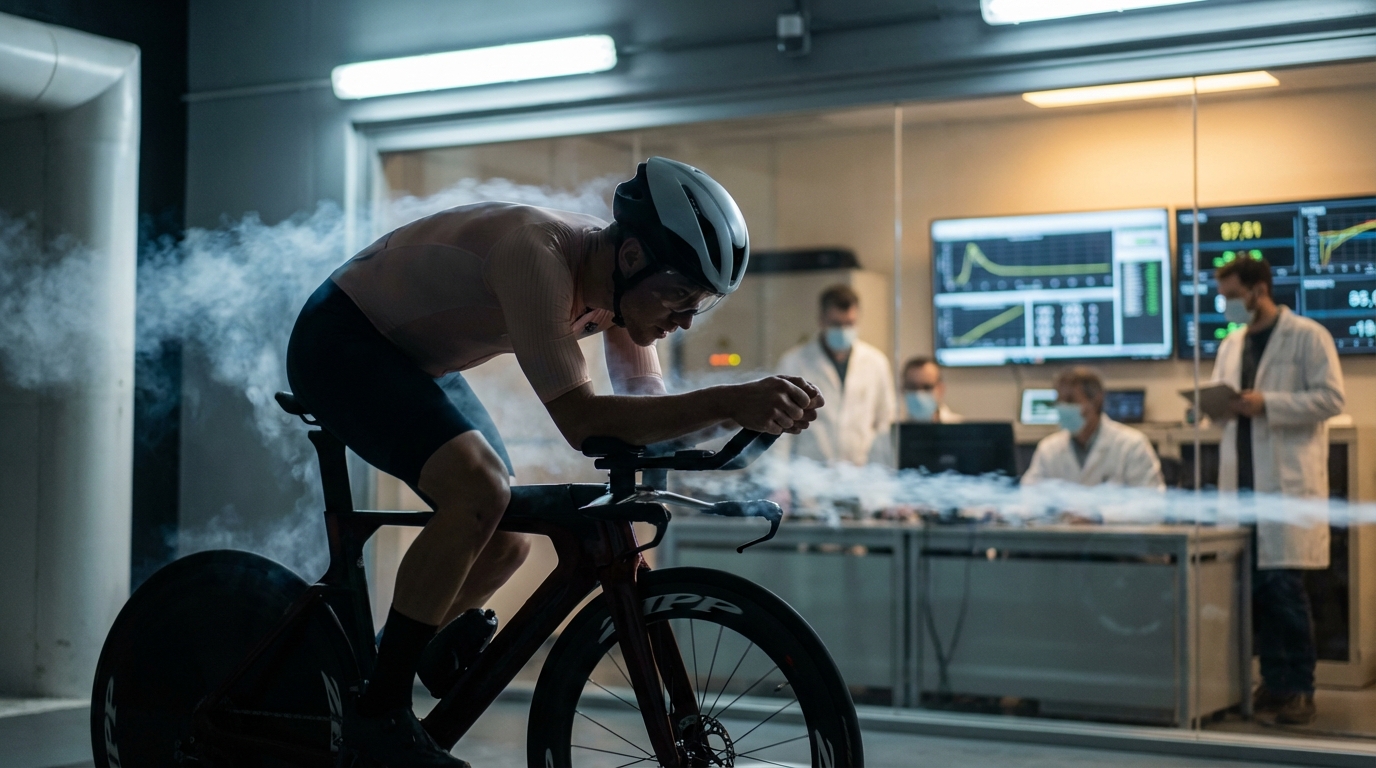
- **Wind Tunnel Testing:** A controlled environment where airflow can be precisely manipulated and forces measured.
- **Computational Fluid Dynamics (CFD):** Computer simulations that model airflow and pressure distributions around complex shapes.
- **Field Testing:** Using power meters and controlled outdoor environments to compare power output required for specific speeds with different setups.
Conclusion
Aerodynamics is a multifaceted and continuously evolving field within road cycling, holding significant sway over a rider’s speed and energy expenditure. From the fundamental types of drag to the critical factors influencing them, a comprehensive understanding empowers cyclists to make informed decisions. While the principles may seem complex, the underlying goal is simple: to slice through the air with the least possible resistance.
Whether it’s adopting a more streamlined riding position, choosing specific apparel, or considering the design of bicycle components, every small optimization contributes to a more efficient ride. By acknowledging the omnipresent force of air resistance, cyclists can unlock greater performance, conserve precious energy, and enhance their overall experience on the road.
Frequently Asked Questions
Q1: Why is aerodynamics so important in cycling?
A1: Aerodynamics is crucial because, at speeds commonly achieved in road cycling (above approximately 20 km/h), air resistance becomes the largest force a cyclist must overcome. Minimizing this resistance means a rider needs to expend less power to maintain a given speed, allowing for faster rides or greater energy conservation over distance.
Q2: What is the single biggest factor influencing aerodynamic drag for a cyclist?
A2: The rider’s body position and shape are by far the most significant factors influencing aerodynamic drag. The human body presents a relatively large, non-aerodynamic shape to the wind, accounting for 70-80% of total drag. Modifying posture to be lower, narrower, and more compact can yield substantial reductions in resistance.
Q3: Does clothing make a significant difference to aerodynamic performance?
A3: Yes, clothing can make a noticeable difference. Loose-fitting or baggy clothing can flap and create significant turbulence and drag. Form-fitting, smooth, and sometimes strategically textured fabrics are designed to minimize skin friction drag and promote smoother airflow over the body, contributing to overall aerodynamic efficiency.
Q4: How does speed affect aerodynamic drag?
A4: Aerodynamic drag increases exponentially with speed, specifically with the square of the velocity. This means that if you double your speed, the aerodynamic drag you experience will quadruple. This relationship underscores why aerodynamics becomes increasingly critical at higher speeds, as the power required to overcome air resistance rises sharply.
Q5: Is aerodynamics only relevant for professional cyclists?
A5: While professional cyclists meticulously optimize aerodynamics for competitive advantage, the principles are relevant for all riders. Any cyclist seeking to increase their speed, improve efficiency, or reduce effort will benefit from an understanding of aerodynamics. Even small adjustments to position or equipment can make a difference, particularly on longer rides or at moderate to high speeds.
“`
Diana Miller, is a dedicated nature enthusiast and an outdoor adventurer. She began leading groups for excursions in her teens and never stopped. Following her passion for nature, she gathers her friends for outdoor trips every now and then. And for the last 10 years, she has executed workshops on backpacking, snow kayaking and traveling that included her main motive of lightweight packing while outdoors. During leisure, she loves planning for her next adventure.