
Understanding Vehicle Dynamics in Challenging Weather Conditions
Operating a vehicle involves navigating a complex interaction between its mechanical systems, the road surface, and environmental factors. Among these, weather conditions play a profoundly significant role in altering how a vehicle responds to driver inputs. From the subtle shifts in grip caused by a light drizzle to the dramatic reduction in control experienced on ice, understanding these influences is not just theoretical knowledge; it is fundamental to safe and efficient driving. This post explores the various ways different weather phenomena impact vehicle handling, detailing the physical principles at play and the implications for drivers.
The Physics of Traction and Adhesion
At the core of vehicle handling is the concept of traction—the friction between a vehicle’s tires and the road surface. This friction is what allows a vehicle to accelerate, brake, and change direction. When weather introduces elements like water, snow, or ice, it significantly reduces this critical friction coefficient. The amount of force a tire can transmit to the road before losing grip is directly proportional to this coefficient, meaning a reduction in friction translates directly to a reduction in control authority.
- Coefficient of Friction: This dimensionless quantity represents the ratio of the force of friction between two surfaces in contact to the normal force pressing them together. Dry asphalt offers a high coefficient of friction, while wet or icy surfaces drastically reduce it.
- Slip Angle: Tires operate by deforming slightly and “slipping” a small amount to generate cornering forces. Adverse weather conditions can cause this slip to increase uncontrollably, leading to a loss of steering response.
- Weight Transfer: During acceleration, braking, and cornering, weight shifts between the wheels. This dynamic weight distribution affects the grip available at each tire. In slippery conditions, managing weight transfer becomes even more critical to prevent traction loss.
Impact of Precipitation: Rain
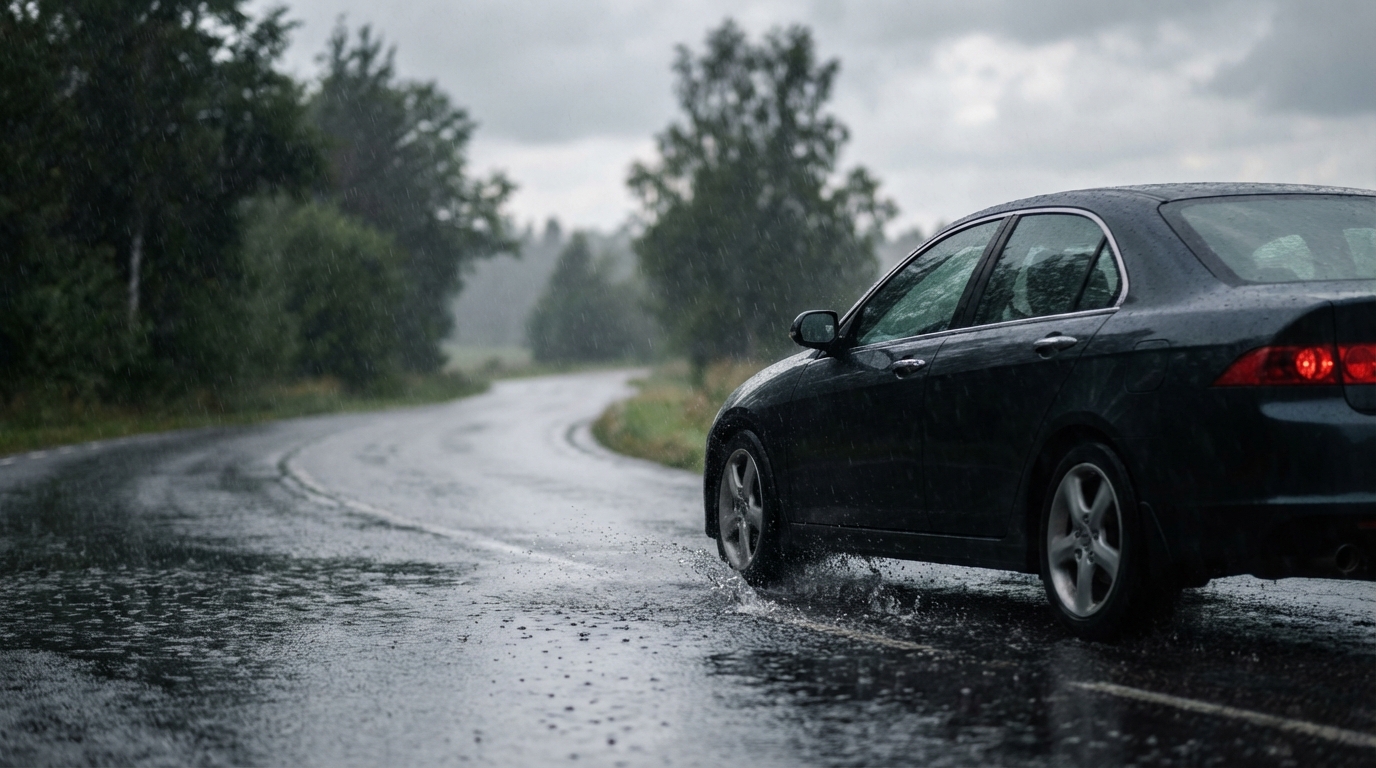
Rain is a common weather condition that immediately alters road surface characteristics and visibility. Even a light rain can be particularly hazardous after a dry spell, as it mixes with accumulated oil and dust to create a slick film.
Reduced Tire Grip and Hydroplaning
Water on the road acts as a lubricant, separating the tire from the road surface. The most dramatic manifestation of this is hydroplaning (or aquaplaning).
- Mechanism: When a tire encounters more water than its tread can displace, a wedge of water builds up under the tire. This lifts the tire off the road surface, causing a complete loss of traction.
- Factors: Hydroplaning risk increases with vehicle speed, tire wear (shallow tread depth reduces water displacement capability), tire under-inflation, and the depth of standing water.
- Handling Implications: During hydroplaning, steering becomes unresponsive, braking effectiveness is severely diminished, and the vehicle may skid uncontrollably.
Visibility and Braking Distance
Rain also impairs visibility, making it harder to perceive hazards and judge distances. Wet roads increase braking distances because of reduced friction. A typical increase can be 2 to 4 times that of dry conditions, depending on the severity of the rain and road surface.
Snow and Ice: Extreme Traction Loss
Snow and ice represent some of the most challenging conditions for vehicle handling, offering significantly lower coefficients of friction than even wet roads.
Snow-Covered Surfaces
Fresh snow can offer some traction, especially for tires with appropriate tread patterns, as the snow can be compressed and provide a degree of grip. However, packed snow becomes much slicker, reducing traction for acceleration, braking, and steering.
- Control Loss: Over-acceleration can lead to wheelspin, over-braking to locking wheels, and sudden steering inputs to skidding.
- Accumulation: Snow accumulation can also reduce ground clearance, affecting steering and suspension components, particularly in deeper snow.
Ice and Black Ice
Ice offers the lowest friction coefficient of common road conditions, making vehicle control exceptionally difficult. Black ice is particularly perilous because it is a thin, transparent layer of ice that is often invisible, blending with the dark color of the pavement.
- Reduced Friction: Even slight inputs to the steering, accelerator, or brakes can cause a complete loss of traction on ice.
- Unpredictability: Black ice often forms in shaded areas, on bridges, and overpasses, which freeze faster than open road surfaces, catching drivers by surprise.
Wind: Lateral Forces and Stability
Strong winds, especially crosswinds, introduce lateral forces on a vehicle, which can significantly affect its stability and handling.
Side Forces and Steering Compensation
Wind pressure exerts a force against the side of the vehicle, pushing it sideways. This requires constant steering input to maintain a straight path.
- Effect on High-Sided Vehicles: Vehicles with large side profiles, such as vans, SUVs, and particularly large trucks, are much more susceptible to being pushed by wind gusts.
- Sudden Gusts: Wind effects can be exacerbated when emerging from sheltered areas (e.g., from behind buildings or passing large vehicles) onto open stretches, or when crossing bridges, leading to sudden, unexpected shifts in vehicle position.
Impact on Aerodynamics
While designed for specific aerodynamic performance, strong winds can disrupt a vehicle’s intended airflow, potentially altering downforce or lift characteristics, though this is less common for typical road vehicles than for racing cars.
Fog and Sun Glare: Visibility Challenges
While not directly affecting tire-to-road friction, fog and sun glare severely impair a driver’s ability to perceive their surroundings, making precise vehicle control and hazard avoidance significantly more difficult.
Fog: Obscured Vision and Depth Perception
Fog consists of tiny water droplets suspended in the air, scattering light and drastically reducing visibility. This makes it challenging to judge distances, speeds of other vehicles, and the curvature of the road.
- Headlight Glare: High beams are ineffective in fog as they reflect off the water droplets, creating glare and worsening visibility. Low beams or dedicated fog lights (which project a wider, lower beam) are more appropriate.
- Slower Reaction Times: Reduced visibility inherently increases reaction times to unexpected events, demanding a reduction in speed and increased following distances.
Sun Glare: Temporary Blindness
Low-angle sun, particularly around sunrise or sunset, can create intense glare that temporarily blinds a driver. This glare can obscure obstacles, traffic signals, and other vehicles, making it difficult to maintain lane position or react to changing traffic conditions.
Extreme Heat: Tire and Engine Stress
While often overlooked in discussions about handling, extreme heat can also impact a vehicle’s performance and handling characteristics, primarily through its effect on tires and the engine.
- Tire Pressure: Heat causes air inside tires to expand, increasing tire pressure. While slightly higher pressure can improve handling response, excessive pressure reduces the tire’s contact patch with the road, potentially decreasing grip and accelerating wear. Conversely, tires can lose pressure quickly in extreme heat if not properly maintained, leading to soft tires and compromised handling.
- Tire Degradation: Sustained driving on hot surfaces can accelerate tire wear and increase the risk of blowouts, which can lead to sudden loss of control.
- Engine Performance: Overheating engines can lead to power loss, affecting a vehicle’s ability to accelerate or maintain speed, indirectly influencing handling in demanding situations.
Conclusion
Vehicle handling is a dynamic interplay of engineering and environmental conditions. Weather, whether in the form of rain, snow, ice, wind, fog, or extreme heat, fundamentally alters the forces and grip available at the tire-road interface. Understanding these effects—from the reduced friction of a wet road to the lateral push of strong winds—is not merely about caution; it is about recognizing the physical limitations imposed on a vehicle and adapting driving techniques accordingly. By acknowledging how different weather conditions affect traction, stability, and visibility, drivers can make informed decisions that enhance safety and maintain control, even when nature presents its challenges.
Frequently Asked Questions (FAQs)
Q1: What exactly is hydroplaning and how does it occur?
A1: Hydroplaning, or aquaplaning, occurs when a layer of water builds up between a vehicle’s tires and the road surface, causing the tires to lose contact with the road. This happens when the tires cannot displace water quickly enough due to factors like high speed, worn tread, or deep standing water, leading to a complete loss of traction for steering, braking, and acceleration.
Q2: How does strong wind typically affect vehicle handling?
A2: Strong winds, particularly crosswinds, exert lateral forces on a vehicle, pushing it sideways. This requires the driver to apply continuous steering adjustments to maintain a straight path. Vehicles with larger side profiles, such as vans or SUVs, are more susceptible to these forces, and sudden gusts can cause abrupt shifts in vehicle position, especially when emerging from sheltered areas or crossing bridges.
Q3: Why is black ice considered particularly dangerous for drivers?
A3: Black ice is exceptionally dangerous because it is a thin, transparent layer of ice that forms on the road surface, making it nearly invisible to the driver. It blends in with the dark color of the pavement, often catching drivers by surprise. Due to its extremely low coefficient of friction, even slight inputs to steering, acceleration, or braking can lead to an immediate and complete loss of control.
Q4: How does fog impair driving and what are the main challenges it presents?
A4: Fog significantly impairs driving by drastically reducing visibility and distorting depth perception. The tiny water droplets in the air scatter light, making it difficult to see other vehicles, road markings, and hazards. This reduced visibility makes it challenging to judge distances and speeds accurately, leading to increased reaction times and a higher risk of collisions.
Q5: Can extreme heat affect a vehicle’s handling?
A5: Yes, extreme heat can affect a vehicle’s handling, primarily through its impact on tires. High temperatures can cause the air inside tires to expand, increasing tire pressure beyond optimal levels, which can reduce the tire’s contact patch with the road and potentially decrease grip. Prolonged exposure to heat can also accelerate tire degradation and increase the risk of blowouts, leading to sudden control loss.

Diana Miller, is a dedicated nature enthusiast and an outdoor adventurer. She began leading groups for excursions in her teens and never stopped. Following her passion for nature, she gathers her friends for outdoor trips every now and then. And for the last 10 years, she has executed workshops on backpacking, snow kayaking and traveling that included her main motive of lightweight packing while outdoors. During leisure, she loves planning for her next adventure.