
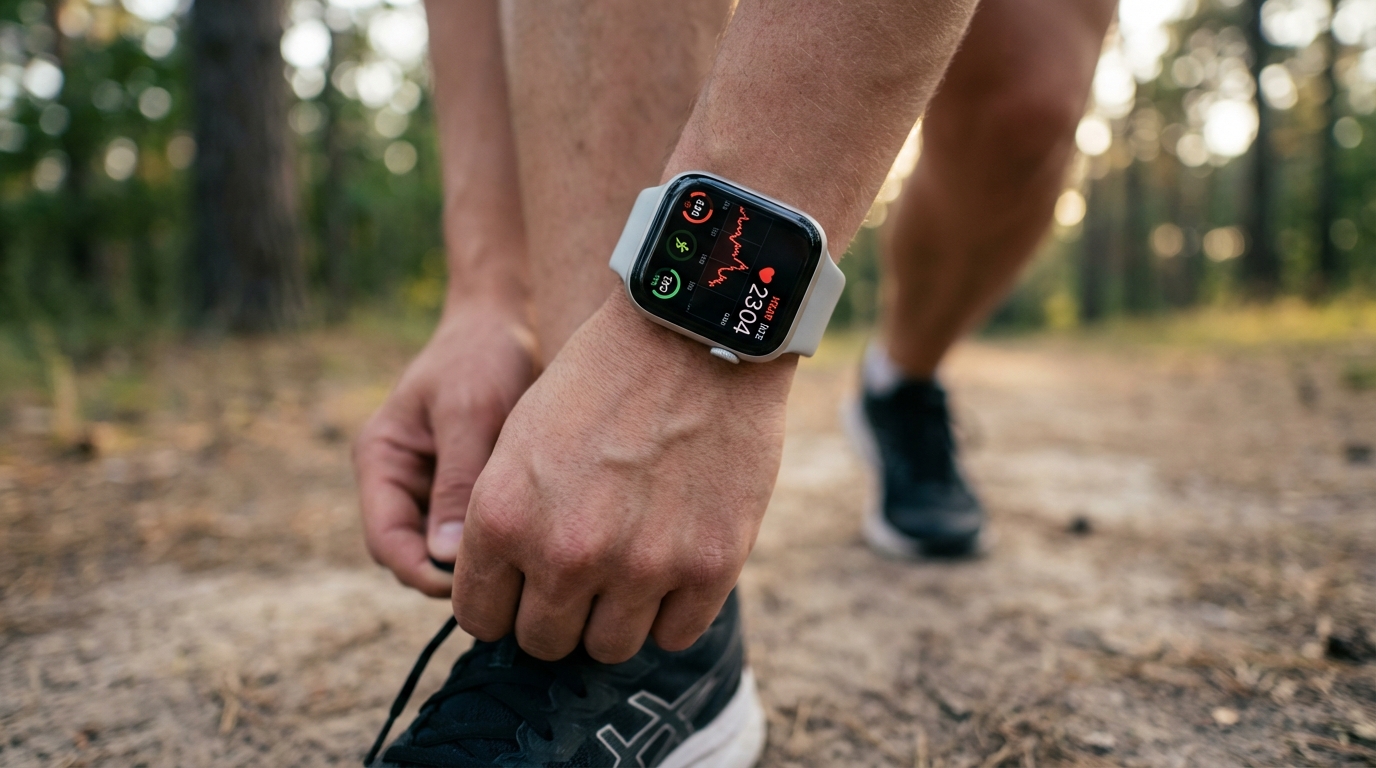
The ubiquity of wearable technology has transformed how individuals monitor their health and fitness. From monitoring daily steps to tracking intricate sleep patterns, these compact devices have become instrumental tools for self-awareness and motivational support. While their convenience is apparent, a deeper understanding of the sophisticated technology and algorithms behind their operation reveals the precision with which they capture and interpret our physical movements and physiological responses. This exploration delves into the core principles and advanced techniques that enable wearables to track physical activity with remarkable accuracy.
The Foundational Sensors: Accelerometers and Gyroscopes
At the heart of virtually every activity tracker lies a combination of micro-electromechanical systems (MEMS) sensors. These tiny yet powerful components are responsible for detecting the nuances of human movement.
Accelerometers
An accelerometer is a sensor that measures non-gravitational acceleration. In wearables, these typically measure acceleration along three orthogonal axes (X, Y, and Z). When you move, the internal components of the accelerometer shift, generating an electrical signal proportional to the acceleration. This raw data forms the basis for understanding movement:
- Movement Detection: It can detect sudden changes in speed or direction.
- Orientation: By measuring static acceleration (gravity), it can determine the device’s orientation relative to the ground.
- Vibration and Shaking: Repetitive movements, like walking or running, create characteristic patterns of acceleration and deceleration.
Gyroscopes
Complementing accelerometers, gyroscopes measure angular velocity or the rate of rotation around an axis. While an accelerometer tells you how fast you’re speeding up or slowing down, a gyroscope tells you how fast you’re turning or rotating. This is crucial for distinguishing between various movements and understanding orientation in a more dynamic context:
- Rotation Detection: Identifies turns, twists, and swings of the wrist or body.
- Orientation Refinement: When combined with accelerometer data, it provides more stable and accurate information about the device’s orientation, even during rapid movement.
Together, accelerometers and gyroscopes provide a comprehensive picture of motion in three-dimensional space. The data from these sensors is continuously sampled, often hundreds of times per second, creating a rich stream of information about the wearer’s activity.
Interpreting Movement Data
Raw sensor data, while detailed, is not directly useful to the user. Sophisticated algorithms are employed to transform this data into understandable metrics like steps, distance, and calories burned.
From Raw Data to Meaningful Metrics
The transition from raw sensor output to actionable insights involves several stages of data processing:
- Signal Filtering: Initial data is often noisy due to minor tremors, device vibrations, or erratic movements. Digital filters are applied to smooth the signal and isolate relevant movement patterns.
- Feature Extraction: Algorithms identify specific characteristics within the filtered data, such as peaks and troughs in acceleration unique to a step, or recurring patterns indicative of a particular activity.
- Activity Recognition: Machine learning models, trained on vast datasets of human movement, classify these patterns into distinct activities (e.g., walking, running, cycling, standing, sitting). These models learn to recognize the unique ‘signature’ of each activity.
Steps and Distance
Step counting is a fundamental function of most wearables. It primarily relies on accelerometer data:
- Step Detection: Algorithms detect the cyclical acceleration patterns associated with each footfall. A peak in vertical acceleration, followed by a valley, often signifies a single step. The sensitivity and threshold for detecting these peaks are carefully calibrated.
- Distance Estimation: Once steps are counted, distance is estimated by multiplying the step count by an average stride length. This stride length is often derived from user-provided data (like height and gender) or dynamically calculated by the device during continuous activity, especially if GPS data is available to calibrate against.
Factors like arm swing, walking surface, and individual gait variations can influence accuracy, but advanced algorithms continuously refine these estimations.
Calories Burned
Estimating energy expenditure (calories burned) is a complex calculation that relies on several inputs:
- Metabolic Equivalent of Task (METs): Activities are assigned MET values, which represent the ratio of the metabolic rate during a specific physical activity to a reference metabolic rate. For instance, walking at a moderate pace might have a MET value of 3.0, meaning it expends three times the energy of sitting quietly.
- User Profile: Information such as age, weight, height, and gender are crucial for calculating basal metabolic rate (BMR) and individual energy expenditure, as metabolic rates vary significantly between individuals.
- Activity Intensity and Duration: The recognized activity, its duration, and its intensity (often inferred from heart rate data or acceleration magnitude) are fed into established formulas (e.g., the Mifflin-St Jeor equation for BMR, combined with activity factors).
The combination of these data points allows the wearable to provide a personalized, albeit estimated, calculation of calories expended throughout the day.
Heart Rate Monitoring
Beyond movement, tracking heart rate provides invaluable insights into exertion levels, recovery, and overall cardiovascular health.
Optical Heart Rate (Photoplethysmography – PPG)
Most wearables utilize optical heart rate sensors, specifically photoplethysmography (PPG). This technology works by detecting changes in blood volume under the skin:
- Light Emission: Green LEDs emit light into the skin. Green light is absorbed by red blood cells and reflected by other tissues.
- Light Detection: Photodiodes measure the amount of light reflected back.
- Blood Flow Detection: As the heart pumps blood, there is a momentary increase in blood volume in the capillaries under the skin, which absorbs more green light. Between heartbeats, blood volume decreases, and less light is absorbed. This rhythmic change in light absorption corresponds directly to the heartbeat.
By detecting these subtle pulsations, the device can accurately count heartbeats per minute.
Factors Affecting Accuracy
While PPG is effective, several factors can influence its accuracy:
- Skin Contact: A snug but comfortable fit is crucial for the sensor to maintain consistent contact with the skin. Loose fit allows ambient light to interfere and causes motion artifacts.
- Motion Artifacts: During vigorous movement, the device can shift on the wrist, causing noise in the signal that can be misinterpreted as heartbeats. Advanced algorithms are designed to filter out these artifacts.
- Skin Tone and Tattoos: Darker skin tones and tattoos can sometimes absorb more green light, making it harder for the sensor to detect changes. Some devices use multiple wavelengths of light or more powerful LEDs to mitigate this.
- Temperature and Blood Flow: Cold weather can restrict blood flow to the extremities, potentially affecting signal quality.
Advanced Metrics and Integrated Data
Modern wearables go beyond basic activity tracking by integrating multiple sensors and employing sophisticated data analysis techniques to provide a holistic view of health.
Sleep Tracking
Sleep monitoring leverages accelerometer data and heart rate information to infer sleep stages:
- Movement Patterns: Lack of movement, combined with slow, steady heart rates, indicates periods of rest. Changes in movement can signal restlessness or waking.
- Heart Rate Variability (HRV): The subtle variations in the time between heartbeats can provide clues about the body’s nervous system activity, which correlates with different sleep stages (light, deep, REM).
While not clinical-grade, these insights offer valuable trends about sleep duration, quality, and disturbances.
GPS and Location Tracking
For outdoor activities, Global Positioning System (GPS) integration significantly enhances accuracy:
- Distance and Pace: GPS provides highly accurate real-time distance and pace data, overcoming the limitations of stride length estimation.
- Route Mapping: It logs the exact route taken, allowing users to review their path and elevation changes post-activity.
- Assisted GPS (A-GPS): Many devices use A-GPS, which leverages cellular network data to get a faster initial GPS lock-on.
Barometric Altimeters
A barometric altimeter measures atmospheric pressure. Since pressure changes with elevation, this sensor can precisely track:
- Elevation Gain/Loss: Accurately counting floors climbed or descended.
- Altitude During Activities: Providing precise altitude data during hikes, runs, or cycling.
Data Fusion and Machine Learning
The true power of modern wearables lies in their ability to fuse data from all these diverse sensors. Machine learning algorithms play a pivotal role in this process:
- Contextual Understanding: By analyzing combined data (e.g., high acceleration + high heart rate + GPS movement = running), algorithms gain a more accurate understanding of the user’s activity and context.
- Noise Reduction and Accuracy Improvement: Machine learning models are trained to identify and filter out sensor noise and to correct for potential inaccuracies by cross-referencing data points.
- Personalization: Over time, devices can learn individual gait patterns, heart rate responses, and activity habits, leading to increasingly personalized and accurate insights.
Conclusion
The accuracy of physical activity tracking in wearables is not a result of a single sensor but rather a complex interplay of sophisticated hardware and intelligent software. Accelerometers and gyroscopes capture the essence of movement, while optical heart rate sensors monitor physiological responses. GPS and barometric altimeters add crucial environmental context, and the entire system is orchestrated by advanced algorithms and machine learning models that interpret, filter, and fuse this rich stream of data. This ongoing technological evolution ensures that wearables continue to provide increasingly reliable and valuable information, empowering individuals to better understand and manage their physical well-being.
Frequently Asked Questions (FAQs)
How do wearables distinguish between different activities like walking and running?
Wearables analyze the distinct patterns of acceleration and angular velocity generated by different movements. Running, for example, produces higher frequency and amplitude in accelerometer data compared to walking, along with a more pronounced swinging motion detected by the gyroscope. Machine learning algorithms are trained to recognize these unique “signatures” and classify the activity accordingly, often also considering the intensity derived from heart rate.
Why can heart rate readings sometimes seem inaccurate?
Optical heart rate sensors can be affected by several factors. Motion artifacts, caused by the device shifting on the wrist during intense exercise, are a common issue. Poor skin contact, excessive ambient light, skin tone, tattoos, and rapid changes in activity intensity can also influence readings. Algorithms work to filter out noise, but a snug fit and steady movement help ensure the most accurate data.
Do wearables really track sleep stages accurately?
Wearables estimate sleep stages (light, deep, REM, awake) by analyzing movement patterns from accelerometers and heart rate variability (HRV). While they can provide valuable insights into sleep duration and disturbances, they do not offer clinical-grade accuracy comparable to polysomnography (a medical sleep study that measures brain waves). They are generally good at identifying overall sleep architecture and trends but should be seen as a tool for personal insight rather than medical diagnosis.
How do wearables estimate calories burned?
Calorie expenditure is estimated by combining several data points: the type of activity detected (from movement sensors), its duration, its intensity (inferred from heart rate and movement magnitude), and the user’s personal profile (age, weight, height, gender). These inputs are fed into established metabolic equations and Metabolic Equivalent of Task (MET) values to provide a personalized calculation of energy expended.
What factors can influence the accuracy of step counts?
Several factors can affect step count accuracy. Exaggerated arm swings without actual steps, carrying objects, walking on uneven or soft surfaces, and very short, shuffling movements may lead to miscounts. Placing the device in unconventional positions (e.g., in a pocket rather than on the wrist) can also impact accuracy as the algorithms are optimized for specific placement and associated movement patterns.

Diana Miller, is a dedicated nature enthusiast and an outdoor adventurer. She began leading groups for excursions in her teens and never stopped. Following her passion for nature, she gathers her friends for outdoor trips every now and then. And for the last 10 years, she has executed workshops on backpacking, snow kayaking and traveling that included her main motive of lightweight packing while outdoors. During leisure, she loves planning for her next adventure.