
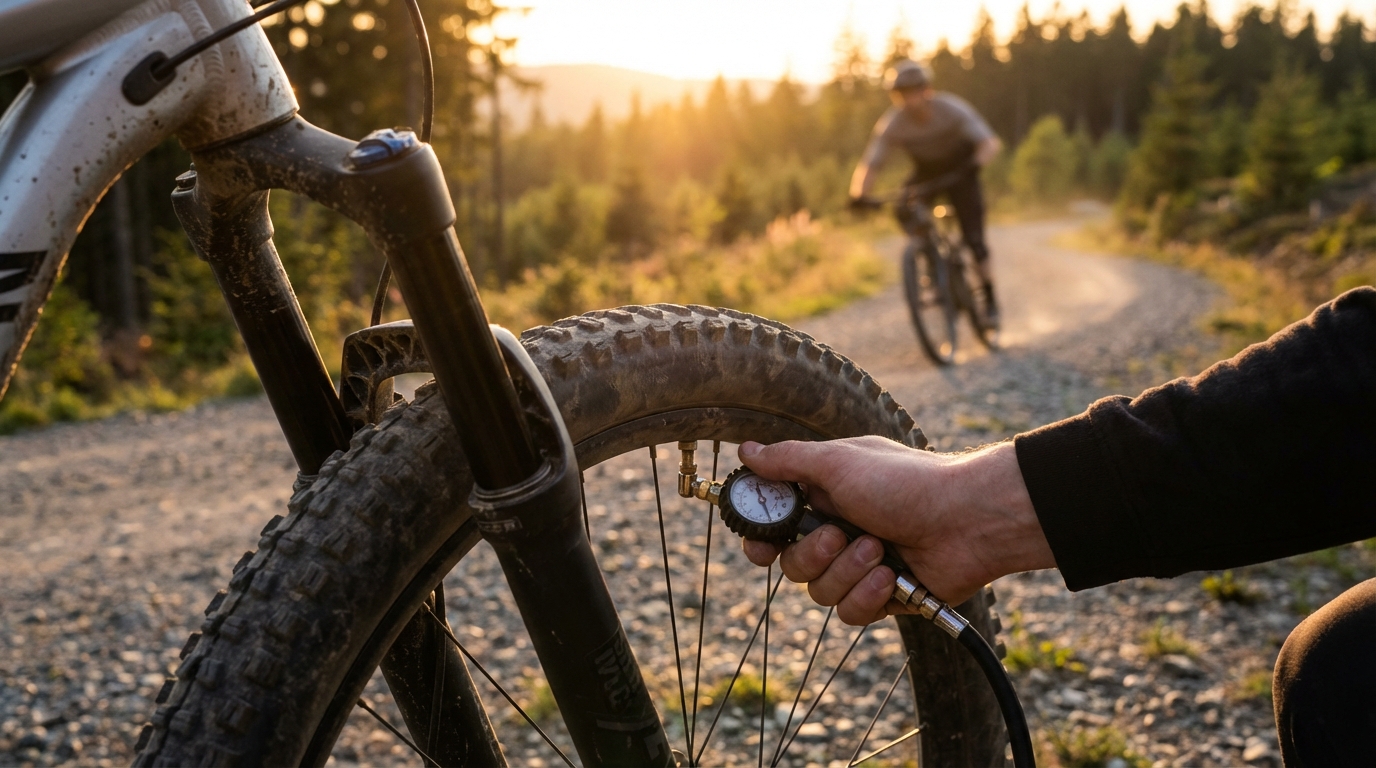
Tire pressure, though seemingly a simple detail, profoundly influences nearly every aspect of a bicycle’s performance. Far from being a static setting, the optimal pressure is a dynamic variable that can dramatically alter a ride’s efficiency, comfort, grip, and even safety. Understanding the nuances of tire inflation allows cyclists to fine-tune their experience, adapting their setup to different terrains, weather conditions, and personal preferences. This exploration delves into how tire pressure shapes a bike’s interaction with the ground and the rider’s overall journey.
The Fundamentals of Tire Pressure
Before examining its effects, it’s essential to grasp what tire pressure represents and the factors that dictate its appropriate range.
What is Tire Pressure?
Tire pressure refers to the amount of force exerted by the air inside the tire against its inner walls. It is typically measured in pounds per square inch (PSI) in many regions, or in Bar, a metric unit of pressure. This internal force supports the rider’s weight and the bike’s weight, dictating how the tire deforms under load and interacts with the riding surface.
Factors Influencing Tire Pressure Requirements
There is no universal “correct” tire pressure; instead, it is highly individualized and depends on several key variables:
- Rider Weight: Heavier riders generally require higher pressures to support their weight and prevent excessive tire deformation. Lighter riders can often benefit from lower pressures.
- Tire Volume/Width: Wider tires, having a larger air volume, can typically be run at lower pressures compared to narrower tires while providing similar support. The larger volume allows the air to be distributed over a greater area.
- Riding Surface/Conditions: Smooth, paved roads often allow for higher pressures for perceived efficiency, while rougher terrain, gravel, or dirt generally calls for lower pressures to enhance grip and comfort. Wet conditions might also warrant a slight reduction in pressure for improved traction.
- Tire Construction (Tubed vs. Tubeless): Tubeless setups, by eliminating the inner tube, can operate at significantly lower pressures without the risk of pinch flats, offering more flexibility in pressure tuning.
Impact on Rolling Resistance
Rolling resistance is the force that opposes the motion of a tire on a surface. It’s often misunderstood in relation to tire pressure, with many assuming higher pressure always equates to lower resistance.
Understanding Rolling Resistance
When a tire rolls, it constantly deforms where it meets the ground, and then reforms as it lifts off. This deformation and reformation process consumes energy, which is experienced as rolling resistance. The magnitude of this energy loss is influenced by the tire’s construction, rubber compound, tread pattern, and crucially, its inflation pressure.
High Pressure and Rolling Resistance
On a perfectly smooth surface, a very high tire pressure minimizes tire deformation, thus reducing the energy lost to flexing. This leads to a lower rolling resistance in theory. However, real-world surfaces are rarely perfectly smooth. When a highly inflated tire encounters bumps or imperfections, it tends to bounce over them. Each bounce causes the entire bike and rider to be lifted and then dropped, which expends energy and actually increases the effective rolling resistance. Furthermore, bouncing reduces continuous contact with the ground, potentially slowing the rider down.
Lower Pressure and Rolling Resistance
On uneven surfaces, a tire with appropriately lower pressure can conform more effectively to the contours of the ground. Instead of bouncing over obstacles, the tire absorbs them. This allows the wheel to maintain a more consistent forward motion, reducing the energy wasted in vertical displacement of the bike and rider. The tire’s ability to “roll over” rather than “bounce over” imperfections often results in lower actual rolling resistance on typical roads and trails, despite the increased tire deformation. The key is finding a “sweet spot” where the tire deforms enough to absorb road irregularities without excessive deformation that would increase friction.
Impact on Grip and Traction
Grip and traction are paramount for safety and control, particularly during cornering, braking, and climbing. Tire pressure plays a direct role in how much of the tire surface makes contact with the ground.
Contact Patch Explained
The “contact patch” is the small area of the tire that is in direct contact with the riding surface at any given moment. This is where all the forces for propulsion, braking, and steering are transmitted.
High Pressure and Grip
When a tire is inflated to a very high pressure, its contact patch becomes smaller and firmer. This reduced contact area means less rubber is engaging with the ground. On smooth, dry surfaces, this might be less noticeable, but on wet roads, loose gravel, or during aggressive cornering, a smaller contact patch significantly reduces grip. The tire is less able to conform to the texture of the road, increasing the likelihood of skidding or losing traction.
Lower Pressure and Grip
Conversely, a lower tire pressure allows the tire to deform more, resulting in a larger and more compliant contact patch. This larger area of rubber on the ground significantly improves traction, especially on uneven, wet, or loose surfaces. The tire can mold itself around individual grains of sand or small stones, digging in for better purchase. This enhanced grip translates to greater confidence in corners, more effective braking, and improved climbing ability, particularly off-road.
Impact on Comfort and Fatigue
The ride quality and the rider’s level of comfort are heavily influenced by how well the tires absorb vibrations and impacts from the road.
Absorption of Vibrations
Bicycle tires act as the primary suspension system, especially on bikes without dedicated suspension components. The air within the tire, in conjunction with the tire casing, absorbs impacts and vibrations before they reach the frame and rider.
High Pressure and Comfort
A highly inflated tire is rigid and transmits more road chatter and impacts directly to the rider. This results in a harsher, less comfortable ride. Every small bump and crack in the pavement can be felt distinctly, leading to increased physical jarring. Over longer distances, this constant vibration and impact can contribute significantly to rider fatigue, reducing endurance and enjoyment.
Lower Pressure and Comfort
By allowing the tire to flex and deform more, lower pressures significantly improve ride comfort. The tire acts as a cushion, absorbing vibrations and impacts from the road surface. This creates a smoother, more forgiving ride, reducing the amount of shock transferred to the hands, arms, and posterior. A more comfortable ride helps to decrease rider fatigue over extended periods, allowing for longer and more enjoyable cycling sessions.
Impact on Puncture Resistance
Tire pressure can influence the likelihood of experiencing different types of punctures, particularly for bikes using inner tubes.
High Pressure and Punctures
While a very firm tire might seem resilient, extremely high pressures can make a tire more susceptible to penetration punctures. When a sharp object, such as glass or a thorn, is encountered, the stiff, highly tensioned tire casing offers less give and can be more easily pierced. Furthermore, if a rider hits a pothole or sharp edge at high speed, the rigid tire has less ability to deform and absorb the impact, potentially leading to a sudden, catastrophic failure of the casing.
Lower Pressure and Punctures
For bikes equipped with inner tubes, excessively low tire pressure carries a significant risk of “pinch flats” or “snakebites.” These occur when the tire compresses so much upon impact with an obstacle (like a curb or rock) that the inner tube gets pinched between the rim and the obstacle, creating two characteristic holes. Tubeless systems, however, are largely immune to pinch flats because there is no inner tube to pinch. For tubeless setups, lower pressures allow the tire to conform around obstacles, reducing the risk of penetrations and generally making them more resilient to punctures from road debris, up to a point where the rim itself might be exposed to impact damage.
Practical Considerations and Adjustments
Leveraging the benefits of proper tire pressure requires practical application and ongoing monitoring.
Tools for Measurement
An accurate tire pressure gauge is an indispensable tool for any cyclist. Floor pumps often have integrated gauges, but a dedicated digital or analog gauge can provide more precise readings, which are crucial for fine-tuning pressure.
Starting Point Guidelines
Most tire manufacturers provide recommended pressure ranges printed on the tire sidewall. These ranges typically serve as a safe operating window. A good starting point often involves considering the rider’s weight and tire width. For example, a wider tire on a heavier rider might start at the mid-to-high end of its recommended range, while a lighter rider on the same tire might start lower. Online calculators and charts can also offer personalized recommendations based on these variables.
Experimentation
Ultimately, the optimal tire pressure is a personal preference and can vary based on riding style, specific bike setup, and current conditions. Cyclists are encouraged to experiment by slightly adjusting their pressure up or down by a few PSI over several rides. Paying attention to how the bike feels in terms of rolling efficiency, grip, and comfort will help in identifying the ideal setting for different scenarios.
Monitoring and Maintenance
Tires naturally lose air over time, and temperature fluctuations can also affect pressure. It is advisable to check tire pressure before every significant ride or at least weekly. Maintaining consistent and appropriate pressure not only enhances performance but also prolongs tire life.
Conclusion
Tire pressure is far more than a minor detail; it is a fundamental determinant of a bike’s character and capabilities. From modulating rolling resistance and enhancing grip to improving comfort and influencing puncture resilience, correctly adjusted tire pressure can transform the cycling experience. By understanding these impacts and embracing an approach of informed experimentation, cyclists can unlock a more efficient, comfortable, and controlled ride, regardless of the terrain or their riding aspirations. Taking the time to properly inflate and regularly check tire pressure is one of the simplest yet most effective ways to optimize bike performance.
FAQs
1. How often should I check my bike tire pressure?
It is recommended to check your bike tire pressure before every significant ride or at least once a week. Tires naturally lose air over time, and regular checks ensure you start each ride with the appropriate pressure for optimal performance and safety.
2. What is the difference between PSI and Bar?
PSI (Pounds per Square Inch) and Bar are two different units for measuring pressure. PSI is commonly used in countries like the United States, while Bar is a metric unit often used in Europe and other parts of the world. One Bar is approximately equal to 14.5 PSI. Your pump gauge or tire sidewall will typically indicate which unit or both are relevant.
3. Can I use the same tire pressure for road and off-road cycling?
It is generally not advisable to use the same tire pressure for both road and off-road cycling. Road riding often benefits from higher pressures for perceived efficiency on smooth surfaces, while off-road riding (like gravel or mountain biking) typically requires lower pressures to maximize grip, traction, and comfort over uneven terrain. Adjusting pressure for the specific conditions is key.
4. Does temperature affect tire pressure?
Yes, temperature significantly affects tire pressure. Air expands when heated and contracts when cooled. For every 10-degree Fahrenheit (or approximately 5-6 degrees Celsius) change in temperature, tire pressure can change by about 1-2 PSI. This means tires inflated in a warm garage might be under-inflated on a cold outdoor ride, and vice-versa.
5. What are the signs that my tire pressure is too low or too high?
Signs of too low pressure include excessive tire deformation, a sluggish or “squishy” feel, poor handling, increased rolling resistance, and a higher risk of pinch flats (for tubed tires) or rim damage. Signs of too high pressure include a harsh and uncomfortable ride, reduced grip, bouncing over bumps, a lack of control, and potentially reduced effective rolling resistance on rough surfaces due to bouncing.

Diana Miller, is a dedicated nature enthusiast and an outdoor adventurer. She began leading groups for excursions in her teens and never stopped. Following her passion for nature, she gathers her friends for outdoor trips every now and then. And for the last 10 years, she has executed workshops on backpacking, snow kayaking and traveling that included her main motive of lightweight packing while outdoors. During leisure, she loves planning for her next adventure.