
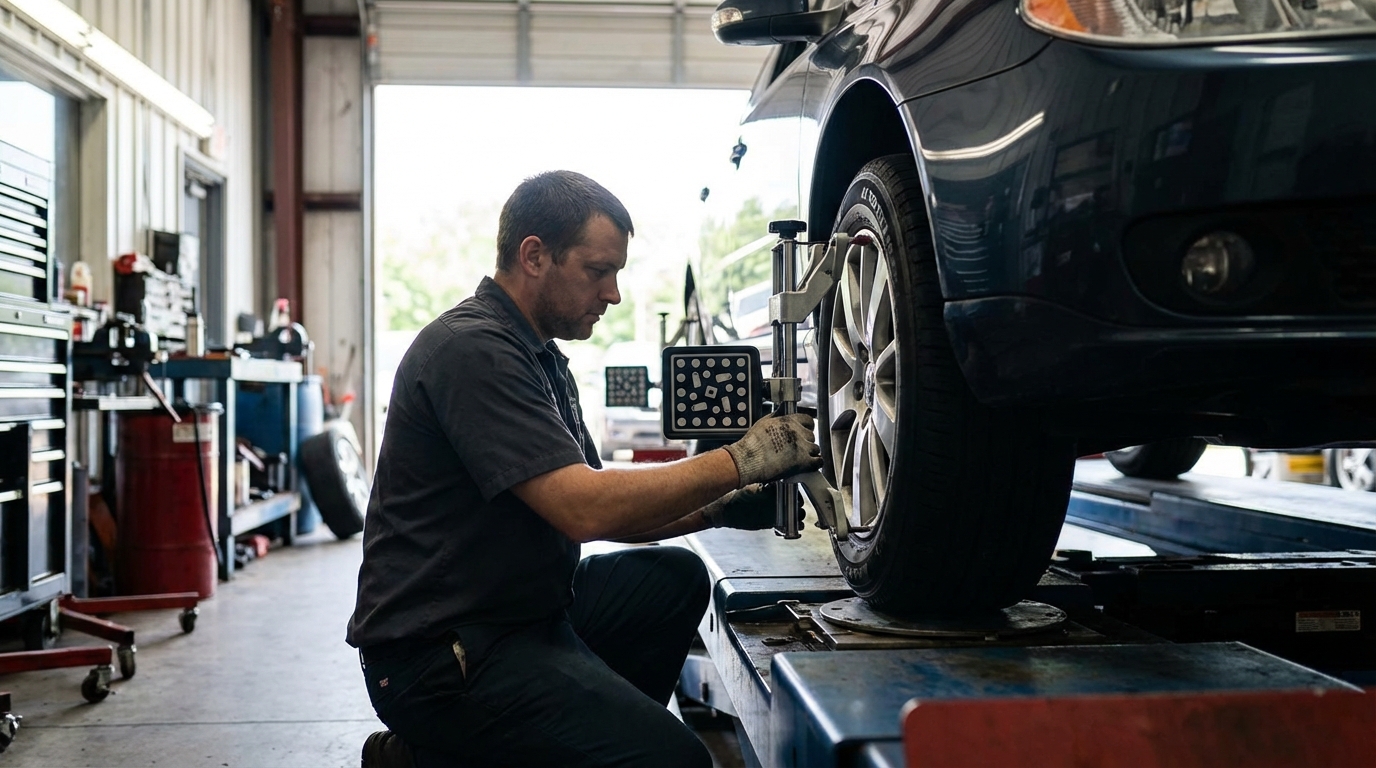
The intricate relationship between a vehicle’s tires and its overall driving dynamics often goes unnoticed until a problem arises. Among the many factors influencing how a vehicle handles, tire alignment plays a profoundly significant role. It’s not just about the tires pointing straight; it involves a precise calibration of angles that dictate how the tires interact with the road surface, affecting everything from steering precision to vehicle stability and tire longevity.
Understanding tire alignment is fundamental to appreciating its impact on your driving experience. When a vehicle’s alignment is within manufacturer specifications, the tires work harmoniously, providing predictable handling, efficient fuel consumption, and extended tire life. Conversely, even slight deviations from these specifications can lead to a cascade of issues, compromising safety, comfort, and the operational efficiency of the vehicle. This post will explore the mechanics of tire alignment, how misalignment manifests in driving stability issues, its underlying causes, and the importance of routine maintenance.
Understanding Tire Alignment
What is Wheel Alignment?
Wheel alignment, often simply called tire alignment, refers to the adjustment of the vehicle’s suspension system. It involves precisely setting the angles of the wheels so that they are parallel to each other and perpendicular to the ground. This process ensures that the tires make proper contact with the road, minimizing wear and maximizing vehicle control. It’s important to clarify that alignment adjustments are made to the suspension components, not the wheels or tires themselves.
Key Alignment Angles
There are three primary alignment angles that technicians measure and adjust to achieve proper wheel alignment:
- Camber: This is the inward or outward tilt of the tire when viewed from the front of the vehicle.
- Positive Camber: The top of the wheel tilts outward from the vehicle. Excessive positive camber can cause wear on the outside edge of the tire.
- Negative Camber: The top of the wheel tilts inward towards the vehicle. Excessive negative camber can lead to wear on the inside edge of the tire.
- Proper camber ensures even tire contact with the road during straight-line driving and cornering, which is crucial for grip and stable handling.
- Caster: This angle refers to the forward or rearward tilt of the steering axis when viewed from the side of the vehicle.
- Positive Caster: The top of the steering axis tilts rearward. This configuration helps the wheels to return to a straight-ahead position after turning and provides straight-line stability, much like the front wheels of a shopping cart.
- Negative Caster: The top of the steering axis tilts forward. This is less common in modern passenger vehicles as it tends to reduce stability.
- Caster significantly influences steering effort, stability at higher speeds, and the self-centering action of the steering wheel.
- Toe: This is the most critical angle for tire wear and straight-line stability, referring to how much the tires turn inward or outward when viewed from above.
- Toe-in: The front edges of the wheels are closer together than the rear edges. A slight toe-in can contribute to straight-line stability, as the wheels are constantly trying to pull away from each other, canceling out forces.
- Toe-out: The front edges of the wheels are further apart than the rear edges. This can make a vehicle feel more nimble in turns but can lead to excessive tire wear if not within specifications.
- Incorrect toe settings are a primary cause of rapid and uneven tire wear because the tires are constantly scrubbing against the road surface rather than rolling smoothly.
How Misalignment Impacts Driving Stability
When any of these angles deviate from the manufacturer’s specifications, the vehicle’s driving stability is compromised, leading to a range of noticeable issues.
Steering and Handling Issues
Misalignment directly translates to a less controlled and less predictable driving experience. Drivers may observe:
- Pulling or Drifting: The vehicle may consistently pull to one side, requiring the driver to constantly correct the steering to maintain a straight path. This can be fatiguing and reduce confidence, especially on longer journeys.
- Loose or Wandering Steering: The vehicle may feel as though it’s “wandering” on the road, making it difficult to keep it in a straight line without constant minor steering adjustments. This reduces the sense of control and responsiveness.
- Steering Wheel Off-Center: Even when driving straight, the steering wheel may not be centered. This indicates that the alignment is off, even if the vehicle isn’t pulling significantly.
- Vibration or Shimmy: While often associated with tire balancing issues, severe misalignment, especially incorrect toe settings, can also cause vibrations that are felt through the steering wheel or the entire vehicle.
- Reduced Responsiveness: The vehicle might react sluggishly to steering inputs, diminishing the driver’s ability to maneuver precisely and safely, particularly in emergency situations.
Tire Wear Implications
Beyond handling, one of the most visible and costly consequences of misalignment is uneven and premature tire wear:
- Feathering: This occurs when the tread blocks on the tire’s edge are worn smooth on one side and sharp on the other, resembling the edge of a feather. It is typically caused by incorrect toe settings.
- Cupping or Scalloping: Irregular dips or scoops form around the tire’s circumference, often indicating issues with camber, worn suspension components, or tire imbalance.
- One-Sided Wear: Excessive wear on either the inside or outside edge of the tire is a clear indicator of incorrect camber or severe toe issues.
- Premature Tire Replacement: Misaligned tires can wear out significantly faster than properly aligned ones, leading to early replacement and increased operational costs.
- Consequences of Worn Tires: Beyond the financial aspect, tires with uneven or excessive wear have reduced grip, increased stopping distances, and a higher risk of hydroplaning in wet conditions, severely compromising safety.
Fuel Efficiency and Component Strain
The impact of misalignment extends to the vehicle’s overall operational efficiency and the longevity of its components:
- Increased Rolling Resistance: When tires are misaligned, they drag or scrub against the road surface instead of rolling freely. This increased resistance requires the engine to work harder, leading to reduced fuel efficiency.
- Strain on Suspension Components: Continuous stress from misaligned wheels can accelerate the wear of critical suspension components such as ball joints, tie rod ends, control arm bushings, and wheel bearings. Over time, this can lead to further alignment problems and necessitate more extensive and costly repairs.
Causes of Misalignment
Numerous factors can cause a vehicle’s alignment to shift over time. These include:
- Everyday Driving Hazards: Hitting potholes, driving over curbs, or encountering speed bumps can jar the suspension components out of alignment.
- Worn Suspension Components: Over time, components like ball joints, tie rod ends, control arm bushings, and strut mounts can wear out, allowing for excessive play that affects alignment angles.
- Accidents: Even minor fender benders can impact the structural integrity of the suspension and steering systems, leading to significant alignment issues.
- Vehicle Modifications: Installing new suspension components, lifting kits, or lowering kits without subsequent alignment adjustments will invariably result in incorrect alignment.
- Routine Wear and Tear: Even without specific incidents, the normal stresses of driving can cause components to settle or wear, gradually altering alignment over thousands of miles.
Maintaining Proper Alignment
Regular checks and timely adjustments are crucial for maintaining proper alignment and ensuring vehicle stability. It is generally recommended to have your alignment checked:
- Annually or every 10,000 to 15,000 miles, as a part of routine vehicle maintenance.
- After hitting a significant pothole or curb, or after any collision.
- Whenever new tires are installed, as proper alignment helps ensure even wear from the start.
- After replacing any steering or suspension components (e.g., tie rod ends, control arms, struts).
- If you notice any of the symptoms of misalignment mentioned above, such as pulling, uneven tire wear, or an off-center steering wheel.
Tire alignment requires specialized equipment and trained technicians to measure and adjust the precise angles. Attempting to perform alignment without the correct tools can lead to further issues.
Conclusion
Tire alignment is far more than a minor vehicle adjustment; it is a fundamental aspect of vehicle safety, performance, and operational economy. Proper alignment ensures that tires wear evenly, the vehicle handles predictably, and steering is responsive and stable. Neglecting alignment can lead to costly tire replacements, reduced fuel efficiency, premature wear of suspension components, and, most importantly, compromised driving stability and safety. By understanding the critical role of alignment and adhering to regular maintenance schedules, vehicle owners can ensure a smoother, safer, and more economical driving experience.
Frequently Asked Questions
1. What is the difference between wheel balancing and wheel alignment?
Wheel balancing addresses the even distribution of weight around the tire and wheel assembly. An unbalanced wheel can cause vibrations at certain speeds. Wheel alignment, on the other hand, involves adjusting the angles of the wheels and suspension components so that they are parallel to each other and perpendicular to the ground, influencing how the vehicle tracks and handles.
2. How often should I have my vehicle’s alignment checked?
It is generally recommended to have your vehicle’s alignment checked annually or every 10,000 to 15,000 miles, whichever comes first. Additionally, it should be checked after any significant impact (like hitting a large pothole), after replacing suspension or steering components, or if you notice any signs of misalignment.
3. Can I tell if my tires are misaligned just by looking at them?
Often, yes. Uneven tire wear patterns are a common visual indicator of misalignment. For example, excessive wear on the inner or outer edge of the tire, or a feathered appearance on the tread, can suggest an alignment issue. However, some alignment problems might not show obvious tire wear immediately but still affect handling.
4. Does a tire rotation affect wheel alignment?
No, a tire rotation does not directly affect wheel alignment. Tire rotation involves moving tires from one wheel position to another to promote even wear. Wheel alignment involves adjusting the angles of the suspension system. While both are important for tire longevity, they are distinct maintenance procedures.
5. Is wheel alignment necessary for all types of vehicles?
Yes, wheel alignment is crucial for virtually all types of vehicles that have a steering and suspension system, including passenger cars, trucks, SUVs, and even some commercial vehicles. Proper alignment is vital for safe operation, predictable handling, and extending the life of tires and suspension components, regardless of the vehicle type.

Diana Miller, is a dedicated nature enthusiast and an outdoor adventurer. She began leading groups for excursions in her teens and never stopped. Following her passion for nature, she gathers her friends for outdoor trips every now and then. And for the last 10 years, she has executed workshops on backpacking, snow kayaking and traveling that included her main motive of lightweight packing while outdoors. During leisure, she loves planning for her next adventure.