
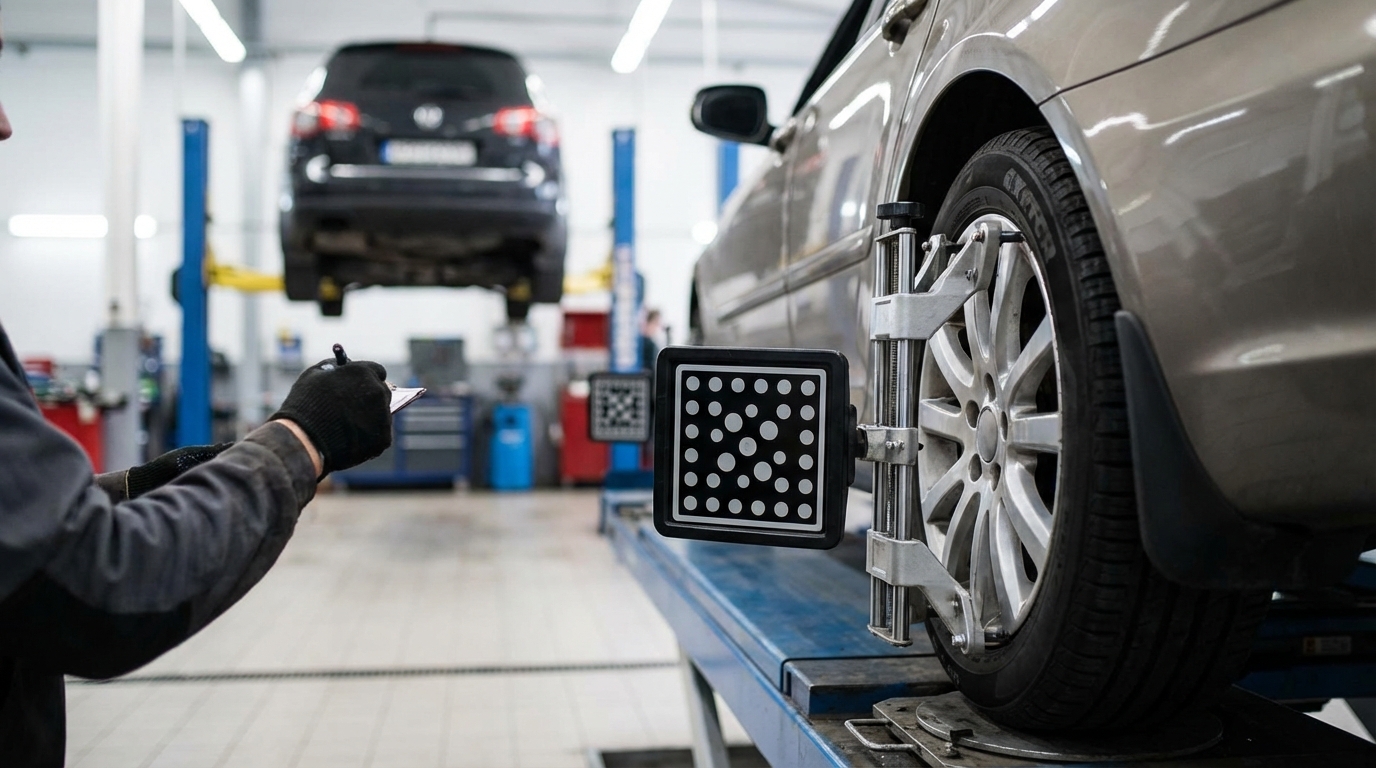
The intricate system of a vehicle’s suspension and steering components plays a foundational role in its overall performance and safety. Among these critical elements, tire alignment stands out as a fundamental aspect directly influencing how a vehicle interacts with the road. It ensures that the wheels are oriented correctly according to the manufacturer’s specifications. This precise adjustment is not merely about preventing premature tire wear; it is a significant determinant of driving stability, handling precision, and the overall longevity of various vehicle components. Understanding the mechanics and implications of proper tire alignment is essential for any vehicle owner concerned with safety and operational efficiency.
What is Tire Alignment?
Tire alignment, often referred to as wheel alignment, involves adjusting the angles of the wheels so they are parallel to each other and perpendicular to the ground. This process ensures that all four wheels are pointing in the correct direction relative to the road and to each other. It is a precise calibration of the vehicle’s suspension system, which connects the wheels to the vehicle itself.
The primary purpose of proper alignment is to achieve three key objectives:
- Minimize tire wear, extending tire life.
- Improve vehicle handling and steering response.
- Ensure the vehicle tracks straight without pulling to one side.
It is important to differentiate tire alignment from wheel balancing. While both contribute to tire performance, balancing addresses weight distribution around the tire and wheel assembly to prevent vibrations, whereas alignment focuses on the angular positioning of the wheels relative to the vehicle’s frame and the road surface.
Key Alignment Angles
Three primary angles define a vehicle’s wheel alignment. Each plays a distinct role in how the vehicle handles, steers, and how its tires wear.
Camber
Camber refers to the inward or outward tilt of the tire when viewed from the front of the vehicle.
- Positive Camber: The top of the wheel tilts outward from the vehicle. This can reduce steering effort but might lead to wear on the outer edge of the tire.
- Negative Camber: The top of the wheel tilts inward towards the vehicle. This can enhance grip during cornering by distributing pressure more evenly across the tire’s tread, but excessive negative camber can cause wear on the inner edge of the tire.
An incorrect camber angle can lead to the vehicle pulling to one side, uneven tire wear, and compromised grip, particularly during turns.
Toe
Toe describes how much the front of the tires points inward or outward relative to each other when viewed from above. It’s often the most critical alignment angle for tire wear and straight-line stability.
- Toe-in: The front edges of the tires are closer together than the rear edges. A slight toe-in typically promotes straight-line stability but can increase tire scrubbing and wear.
- Toe-out: The front edges of the tires are farther apart than the rear edges. This can improve turn-in response but might reduce straight-line stability and cause rapid tire wear.
Incorrect toe settings are a common cause of rapid and uneven tire wear, as they force the tires to constantly scrub against the road surface. They also significantly impact the vehicle’s ability to maintain a straight path without constant steering input.
Caster
Caster is the angle of the steering axis when viewed from the side of the vehicle. It’s the forward or rearward tilt of the steering axis, which runs through the upper and lower ball joints.
- Positive Caster: The steering axis tilts towards the rear of the vehicle at the top. This configuration provides a self-centering action for the steering wheel, improving straight-line stability and reducing steering effort after a turn.
- Negative Caster: The steering axis tilts towards the front of the vehicle at the top. This is uncommon in most modern vehicles as it can make steering feel light and unstable.
Proper caster alignment is crucial for the vehicle’s directional stability at higher speeds and for the steering wheel’s tendency to return to the center position after a turn. Incorrect caster can lead to wandering, heavy steering, or excessive road shock feedback through the steering wheel.
How Misalignment Impacts Driving Stability
When any of these critical alignment angles are out of specification, the impact on driving stability can be profound and multifaceted.
Reduced Straight-Line Stability
One of the most immediate and noticeable effects of misalignment is a compromise in the vehicle’s ability to drive straight without driver intervention. The vehicle may constantly pull or drift to one side, requiring continuous steering corrections. This not only makes driving more tiring but also increases the risk of losing control, especially at higher speeds or in adverse weather conditions.
Compromised Handling and Steering Response
Misaligned wheels can lead to a loose or vague steering feel, making the vehicle less responsive to steering inputs. This can manifest as delayed reactions to steering wheel movements or an overall imprecise sensation when navigating turns. During emergency maneuvers, compromised handling can significantly increase stopping distances and reduce the driver’s ability to steer clear of obstacles.
Uneven Tire Wear
As touched upon earlier, misalignment forces tires to scrub or drag across the road surface rather than rolling freely. This generates friction and heat, leading to premature and uneven tire wear patterns such as feathering, cupping, or scrubbing across the tread. Uneven wear shortens the lifespan of tires, necessitating earlier and more frequent replacements. Moreover, unevenly worn tires provide reduced grip and traction, which can compromise safety, particularly in wet or slippery conditions.
Decreased Fuel Efficiency
When wheels are misaligned, the tires experience increased rolling resistance because they are fighting against their intended direction of travel. The engine has to work harder to overcome this resistance, leading to a noticeable decrease in fuel efficiency. Over time, this translates into higher operational costs for the vehicle owner.
Increased Component Wear
The constant stress and strain caused by misaligned wheels are not limited to the tires. Other components within the steering and suspension systems, such as ball joints, bushings, tie rod ends, and wheel bearings, endure excessive loads and wear out prematurely. This accelerates the need for repairs and replacements, leading to additional maintenance expenses and potential safety issues if these components fail.
Causes of Misalignment
Several factors can cause a vehicle’s alignment to shift out of specification:
- Impacts: Hitting potholes, curbs, speed bumps incorrectly, or being involved in minor collisions are common culprits.
- Wear and Tear: Over time, the components of the suspension system, such as springs, shocks, struts, ball joints, and bushings, can wear out, altering the wheel angles.
- Suspension Modifications: Installing new suspension components, lifting kits, or lowering kits without subsequent alignment adjustments.
- Heavy Loads: Consistently carrying heavy loads can put stress on suspension components, leading to eventual misalignment.
Recognizing the Signs of Misalignment
Being able to identify the indicators of misalignment can help address the issue promptly, preventing further damage and ensuring driving safety. Look out for:
- The vehicle consistently pulling or drifting to one side while driving straight.
- Uneven or rapid wear on the tires (e.g., one side of the tire tread worn more than the other).
- The steering wheel being off-center when the vehicle is traveling in a straight line.
- A loose, vague, or unresponsive feeling in the steering.
- Squealing tires, especially when making turns.
- Vibrations felt through the steering wheel or the entire vehicle.
Conclusion
Tire alignment is a fundamental aspect of vehicle maintenance that directly impacts driving stability, safety, and operational efficiency. By ensuring that a vehicle’s wheels are correctly oriented, owners can significantly enhance the vehicle’s handling characteristics, extend tire life, improve fuel economy, and prolong the life of critical suspension components. Recognizing the signs of misalignment and addressing them proactively through regular inspections and necessary adjustments are crucial steps in maintaining a vehicle’s integrity and ensuring a secure driving experience for all occupants.
Frequently Asked Questions (FAQs)
How often should I get a wheel alignment?
It is generally recommended to check your wheel alignment every 12,000 to 15,000 miles or at least once a year. However, it is advisable to get it checked immediately after hitting a large pothole, curb, or experiencing any impact, or when you notice any of the signs of misalignment mentioned above.
Is wheel alignment the same as wheel balancing?
No, they are distinct services. Wheel alignment adjusts the angles of the wheels so they are properly oriented relative to the vehicle and the road. Wheel balancing addresses the weight distribution around the tire and wheel assembly to prevent vibrations and ensure smooth rotation.
Can I drive long with misaligned wheels?
While a vehicle can still be driven with misaligned wheels, it is strongly not recommended for extended periods. Driving with misalignment can lead to severe and premature tire wear, decreased fuel efficiency, increased strain on suspension components, and compromised driving stability, posing safety risks.
Does alignment affect all four wheels?
While some vehicles allow only for front-wheel alignment adjustments, many modern vehicles, especially those with independent rear suspensions, require a four-wheel alignment. A four-wheel alignment ensures that all wheels are correctly angled relative to each other and the vehicle’s center line, providing comprehensive stability and performance.
What happens during a wheel alignment service?
During a wheel alignment service, specialized equipment, often using lasers, is attached to the wheels to measure their current angles (camber, toe, and caster). A trained technician then adjusts the suspension components to bring these angles back into the manufacturer’s specified range. This process ensures the wheels are precisely positioned for optimal performance and tire longevity.

Diana Miller, is a dedicated nature enthusiast and an outdoor adventurer. She began leading groups for excursions in her teens and never stopped. Following her passion for nature, she gathers her friends for outdoor trips every now and then. And for the last 10 years, she has executed workshops on backpacking, snow kayaking and traveling that included her main motive of lightweight packing while outdoors. During leisure, she loves planning for her next adventure.