
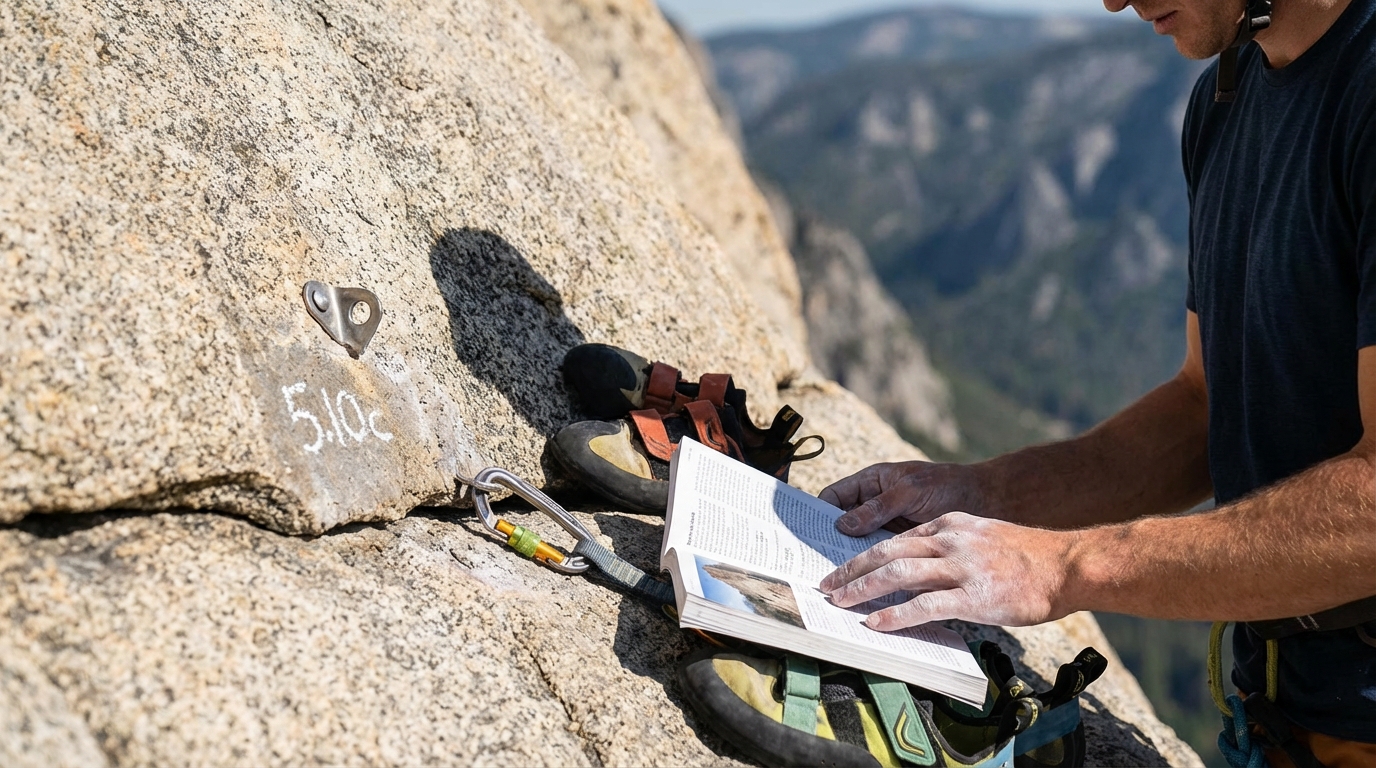
Understanding Climbing Grades: A Universal Language for Vertical Challenges
Climbing grades represent a standardized system designed to communicate the difficulty and character of a climbing route or bouldering problem. Far from being arbitrary numbers, these grades encapsulate a multitude of factors, from physical exertion and technical skill to psychological demands and objective hazards. For climbers, understanding these systems is fundamental for safe progression, effective training, and choosing objectives that align with their experience and aspirations. This post will delve into the various elements that contribute to a climb’s grade and explore the prominent grading systems used across the globe.What Are Climbing Grades?
At their core, climbing grades are subjective yet largely standardized scales that allow climbers to assess the challenge level of a specific ascent. They provide a common language, enabling climbers to communicate about routes, evaluate their own abilities, and make informed decisions about what to attempt. While the specific numerical or alphabetical designations vary between systems, their underlying purpose remains consistent: to quantify difficulty.Key Factors Determining a Climb’s Difficulty
A climb’s grade is not simply a measure of one attribute; it is a holistic assessment incorporating several interacting elements.Physical Demands
The most apparent factor, physical demand, encompasses various aspects of a climber’s physicality:- Strength: This includes finger strength (to hold small edges), arm and shoulder strength (for pulling and locking off), and core strength (for body tension and stability).
- Endurance: The ability to sustain effort over time, crucial on longer routes with sustained difficulty or multiple demanding sequences.
- Power: The capacity for explosive movements, often required for dynamic moves between distant holds.
- Flexibility and Mobility: The range of motion needed to reach distant holds, maintain balance in contorted positions, or execute specific technical moves.
Technical Complexity
Technical skill plays a significant role in determining a climb’s grade, often distinguishing between routes of similar physical demand:- Hold Type and Size: Whether holds are large jugs, small crimps, slippery slopers, or shallow pockets dictates the precision and strength required.
- Footwork Requirements: The precision, balance, and strength needed for foot placements on small edges, smears, or difficult angles.
- Body Positioning and Movement: The specific sequence of movements, body tension, and subtle weight shifts necessary to navigate sections of a climb. This can include specific techniques like heel hooks, drop knees, or delicate traverses.
- Route Reading: The ability to interpret the features of a climb and plan a sequence of moves efficiently.
Risk and Exposure
For traditional (trad) and multi-pitch climbing, the element of risk significantly influences the overall grade or seriousness of a route:- Protection Quality and Spacing: How easily and securely protection (cams, nuts) can be placed, and the distance between placements. Longer “runouts” (sections without protection) increase the risk of a long fall.
- Fall Potential: The likelihood and consequences of a fall, including potential for hitting ledges, swinging into features, or lengthy free-falls.
- Objective Hazards: Factors like rockfall, adverse weather exposure, or remote access can contribute to the overall challenge and seriousness, especially in alpine environments.
Route Length and Continuity
The overall duration and sustained nature of difficulty also contribute:- Sustained Difficulty: Routes that maintain a high level of challenge over many moves without significant rests will feel harder than those with short, intense sections followed by good recovery points.
- Number of Cruxes: A climb with multiple difficult sections (cruxes) can be more demanding than one with a single, isolated hard move.
Major Grading Systems in Climbing
The world of climbing utilizes several distinct grading systems, each with its own history, structure, and geographical prevalence.Yosemite Decimal System (YDS)
The YDS is predominantly used in North America for roped climbing, encompassing sport, traditional, and free climbing on multi-pitch routes. It is a three-part system, though for technical climbing, only the “5.” prefix and subsequent numbers are commonly used.- Structure: It begins at 5.0 (considered scrambling or an easy walk) and progresses upwards. Technical climbing begins around 5.5, with professional-level climbs reaching into the 5.15 range.
- Sub-grades: From 5.10 onwards, letters ‘a’, ‘b’, ‘c’, ‘d’ are appended to provide finer distinctions (e.g., 5.10a is easier than 5.10d).
- Characteristics: The YDS is an open-ended system, meaning new, harder grades can always be added. It attempts to rate the difficulty of the hardest move on a route, taking into account exposure and overall commitment for traditional routes.
V-Scale (Hueco V-System)
The V-scale is the global standard for bouldering, which involves short, intense problems typically undertaken without ropes, relying on crash pads for safety.- Structure: Grades start at V0 (relatively easy for a climber) and extend upwards, currently beyond V17.
- Characteristics: Like YDS, it is open-ended. It focuses on the difficulty of isolated sequences of moves, emphasizing raw strength, power, and precise technique over endurance. The ‘V’ stands for John Sherman, who developed the system in Hueco Tanks, Texas.
French Sport Climbing Grade
Widely adopted in Europe and internationally for sport climbing, the French system is a popular and comprehensive scale.- Structure: It uses numbers and letters (e.g., 6a, 7b). A “+” sign can be added for further refinement within a letter grade (e.g., 6a+ is harder than 6a but easier than 6b).
- Characteristics: It is also open-ended. The French system primarily assesses the physical and technical difficulty of a route, with less emphasis on risk or protection, as sport routes typically have fixed bolts.
UIAA Scale (Union Internationale des Associations d’Alpinisme)
The UIAA scale is another European system, often used for traditional climbing and mountaineering routes, particularly where the overall character of the ascent matters.- Structure: It uses Roman numerals (I, II, III, IV…) with an optional “+” or “-” for finer distinctions (e.g., V+, VI-).
- Characteristics: Historically, it was a closed system, but modern usage has seen it extend with higher numerals. It aims to describe the overall difficulty, including technical moves, exposure, and the seriousness of the situation.
British Technical and Adjectival Grades
Unique to the UK, this system is primarily used for traditional climbing and combines two separate grades to convey a complete picture of a route’s difficulty and seriousness.- Adjectival Grade: This part assesses the overall difficulty, danger, and commitment of the route. It progresses from Easy (E) to Moderate (M), Difficult (D), Very Difficult (VD), Severe (S), Hard Severe (HS), Very Hard Severe (VS), Hard Very Severe (HVS), and then into the E-grades (E1, E2, E3…).
- Technical Grade: This numeral (e.g., 4a, 4b, 4c, 5a, 5b) indicates the difficulty of the hardest single move on the route, regardless of how sustained it is or how good the protection might be.
- Example: A route graded “E2 5b” means it has an overall seriousness and commitment level of E2, and its hardest move is 5b. A route could be E2 5a if the moves are sustained and exposed but none are individually very difficult, or E1 5c if there’s one very hard move but it’s well protected and the route is otherwise straightforward.
The Grading Process and Its Evolution
Assigning a grade to a new climb is a nuanced process that involves initial assessment by the first ascentionist, followed by refinement through community consensus.Initial Assessment
The first climber to successfully ascend a new route (the first ascentionist) typically proposes an initial grade. This initial assessment is inherently subjective, influenced by their personal climbing style, physical condition, and experience with similar climbs. They aim to provide a reasonable estimate based on their expertise.Community Consensus
Once a route is established and repeated by other climbers, their feedback plays a crucial role in validating or adjusting the initial grade. Guidebooks, online climbing databases, and local climbing communities serve as forums for this collective refinement. Through repeated ascents by a diverse group of climbers, a consensus often emerges, leading to a widely accepted and more objective grade. This iterative process allows for the grades to become more consistent over time.Grade Sandbagging and Softness
Climbing grades are not always perfectly consistent. A “sandbagged” route is one that feels significantly harder than its stated grade, often due to historical grading practices (early climbers were incredibly strong), a change in holds (wear and tear), or a particular local style. Conversely, a “soft” grade implies a route feels easier than its numerical designation. These inconsistencies highlight the subjective nature of grading and the evolution of climbing standards.Modern Grading Trends
With the rapid progression of climbing abilities, particularly in indoor gyms, outdoor grades are constantly being re-evaluated. There’s a push towards greater global consistency, though local styles and historical influences often persist. New, higher grades are continuously being established as climbers push the boundaries of what is physically possible.The Role of Grades in Your Climbing Journey
Grades serve as valuable tools, but it’s important to understand both their utility and their limitations.Benefits
- Safety: Grades help climbers avoid routes that are dangerously beyond their current ability, reducing the risk of falls and injury.
- Progression Tracking: They provide a metric for measuring improvement and setting achievable goals, motivating climbers to train and develop new skills.
- Route Selection: Grades allow climbers to efficiently choose routes that offer an appropriate challenge, maximizing enjoyment and learning.
- Communication: They create a common understanding among climbers, facilitating discussions about routes and experiences.
Limitations
- Subjectivity: As discussed, grades are not purely objective. Personal strengths, weaknesses, height, and climbing style can make a route feel easier or harder for different individuals.
- Inconsistency: Variations between crags, regions, and even within the same grading system can exist.
- Over-reliance: Focusing too much on the numerical grade can detract from the intrinsic joy of movement, problem-solving, and the overall experience of climbing.
- Does Not Account for All Factors: While comprehensive, grades cannot fully capture the aesthetic beauty, unique rock features, or the specific mental challenge of every climb.
Conclusion
Climbing grades are indispensable tools that provide a framework for understanding and communicating the diverse challenges presented by the vertical world. By understanding the factors that influence grades and familiarizing oneself with the various grading systems, climbers can make informed decisions, track their progress, and safely explore routes that match their evolving abilities. While valuable, it is crucial to remember that grades are ultimately guidelines. The true essence of climbing lies in the personal journey, the mastery of movement, and the profound connection with nature, rather than an exclusive pursuit of higher numbers.Frequently Asked Questions (FAQs)
Q1: Why do climbing grades sometimes feel inconsistent between different climbing areas or gyms?
A1: Grade inconsistencies can stem from several factors, including the subjective assessment of the first ascentionist, different local climbing styles (e.g., slab-focused vs. overhung-focused areas), the age of the route (older routes can sometimes feel “sandbagged” as climbing standards have progressed), and even variations in rock type or climate that affect grip. Gyms might also grade differently based on their target audience or specific route setting philosophy.
Q2: Is there a single, universal climbing grading system used worldwide?
A2: No, there isn’t a single universal system. Different regions and types of climbing (roped vs. bouldering, traditional vs. sport) have developed their own systems that reflect local climbing cultures and the specific demands of those disciplines. However, systems like the French sport climbing grade and the V-scale for bouldering are widely recognized and used internationally, often alongside local systems.
Q3: How do new, higher grades get established when climbers push the limits of what’s possible?
A3: Most modern grading systems (like YDS, V-scale, and French grades) are “open-ended,” meaning they don’t have a fixed upper limit. When an elite climber completes a route that is significantly harder than any previously graded climb, they will propose a new, higher grade (e.g., 5.15d or V18). This proposed grade is then subject to confirmation by other elite climbers who repeat the route. If a consensus emerges that the climb genuinely represents a new level of difficulty, the new grade becomes established.
Q4: Do climbing grades account for a climber’s height or reach?
A4: While a route’s grade is not explicitly adjusted for individual body dimensions, the “average” human body dimensions are implicitly considered during grading. This means a route graded 5.12b might feel significantly harder for a very short climber or easier for a very tall climber on certain moves. However, the grade itself remains constant. Climbers of all heights develop specific techniques and adapt their beta (sequence of moves) to overcome these challenges, which is part of the problem-solving aspect of climbing.
Q5: What do the letters (a, b, c, d) or plus signs (+) mean in systems like YDS or French grades?
A5: These additions provide finer distinctions within a main numerical grade, indicating a slight increase in difficulty.
- In the Yosemite Decimal System (YDS), for grades 5.10 and above, ‘a’, ‘b’, ‘c’, and ‘d’ divide each number into four sub-grades (e.g., 5.10a is easier than 5.10b, which is easier than 5.10c, and so on, with 5.10d being the hardest of that numerical grade).
- In the French Sport Climbing Grade, a ‘+’ sign is used to indicate a slight increase in difficulty within a letter grade (e.g., 6a is easier than 6a+, which is easier than 6b).

Diana Miller, is a dedicated nature enthusiast and an outdoor adventurer. She began leading groups for excursions in her teens and never stopped. Following her passion for nature, she gathers her friends for outdoor trips every now and then. And for the last 10 years, she has executed workshops on backpacking, snow kayaking and traveling that included her main motive of lightweight packing while outdoors. During leisure, she loves planning for her next adventure.