
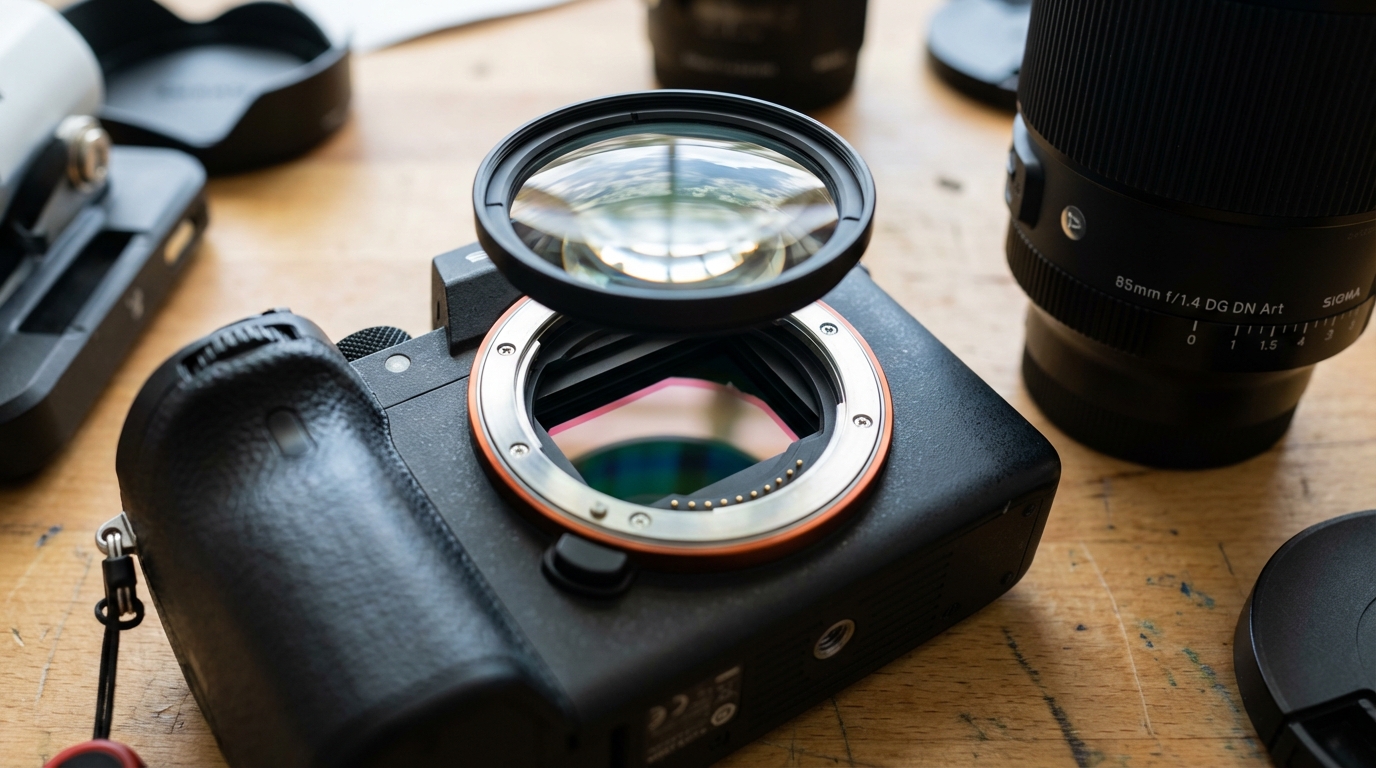
The camera sensor is arguably the most crucial component in a digital camera, serving as its digital “eye.” It is responsible for converting light into an electrical signal, which is then processed to form a digital image. The characteristics and capabilities of this tiny, light-sensitive chip profoundly influence virtually every aspect of a photograph’s quality, from its sharpness and detail to its color accuracy and performance in challenging lighting conditions. Understanding how different sensor attributes impact image capture can provide valuable insight for anyone seeking to comprehend the mechanics behind image creation.
Far from being a monolithic component, camera sensors come in various sizes and designs, each bringing its own set of advantages and implications for the resulting image. This discussion will explore the fundamental ways in which sensor design and specifications directly contribute to the visual properties and overall quality of a digital photograph.
Understanding the Camera Sensor
At its core, a camera sensor is an integrated circuit containing millions of light-sensitive elements known as photosites or pixels. When light strikes these photosites, they generate an electrical charge proportional to the intensity of the light received. This charge is then converted into a digital value, which forms the basis of the image data. The quality of this initial light-to-signal conversion and the subsequent data processing are critical for achieving high-fidelity images.
Several key characteristics define a sensor’s performance:
- Physical Size: The overall dimensions of the sensor chip.
- Resolution: The total number of individual photosites (megapixels).
- Pixel Size: The physical dimensions of each individual photosite.
- Dynamic Range: The sensor’s ability to capture detail in both the brightest and darkest areas of a scene.
- ISO Sensitivity: How effectively the sensor can capture light, particularly in low-light environments.
- Color Depth: The range of colors and tonal gradations the sensor can record.
Sensor Size: A Primary Influence
Perhaps the most significant factor affecting image quality is the physical size of the camera sensor. Generally, larger sensors contain larger photosites or more photosites overall, allowing them to gather more light. This fundamental principle has cascading effects on various aspects of image quality.
Full-Frame Sensors
Often considered a benchmark, full-frame sensors measure approximately 36mm x 24mm, mimicking the size of a 35mm film frame. Their substantial surface area offers several advantages:
- Superior Low-Light Performance: Larger photosites can collect more photons, resulting in a stronger signal and less noise, especially at higher ISO settings.
- Greater Dynamic Range: The ability to capture a broader spectrum of light intensities, preserving detail in both highlights and shadows.
- Shallower Depth of Field: Due to their larger format, full-frame sensors inherently allow for easier creation of images with a pleasingly blurred background (bokeh) when using comparable focal lengths and apertures.
APS-C Sensors
APS-C (Advanced Photo System type-C) sensors are smaller than full-frame, typically around 23.6mm x 15.7mm (sizes can vary slightly between manufacturers). While smaller, they still offer a compelling balance of performance and cost efficiency.
- Good Low-Light Performance: While not matching full-frame, modern APS-C sensors deliver very good performance in challenging light conditions.
- “Crop Factor”: Because they are smaller, APS-C sensors effectively “crop” the image compared to a full-frame sensor using the same lens. This results in a narrower field of view, which can be advantageous for telephoto photography.
- More Compact Systems: Cameras and lenses designed for APS-C sensors can often be smaller and lighter.
Micro Four Thirds and Smaller Sensors
Micro Four Thirds (MFT) sensors (approximately 17.3mm x 13mm) and even smaller sensors found in many compact cameras and smartphones represent a significant reduction in size. While they offer extreme portability, there are trade-offs:
- Reduced Light Gathering: Smaller photosites generally collect less light, potentially leading to more noise in dim conditions and lower dynamic range.
- Greater Depth of Field: Achieving a shallow depth of field can be more challenging due to the sensor’s dimensions.
- Enhanced Portability: The primary advantage is the significantly smaller camera bodies and lenses possible with these sensor sizes.
Resolution and Pixel Dimensions
Resolution, often expressed in megapixels (MP), refers to the total number of photosites on the sensor. While a higher megapixel count suggests more detail, the relationship between resolution and image quality is nuanced.
Megapixels and Detail
More megapixels mean more data points to construct an image, potentially allowing for finer detail capture and larger prints without visible pixelation. For subjects with intricate textures or for photographers who frequently crop their images, a higher resolution sensor can be beneficial. However, the benefits diminish beyond a certain point relative to viewing distance and output size.
Pixel Size and Light Capture
Equally important as the total number of pixels is the size of individual pixels (photosites). If two sensors have the same physical size but one has a significantly higher megapixel count, it implies that its individual pixels are smaller. Smaller pixels, by nature, have less surface area to collect light. This can lead to:
- Increased Noise: Smaller photosites generate a weaker electrical signal, which is more susceptible to electronic noise, particularly in low light or at high ISO settings.
- Reduced Dynamic Range: They may have a lower “well depth”—the maximum amount of charge a photosite can hold—limiting the sensor’s ability to differentiate between very bright and very dark tones.
Conversely, sensors with fewer but larger pixels (on a similar physical sensor size) tend to excel in low light and dynamic range, albeit at the expense of absolute fine detail.
Dynamic Range and Tonal Reproduction
Dynamic range refers to the difference between the lightest and darkest tones a sensor can capture while retaining detail in both. A sensor with a wide dynamic range can record subtle variations in tone across an entire scene, from bright highlights to deep shadows, preventing blown-out whites or crushed blacks. Key factors influencing dynamic range include:
- Well Depth: The maximum charge a photosite can hold before it saturates. Larger pixels generally have greater well depth.
- Noise Floor: The baseline electronic noise present in the sensor’s readout. A lower noise floor means a cleaner signal and the ability to distinguish subtle detail in darker areas.
Sensors with excellent dynamic range produce images with rich, nuanced tonality and greater flexibility for post-processing adjustments.
ISO Sensitivity and Noise Control
ISO represents the sensor’s sensitivity to light. While higher ISO settings allow for shooting in darker conditions, they inherently amplify not only the light signal but also electronic noise, which manifests as graininess or color artifacts in the image. Sensor design plays a significant role in noise control:
- Larger Photosites: As discussed, larger photosites gather more light, producing a stronger signal that requires less amplification, thus reducing the apparent noise at a given ISO.
- Efficient Circuitry: Advanced sensor designs incorporate sophisticated circuitry to minimize inherent electronic noise during readout and amplification.
A sensor that performs well at high ISO settings allows photographers to capture clean images in challenging low-light environments without resorting to a flash or excessively slow shutter speeds.
Color Fidelity and Depth
Color fidelity refers to the sensor’s ability to accurately capture and reproduce the colors of a scene. Color depth, often measured in bits (e.g., 8-bit, 12-bit, 14-bit), indicates the number of distinct tonal values a sensor can record for each primary color (red, green, blue). A higher bit depth allows for a wider range of colors and smoother transitions between tones, minimizing color banding—an undesirable artifact where gradients appear as distinct, stepped blocks of color.
Modern sensors, especially those in more advanced cameras, offer substantial color depth, contributing to realistic and vibrant image rendering and providing greater leeway for color grading in post-production.
Other Factors Affecting Sensor Performance
Antialiasing Filters
Many camera sensors incorporate an optical low-pass filter (OLPF), also known as an antialiasing (AA) filter, placed directly in front of the sensor. Its purpose is to slightly blur incoming light, preventing moiré patterns (undesirable wavy or color interference patterns that can occur when shooting fine, repeating textures). However, this slight blur can also reduce overall image sharpness. Some modern sensors omit or weaken the AA filter to achieve maximum sharpness, relying on advanced image processing to mitigate moiré.
Sensor Architecture
While many types exist, CMOS (Complementary Metal-Oxide Semiconductor) sensors are dominant in contemporary digital cameras due to their efficiency and speed. CMOS sensors allow for faster data readout, which is beneficial for continuous shooting (burst mode) and high-resolution video recording. Their architecture also contributes to lower power consumption and reduced heat generation.
Readout Speed
The speed at which a sensor can transfer data affects several camera functions, including:
- Continuous Shooting Rate: Faster readout allows for more frames per second.
- Video Capabilities: High frame rate and high-resolution video require rapid data transfer.
- Electronic Shutter Performance: Minimizing rolling shutter distortion (where fast-moving objects appear skewed) in modes that use an electronic shutter.
Conclusion
The camera sensor is the heart of digital image capture, and its various characteristics intricately influence the quality of the final photograph. Sensor size, resolution, individual pixel dimensions, dynamic range, ISO performance, and color depth all play critical roles in determining an image’s sharpness, detail, tonal range, color accuracy, and low-light capabilities. While larger sensors generally offer advantages in light gathering and noise control, advancements in smaller sensor technology and sophisticated image processing continually push the boundaries of what is possible. Ultimately, an understanding of these sensor attributes empowers photographers to appreciate the technical foundations of image quality and to make informed choices based on their specific photographic needs and creative vision.
Frequently Asked Questions
1. Does more megapixels always mean a better image?
Not necessarily. While more megapixels can provide greater detail and allow for larger prints or more aggressive cropping, image quality is also heavily dependent on individual pixel size, sensor size, lens quality, and image processing. A sensor with fewer but larger pixels often performs better in low light and has a wider dynamic range than a sensor with many small pixels on the same physical size.
2. How does sensor size affect depth of field?
Larger sensors typically make it easier to achieve a shallower depth of field (where the subject is sharp and the background is blurred) at a given equivalent focal length and aperture. This is because to achieve the same field of view as a smaller sensor, a longer physical focal length lens is often used with a larger sensor, which inherently creates more background blur.
3. What is dynamic range in relation to camera sensors?
Dynamic range is the measure of a sensor’s ability to capture detail in both the brightest highlights and the darkest shadows of a scene simultaneously. A sensor with a wide dynamic range can record a broader spectrum of light intensities, leading to images with richer tonality and less loss of detail in extreme light conditions.
4. Why do images get noisy at high ISO settings?
High ISO settings digitally amplify the electrical signal from the sensor to make a dimly lit scene brighter. However, this amplification also increases any inherent electronic noise present in the signal. As a result, images taken at high ISOs tend to exhibit more graininess or color artifacts because the signal-to-noise ratio decreases.
5. Are all camera sensors the same type?
No, there are different types, but CMOS (Complementary Metal-Oxide Semiconductor) sensors are by far the most common in modern digital cameras, including DSLRs, mirrorless cameras, and smartphones. Another type, CCD (Charge-Coupled Device), was once prevalent but is now primarily found in specialized applications due to CMOS advantages in speed, power efficiency, and cost.

Diana Miller, is a dedicated nature enthusiast and an outdoor adventurer. She began leading groups for excursions in her teens and never stopped. Following her passion for nature, she gathers her friends for outdoor trips every now and then. And for the last 10 years, she has executed workshops on backpacking, snow kayaking and traveling that included her main motive of lightweight packing while outdoors. During leisure, she loves planning for her next adventure.