
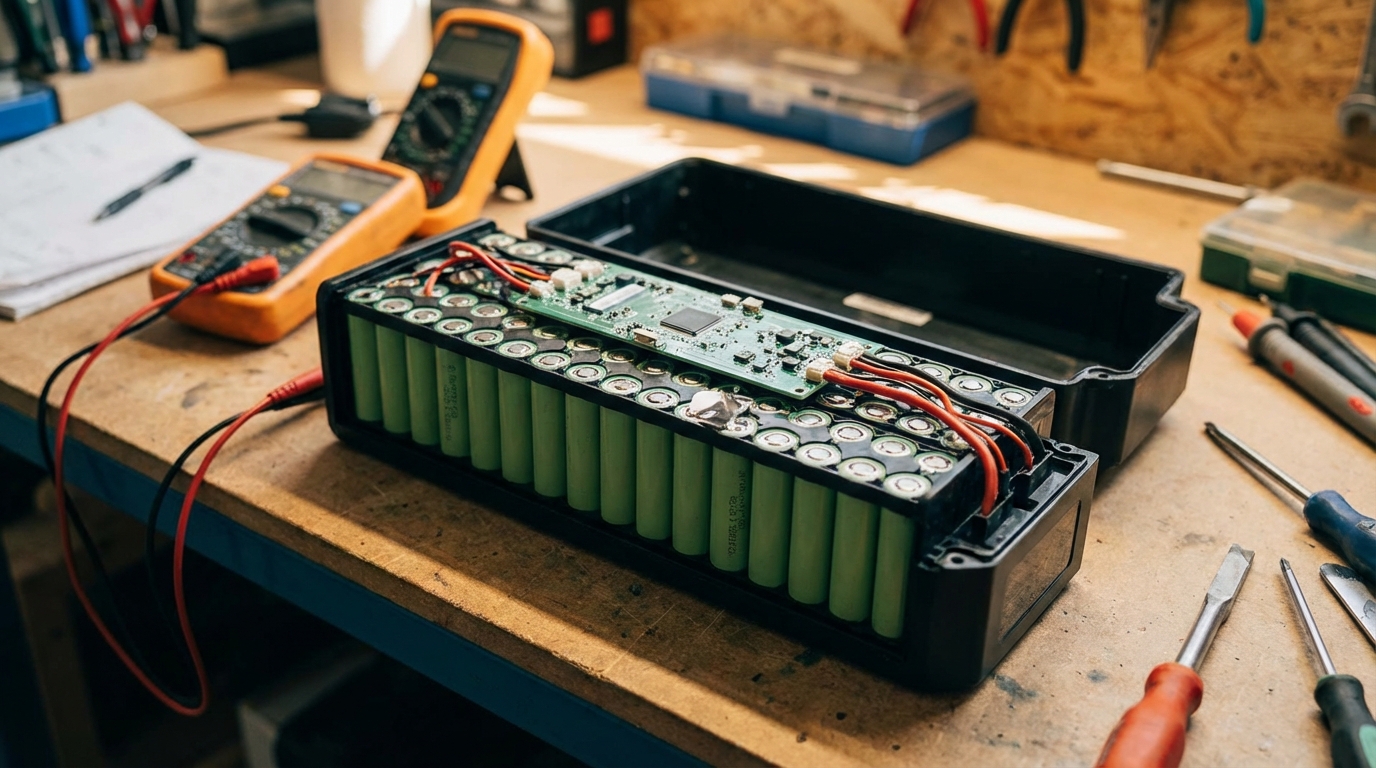
Electric bicycles, or eBikes, have transformed urban commutes and recreational rides by offering an accessible way to cover longer distances and tackle varied terrain. At the heart of every eBike lies its battery, a sophisticated energy storage device that makes pedal assistance possible. Understanding how these batteries store and deliver energy involves delving into the principles of electrochemistry and modern battery technology. This exploration will demystify the core components and processes that allow an eBike battery to power your journey, from the moment you plug it in to the instant you engage the motor.
Understanding Battery Fundamentals
A battery is essentially a device that converts chemical energy into electrical energy through electrochemical reactions. While various battery chemistries exist, the fundamental concept remains consistent: a controlled chemical reaction releases electrons, creating an electric current.
Core Components of a Battery Cell
- Anode (Negative Electrode): Where oxidation (electron release) occurs during discharge. It’s the source of electrons for the external circuit.
- Cathode (Positive Electrode): Where reduction (electron acceptance) occurs during discharge. It accepts electrons from the external circuit.
- Electrolyte: A chemical medium that facilitates the movement of ions between the anode and cathode. It does not conduct electrons externally.
- Separator: A porous membrane that physically separates the anode and cathode to prevent short circuits, while still allowing ions to pass through the electrolyte.
- Current Collectors: Metal foils (e.g., copper for anode, aluminum for cathode) that gather the electrons and provide an external connection.
In simple terms, when the battery discharges, chemical reactions at the electrodes cause electrons to flow from the anode, through an external circuit (like your eBike motor), to the cathode. Simultaneously, ions move through the electrolyte to balance the charge within the battery.
Key Battery Specifications
- Voltage (V): Represents the electrical potential difference between the anode and cathode. For eBikes, common voltages are 36V, 48V, and 52V. Higher voltage generally translates to more power delivery.
- Capacity (Ah – Ampere-hours): Indicates the amount of charge the battery can deliver over time. A 10 Ah battery can deliver 10 amps for one hour, or 1 amp for 10 hours.
- Energy (Wh – Watt-hours): The total amount of electrical energy the battery can store and deliver. It is calculated by multiplying voltage by capacity (Wh = V * Ah). Watt-hours is the most direct measure of an eBike’s potential range.
The Dominance of Lithium-ion Batteries
While early eBikes might have used lead-acid or nickel-metal hydride (NiMH) batteries, modern eBikes overwhelmingly rely on lithium-ion (Li-ion) technology. This preference is due to Li-ion batteries offering a superior combination of high energy density (more energy for their size and weight), low self-discharge rate, and a longer cycle life.
Lithium-ion Battery Chemistry in Detail
Li-ion batteries do not contain metallic lithium in its pure form, which would be highly reactive. Instead, they utilize lithium ions (Li+) that move between the electrodes during charge and discharge cycles.
- Anode Material: Typically graphite, often with silicon additives to increase energy density. During charging, lithium ions intercalate (insert themselves) into the layered structure of the graphite.
- Cathode Material: Composed of various lithium metal oxides. Common chemistries include:
- LCO (Lithium Cobalt Oxide): High energy density but lower safety and cycle life.
- NMC (Lithium Nickel Manganese Cobalt Oxide): A balanced blend offering good energy density, cycle life, and safety. This is a very common choice for eBikes.
- LFP (Lithium Iron Phosphate): Lower energy density than NMC but exceptional safety, longer cycle life, and better thermal stability.
- LMO (Lithium Manganese Oxide): Good safety and power, but lower energy density and cycle life compared to NMC.
- Electrolyte: A non-aqueous (organic solvent) solution containing lithium salts, which allows Li+ ions to freely move between electrodes but prevents electron flow.
- Separator: A polymer film with microscopic pores, acting as a physical barrier while allowing the electrolyte and lithium ions to pass.
How Energy is Stored (Charging)
The process of charging an eBike battery involves reversing the chemical reactions that occur during discharge. This requires an external power source, typically a wall charger, which supplies electricity to the battery.
- The charger applies an external voltage to the battery, forcing electrons into the anode and out of the cathode.
- At the cathode, the lithium ions delaminate from the cathode material and become solvated in the electrolyte.
- These positively charged lithium ions then migrate through the electrolyte and across the separator towards the negatively charged anode.
- At the anode, the lithium ions intercalate into the layered structure of the anode material (e.g., graphite), where they combine with the electrons supplied by the charger.
- This intercalation process effectively stores electrical energy as chemical potential energy within the anode structure. The battery is now charged and ready to deliver power.
How Energy is Delivered (Discharging)
When you turn on your eBike and engage the motor, the battery begins to discharge, converting its stored chemical energy back into electrical energy to power the bike.
- The eBike’s motor and controller create an external circuit between the battery’s anode and cathode.
- At the anode, the lithium ions that were stored during charging begin to de-intercalate from the anode material.
- As the lithium ions leave the anode, they release electrons. These electrons cannot pass through the electrolyte and are forced to travel through the external circuit (the eBike’s wiring, controller, and motor) to reach the cathode.
- This flow of electrons constitutes the electric current that powers the eBike’s motor, providing pedal assistance.
- Simultaneously, the lithium ions move through the electrolyte and across the separator towards the cathode.
- At the cathode, the lithium ions intercalate back into the cathode material, where they recombine with the electrons flowing in from the external circuit.
- This process continues until the battery is depleted or the eBike is turned off.
The Essential Role of the Battery Management System (BMS)
A lithium-ion battery pack for an eBike is not just a collection of cells; it also includes a sophisticated electronic component known as the Battery Management System (BMS). The BMS is critical for the battery’s safety, performance, and longevity.
Key Functions of a BMS
- Overcharge Protection: Prevents cells from being charged beyond their safe voltage limit, which can lead to overheating and damage.
- Over-discharge Protection: Stops the battery from discharging below its minimum safe voltage, preserving cell health and preventing irreversible damage.
- Overcurrent Protection: Limits the current drawn from the battery to prevent damage to the cells or the eBike’s motor/controller.
- Temperature Monitoring: Monitors the battery’s temperature and can shut down operation if it exceeds safe limits, preventing thermal runaway.
- Cell Balancing: Ensures that all individual cells within the battery pack maintain similar voltage levels, which is crucial for overall pack health and maximizing capacity.
- State of Charge (SoC) Estimation: Calculates the remaining battery capacity and often communicates this information to the eBike’s display.
- Communication: Can communicate with the eBike’s motor controller, providing data about battery status and receiving commands.
Without a robust BMS, the inherent volatility of lithium-ion chemistry would make eBike batteries impractical and potentially hazardous.
Factors Influencing Battery Performance and Lifespan
While the internal chemistry is fundamental, external factors and user habits significantly impact an eBike battery’s performance and longevity.
- Charging Habits: Consistently charging the battery to 100% and immediately discharging it to near 0% can stress the battery. Partial charging (e.g., 20-80%) can extend cycle life.
- Temperature: Extreme temperatures (both hot and cold) degrade battery performance and accelerate aging. Operating and charging within the manufacturer’s recommended temperature range is crucial.
- Storage: Storing a battery fully charged or fully discharged for extended periods is detrimental. A charge level between 50-60% is generally recommended for long-term storage in a cool, dry place.
- Discharge Rate: Frequently demanding high power from the battery (e.g., constant turbo mode on steep hills) can generate more heat and slightly reduce the effective capacity and cycle life.
- Age: All batteries naturally degrade over time, even if not used, due to calendar aging. Chemical reactions slowly occur, leading to a gradual reduction in capacity.
Conclusion
The energy storage and delivery within an eBike battery are a marvel of modern electrochemistry and engineering. From the precise movement of lithium ions between electrodes to the sophisticated monitoring by the BMS, every element plays a vital role in powering your ride. Understanding these underlying principles not only deepens appreciation for eBike technology but also empowers riders to care for their batteries properly, ensuring safety, optimizing performance, and extending the lifespan of this crucial component.
Frequently Asked Questions
1. What is the typical lifespan of an eBike battery?
The lifespan of an eBike battery is typically measured in charge cycles, with most modern lithium-ion batteries rated for 500 to 1000 full charge cycles before their capacity significantly diminishes (e.g., to 80% of original). In terms of years, this often translates to 3 to 6 years, depending on usage, charging habits, and storage conditions.
2. Can I overcharge my eBike battery?
Modern eBike batteries are equipped with a Battery Management System (BMS) that includes overcharge protection. This system prevents the battery from accepting charge once it reaches its full capacity, so leaving it plugged in after it’s fully charged is generally safe. However, for long-term battery health, it’s often advised not to leave the battery on the charger indefinitely.
3. How does temperature affect battery range?
Extreme temperatures, particularly cold, can significantly reduce an eBike’s range. In cold conditions, the chemical reactions inside the battery slow down, leading to decreased power output and a temporary reduction in available capacity. High temperatures can also reduce efficiency and accelerate long-term degradation.
4. What is “capacity” in relation to an eBike battery?
In the context of an eBike battery, capacity primarily refers to its Ampere-hour (Ah) rating, which indicates how much electrical charge the battery can store. When multiplied by the battery’s voltage (V), it gives the Watt-hour (Wh) rating, which is the total energy stored and is a more direct indicator of a battery’s potential range.
5. Is it okay to charge my eBike battery after every ride?
Yes, it is generally acceptable to charge your eBike battery after every ride, especially if you’ve used a significant portion of its capacity. Modern lithium-ion batteries do not suffer from a “memory effect” and can be topped up without harm. For optimal longevity, some experts suggest avoiding consistently charging to 100% or discharging to 0% if daily range does not require it, aiming for partial charge cycles instead.

Diana Miller, is a dedicated nature enthusiast and an outdoor adventurer. She began leading groups for excursions in her teens and never stopped. Following her passion for nature, she gathers her friends for outdoor trips every now and then. And for the last 10 years, she has executed workshops on backpacking, snow kayaking and traveling that included her main motive of lightweight packing while outdoors. During leisure, she loves planning for her next adventure.