
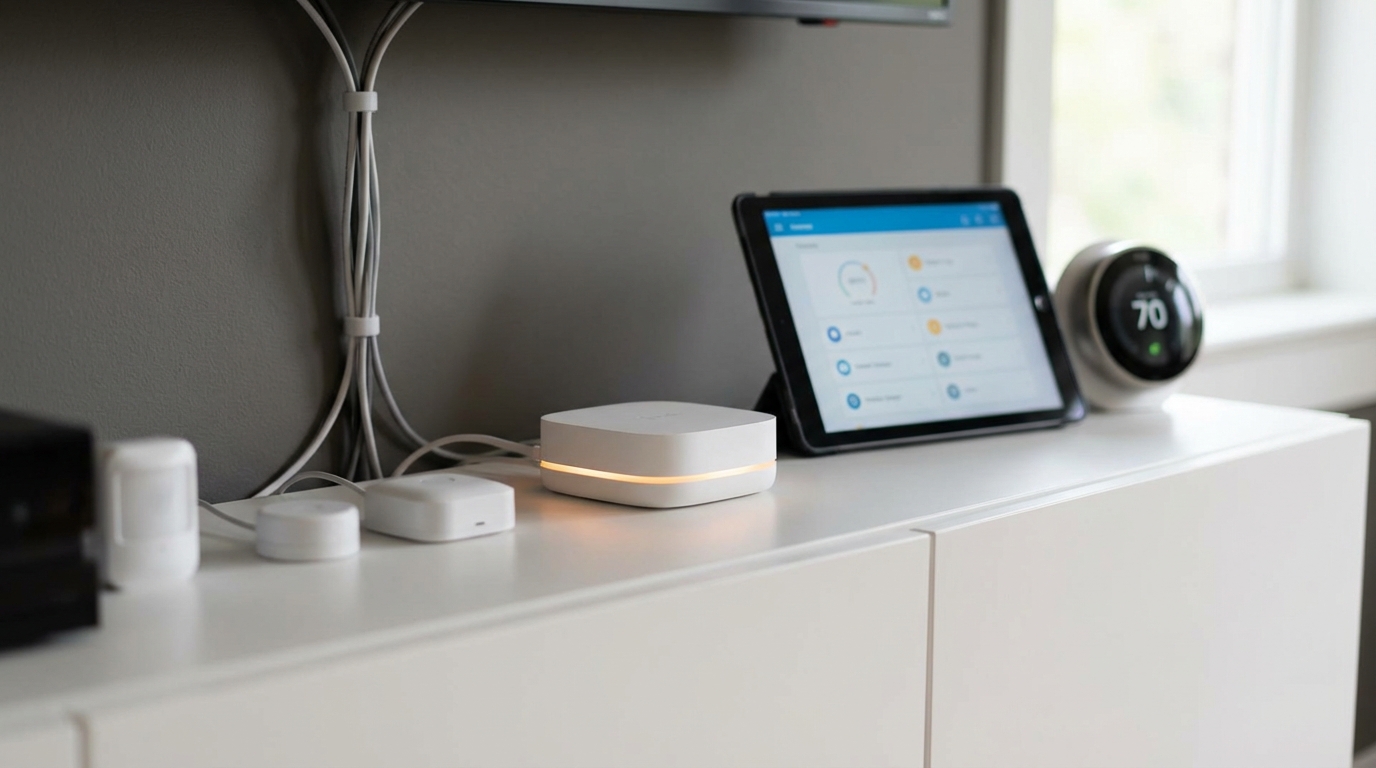
The concept of a smart home has evolved from futuristic vision to a present-day reality for many. At its core, a smart home system enables various devices—from lighting and thermostats to security cameras and entertainment systems—to interact with each other and be controlled, often remotely. This interconnectedness is not magic; it relies on sophisticated communication mechanisms that allow these diverse devices to understand and respond to commands. Understanding these underlying technologies provides insight into how a collection of individual gadgets transforms into a cohesive smart environment. This article will delve into the various protocols and methods that facilitate communication within a smart home ecosystem, explaining how devices exchange data and operate in sync.
Core Principles of Smart Home Communication
For smart home devices to function together, they must adhere to common communication standards. These standards dictate how data is formatted, transmitted, and received across a network.
Nodes, Controllers, and Networks
- Devices (Nodes): These are the individual smart appliances or sensors, such as smart bulbs, door locks, or motion detectors. Each device acts as a node within the larger smart home network.
- Controllers/Hubs/Gateways: A central component, often referred to as a hub or gateway, frequently serves as the brain of the smart home. It translates commands, manages the network, and often connects the local device network to the internet. Some simpler smart devices can operate without a dedicated hub, connecting directly to a standard Wi-Fi router.
- Network: All interconnected devices, along with the controller, form a network. This network can be based on various wireless or wired technologies, each with its own characteristics regarding range, speed, power consumption, and reliability.
Communication Protocols: The Shared Languages
Just as humans need a common language to converse, smart devices require communication protocols. These are sets of rules that govern how data is exchanged between devices. Different protocols are designed for specific purposes, offering varying balances of bandwidth, range, power efficiency, and security.
Wireless Communication Protocols
The majority of smart home devices rely on wireless communication for flexibility and ease of installation. Several key protocols dominate this space.
Wi-Fi
Wi-Fi is perhaps the most familiar wireless technology, widely used for connecting computers, smartphones, and many smart home devices to the internet. It operates over radio waves, typically in the 2.4 GHz or 5 GHz frequency bands.
- How it Works: Devices connect directly to a home’s Wi-Fi router, obtaining an IP address and communicating over standard internet protocols.
- Advantages:
- Ubiquitous and widely supported by many devices.
- High bandwidth, suitable for streaming video (e.g., security cameras).
- No additional hub often required beyond the existing home router.
- Considerations:
- Higher power consumption, making it less ideal for battery-powered sensors.
- Can contribute to network congestion if many devices are connected.
- Range can be limited by walls and obstacles, potentially requiring extenders.
Bluetooth
Bluetooth is a short-range wireless technology designed for direct device-to-device communication, often used for peripherals like headphones or keyboards.
- How it Works: Devices pair directly with each other, creating a point-to-point or point-to-multipoint connection over a short distance. Bluetooth Low Energy (BLE) is a variant designed for minimal power usage.
- Advantages:
- Very low power consumption, excellent for battery-operated devices.
- Direct connection, often without needing a central hub.
- Considerations:
- Limited range (typically under 30 feet).
- Lower bandwidth compared to Wi-Fi.
- Less scalable for whole-home systems with many devices needing to communicate.
Zigbee
Zigbee is a low-power, low-data-rate wireless mesh networking standard designed specifically for Internet of Things (IoT) applications.
- How it Works: Devices form a self-organizing and self-healing mesh network. This means that each powered Zigbee device can act as a repeater, extending the range and reliability of the network. A central Zigbee hub is typically required to connect the network to the internet and control devices.
- Advantages:
- Low power consumption, suitable for battery-powered sensors.
- Robust mesh network allows devices to communicate over longer distances by hopping signals.
- High scalability, supporting many devices within a single network.
- Good security features including encryption.
- Considerations:
- Requires a dedicated Zigbee hub or gateway.
- Operates on the 2.4 GHz band, potentially susceptible to interference from Wi-Fi.
Z-Wave
Z-Wave is another low-power wireless mesh networking protocol, similar in concept to Zigbee but operating on a different radio frequency.
- How it Works: Like Zigbee, Z-Wave creates a mesh network where devices can relay signals to extend range. A Z-Wave hub is essential for managing the network and providing external control. Z-Wave uses sub-1 GHz frequencies (e.g., 908.42 MHz in the US), which generally offers greater range and less interference from common household devices like Wi-Fi.
- Advantages:
- Excellent range due to lower frequency, less susceptible to structural interference.
- Less interference from Wi-Fi and other 2.4 GHz devices.
- Low power consumption.
- Good security and interoperability among Z-Wave certified products.
- Considerations:
- Requires a dedicated Z-Wave hub.
- Lower data rate than Wi-Fi.
- Different frequencies used in different regions, impacting device compatibility across borders.
Thread
Thread is an IP-based mesh networking protocol built on open standards, designed for connecting low-power IoT devices securely and reliably.
- How it Works: Thread devices form a self-healing mesh network, where each device can be IP-addressable. It utilizes IPv6 and is designed to run over 802.15.4 radio technology (similar to Zigbee’s physical layer) in the 2.4 GHz band. A Thread Border Router is typically needed to connect the Thread network to the broader internet.
- Advantages:
- IP-based, allowing direct communication with internet services without complex translation layers.
- Robust, self-healing mesh network.
- Low power consumption.
- Strong security features.
- Considerations:
- Requires a Thread Border Router.
- Still gaining widespread adoption compared to older protocols.
Matter
Matter is not a wireless protocol in itself but an application layer connectivity standard that runs over existing IP-based networking technologies like Wi-Fi, Thread, and Ethernet. Its goal is to provide unified communication and interoperability between smart home devices from different manufacturers and across various underlying protocols.
- How it Works: Matter defines a common language and set of rules for devices to communicate, regardless of their underlying physical connection (as long as it’s IP-based). It aims to simplify setup, improve local control, and enhance security.
- Advantages:
- Focus on universal interoperability, simplifying the creation of multi-brand smart homes.
- Simplified device pairing and commissioning.
- Enhances local control, reducing reliance on cloud services.
- Robust security from the ground up.
- Considerations:
- Devices must be Matter-certified and use an IP-based transport protocol.
- Still in the early stages of broad adoption, with the ecosystem expanding.
Wired Communication
While wireless dominates the smart home landscape, wired connections offer distinct advantages for certain applications.
Ethernet
Ethernet provides a reliable, high-speed wired connection, commonly used for connecting computers, TVs, and some high-bandwidth smart home devices like network video recorders or central hubs.
- Advantages:
- Extremely stable and reliable connection.
- High bandwidth, ideal for data-intensive applications.
- Impervious to wireless interference.
- Enhanced security over wireless connections.
- Considerations:
- Requires physical cabling, which can be inconvenient or costly to install.
- Less flexible for device placement.
Powerline Communication (PLC)
PLC technology uses a building’s existing electrical wiring to transmit data signals, essentially turning electrical outlets into network ports.
- Advantages:
- Leverages existing infrastructure, avoiding the need for new wires.
- Can extend network connectivity to areas where Wi-Fi signals are weak.
- Considerations:
- Performance can be inconsistent, affected by the quality of electrical wiring and household electrical noise.
- Typically lower bandwidth than direct Ethernet.
Central Hubs and Gateways
Many smart home ecosystems rely on a central hub or gateway. These devices play a crucial role in enabling communication.
- Protocol Translation: A key function of a hub is to translate commands between different communication protocols. For instance, a hub might have radios for Zigbee, Z-Wave, and Wi-Fi, allowing devices using these distinct protocols to interact within the same smart home system.
- Central Control Point: Hubs often provide a unified interface for managing and automating all connected devices, regardless of their underlying communication method. This simplifies control for the user.
- Local vs. Cloud Processing: Some hubs process commands locally, enhancing speed and reliability and reducing reliance on an internet connection. Others depend more heavily on cloud services for processing and remote access.
- Voice Assistants: Devices like smart speakers with integrated voice assistants typically communicate with smart home hubs or directly with Wi-Fi devices via the internet to execute commands based on spoken instructions.
Data Transmission and Security
Beyond the physical means of communication, the integrity and security of the data transmitted are paramount in a smart home.
- Encryption: Most modern smart home protocols employ encryption to protect data as it travels across the network, preventing unauthorized access and eavesdropping.
- Authentication: Devices and users are typically authenticated to ensure that only authorized entities can send or receive commands.
- Latency: The speed at which commands are transmitted and executed is important. Low-latency protocols are crucial for applications like security systems where immediate response is critical.
- Reliability: Mesh networks, with their ability to route around failed nodes, significantly enhance reliability by ensuring messages reach their destination even if one device goes offline.
Conclusion
The intricate dance of communication within a smart home relies on a diverse array of protocols and technologies. From the high-bandwidth capabilities of Wi-Fi to the power-efficient mesh networks of Zigbee and Z-Wave, each method offers distinct advantages suited to different types of devices and use cases. Central hubs often act as crucial translators, bridging these disparate languages to create a cohesive system. As standards like Matter emerge, the landscape of smart home communication continues to evolve, striving for greater interoperability and a more seamless, secure experience for users. Understanding these foundational communication methods is key to appreciating the complexity and potential of connected living.
Frequently Asked Questions (FAQs)
1. Do all smart home devices use the same communication method?
No, smart home devices utilize a variety of communication protocols, including Wi-Fi, Bluetooth, Zigbee, Z-Wave, and Thread. Each protocol has different strengths regarding range, power consumption, data speed, and cost, making it suitable for particular types of devices or smart home setups.
2. Is a central hub always required for smart home communication?
Not always. Many smart devices, particularly those using Wi-Fi, can connect directly to your home’s existing Wi-Fi router and be controlled via an app or voice assistant without an additional dedicated hub. However, a central hub is often required for devices that use protocols like Zigbee or Z-Wave, as it translates their signals and connects them to your home network and the internet. Hubs can also offer enhanced automation, local control, and improved reliability for complex systems.
3. How does range affect smart home device communication?
Range is a critical factor. Protocols like Bluetooth have limited range, suitable for close-proximity connections. Wi-Fi has a broader range but can be affected by walls and obstacles. Protocols like Zigbee and Z-Wave utilize mesh networking, where each powered device can relay signals from other devices, effectively extending the network’s reach and enhancing reliability across a larger home or property.
4. Are smart home communications secure?
Most modern smart home communication protocols incorporate various security measures, including encryption and authentication, to protect data and prevent unauthorized access. However, security is an ongoing concern, and it’s essential for users to maintain strong passwords, keep device firmware updated, and use reputable devices to mitigate potential vulnerabilities. The adoption of standards like Matter also aims to enhance security across the ecosystem.
5. Can different communication protocols work together?
Yes, different communication protocols can work together, primarily through the use of a central smart home hub or gateway. A hub often contains radios for multiple protocols (e.g., Wi-Fi, Zigbee, Z-Wave), allowing it to communicate with and translate commands between devices that use different standards. Emerging standards like Matter also aim to facilitate interoperability by providing a common application layer that can run over various underlying IP-based protocols.

Diana Miller, is a dedicated nature enthusiast and an outdoor adventurer. She began leading groups for excursions in her teens and never stopped. Following her passion for nature, she gathers her friends for outdoor trips every now and then. And for the last 10 years, she has executed workshops on backpacking, snow kayaking and traveling that included her main motive of lightweight packing while outdoors. During leisure, she loves planning for her next adventure.