
The Vital Mechanics: How Braking Systems Work in Modern Vehicles
The ability to stop a vehicle reliably and efficiently is as crucial as its ability to move. Braking systems are the unsung heroes of automotive safety, transforming kinetic energy into thermal energy to bring a vehicle to a controlled halt. Far from being a simple mechanism, modern braking systems are sophisticated networks of mechanical, hydraulic, and electronic components working in harmony. This exploration delves into the intricate workings of these essential systems, explaining the principles and technologies that ensure vehicle safety on our roads today.Understanding the Fundamental Principle of Braking
At its core, braking relies on the principle of friction. When a vehicle is in motion, it possesses kinetic energy. To slow down or stop, this kinetic energy must be dissipated or converted into another form of energy. In braking systems, this conversion primarily occurs through friction, generating heat. The process involves: * **Friction Generation:** Two surfaces are brought into contact and pressed together while one is moving relative to the other. * **Energy Conversion:** The resistance to motion (friction) converts the vehicle’s kinetic energy into thermal energy (heat). * **Heat Dissipation:** This heat is then dispersed into the atmosphere, allowing the vehicle to decelerate. The effectiveness of a braking system depends on its ability to generate sufficient friction and to manage the resulting heat without performance degradation.Components of a Hydraulic Braking System
The vast majority of modern vehicles utilize a hydraulic braking system, which relies on the incompressible nature of fluid to transmit force. This system consists of several key components:The Brake Pedal and Master Cylinder
* **Brake Pedal:** This is the driver’s interface with the braking system. Pressing the pedal initiates the braking process. * **Master Cylinder:** Connected to the brake pedal, the master cylinder is a crucial component. It converts the mechanical force from the pedal into hydraulic pressure. Inside, one or more pistons move within a bore, pushing brake fluid through the system. Modern vehicles often feature a dual-circuit master cylinder, which provides redundancy by separating the hydraulic system into two independent circuits, usually for the front and rear wheels, or diagonal pairs. This ensures partial braking capability even if one circuit fails.Brake Lines and Hoses
* **Brake Lines:** These are rigid metal tubes that carry the hydraulic fluid from the master cylinder to various points in the system. They are designed to withstand high pressure and resist corrosion. * **Brake Hoses:** Flexible hoses are used where there needs to be movement, such as near the wheels or suspension components. These connect the rigid lines to the calipers or wheel cylinders, allowing for suspension travel and steering without breaking the fluid circuit.Brake Assemblies: Disc Brakes and Drum Brakes
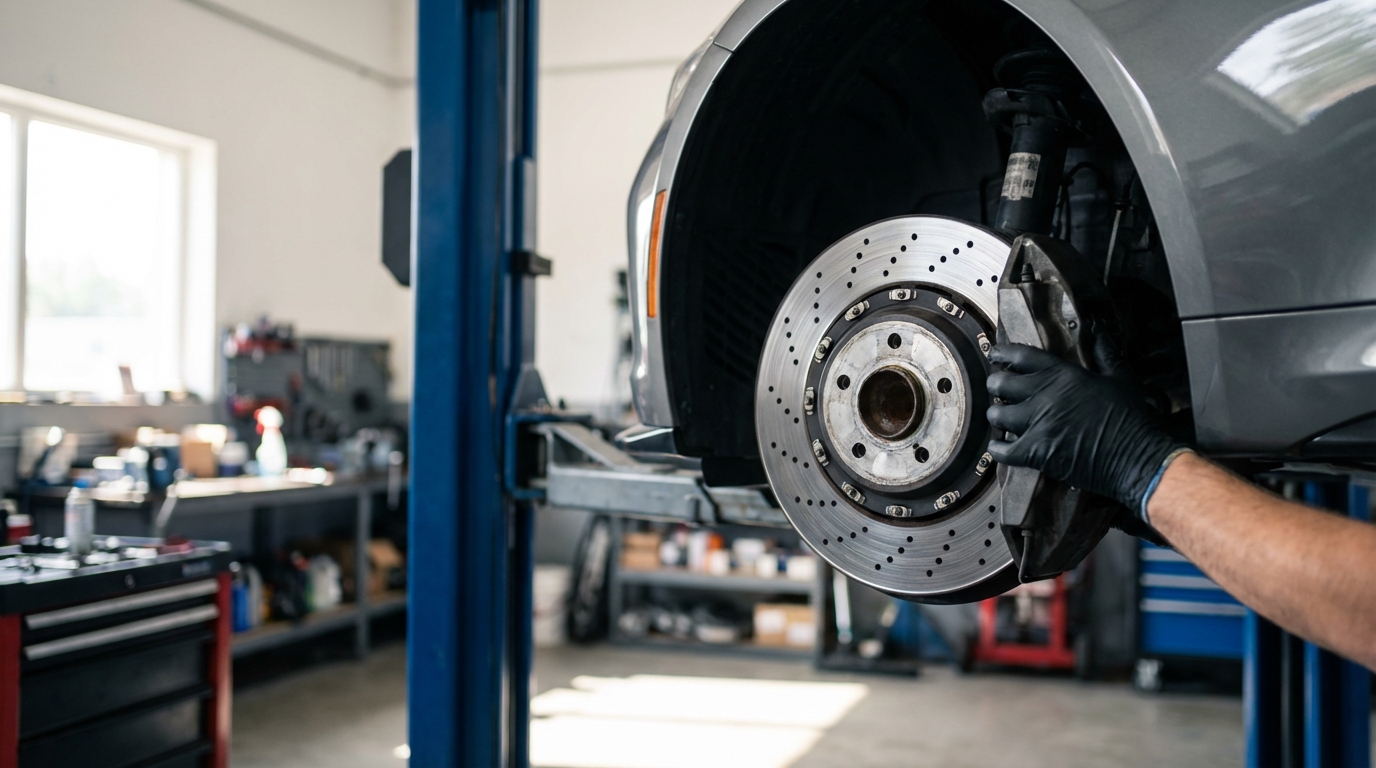
Modern vehicles predominantly use disc brakes, especially on the front wheels, for their superior performance and heat dissipation. Some vehicles, particularly on the rear, may still utilize drum brakes. * **Disc Brakes:** * **Brake Calipers:** These components house one or more pistons that receive hydraulic pressure. When pressure is applied, the pistons press the brake pads against the rotor. * **Brake Pads:** Made from friction material bonded to a metal backing plate, these pads are designed to create high friction with the rotor. They are consumables that wear down over time. * **Brake Rotors (Discs):** These are large, flat metal discs that rotate with the wheel. When the pads clamp onto the rotor, friction is generated, slowing the wheel. Rotors can be solid or ventilated (with internal cooling fins) to improve heat dissipation. * **Drum Brakes:** * **Wheel Cylinders:** Located within the brake drum assembly, these hydraulic cylinders receive fluid pressure and push the brake shoes outwards. * **Brake Shoes:** Curved friction material segments mounted on metal frames. When activated, they press against the inside surface of the brake drum. * **Brake Drums:** A cylindrical casting that rotates with the wheel. The brake shoes press against its inner surface to create friction.Brake Fluid
* **Brake Fluid:** This is the hydraulic medium that transmits pressure throughout the system. It is specifically formulated to be incompressible, have a high boiling point (to resist vaporization under heat), and lubricate system components. Different types (e.g., DOT 3, DOT 4, DOT 5.1) have varying characteristics and boiling points.The Braking Process: A Step-by-Step Overview
When a driver applies the brakes, a precise sequence of events unfolds: 1. **Pedal Input:** The driver depresses the brake pedal, applying mechanical force. 2. **Pressure Generation:** This force is amplified by a brake booster (discussed below) and then transmitted to the master cylinder. The master cylinder’s pistons move, pressurizing the brake fluid. 3. **Fluid Transmission:** The pressurized brake fluid travels through the rigid brake lines and flexible hoses to the wheel-end braking mechanisms. 4. **Component Actuation:** * In disc brakes, the hydraulic pressure forces the caliper pistons to extend, pushing the brake pads against the spinning brake rotor. * In drum brakes, the pressure causes the wheel cylinder pistons to move outwards, pressing the brake shoes against the inside of the spinning brake drum. 5. **Friction and Deceleration:** The contact between the friction material (pads or shoes) and the rotating component (rotor or drum) generates friction. This friction converts the vehicle’s kinetic energy into heat, slowing the rotation of the wheels and, consequently, the vehicle. 6. **Release:** When the driver releases the brake pedal, the pressure in the system drops. Return springs retract the brake pads or shoes away from the rotors or drums, allowing the wheels to rotate freely again.Enhancements and Advanced Braking Technologies
Modern vehicles integrate sophisticated technologies to improve braking performance, control, and safety.Power Brakes (Brake Booster)
* To reduce the physical effort required from the driver, most vehicles incorporate a brake booster. This device, typically vacuum-assisted, amplifies the force applied to the brake pedal before it reaches the master cylinder. When the driver presses the pedal, a diaphragm inside the booster moves, using the pressure differential between the engine vacuum and atmospheric pressure to multiply the force applied to the master cylinder pistons.Anti-lock Braking System (ABS)
* ABS is a critical safety system designed to prevent wheels from locking up during sudden or hard braking, especially on slippery surfaces. When a wheel locks, the driver loses steering control, and the braking distance can increase. * **How it works:** ABS uses wheel speed sensors to monitor the rotational speed of each wheel. If a sensor detects that a wheel is decelerating too rapidly (indicating it’s about to lock), the ABS control unit rapidly modulates the brake pressure to that specific wheel. It cycles the pressure – releasing, reapplying, and holding – many times per second, allowing the wheel to continue rotating just below the point of locking. This maintains traction, enabling the driver to steer while braking.Electronic Brakeforce Distribution (EBD)
* EBD is often integrated with ABS and optimizes the braking force applied to each wheel based on road conditions, vehicle load, and weight transfer during braking. It ensures that the rear wheels do not lock up before the front wheels and can dynamically adjust force distribution side-to-side. For instance, if a vehicle is carrying a heavy load, EBD will send more braking force to the rear wheels.Brake Assist (BA)
* Brake Assist systems are designed to detect emergency braking situations. Many drivers do not apply sufficient force to the brake pedal during a panic stop. BA monitors the speed at which the brake pedal is pressed and the force applied. If it determines an emergency, it automatically applies maximum braking force, even if the driver hasn’t pressed the pedal all the way down, potentially reducing stopping distances.Traction Control System (TCS) and Electronic Stability Control (ESC)
* While primarily focused on vehicle stability and traction, both TCS and ESC utilize the braking system to achieve their goals. * **TCS:** Prevents wheel spin during acceleration by applying the brakes to individual spinning wheels or reducing engine power. * **ESC:** Monitors steering angle, wheel speed, and vehicle yaw. If it detects a loss of control (e.g., oversteer or understeer), it can selectively apply brakes to individual wheels to help steer the vehicle back onto its intended path.Maintenance Considerations for Braking Systems
Consistent maintenance is paramount for ensuring the safety and effectiveness of a vehicle’s braking system. * **Brake Fluid:** Regular inspection and replacement of brake fluid are necessary. Brake fluid is hygroscopic, meaning it absorbs moisture over time, which lowers its boiling point and can lead to corrosion within the system. * **Brake Pads/Shoes:** These friction materials wear down with use and must be inspected periodically and replaced when they reach their minimum thickness. Ignoring worn pads can lead to rotor damage and reduced braking performance. * **Brake Rotors/Drums:** These components can wear thin, warp, or develop grooves. They should be inspected for proper thickness, run-out, and surface condition. * **Brake Lines and Hoses:** Inspect for signs of corrosion, leaks, cracks, or bulging, which can compromise the hydraulic integrity of the system. * **Bleeding the System:** Air can enter the hydraulic system, causing a spongy pedal feel and reduced braking efficiency. Periodically bleeding the brakes removes any trapped air.Conclusion
The braking system of a modern vehicle is a testament to engineering ingenuity, evolving from simple mechanical linkages to complex hydraulic and electronic networks. Its fundamental purpose remains unchanged: to reliably and efficiently convert kinetic energy into thermal energy to safely bring a vehicle to a halt. The continuous development of technologies like ABS, EBD, and Brake Assist underscores an ongoing commitment to enhancing vehicle control and passenger safety. Understanding these systems is not just about appreciating their complexity, but also about recognizing the critical role they play in every journey. —Frequently Asked Questions (FAQs)
Q1: How often should brake fluid be replaced?
A1: Brake fluid replacement intervals typically range from every two to five years, or as specified by the vehicle manufacturer. This is because brake fluid absorbs moisture over time, which lowers its boiling point and can lead to corrosion within the braking system. Checking your vehicle’s owner’s manual for specific recommendations is always advisable.
Q2: What causes a spongy brake pedal?
A2: A spongy or soft brake pedal feel is most commonly caused by air trapped within the hydraulic brake lines. Since air is compressible, it absorbs some of the pedal force instead of transmitting it directly to the brake calipers or wheel cylinders. Other potential causes include low brake fluid level, a leaking master cylinder, or issues with brake hoses.
Q3: What is the primary purpose of an Anti-lock Braking System (ABS)?
A3: The primary purpose of ABS is to prevent the wheels from locking up during hard or sudden braking. By rapidly modulating the brake pressure to individual wheels, ABS allows the driver to maintain steering control and often reduces stopping distances, especially on slippery surfaces, compared to locked wheels.
Q4: Can I mix different types of brake fluid?
A4: Mixing different types of brake fluid is generally not recommended unless explicitly stated as compatible by the manufacturer. DOT 3, DOT 4, and DOT 5.1 are glycol-ether based and generally compatible, though mixing can dilute their individual properties. DOT 5, however, is silicone-based and is not compatible with glycol-ether fluids; mixing them can cause damage to the braking system seals and components.
Q5: What is brake fade and how does it occur?
A5: Brake fade refers to a reduction in braking effectiveness that can occur when the braking system becomes excessively hot due to prolonged or heavy use. High temperatures can cause the brake pads’ friction material to degrade, reduce the friction coefficient, and can even boil the brake fluid, creating gas bubbles in the lines. This leads to a noticeable decrease in stopping power and requires greater pedal effort to achieve the same braking effect.

Diana Miller, is a dedicated nature enthusiast and an outdoor adventurer. She began leading groups for excursions in her teens and never stopped. Following her passion for nature, she gathers her friends for outdoor trips every now and then. And for the last 10 years, she has executed workshops on backpacking, snow kayaking and traveling that included her main motive of lightweight packing while outdoors. During leisure, she loves planning for her next adventure.