
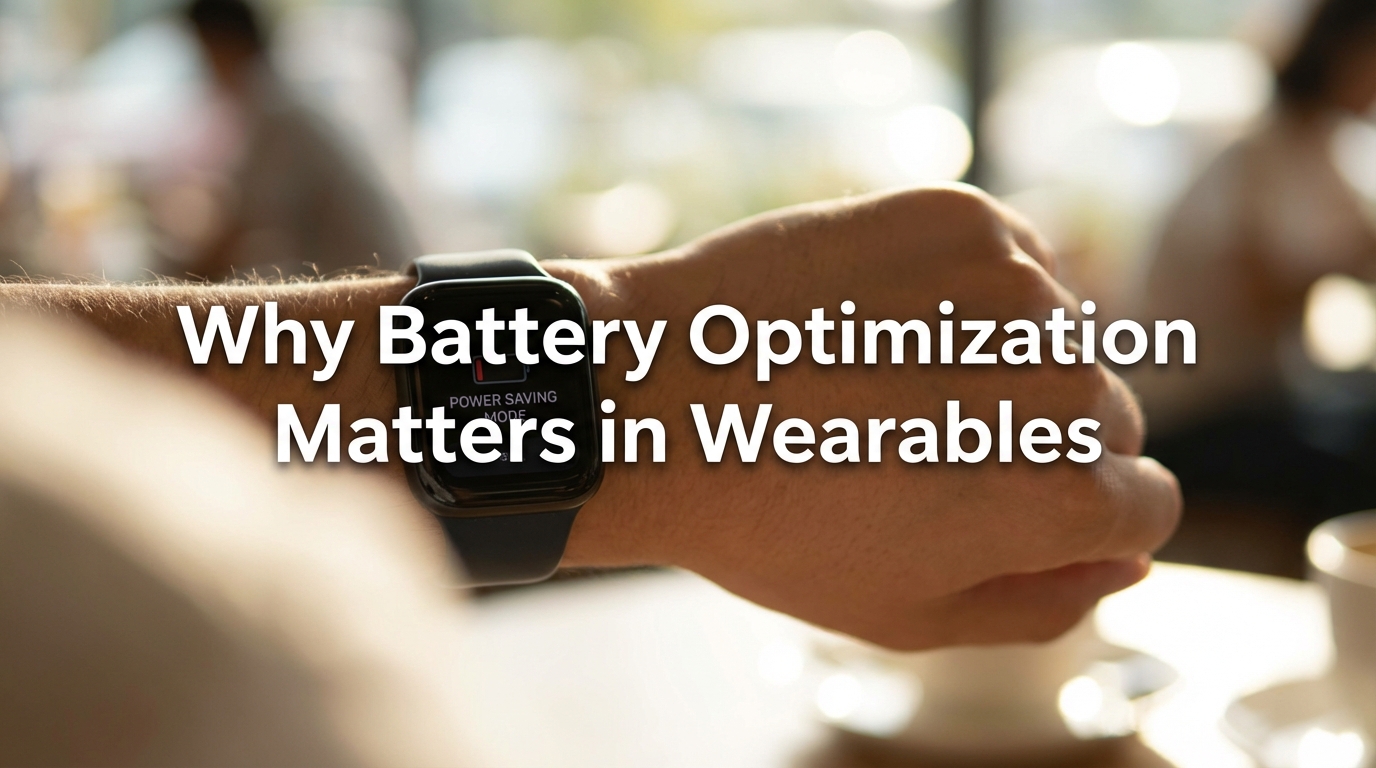
Why Battery Optimization Matters in Wearables
Wearable technology has transitioned from niche gadgets to ubiquitous companions, seamlessly integrating into daily life. From smartwatches tracking fitness metrics to health monitors providing critical physiological data, these compact devices offer unparalleled convenience and insights. However, the very nature of wearables – their small form factor, continuous operation, and diverse functionalities – places significant demands on a crucial component: the battery. The ability of a wearable device to maintain power efficiency directly influences its practicality, user satisfaction, and overall utility. Understanding why battery optimization is so vital sheds light on the engineering challenges and design philosophies behind these miniature marvels.The Ubiquity and Utility of Wearable Technology
Defining Wearables and Their Diverse Applications
Wearable devices encompass a broad spectrum of electronics designed to be worn on the body, often continuously. These range from smartwatches and fitness trackers to smart rings, hearables, and even specialized medical patches. Their applications are incredibly diverse, touching various facets of human experience. In the realm of health and fitness, they monitor heart rate, step count, sleep patterns, calorie expenditure, and even blood oxygen levels, providing users with actionable data for well-being. Beyond health, wearables facilitate communication by delivering notifications, calls, and messages directly to the wrist or ear, reducing the need to constantly check a smartphone. They offer convenience features like contactless payments, smart home control, and GPS navigation. In professional settings, specialized wearables can monitor worker safety, track assets, or provide real-time data for field operations. The common thread among all these applications is the expectation of continuous, reliable performance, which is inherently tied to their power source.The User Expectation of Continuous Functionality
A fundamental expectation from users of any electronic device, especially those designed for continuous wear, is reliable and uninterrupted operation. With wearables, this expectation is amplified. Users rely on their devices throughout the day for tracking activities, receiving timely alerts, and accessing quick information. The inconvenience of a device running out of power mid-day, or requiring frequent, often inconvenient, charging, can severely detract from the user experience. Imagine tracking a long run, only for the device to die before completion, or missing an important health alert because the battery depleted unexpectedly. Such occurrences can undermine the perceived value and trustworthiness of the technology. Therefore, manufacturers strive to design wearables that can last a full day, or even multiple days, on a single charge, making battery optimization a critical design priority rather than a mere afterthought.Fundamental Principles of Battery Consumption in Wearables
Every component and software process within a wearable device contributes to its overall power consumption. Understanding these fundamental demands is crucial for effective optimization.Hardware Components and Their Energy Demands
The physical components of a wearable are primary consumers of battery power.- Microprocessors: The central processing unit (CPU) is responsible for executing software instructions, processing data from sensors, and managing the device’s overall operations. Its power consumption scales with clock speed and the complexity of tasks.
- Sensors: Wearables are packed with sensors. Accelerometers, gyroscopes, magnetometers, optical heart rate sensors, electrodermal activity (EDA) sensors, and GPS modules all require energy to collect data. GPS, in particular, is a notoriously power-hungry component.
- Displays: Whether an OLED, LCD, or reflective display, the screen is a significant power consumer, especially if it’s an “always-on” display or has high brightness settings. The technology and how frequently the display updates or illuminates play a large role.
- Radios: Connectivity modules like Bluetooth, Wi-Fi, Near Field Communication (NFC), and cellular (LTE) are essential for communication and data synchronization. Transmitting and receiving data wirelessly demands considerable power. Bluetooth Low Energy (BLE) has been a significant advancement in this area for short-range communication.
- Vibration Motors: Used for haptic feedback and notifications, these small motors consume power each time they activate.
Software Processes and Their Impact
Beyond hardware, the software running on a wearable device significantly influences battery drain.- Operating System Overhead: The core operating system requires power to run its fundamental processes, manage memory, and schedule tasks.
- Background Apps and Services: Applications running in the background, even if not actively used, can consume power by performing updates, data synchronization, or listening for events.
- Data Synchronization Frequency: How often the device syncs data with a paired smartphone or cloud service directly impacts the usage of communication radios, thus affecting battery life. Frequent syncing, while providing up-to-the-minute data, uses more power.
- Notification Handling: Each notification triggers various components, including the display, vibration motor, and often the communication radio, contributing to power consumption.
- Algorithm Complexity: Sophisticated algorithms used for processing raw sensor data into meaningful metrics (e.g., sleep stage analysis, advanced activity recognition) require more processing power and thus more energy.
The Core Reasons for Prioritizing Battery Optimization
The sustained success and evolution of wearable technology hinge on effective battery management, impacting both the immediate user experience and long-term viability.Enhancing User Experience and Satisfaction
The most immediate and palpable benefit of battery optimization is an improved user experience. Users desire devices that can keep pace with their lifestyles, not ones that add another item to their daily charging routine. Longer battery life translates to:- Reduced Charging Anxiety: Users worry less about their device dying at an inconvenient moment.
- Greater Freedom: Devices can be used for extended periods without access to a charger, ideal for travel, multi-day events, or outdoor activities.
- Seamless Integration: When a device lasts longer, it feels more like a natural extension of oneself rather than a separate gadget needing constant attention.
Sustaining Data Accuracy and Continuity
Many wearables are valued for their continuous data collection capabilities, especially in health and fitness monitoring. Accurate and uninterrupted data streams are critical for deriving meaningful insights.- Consistent Monitoring: To build a comprehensive picture of a user’s health or activity patterns, devices need to operate consistently. A wearable that frequently runs out of battery creates gaps in data, reducing the overall utility and reliability of the collected information.
- Reliable Sensor Performance: Maintaining sufficient power ensures that sensors can operate at their intended accuracy and sampling rates. Power-saving modes that reduce sensor activity might compromise data quality, making optimization crucial to balance power and performance.
Enabling Advanced Functionality
The ambition of wearable technology extends to incorporating more sophisticated features, such as on-device AI processing, advanced biometric tracking, and richer interactive experiences. These capabilities often demand more computational power and energy. Effective battery optimization allows these advanced functionalities to be implemented without drastically compromising device longevity. Without careful power management, devices would either be severely limited in their features or require impossibly large batteries, defeating the purpose of a compact wearable.Supporting Device Longevity and Environmental Considerations
Beyond immediate usage, battery optimization plays a role in the long-term health of the device and its environmental impact.- Battery Health: Lithium-ion batteries, commonly used in wearables, have a finite number of charge cycles. Frequent deep discharges and recharges can accelerate battery degradation. Efficient power management reduces the frequency of these cycles, potentially extending the overall lifespan of the battery and, by extension, the wearable device itself.
- Reduced Waste: By extending the usable life of both the battery and the device, the need for premature replacements is reduced, contributing to less electronic waste and a more sustainable technological ecosystem.
Strategies and Techniques for Battery Optimization
Manufacturers employ a combination of hardware and software approaches, alongside offering user-configurable settings, to achieve optimal battery performance.Hardware-Level Optimizations
At the foundational level, power efficiency is engineered into the components themselves:- Low-Power Chip Architectures: Designers utilize Systems-on-Chip (SoCs) specifically designed for low-power operation, often incorporating dedicated low-power cores or specialized hardware accelerators for common tasks.
- Efficient Sensor Designs: Sensors are chosen and designed for minimal power draw while maintaining accuracy. This might involve optimizing the sampling rate or using lower-power sensing technologies.
- Power-Efficient Displays: Employing display technologies like OLED that can turn off individual pixels, or using reflective displays in certain contexts, helps reduce power consumption. Ambient display modes that update less frequently are also common.
- Dynamic Voltage and Frequency Scaling (DVFS): Processors can dynamically adjust their operating voltage and frequency based on the workload, consuming less power during idle periods or light tasks.
Software-Level Optimizations
The software layer is equally critical for managing power effectively:- Intelligent Power Management Algorithms: Operating systems employ sophisticated algorithms to put components into deep sleep states when not in use, schedule tasks efficiently to avoid unnecessary wake-ups, and manage resource allocation.
- Event-Driven Processing: Instead of continuously polling for data, devices can be designed to wake up only when a specific event occurs (e.g., a notification arrives, a sensor detects motion), minimizing active power draw.
- Optimized Data Transmission Protocols: Utilizing protocols like Bluetooth Low Energy (BLE) for communication drastically reduces the power required for wireless data exchange compared to older Bluetooth standards or Wi-Fi when only small amounts of data need to be transferred.
- User-Configurable Power Saving Modes: Software can offer different power modes, allowing users to sacrifice certain functionalities for extended battery life when needed.
- Efficient Code and Algorithms: Developers write optimized code that performs tasks efficiently, reducing the number of CPU cycles and memory accesses required, thereby conserving energy.
User-Configurable Settings
Users themselves can contribute to battery optimization by making informed choices:- Adjusting Screen Brightness and Timeout: Lowering screen brightness and reducing the display timeout period can significantly save power.
- Managing Notification Frequency and Types: Limiting notifications to only the most essential ones reduces screen activations, vibrations, and radio usage.
- Limiting Continuous Monitoring or GPS Usage: Disabling continuous heart rate monitoring or only activating GPS when actively tracking an outdoor workout can conserve substantial power.
- Disabling Unused Features: Turning off Wi-Fi, NFC, or cellular connectivity when not needed eliminates their background power consumption.
Conclusion
Battery optimization stands as a foundational pillar for the continued growth and user acceptance of wearable technology. It transcends mere convenience, directly influencing the user experience, the reliability of data collection, the feasibility of advanced features, and the long-term sustainability of the devices. As wearables become even more sophisticated and integrated into our lives, the importance of maximizing every milliamp-hour will only intensify. Continued innovation in battery chemistry, power-efficient hardware design, and intelligent software algorithms will be essential to meet the evolving demands of a connected and always-on world, ensuring that these small devices deliver their immense potential without compromise.FAQs
-
Why is battery life a common concern for wearable users?
Battery life is a common concern because wearables are designed for continuous or frequent use throughout the day. A device running out of power can disrupt health tracking, communication, and other essential functions, causing frustration and requiring users to frequently seek out charging opportunities, which can be inconvenient. -
How do different wearable features impact battery consumption?
Various features contribute differently to battery consumption. The display, especially if it’s always-on or bright, is a major power drain. Sensors like GPS and continuous heart rate monitors consume significant power when active. Wireless radios (Bluetooth, Wi-Fi, cellular) also demand power for transmitting and receiving data. More complex processing for advanced features or algorithms also increases energy usage. -
Can I, as a user, do anything to improve my wearable’s battery life?
Yes, users can significantly impact battery life. Actions like reducing screen brightness, shortening display timeout, limiting the number and frequency of notifications, disabling continuous monitoring for certain sensors (like heart rate or GPS when not exercising), and turning off unused connectivity features (Wi-Fi, NFC) can all help conserve power. -
Are there new technologies emerging to address wearable battery limitations?
Yes, research and development are ongoing. Emerging technologies include solid-state batteries, which promise higher energy density and improved safety; energy harvesting solutions (e.g., kinetic, solar, thermoelectric) that can supplement or recharge batteries; and advanced software algorithms leveraging machine learning to predict usage patterns and optimize power distribution more intelligently. -
Does frequent charging harm a wearable’s battery?
Modern lithium-ion batteries, commonly used in wearables, have a finite number of charge cycles. While frequent “top-off” charging generally causes less stress than allowing the battery to fully drain repeatedly (deep discharge), every charge contributes to the overall cycle count. Smart charging technologies in devices are designed to manage this, but over many years, all batteries will experience some degradation regardless of charging habits.
Diana Miller, is a dedicated nature enthusiast and an outdoor adventurer. She began leading groups for excursions in her teens and never stopped. Following her passion for nature, she gathers her friends for outdoor trips every now and then. And for the last 10 years, she has executed workshops on backpacking, snow kayaking and traveling that included her main motive of lightweight packing while outdoors. During leisure, she loves planning for her next adventure.