
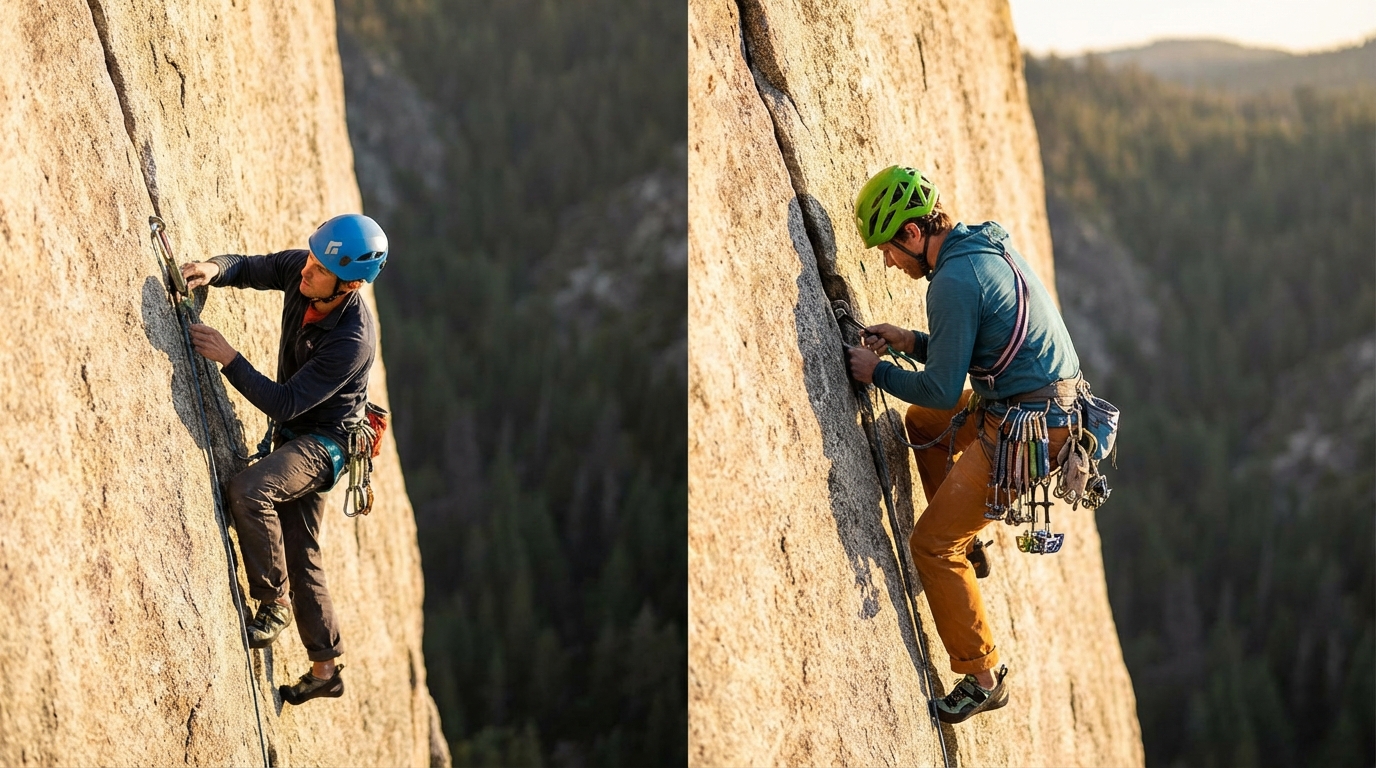
Rock climbing encompasses a diverse array of disciplines, each offering unique challenges and experiences. Among the most popular and foundational forms of rope climbing are sport climbing and traditional (trad) climbing. While both involve ascending rock faces using ropes and harnesses for safety, their fundamental approaches to protection—how climbers secure themselves to the rock to prevent long falls—differ significantly. Understanding these distinctions is crucial for anyone looking to engage with or learn more about these fascinating vertical pursuits.
Understanding Rope Climbing Fundamentals
Before delving into the specifics of sport and trad climbing, it’s helpful to establish a baseline understanding of rope climbing principles. In general, rope climbing involves:
- Ropes: Dynamic ropes designed to stretch and absorb the force of a fall.
- Harnesses: Worn by climbers and belayers to connect to the rope.
- Belay Device: A friction-enhancing device used by the belayer to control the rope and arrest a fall.
- Protection: Any gear placed into or fixed to the rock to which the rope is clipped, limiting the distance a climber would fall.
- Anchor Systems: Combinations of protection used at the top of a climb or at a belay station to secure the belayer and/or rope.
The primary divergence between sport and trad climbing lies in the nature and placement of this “protection.”
Sport Climbing Explained
Sport climbing is characterized by its reliance on pre-placed, fixed protection permanently installed in the rock. This approach streamlines the process of ascent, allowing climbers to focus primarily on the physical and technical aspects of moving over rock.
Protection in Sport Climbing
The protection in sport climbing consists of:
- Bolts: Metal anchors drilled into the rock face.
- Hangers: Plates or rings attached to the bolts, providing a point to clip a quickdraw.
- Chains/Anchors at the Top: Permanent setups at the end of a route for safe lowering or rappelling.
These fixed points are typically spaced at regular intervals along a route, often referred to as a “sport route.”
Equipment for Sport Climbing
Compared to trad climbing, the equipment required for a sport climbing ascent is relatively minimal for the lead climber:
- Climbing rope
- Harness
- Climbing shoes
- Belay device and locking carabiner
- Quickdraws (used to connect the rope to the bolt hangers)
- Helmet (optional but recommended)
- Chalk bag
The Sport Climbing Process
A sport climber ascends a route by:
- Clipping a quickdraw into a fixed hanger on a bolt.
- Then clipping the climbing rope into the other end of the quickdraw.
- Repeating this process as they ascend, creating a series of protection points.
This systematic approach means the climber does not need to carry or place protection gear during the climb, allowing for a more dynamic and athletic focus.
Characteristics of Sport Climbing
- Athletic Focus: Emphasizes physical strength, endurance, and precise movement.
- Reduced Mental Overhead: Less time and mental energy are spent on identifying and placing protection.
- Accessibility: Often perceived as more accessible for newcomers due to its straightforward protection system.
- Training Ground: Popular for training and pushing physical limits on challenging routes.
- Developed Areas: Typically found at crags with easily accessible routes, often close to population centers.
Traditional (Trad) Climbing Explained
Traditional climbing, in contrast, involves the lead climber placing all their protection gear into natural features of the rock as they ascend. This gear is then removed by the second climber (the follower) or by the lead climber upon descent, leaving no permanent fixtures behind.
Protection in Trad Climbing
The protection in trad climbing is entirely removable and relies on the climber’s skill and judgment to place gear securely into the rock. Common types of trad protection include:
- Cams (Spring-Loaded Camming Devices – SLCDs): Mechanical devices with spring-loaded lobes that expand into cracks, creating friction.
- Nuts (Chocks): Tapered metal wedges that are wedged into constrictions in cracks.
- Hexes (Hexentric Nuts): Hexagonal metal pieces that can be placed passively like nuts or actively cammed into wider cracks.
- Slings/Cord: Used to wrap around natural features like rock horns or trees to create protection points.
All these pieces are attached to the rope via carabiners and sometimes quickdraws (often referred to as ‘extenders’ in trad to reduce rope drag).
Equipment for Trad Climbing
Trad climbing requires a substantially larger and more varied rack of gear compared to sport climbing:
- Full “rack” of cams (various sizes)
- Full “rack” of nuts (various sizes)
- Hexes (optional, but often carried for wider cracks)
- Quickdraws (often a mix of short and longer ones/slings for extending placements)
- Alpine draws (slings with two carabiners, for extending placements even further)
- Several slings (nylon or dyneema, various lengths)
- Belay device and locking carabiners
- Climbing rope (often a longer rope for multi-pitch routes)
- Harness
- Climbing shoes
- Helmet (highly recommended)
- Chalk bag
- Nut tool (for removing stubborn nuts)
The Trad Climbing Process
A trad climber ascends a route by:
- Identifying natural cracks, pockets, or constrictions in the rock.
- Selecting the appropriate piece of protection from their rack.
- Placing the gear securely into the rock.
- Testing the placement to ensure it holds a fall.
- Clipping the rope into the placed gear via a carabiner or quickdraw.
- Continuing to climb, placing new protection as needed.
Once the lead climber reaches the top or a belay station, they build a multi-point anchor using their protection gear. The follower then climbs, removing the gear as they go, a process known as “cleaning the pitch.”
Characteristics of Trad Climbing
- Problem Solving: Demands significant knowledge of rock mechanics, gear placement, and route finding.
- Mental Fortitude: Requires a high level of concentration and confidence in self-placed protection.
- Self-Sufficiency: Climbers must be proficient in all aspects of protection, anchor building, and rescue techniques.
- Adventure and Exploration: Often takes climbers into more remote, undeveloped areas and multi-pitch environments.
- Leave No Trace: Adheres strictly to principles of leaving no permanent impact on the rock face.
Key Distinctions
While both disciplines share the fundamental goal of ascending rock, their operational differences are significant:
- Protection System: Sport climbing uses fixed, pre-placed bolts; trad climbing uses removable gear placed by the climber.
- Gear Carried: Sport climbers carry quickdraws; trad climbers carry an extensive rack of cams, nuts, and slings.
- On-Route Activity: Sport climbers primarily focus on physical movement and clipping pre-existing gear; trad climbers constantly assess rock features, select, place, and test protection.
- Skill Set Emphasis: Sport climbing highlights athleticism and movement efficiency; trad climbing emphasizes technical knowledge, judgment, and risk assessment alongside physical ability.
- Environmental Philosophy: Sport climbing creates a permanent presence with bolts (though done responsibly); trad climbing prioritizes a “leave no trace” approach by removing all gear.
- Pace of Ascent: Sport climbing can often be quicker due to the lack of gear placement; trad climbing is generally slower, involving more pauses for gear work.
Conclusion
Sport climbing and trad climbing represent two distinct yet equally rewarding facets of the climbing world. Sport climbing offers a pathway to push physical limits on routes with established safety infrastructure, appealing to those who prioritize athletic performance and a streamlined experience. Trad climbing, on the other hand, is a more involved endeavor, demanding extensive technical knowledge, problem-solving skills, and a deeper engagement with the natural environment, often leading to a greater sense of adventure and self-reliance. Both styles require proper training, skill development, and a strong commitment to safety protocols. Ultimately, the choice between them or the pursuit of both depends on individual preferences, goals, and a willingness to master their respective complexities.
Frequently Asked Questions
1. Is one climbing style inherently safer than the other?
Neither style is inherently safer; instead, safety depends on factors such as climber experience, adherence to proper techniques, gear quality, and objective hazards. Sport climbing’s fixed protection reduces reliance on a climber’s gear placement skills for protection, but bolts can degrade over time, and human error in clipping or belaying remains a risk. Trad climbing requires extensive knowledge of gear placement and anchor building, which, if done incorrectly, can lead to serious consequences. However, properly placed trad gear can be very secure. Both demand diligent safety practices and thorough understanding of the specific risks involved.
2. Can I transition from sport to trad climbing?
Yes, many climbers start with sport climbing due to its relative accessibility and then progress to trad climbing. The physical skills of climbing movement are transferable. However, transitioning to trad requires significant additional training in gear identification, placement, testing, and removal, as well as anchor building and route finding. It’s highly recommended to seek professional instruction or mentorship from experienced trad climbers to learn these critical skills safely.
3. What are the environmental considerations for each climbing style?
Sport climbing involves drilling bolts into the rock, which creates a permanent alteration. Responsible development includes minimizing the number of bolts, careful placement to avoid fragile rock or sensitive areas, and using durable materials. Trad climbing adheres to “Leave No Trace” principles, meaning all gear is removed, leaving the rock as undisturbed as possible. However, even trad climbing can cause minor impacts such as rope abrasion or accidental gear stuck in cracks if not careful. Both styles require responsible access and interaction with the natural environment.
4. Do both climbing styles use the same type of rope?
Generally, both sport and trad climbing utilize dynamic ropes designed to stretch and absorb the energy of a fall. The specific length and diameter of the rope might vary based on the type of route. For instance, sport climbing might use shorter, thicker ropes for single-pitch routes, while multi-pitch trad climbing often requires longer, sometimes thinner, ropes to cover greater distances between belay stations.
5. What is a “lead climber” in both styles?
In both sport and trad climbing, the “lead climber” is the person who ascends first, clipping the rope into protection points as they go. They are protected by a “belayer” on the ground (or at a belay station) who manages the rope and arrests falls. The key difference is that a sport lead climber clips into pre-placed fixed bolts, whereas a trad lead climber actively places all their protection gear into the rock as they ascend.

Diana Miller, is a dedicated nature enthusiast and an outdoor adventurer. She began leading groups for excursions in her teens and never stopped. Following her passion for nature, she gathers her friends for outdoor trips every now and then. And for the last 10 years, she has executed workshops on backpacking, snow kayaking and traveling that included her main motive of lightweight packing while outdoors. During leisure, she loves planning for her next adventure.