
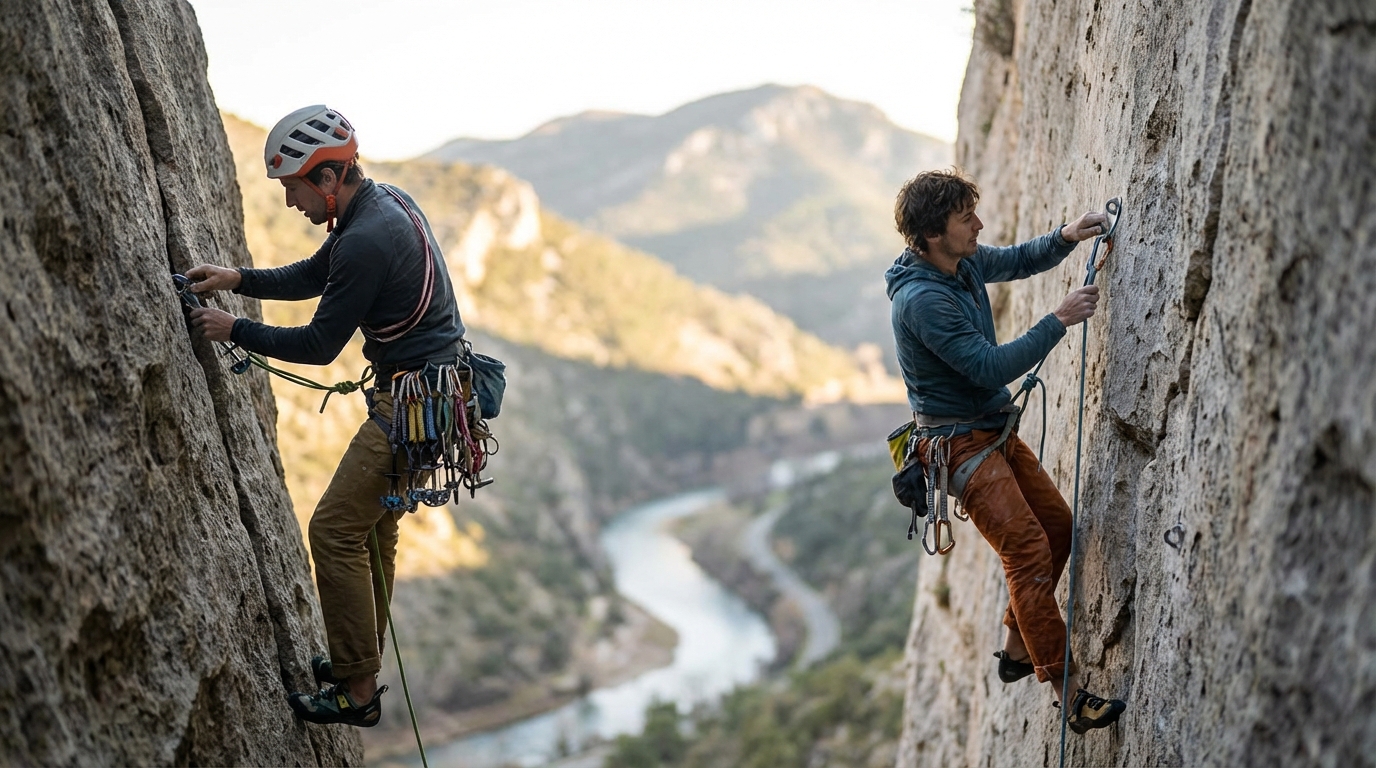
Understanding the Differences Between Sport and Traditional Climbing
Rock climbing encompasses a wide range of disciplines, each offering unique challenges and requiring distinct skill sets. Among the most popular and foundational forms are sport climbing and traditional (trad) climbing. While both involve ascending rock faces with ropes and specialized equipment, their approaches to safety, gear placement, and overall philosophy diverge significantly. Understanding these distinctions is crucial for anyone looking to engage with, or simply comprehend, the world of vertical ascent. This exploration will delineate the core characteristics of sport and trad climbing, highlighting their operational differences, equipment needs, and underlying ethics.Fundamental Distinctions in Climbing Approaches
The primary difference between sport and trad climbing lies in the nature of their protective systems. Sport climbing relies on pre-placed, fixed anchors, whereas trad climbing involves the lead climber placing temporary, removable protection during the ascent. This fundamental distinction influences everything from the gear carried to the mental approach required for each style.Sport Climbing Explained
Sport climbing emerged as a discipline focused on the physical and technical aspects of climbing movement. It minimizes the complexities of protection placement, allowing climbers to concentrate on gymnastic sequences and precise footwork.Fixed Protection
In sport climbing, routes are equipped with permanent anchors, typically stainless steel or titanium bolts drilled into the rock. These bolts are spaced at regular intervals, often every few meters. As the lead climber ascends, they clip a quickdraw (a pair of carabiners connected by a short sling) into a bolt and then clip their climbing rope into the bottom carabiner of the quickdraw. * **Pre-placed Anchors:** The security of the route is largely predetermined by the quality and placement of these fixed bolts. * **Reduced Gear Burden:** The climber on lead carries only a relatively small number of quickdraws, a belay device, and their harness, shoes, and chalk bag. This reduces weight and simplifies gear management during the ascent. * **Top Rope Potential:** Sport routes are also well-suited for top-roping, where the rope runs through an anchor at the top of the climb, providing a high level of security for less experienced climbers or for working on difficult moves.Focus on Movement and Physicality
With the protection concerns largely handled by fixed hardware, sport climbers can dedicate their full attention to the physical challenge of the climb. * **Technical Sequences:** Routes are often designed to test specific movements, strength, endurance, or balance. * **Gymnastic Style:** Many sport climbs feature dynamic, powerful moves, demanding high levels of physical fitness. * **Clean Routes:** Sport routes are frequently cleaned of loose rock and vegetation, and sometimes even intentionally chipped or sculpted to create holds, though this practice is controversial. The path up is typically obvious.Equipment Considerations in Sport Climbing
The equipment list for sport climbing is comparatively streamlined: * **Rope:** A dynamic single rope, typically 9.5mm to 10.5mm in diameter, suitable for catching falls. * **Harness:** A comfortable climbing harness. * **Belay Device:** An assisted braking device or tubular belay device for managing the rope and arresting falls. * **Quickdraws:** A set of 10-20 quickdraws, depending on the length and spacing of the bolts on the route. * **Climbing Shoes:** Specialized footwear designed for friction and precision. * **Chalk Bag:** To keep hands dry and improve grip. * **Helmet:** Highly recommended for head protection.Traditional (Trad) Climbing Explained
Traditional climbing is often regarded as a more holistic and adventurous form of climbing, demanding a broader skill set that includes not just physical prowess but also significant judgment, problem-solving, and a deep understanding of rock mechanics.Placement of Removable Protection
In trad climbing, the lead climber places temporary, removable pieces of protection into natural features of the rock as they ascend. These pieces are then clipped with quickdraws or slings, and the rope is run through. * **Natural Features:** Protection is typically placed in cracks, fissures, or constrictions within the rock. * **Active and Passive Protection:** * **Passive Protection:** Includes nuts (metal wedges) and hexes (hexagonal pieces) which are wedged into constricting features. * **Active Protection:** Primarily represented by cams (spring-loaded camming devices), which expand to create friction against the rock walls of a crack. * **Removable Gear:** All placed protection is designed to be removed by the second climber following the pitch, leaving no trace on the rock. This adheres to the “leave no trace” outdoor ethic.Emphasis on Route Finding and Gear Management
Trad climbing places a significant emphasis on mental acuity and self-reliance, extending beyond just the physical act of climbing. * **Strategic Placement:** The leader must constantly assess the rock for suitable placements, select the correct piece of gear from their “rack,” and place it securely to protect against potential falls. * **Route Finding:** Trad routes often follow natural lines of weakness or systems of cracks, which may not always be obvious. The leader must effectively navigate and find their way up. * **Gear Management:** Carrying a substantial rack of gear (often 10-20 pounds) and managing it efficiently while climbing is a skill in itself. This includes selecting the correct piece quickly and efficiently placing it. * **Psychological Challenge:** The commitment to placing one’s own protection, and the understanding that the security of a fall depends entirely on the leader’s judgment, adds a significant psychological dimension.Equipment Considerations in Trad Climbing
Trad climbing requires a more extensive and specialized equipment list than sport climbing: * **Rope, Harness, Belay Device, Shoes, Chalk Bag, Helmet:** These are common to both disciplines. * **Protection (The Rack):** * **Cams (Spring-Loaded Camming Devices – SLCDs):** A range of sizes to fit various crack widths. * **Nuts (Passive Protection):** A set of metal wedges of various sizes. * **Hexes:** Sometimes carried as an alternative to cams or nuts in certain situations. * **Slings and Carabiners:** Many more than in sport climbing, used for extending protection, creating anchor systems, and adapting gear. * **Nut Tool:** A small hooked tool used to remove stuck nuts. * **Cordelettes/Prusiks:** For anchor building, self-rescue, or rappelling. * **Multi-pitch Anchor Material:** Often includes specialized slings, cordelettes, or larger locking carabiners for building belay anchors at the end of a pitch.Key Operational Differences
Beyond the equipment, the operational aspects and inherent philosophies of sport and trad climbing also present clear distinctions.Lead Climbing Experience
* **Sport:** The leader’s primary focus is on executing the physical moves and clipping into fixed bolts. Falls, while potentially long, are generally considered “clean” into robust, engineered protection. * **Trad:** The leader’s experience is interwoven with continuous decision-making regarding protection, route interpretation, and assessing rock quality. Falls carry a higher degree of uncertainty due to the variable nature of placed gear.Route Establishment
* **Sport:** Routes are established by bolting, often from above on rappel or by drilling on lead. This allows for routes to be created on blanker sections of rock that lack natural protection. * **Trad:** Routes naturally follow weaknesses in the rock, such as crack systems or chimneys, where protection can be placed. The ethic is to leave the rock as untouched as possible, meaning no permanent fixtures beyond what nature provides.Safety and Risk Perception
* **Sport:** Generally perceived to have a lower *objective* risk due to the reliability of fixed protection. However, subjective risk (e.g., skill level, decision-making) still plays a major role, and falls can still lead to injury, especially if hitting ledges or swinging into the rock. * **Trad:** Carries a higher *objective* risk due to the reliance on the leader’s judgment in placing removable gear, the quality of the rock, and the potential for gear to fail or pull out. The focus is on preventing falls and mitigating consequences through careful protection.Environmental Impact Considerations
* **Sport:** The placement of permanent bolts has an impact, but once established, the site is relatively static. There can be ethical debates about bolting practices and the “over-bolting” of certain areas. * **Trad:** Embraces a “clean climbing” ethic, aiming to leave no trace. All gear is removed, preserving the natural state of the rock. This approach minimizes human impact on the climbing environment.Learning Pathways and Progression
Many climbers begin their journey with sport climbing, as it allows for a focused development of basic movement skills and rope management without the added complexity of protection placement. The progression from sport to trad climbing typically involves extensive mentorship, formal instruction, and a gradual accumulation of experience in various rock types and situations. It requires a significant commitment to learning about gear, anchors, rescue techniques, and risk assessment. Some climbers specialize in one discipline, while others enjoy exploring the breadth of both.Conclusion
Sport climbing and traditional climbing represent two distinct philosophies within the climbing world. Sport climbing emphasizes the athletic and technical challenge of movement on fixed, reliable protection, making it an accessible entry point for many. Traditional climbing, on the other hand, embraces a more adventurous, self-reliant approach, demanding a comprehensive skill set that includes astute judgment, route-finding abilities, and meticulous gear management, all while adhering to an ethic of minimal environmental impact. Both disciplines offer profound satisfaction and unique ways to engage with the vertical environment, enriching the diverse tapestry of rock climbing.Frequently Asked Questions (FAQs)
1. Is one type of climbing inherently safer than the other?
There isn’t a simple answer. Sport climbing generally has a lower objective risk due to pre-placed, inspected fixed anchors. However, falls can still be significant, and subjective risk (climber error, fatigue) is always present. Trad climbing has a higher objective risk because safety relies on the leader’s judgment in placing temporary, removable protection. However, experienced trad climbers mitigate this risk through careful planning, skill, and conservative decision-making. Both require proper training and adherence to safety protocols.
2. Can I use sport climbing gear for trad climbing?
Partially. Essential items like ropes, harnesses, belay devices, climbing shoes, and helmets are common to both. However, trad climbing requires a substantial additional set of specialized gear, including a full “rack” of passive protection (nuts, hexes) and active protection (cams), as well as many more slings and carabiners for building anchors and extending placements. Sport quickdraws can be used to clip the rope into trad gear, but they don’t serve as the primary protection.
3. Which type of climbing is suitable for beginners?
Sport climbing is generally recommended for beginners. Its fixed protection system allows new climbers to focus on learning fundamental movement skills, rope handling, and belaying without the added complexity and mental pressure of placing their own protective gear. This simplified approach provides a safer and more manageable learning environment.
4. Are there routes that combine elements of both?
Yes, such routes are often referred to as “mixed” climbs. These routes might feature sections with fixed bolts (like sport climbing) and other sections requiring the placement of traditional protection (like trad climbing). They are less common than pure sport or pure trad routes and typically demand a higher level of experience, as climbers need to be proficient in both styles and manage a hybrid rack of gear.
5. How do I learn trad climbing after sport climbing?
Transitioning from sport to trad climbing requires dedicated learning. It is highly recommended to seek formal instruction from a certified climbing guide or instructor. Additionally, finding an experienced mentor who can teach you the nuances of gear placement, anchor building, route finding, and risk assessment is invaluable. Practice placing gear on the ground, then on easy routes, and gradually increase the difficulty as your skills and confidence grow.

Diana Miller, is a dedicated nature enthusiast and an outdoor adventurer. She began leading groups for excursions in her teens and never stopped. Following her passion for nature, she gathers her friends for outdoor trips every now and then. And for the last 10 years, she has executed workshops on backpacking, snow kayaking and traveling that included her main motive of lightweight packing while outdoors. During leisure, she loves planning for her next adventure.