
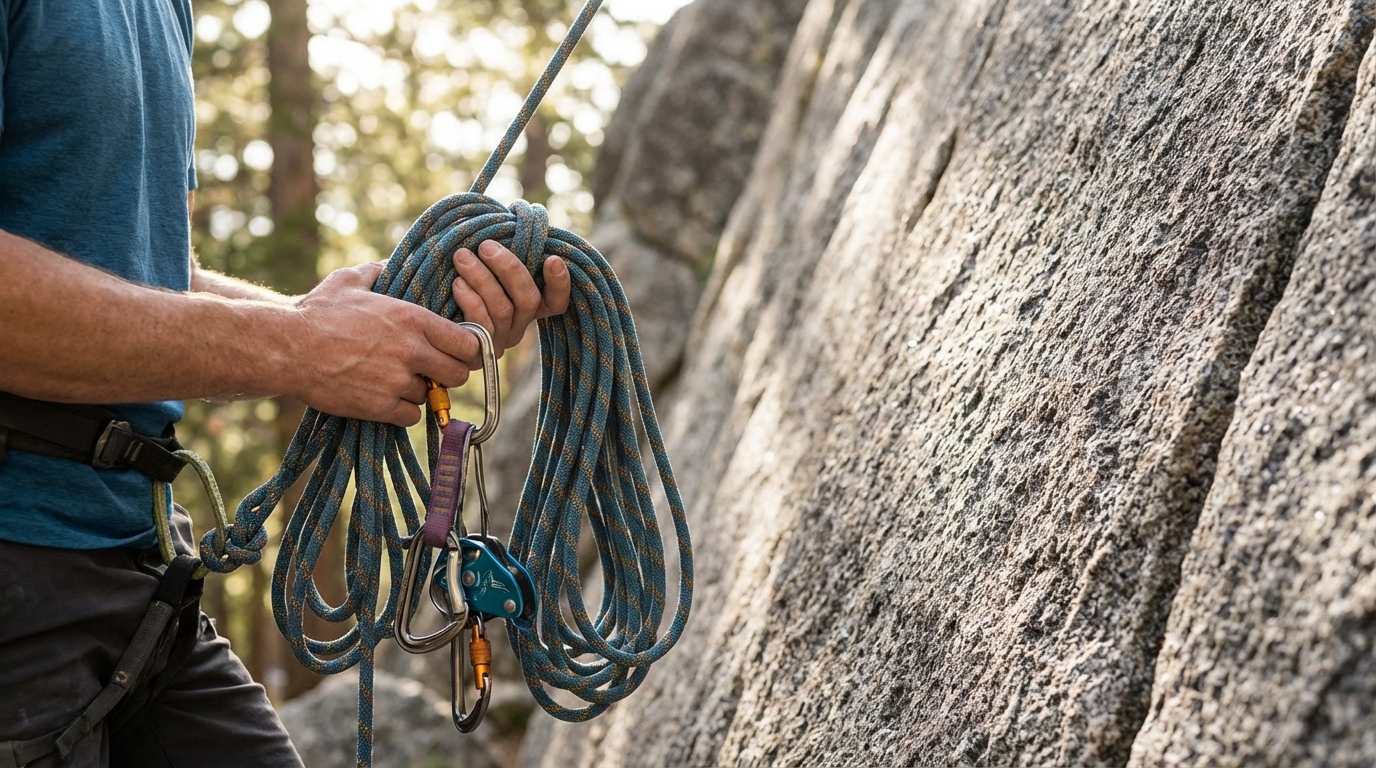
Rope systems are fundamental to the safety and execution of nearly every form of climbing. Far from being a simple length of cord, a climbing rope is a highly engineered piece of equipment, and the way it is integrated into a system with other gear and techniques is crucial. Understanding the various rope systems available and their specific applications is essential for any climber, from those starting out to seasoned veterans tackling complex routes. This guide aims to demystify these systems, explaining their characteristics, uses, and the considerations that inform their selection in different climbing scenarios.
Fundamentals of Climbing Ropes
Before delving into specific systems, it’s important to understand the two main categories of climbing ropes and their basic construction.
Dynamic vs. Static Ropes
- Dynamic Ropes: These ropes are designed to stretch significantly when subjected to a sudden load, such as a climber falling. This elasticity absorbs the energy of the fall, reducing the impact force on both the climber and the anchor system. Dynamic ropes are universally used for lead climbing and top-roping where falls are a possibility.
- Static Ropes: In contrast, static ropes have minimal stretch. This characteristic makes them unsuitable for absorbing fall forces in lead climbing, as they transmit high impact forces. Their primary use is for applications where stretch is undesirable, such as hauling gear, ascending fixed lines, rappelling access, and rescue operations.
Rope Construction and Types
Modern climbing ropes typically feature a kernmantle construction, comprising an inner core (kern) that provides the majority of the rope’s strength, and an outer sheath (mantle) that protects the core from abrasion and damage. Dynamic ropes are further categorized by their intended use in different systems:
- Single Ropes: These are the most common and versatile dynamic ropes. They are designed to be used alone in a single strand.
- Half Ropes (or Double Ropes): These ropes are designed to be used in pairs, with each rope clipped into alternating protection points.
- Twin Ropes: These ropes are also used in pairs, but both strands must always be clipped into every protection point together.
Single Rope Systems
The single rope system is arguably the most prevalent and straightforward setup in climbing. It involves using one dynamic rope for the entire climbing process.
Description and Application
In a single rope system, a single strand of dynamic rope connects the climber to the belayer. The rope is clipped through protection points (quickdraws on bolts, or traditional gear) as the climber ascends. This system is widely used for:
- Sport Climbing: Its simplicity and the direct nature of most sport routes make it ideal.
- Top-Roping: A single rope is passed through an anchor at the top of a climb, allowing climbers to ascend with minimal risk of a significant fall.
- Single-Pitch Traditional Climbing: Where routes are relatively direct and fall potential is manageable with a single rope.
Advantages and Limitations
- Advantages:
- Simplicity: Easier to manage and understand, making it suitable for beginners.
- Lightweight: Only one rope to carry and handle.
- Versatility: Suitable for a wide range of climbing styles and environments.
- Limitations:
- No Redundancy: If the single rope is severely damaged or cut, there is no backup.
- Rope Drag: Can be significant on winding routes, as the single rope runs through all protection points.
- Rappelling: A single rope can only be used for rappels half its length, unless two ropes are joined, or a retrieve method is employed.
Half Rope Systems
Half rope systems, also known as double rope systems, involve the use of two dynamic ropes, each meeting a specific impact force rating for half ropes.
Description and Application
With a half rope system, the climber uses two separate ropes. As they ascend, they clip each rope into alternating protection points. For example, the first rope might be clipped into the first, third, and fifth pieces of protection, while the second rope is clipped into the second, fourth, and sixth. This system is particularly beneficial for:
- Traditional Climbing: Especially on routes with wandering protection, where the ropes can be managed to reduce drag.
- Multi-Pitch Climbing: Allows for full-length rappels by joining the two ropes at an anchor.
- Ice Climbing and Mixed Climbing: Offers redundancy and can handle sharp edges better due to the possibility of one rope being damaged while the other remains intact.
Advantages and Limitations
- Advantages:
- Redundancy: Provides a safety net if one rope is damaged by a rockfall or sharp edge.
- Reduced Rope Drag: By clipping into alternating pieces, the ropes can follow straighter paths, minimizing friction.
- Full-Length Rappels: Significantly extends rappel length on multi-pitch routes.
- Versatility in Multi-Directional Falls: Can provide a more even distribution of force on anchors in complex fall scenarios.
- Limitations:
- Increased Complexity: Requires more advanced rope management skills from both the climber and belayer.
- Heavier: Two ropes are heavier to carry and handle than a single rope.
- Potential for Tangling: Can become tangled if not managed carefully.
Twin Rope Systems
Twin rope systems also utilize two dynamic ropes, but with a stricter protocol for clipping protection.
Description and Application
In a twin rope system, both dynamic ropes, which are typically thinner and specifically rated as twin ropes, are clipped together into every single protection point. This system offers the highest level of redundancy and strength when two ropes are handled as one. It is often employed in:
- Mountaineering: Where the weight of thicker single or half ropes might be prohibitive, and redundancy against rockfall or sharp ice is crucial.
- Ice Climbing: Similar to half ropes, but with enhanced robustness against sharp ice and tools.
- High-Altitude Climbing: Where extreme conditions demand maximum durability and safety.
Advantages and Limitations
- Advantages:
- High Redundancy: Both ropes are always protecting the climber, offering maximum safety against a single point of failure (e.g., rope cut).
- Durability: The combined sheath of two ropes offers enhanced abrasion resistance.
- Full-Length Rappels: Similar to half ropes, allows for extended rappels.
- Lighter than Half Ropes (for the pair): Often twin ropes are thinner than half ropes, making the pair lighter than a pair of half ropes of similar length, while offering similar fall-stopping capability when used together.
- Limitations:
- Less Versatile than Half Ropes: Cannot effectively manage rope drag on wandering routes, as both ropes must follow the same path.
- Requires Precise Management: Clipping both ropes simultaneously requires attention.
- Heavier than a Single Rope: Still involves carrying and managing two strands.
Static Rope Systems for Specialized Applications
While dynamic ropes are for arresting falls, static ropes serve different, equally critical roles in climbing and related activities.
Description and Application
As mentioned, static ropes exhibit minimal stretch. This property makes them highly efficient for lifting and lowering loads, and for creating stable fixed lines. Their applications include:
- Hauling Systems: For lifting heavy bags (haul bags) on big walls.
- Fixed Lines: For ascending and descending in mountaineering or caving, providing a stable pathway.
- Rescue Operations: Essential for lowering and raising injured individuals or equipment, where controlled movement is paramount.
- Rappelling Access: Setting up fixed rappels where subsequent climbers need a reliable, low-stretch line.
It is crucial to reiterate that static ropes are not designed to absorb the energy of a lead climbing fall and using them dynamically in such a scenario can lead to severe injury or equipment failure due to high impact forces.
Advanced Rope Management Considerations
Beyond choosing the right rope system, proficient climbing involves mastering various techniques and understanding how gear interacts within these systems.
- Belay Devices: The choice of belay device often depends on the rope system. Some devices are designed specifically for single ropes, while others can accommodate two strands, or even function in guide mode for multi-pitch belaying.
- Knots: A solid understanding of various climbing knots is fundamental. Knots are used for tying into the rope, creating anchors, joining ropes for rappelling, and managing the rope system effectively.
- Anchoring: Establishing secure anchors is paramount. The rope system interacts directly with these anchor points, and the forces generated during a fall are transferred through the rope to the anchor.
Conclusion
The world of climbing rope systems is diverse, reflecting the varied challenges and environments climbers encounter. From the simplicity and versatility of the single rope system to the redundancy and complexity of half and twin rope setups, each system offers distinct advantages and serves specific purposes. Understanding the fundamental differences between dynamic and static ropes, and knowing when and how to deploy single, half, or twin rope systems, is not merely a matter of efficiency but one of profound safety. Climbers must carefully consider the objective, terrain, and potential hazards of a climb when selecting their rope system. Mastery comes not just from knowing the theory, but from diligent practice and experience, ensuring that every ascent is as secure and enjoyable as possible.
Frequently Asked Questions (FAQs)
1. What is the primary difference between dynamic and static ropes?
The primary difference lies in their stretch properties. Dynamic ropes are designed to stretch significantly to absorb the energy of a climber’s fall, reducing impact forces. Static ropes, conversely, have minimal stretch, making them unsuitable for fall arrest but ideal for hauling, fixed lines, and rescue operations where low elongation is desired.
2. When would a climber choose a half rope system over a single rope system?
A climber would typically choose a half rope system for traditional climbing, especially on routes that are wandering or have intricate protection placements. The ability to clip each rope into alternating pieces reduces rope drag significantly. Additionally, half ropes are chosen for multi-pitch climbing as they allow for full-length rappels by joining the two ropes, and provide redundancy against rope damage.
3. Can a twin rope be used as a single rope?
No, a twin rope should not be used as a single rope. Twin ropes are designed to be used in pairs, with both strands clipped into every piece of protection simultaneously. Their individual strength rating and impact force absorption capabilities are typically lower than a dedicated single rope. Using a single strand of a twin rope alone would not provide adequate safety in the event of a lead fall.
4. Are thicker ropes always stronger?
While thicker ropes often possess greater durability and resistance to abrasion due to more material in the sheath, strength is not solely determined by diameter. Modern rope manufacturing and materials science mean that thinner ropes can achieve very high strength ratings. The specific construction, core material, and type of rope (single, half, twin) all contribute to its overall strength and performance characteristics, as tested and rated by international standards.
5. What maintenance is important for climbing ropes?
Proper maintenance is crucial for a climbing rope’s longevity and safety. This includes regular inspection for cuts, flat spots, fuzziness, or other damage to the sheath and core. Ropes should be kept clean, washed with appropriate rope soap and water when soiled, and thoroughly dried out of direct sunlight. Proper storage, coiled or flaked in a rope bag away from chemicals, UV light, and extreme temperatures, is also vital.

Diana Miller, is a dedicated nature enthusiast and an outdoor adventurer. She began leading groups for excursions in her teens and never stopped. Following her passion for nature, she gathers her friends for outdoor trips every now and then. And for the last 10 years, she has executed workshops on backpacking, snow kayaking and traveling that included her main motive of lightweight packing while outdoors. During leisure, she loves planning for her next adventure.