
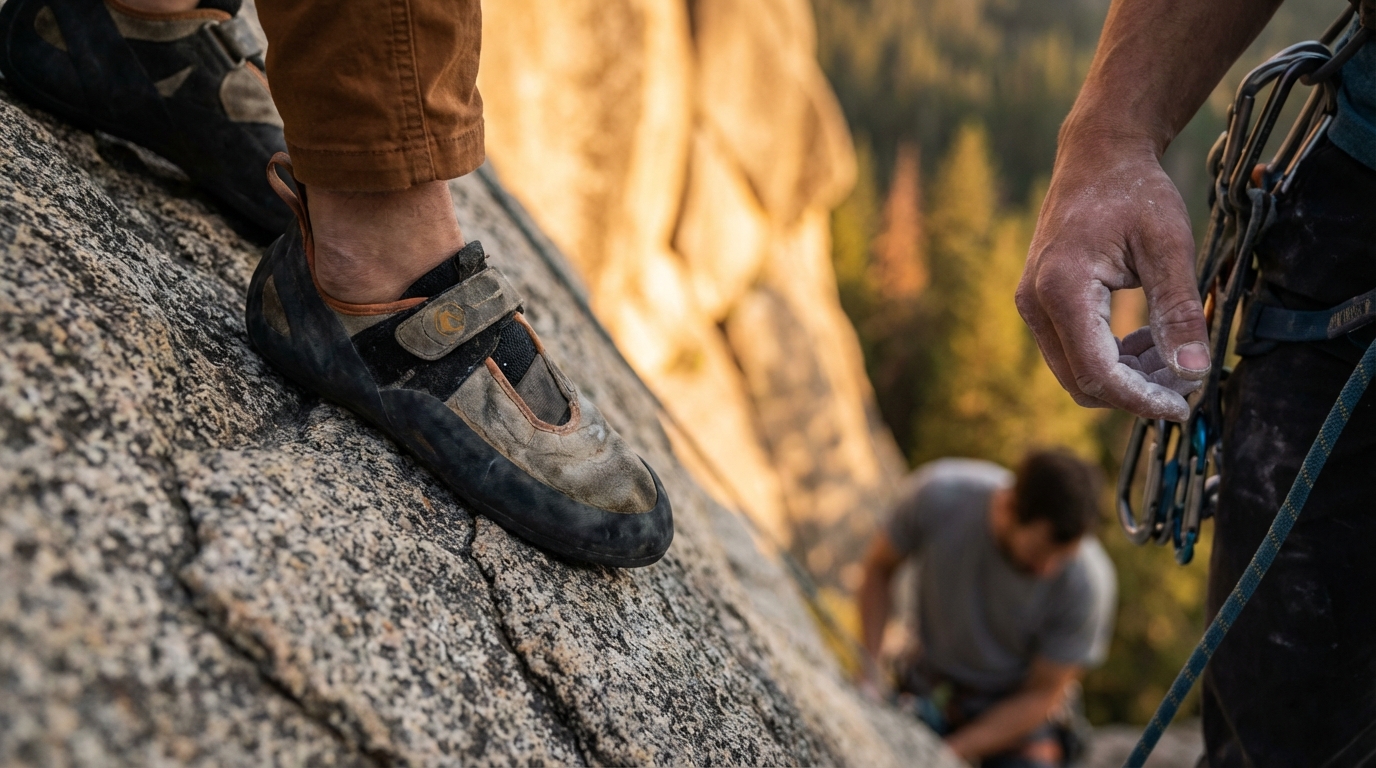
Climbing, a pursuit that blends physical prowess with mental fortitude, demands precision and control. While upper body strength and technique are frequently highlighted, the role of footwork is equally, if not more, critical. At the heart of effective footwork lies the climbing shoe, a specialized piece of equipment designed to enhance a climber’s connection to the rock or wall. These shoes are far from ordinary footwear; their intricate design directly influences a climber’s ability to ascend challenging routes safely and efficiently. Understanding how these specialized shoes function is key to appreciating their impact on both performance and overall safety during climbing activities.
The Fundamental Role of Climbing Shoes
Unlike conventional athletic shoes, climbing shoes are engineered with a singular purpose: to maximize friction, sensitivity, and support on small, irregular holds. Their design departs significantly from everyday footwear, featuring sticky rubber soles, a snug fit, and often an asymmetrical shape. This specialized construction allows climbers to stand on features as small as a dime, smear on slabs, and execute complex foot maneuvers that would be impossible in standard shoes. Without the specific attributes of climbing shoes, the sport as it is known today would be fundamentally different, limiting the types of routes and techniques climbers could realistically attempt.
Key Design Elements and Their Impact on Performance
The efficacy of a climbing shoe stems from a combination of several interconnected design elements, each playing a vital role in a climber’s interaction with the climbing surface.
Fit and Sizing
The fit of a climbing shoe is perhaps its most crucial aspect. A proper fit is snug, eliminating any dead space within the shoe, which could compromise precision and power transfer. The toes should be close to the end of the shoe, often slightly curled, but excessive pain should be avoided. A shoe that is too loose will reduce sensitivity and the ability to apply pressure precisely, potentially leading to slips. Conversely, a shoe that is excessively tight can cause discomfort, distract the climber, and lead to foot problems over time, ultimately hindering performance.
Last (Shape)
The “last” refers to the three-dimensional model around which a shoe is built, dictating its overall shape. Climbing shoes typically fall into three general last categories:
- Neutral Last: These shoes are relatively flat and symmetrical, offering a more relaxed fit and greater comfort, making them suitable for prolonged wear, multi-pitch climbing, or beginner climbers. They provide solid support for standing on larger holds.
- Moderate Last: Featuring a slight downturn and asymmetry, moderate shoes offer a balance between comfort and performance. They are versatile, performing well on a variety of angles and rock types, enhancing precision without being overly aggressive.
- Aggressive Last: Characterized by a significant downturn and strong asymmetry, aggressive shoes are designed to position the foot in a powerful, claw-like shape. This maximizes power on small footholds, especially on steep, overhanging terrain, allowing climbers to “pull” with their feet. However, they typically sacrifice comfort for performance and are not ideal for all climbing styles or extended use.
The choice of last directly impacts how the foot interacts with different types of holds and angles, influencing a climber’s ability to apply force effectively.
Stiffness (Midsole)
The stiffness of a climbing shoe is primarily determined by its midsole. This internal layer, often made from plastic or synthetic materials, provides support and dictates how much the shoe flexes. Stiffness affects several aspects of performance:
- Stiff Shoes: Offer greater support for edging on small holds, as they reduce the amount of foot muscle required to maintain pressure. They can also be beneficial for crack climbing, protecting the foot. However, they may reduce sensitivity and smearing ability.
- Soft Shoes: Provide enhanced sensitivity, allowing the climber to “feel” the rock more distinctly. They excel at smearing, as the sole can conform more readily to irregular surfaces, maximizing rubber contact. However, soft shoes demand more foot strength and can be less comfortable for extended edging.
Rubber Compound and Thickness
The sole rubber is the primary point of contact with the climbing surface. Manufacturers develop various rubber compounds with differing properties in terms of stickiness, durability, and hardness. A stickier rubber offers superior friction, while a harder rubber may last longer but provide less grip. The thickness of the rubber also plays a role: thinner rubber increases sensitivity but wears out faster, while thicker rubber offers more durability and sometimes greater support but reduces proprioception.
Closure Systems
Climbing shoes typically employ one of three closure systems:
- Laces: Offer the most customizable and secure fit, allowing for fine-tuned tension across the foot. This is advantageous for routes requiring precise footwork or extended periods of climbing.
- Velcro (Hook-and-loop): Provides quick on-off convenience and decent adjustability, making them popular for bouldering or sport climbing where shoes are frequently removed between attempts.
- Slippers: Rely solely on elasticity and heel tension for fit, offering the highest sensitivity and minimal bulk. They are often favored for specialized techniques like toe hooking but may not offer the same level of support or precise fit as laced shoes.
The chosen closure system impacts the ease of use, the security of the fit, and the overall feel of the shoe during climbing.
Enhancing Performance Through Shoe Characteristics
The combined effect of these design elements translates directly into a climber’s ability to execute specific techniques and ascend more challenging routes.
Edging Capability
Shoes with a stiffer sole and a more pointed or aggressive toe are optimized for edging. This design allows climbers to place the very edge of the shoe on minute features, concentrating their body weight onto a small point. The stiffness supports the foot, preventing it from collapsing, and transfers power directly to the edge, enabling precise and powerful foot placements on technical terrain.
Smearing Effectiveness
Smearing involves pressing the sole of the shoe flat against a featureless or low-friction surface to generate maximum friction. Softer, more flexible shoes with a broad contact patch of sticky rubber excel here. Their ability to conform to the rock surface increases the area of contact, providing the necessary grip to move across slabs or friction-dependent features where distinct holds are scarce.
Heel Hooking and Toe Hooking
These advanced techniques involve using the heel or toe of the shoe to grab or pull on an overhang or feature. Shoes designed for these maneuvers often feature extended rubber coverage over the heel or toe box, along with a secure, tensioned heel cup. This additional rubber and structural integrity allow climbers to apply significant force with their feet in unconventional orientations, adding new dimensions to their movement vocabulary.
Sensitivity and Feel
A crucial aspect of high-level climbing is the ability to “feel” the rock through the shoe. Shoes with thinner soles and softer midsoles enhance sensitivity, allowing the climber to discern the subtle textures and contours of holds. This tactile feedback enables more precise foot placements, improves balance, and allows for micro-adjustments that can be critical on challenging climbs.
The Relationship Between Climbing Shoes and Safety
While performance is often the primary focus, the design and proper use of climbing shoes are equally vital for ensuring a climber’s safety.
Secure Foot Placements
The enhanced friction, precision, and support offered by climbing shoes significantly reduce the likelihood of slipping. A secure foot placement is fundamental to maintaining balance and control, preventing unexpected falls that could lead to injury, even when roped. By allowing climbers to trust their feet, these shoes mitigate a common source of risk.
Injury Prevention
Properly fitting climbing shoes can contribute to preventing various foot-related injuries. They protect the feet from abrasions and impacts against rough rock surfaces. More importantly, the support and structured fit help to stabilize the foot during strenuous movements, reducing strain on ligaments and tendons. Conversely, ill-fitting shoes, whether too loose or too tight, can lead to blisters, bunions, nerve compression, or exacerbate existing foot conditions, distracting the climber and potentially compromising their focus and safety.
Confidence and Focus
When climbers trust their footwear, they can focus more intently on their movement, strategy, and surroundings rather than constantly worrying about their feet slipping. This increased confidence allows for more fluid, intentional movements, reducing hesitation and the likelihood of errors caused by distraction. A secure feeling in one’s shoes frees up mental energy, which is invaluable for making critical decisions high on a route.
Maintaining Climbing Shoes for Optimal Performance and Safety
To ensure climbing shoes continue to deliver their performance and safety benefits, proper maintenance is essential:
- Cleaning: Regularly wipe down the rubber soles with a damp cloth to remove dirt, dust, and grime, which can reduce friction. Avoid harsh chemicals that might degrade the rubber.
- Storage: Store shoes in a cool, dry place away from direct sunlight and extreme temperatures. Allowing them to air out after each use helps prevent odor and mold growth. Avoid leaving them in hot cars.
- Resole When Needed: Do not wait until the rubber is completely worn through to the midsole. Resoling early preserves the shoe’s structure and makes the process more effective, extending the shoe’s life and maintaining its performance characteristics.
- Avoid Excessive Wear: Try not to walk extensively in climbing shoes on rough surfaces, as this quickly wears down the sensitive sole rubber.
Conclusion
Climbing shoes are more than just footwear; they are an indispensable tool that bridges the gap between a climber’s body and the climbing surface. Their sophisticated design elements—from the precise fit and various lasts to specific rubber compounds and stiffness profiles—are intricately linked to both performance and safety. By providing enhanced friction, precision, and support, these shoes enable climbers to execute advanced techniques, climb challenging routes, and do so with greater security and confidence. Understanding the nuances of climbing shoe design and maintaining them properly are crucial for any climber looking to maximize their potential and ensure a safer, more enjoyable experience on the rock or wall.
Frequently Asked Questions (FAQs)
1. How snug should climbing shoes be?
Climbing shoes should fit very snugly, eliminating any dead space, particularly around the toes and heel. Your toes should generally be at the very end of the shoe, possibly slightly bent, but without causing excruciating pain. The goal is a performance fit that allows for precision and power transfer, which often means an initial feeling of tightness that gradually conforms to your foot.
2. Do different climbing disciplines require different shoe types?
Yes, different climbing disciplines often benefit from specific shoe characteristics. For example, bouldering and sport climbing on steep terrain often favor aggressive, downturned shoes for power. Traditional (trad) climbing and multi-pitch climbing may benefit from more comfortable, neutral shoes. Slab climbing typically works well with softer, sensitive shoes for smearing, while technical face climbing often demands stiffer shoes for edging.
3. How long do climbing shoes typically last?
The lifespan of climbing shoes varies significantly depending on several factors, including frequency of use, climbing style, terrain (e.g., abrasive outdoor rock vs. gym plastic), and individual footwork. On average, the sole rubber might last anywhere from 3 months to over a year for regular climbers. The upper material and overall structure can last much longer, often through multiple resoles.
4. Can climbing shoes be resoled?
Yes, most climbing shoes can be resoled, which is a cost-effective and environmentally friendly way to extend their life. Resoling involves replacing the worn rubber sole with new rubber. It’s advisable to resole before the rubber is completely worn through to the midsole or rand (the protective rubber strip around the toe), as this preserves the shoe’s original shape and structural integrity.
5. What are common signs that a climbing shoe is no longer effective?
Key indicators that a climbing shoe is losing effectiveness include: the sole rubber being worn thin or developing holes, particularly around the toes; a noticeable decrease in grip or friction; the shoe losing its original stiffness or shape, leading to a “baggy” fit; or significant delamination of the sole or rand. These signs suggest that the shoe is compromising performance and potentially safety.

Diana Miller, is a dedicated nature enthusiast and an outdoor adventurer. She began leading groups for excursions in her teens and never stopped. Following her passion for nature, she gathers her friends for outdoor trips every now and then. And for the last 10 years, she has executed workshops on backpacking, snow kayaking and traveling that included her main motive of lightweight packing while outdoors. During leisure, she loves planning for her next adventure.