
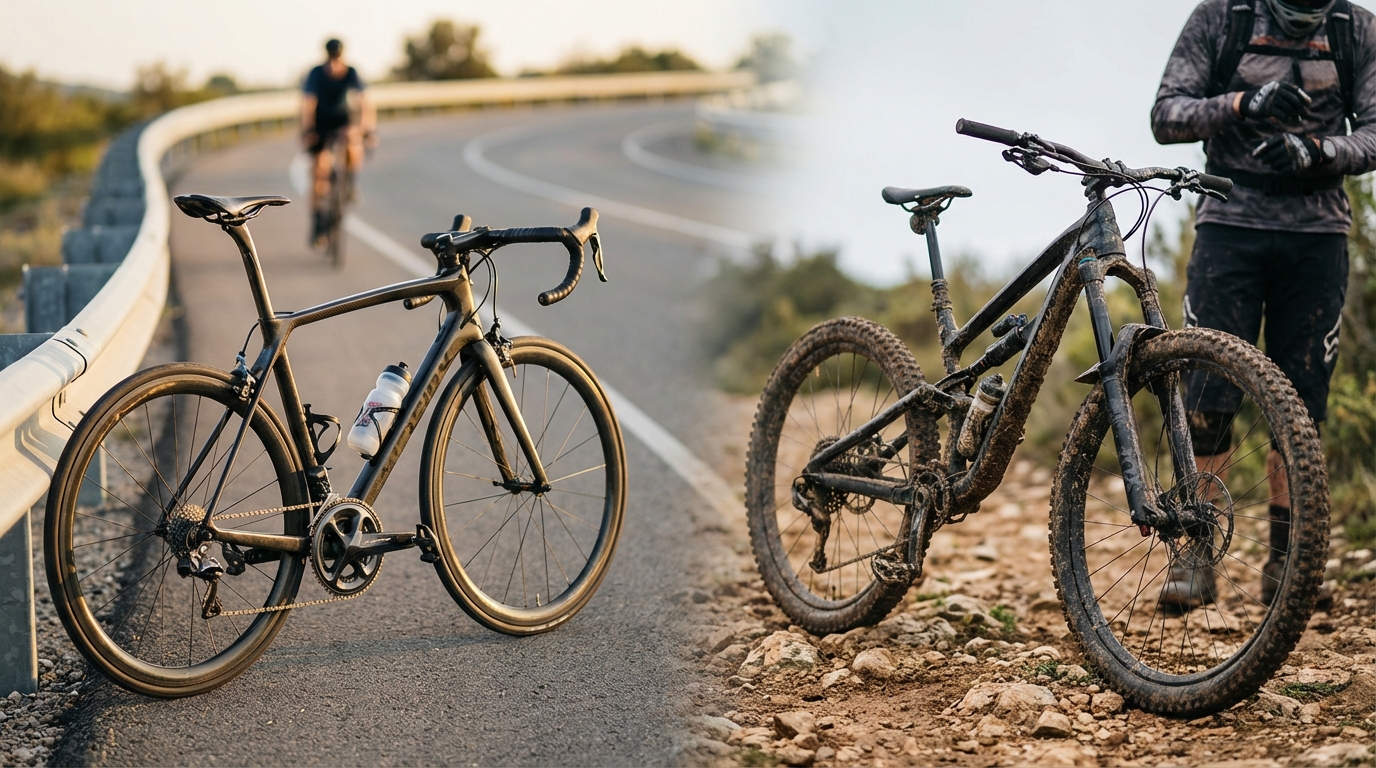
The weight of a bicycle is a characteristic often discussed among cyclists, yet its true significance is frequently misunderstood. Far from being a universal indicator of performance, a bicycle’s weight plays a nuanced role that varies considerably depending on the rider’s intended use and preferred terrain. Understanding how bike weight interacts with different cycling disciplines can help riders appreciate the engineering choices behind various bicycle designs and optimize their riding experience.
Fundamental Principles of Bike Weight
To grasp why bike weight matters, it’s essential to consider a few core physics principles that apply to all forms of cycling:
-
Inertia and Acceleration
Inertia is the resistance of any physical object to any change in its state of motion, including changes to its speed, direction, or state of rest. A heavier bicycle possesses more inertia, meaning it requires more force to accelerate from a standstill or to increase speed. Conversely, a lighter bicycle is quicker to accelerate and respond to changes in pace. This difference is particularly noticeable during repeated accelerations, such as sprinting out of corners or climbing steep pitches.
-
Gravity and Climbing
When riding uphill, a cyclist is constantly working against the force of gravity. The heavier the bicycle and rider system, the more effort is required to ascend. This is a primary reason why lighter bikes are often preferred for routes with significant elevation gain. Every kilogram saved on the bicycle can translate into reduced energy expenditure over a long climb.
-
Handling and Maneuverability
The distribution of weight, along with the overall mass, influences how a bicycle handles. A heavier bike can sometimes feel more stable at speed, resisting minor steering inputs more. A lighter bike, while potentially more agile and responsive to steering, might feel less planted in certain situations, such as fast descents on rough terrain, where a bit more mass can contribute to stability.
Weight Considerations for Road Cycling
Road cycling encompasses a broad range of activities, and the importance of bike weight shifts accordingly.
-
Climbing-Focused Road Riding
For riders whose primary goal is to conquer long, steep ascents, a lighter bicycle is often highly valued. The reduction in mass directly translates to less energy expended fighting gravity. This is where marginal gains in weight savings—through frame materials, components, and wheels—can become significant over sustained climbs. The lower the total system weight (rider plus bike), the more favorable the power-to-weight ratio, which is crucial for climbing performance.
-
Flat and Rolling Terrain Road Riding
On flatter roads or gently rolling terrain, the influence of weight becomes less pronounced once a steady speed is achieved. Aerodynamic efficiency often takes precedence over minimal weight savings here. While a lighter bike still offers an advantage during accelerations, maintaining momentum at higher speeds is more about minimizing air resistance. For these scenarios, bikes might be designed with aerodynamic tubing profiles and deeper section wheels, which can sometimes add a modest amount of weight but offer greater overall speed efficiency.
-
Time Trials and Triathlons
In disciplines focused on maximizing speed over a set distance against the clock, aerodynamics are paramount. Bikes designed for time trials or triathlons prioritize cutting through the air, often featuring deep-section frames, aero handlebars, and disc wheels. While weight is still a consideration, it typically takes a backseat to aerodynamic shaping, leading to bikes that may not be the lightest but are engineered for minimal drag.
Weight Considerations for Mountain Biking
Mountain biking’s diverse terrains and technical demands present a different set of priorities for bike weight.
-
Cross-Country (XC) Riding
XC riding often involves significant climbing and rapid changes in speed, making weight a crucial factor. Lighter XC bikes accelerate quicker, climb more efficiently, and are easier to maneuver through technical sections. However, there’s a balance to strike between lightness and durability, as XC courses can still be demanding on equipment. Components are typically chosen for their low weight without sacrificing too much strength.
-
Trail Riding
Trail riding bikes aim for versatility, balancing climbing prowess with descending capability. While moderate weight is appreciated for climbing, durability, suspension performance, and stable handling on descents are equally important. Trail bikes often feature stronger frames and components, and more robust suspension systems, which inherently add some weight compared to pure XC machines. This added weight contributes to the bike’s ability to handle rougher trails and larger impacts.
-
Enduro and Downhill Riding
In Enduro and Downhill, the emphasis shifts dramatically from climbing efficiency to downhill performance, stability, and impact absorption. Bikes in these categories are designed to withstand significant abuse, featuring heavy-duty frames, long-travel suspension, and robust components. Here, weight is less of a primary concern for speed and more a byproduct of the required strength and stability. A heavier, more planted bike can often provide greater confidence and control at high speeds over extremely rough terrain.
Weight Considerations for Commuting and Urban Riding
For daily commutes and urban exploration, practicality, durability, and convenience often dictate weight preferences.
-
Practicality and Security
Commuter bikes are frequently carried up stairs, lifted onto public transport, or maneuvered through crowded spaces. A lighter bike can significantly improve the ease of these daily tasks. Additionally, a bike that is easier to carry can be more convenient for storage in an apartment or office, potentially enhancing security by keeping it indoors. However, a lighter bike is not necessarily more secure; rather, its portability contributes to ease of handling in urban environments.
-
Durability and Maintenance
Urban environments can be harsh on bicycles, with potholes, curb strikes, and constant stopping and starting. Many commuter bikes prioritize robust construction and reliable components that can withstand daily use with minimal maintenance. This often means opting for slightly heavier but more durable materials and components rather than ultra-lightweight, performance-oriented parts that might require more frequent attention.
-
Accessory Carrying
Commuters often need to carry bags, groceries, or work essentials. Bikes designed for urban use often feature integrated racks or mounting points for panniers and baskets. The weight of these accessories, plus the load they carry, adds to the overall system weight. Therefore, the base bike’s weight becomes less critical than its capacity to carry a load efficiently and stably.
Weight Considerations for Touring and Bikepacking
Long-distance cycling, whether traditional touring or minimalist bikepacking, introduces unique weight dynamics.
-
Load Carrying Capacity
Touring and bikepacking involve carrying significant amounts of gear, which dramatically increases the overall system weight. The bike frame and components must be strong enough to support this added load safely and reliably over thousands of kilometers. While a lighter base bike might seem appealing, the structural integrity to handle heavy loads often requires slightly more material, contributing to a moderate bike weight.
-
Overall System Weight
When considering touring, the weight of the bike is just one component of the total system weight (rider + bike + gear). Optimizing gear weight often yields more significant overall reductions than marginal savings on the bike itself. A moderately weighted, durable frame that provides a stable and comfortable ride under load is often preferred over an ultra-light one that might compromise stability or longevity.
-
Comfort and Stability
For extended journeys, comfort and stability are paramount. A bike that feels stable and predictable when fully loaded can reduce rider fatigue and improve confidence, especially on challenging terrain or in adverse weather. Often, the geometry and material choices that contribute to this stability also mean a bike that is not the absolute lightest, but one that is well-suited to the demands of long-distance, loaded travel.
Conclusion
The importance of bike weight is not a one-size-fits-all metric. While a lighter bicycle generally offers advantages in acceleration and climbing, its significance diminishes or shifts depending on the specific demands of the riding style. For some disciplines, such as downhill mountain biking or time trialing, other factors like stability, durability, or aerodynamics take precedence over minimal weight. Ultimately, an appropriate bicycle weight is one that aligns with the rider’s primary use case, contributing to an enjoyable, efficient, and capable cycling experience.
Frequently Asked Questions
1. Does rider weight influence how important bike weight is?
Yes, rider weight significantly influences the perceived importance of bike weight. For a lighter rider, a kilogram saved on the bike represents a larger percentage of the total system weight (rider + bike), making the weight savings more noticeable. For a heavier rider, the same kilogram saved on the bike represents a smaller percentage of the total system weight, so the impact on performance might be less pronounced, though still present, especially on climbs.
2. Can a heavier bike be faster in some situations?
In specific situations, yes. On very fast descents or rough terrain, a slightly heavier bike can offer greater stability and momentum, potentially allowing for higher speeds with increased control. For time trials or flat road races, a bike that is designed to be highly aerodynamic might be slightly heavier due to the material needed for its aero profiles, but its reduced air resistance can make it faster overall than a lighter, less aerodynamic bike.
3. Are lighter bikes always more expensive?
Generally, lighter bikes tend to be more expensive. Achieving significant weight reduction often requires advanced materials (like high-grade carbon fiber or specialized alloys), sophisticated manufacturing processes, and high-performance, lightweight components. These technologies and materials typically come with a higher cost. However, there are exceptions, and the value of a bike should always be considered in relation to its intended use and overall component quality, not just its weight.
4. What’s the difference between rotating mass and static mass regarding bike weight?
Static mass refers to the overall weight of the bike, which impacts acceleration against inertia and climbing against gravity. Rotating mass refers to the weight of components that spin, primarily the wheels, tires, and cranks. Reducing rotating mass has a disproportionately larger effect on acceleration and changes in speed because energy is required not only to move the mass forward but also to get it spinning. Therefore, weight savings in wheels are often considered more impactful for responsiveness than similar savings in the frame.
5. How much weight difference is noticeable to a rider?
The amount of weight difference a rider can notice varies based on individual sensitivity, riding experience, and the context (e.g., flat vs. climbing). Many experienced riders can perceive differences of around 500 grams (approximately 1.1 pounds), especially when accelerating or climbing. Smaller differences, perhaps 100-200 grams, might be harder to distinguish consistently unless the rider is highly attuned to their equipment and the change occurs in a critical rotating component.

Diana Miller, is a dedicated nature enthusiast and an outdoor adventurer. She began leading groups for excursions in her teens and never stopped. Following her passion for nature, she gathers her friends for outdoor trips every now and then. And for the last 10 years, she has executed workshops on backpacking, snow kayaking and traveling that included her main motive of lightweight packing while outdoors. During leisure, she loves planning for her next adventure.