
Riding a bicycle offers a unique sense of freedom and engagement with the environment. However, the experience of controlling a bike is not static; it dynamically shifts with the conditions beneath the wheels. The road surface, moisture levels, presence of obstructions, and changes in elevation all play a significant role in how a bicycle responds to a rider’s input and, critically, how the rider must adapt to maintain control and safety. Understanding these influences is fundamental for any cyclist, from the casual commuter to the seasoned enthusiast, enabling more confident and secure navigation.
Understanding Bike Handling Fundamentals
Before delving into how external factors impact a bicycle, it’s helpful to establish a baseline of what “bike handling” entails. At its core, bike handling refers to a rider’s ability to control the bicycle through various maneuvers, including:
- Balance: Maintaining an upright position, especially at varying speeds.
- Steering: Guiding the bicycle in a desired direction, from subtle adjustments to sharp turns.
- Braking: Efficiently and safely reducing speed or stopping.
- Cornering: Navigating turns smoothly and effectively.
These actions are influenced by the bicycle’s geometry, the rider’s skill, and crucially, the interaction between the tires and the riding surface. When road conditions deviate from the ideal, this interaction changes dramatically, requiring the rider to adjust their technique and expectations.
Impact of Surface Texture
The texture of the road surface is perhaps the most immediate factor affecting tire grip and the transmission of road feedback to the rider.
Smooth Pavement
Ideal, dry, smooth pavement offers predictable and consistent traction. This allows for precise steering, confident braking, and aggressive cornering within the bicycle’s and rider’s limits. The bike feels stable and responsive, transmitting minimal vibration.
Rough Pavement and Gravel
When the pavement becomes rough, cracked, or gives way to packed gravel, the bike’s behavior changes. Reduced contact patch consistency leads to a decrease in overall grip. Vibrations increase significantly, which can fatigue a rider and make it harder to maintain a smooth line. On such surfaces, the bicycle might feel less stable, requiring a more relaxed grip on the handlebars to allow the bike to track over irregularities without fighting it, and slightly wider, smoother lines through turns.
Loose Surfaces (Sand, Dirt, Loose Gravel)
Loose surfaces present a substantial challenge. Tires struggle to find purchase, leading to a significant reduction in traction. The front wheel, in particular, can wash out unexpectedly, causing a loss of control. Riding on these surfaces demands very gentle inputs on the handlebars and brakes, a centered body position to maintain balance, and often, maintaining a steady momentum to ‘float’ over the loose material rather than sinking into it. Skidding is a common occurrence, especially under sudden braking or turning.
Impact of Moisture
The presence of moisture fundamentally alters the coefficient of friction between tires and the road, making conditions significantly more challenging.
Wet Roads
Water acts as a lubricant, dramatically reducing tire grip. This means:
- Reduced Braking Efficiency: Stopping distances increase considerably. Braking must be applied earlier and more progressively to avoid skidding.
- Compromised Cornering: Turning speeds must be reduced, and lean angles decreased to prevent the tires from losing traction.
- Slippery Surfaces: Painted road lines, metal manhole covers, gratings, and certain types of asphalt become exceedingly slick when wet, posing particular hazards during turns or braking.
Hydroplaning, while less common for bicycle tires than car tires due to narrower profiles, can still occur on very smooth, wet surfaces at higher speeds, momentarily reducing grip to near zero.
Ice and Snow
These conditions represent the extreme end of moisture impact. Ice offers virtually no friction, making riding exceedingly perilous and often impractical without specialized studded tires. Snow, depending on its type (powder, packed, slush), can offer some varying degree of grip but still reduces stability and control significantly. Traction for braking and turning is severely compromised, demanding extremely slow speeds and gentle, deliberate movements. Often, riding is not advisable under these conditions.
Impact of Obstructions and Irregularities
Beyond the surface itself, discrete elements on the road can profoundly affect handling, often requiring immediate evasive action.
Potholes and Cracks
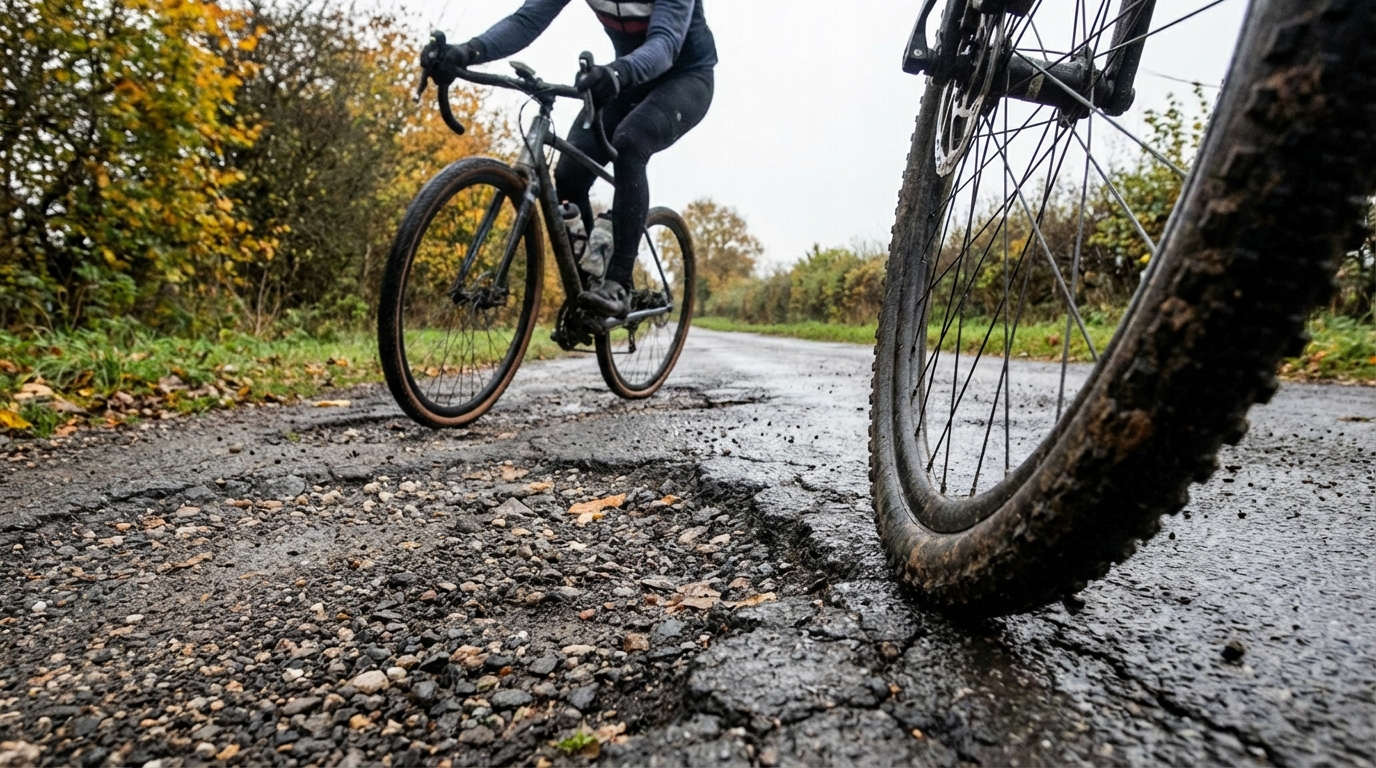
These can cause sudden impacts, potentially leading to pinch flats, rim damage, or even a complete loss of control. Hitting a pothole at speed can throw a rider off balance or cause a fall. Effective handling involves scanning ahead to identify these hazards early and either riding around them or, if unavoidable, lifting slightly off the saddle and unweighting the wheels to absorb the impact.
Road Markings and Metal Covers
Painted lines, crosswalks, manhole covers, and utility plates are often made of materials that become very slippery when wet. A rider might experience a momentary loss of traction if they brake or turn sharply while crossing these surfaces, necessitating a straight-line approach and gentle inputs.
Railway Tracks and Grates
These present a unique hazard where a bicycle wheel can become trapped, leading to a sudden stop and fall. Railway tracks should always be crossed perpendicularly, if possible, to minimize the risk of a wheel dropping into the gap. Parallel-oriented grates can also trap wheels and should be avoided or crossed with extreme caution, often by briefly lifting the front wheel or identifying a safe crossing point.
Debris (Leaves, Branches, Spilled Substances)
Accumulations of wet leaves, loose gravel, fallen branches, or even spilled oil or anti-freeze can create unpredictable patches of reduced traction. These demand constant vigilance and a readiness to adjust speed and line. Wet leaves, in particular, can be as slippery as ice.
Impact of Gradient and Elevation
Changes in the road’s incline also influence bike handling by shifting the dynamics of speed, balance, and effort.
Uphills
Climbing hills reduces speed, which can make maintaining balance more challenging, especially at very low speeds or when standing out of the saddle. The effort required also impacts a rider’s ability to react quickly to other road conditions. Steering might feel heavier, and any sudden movements can compromise momentum and balance.
Downhills
Descending increases speed, which in turn amplifies the consequences of any handling error. Braking distances are significantly longer, and the bike’s stability can feel different due to increased momentum. Proper body positioning (low and centered), controlled braking, and careful line selection are paramount to manage speed and maintain control.
Rider Adaptation and Techniques
Given the varied challenges presented by road conditions, a cyclist’s ability to adapt is crucial for safe and effective bike handling.
- Scanning and Anticipation: Constantly observing the road ahead for hazards allows for early identification and planning of evasive action or adjustments in speed and line.
- Body Positioning: Shifting weight can significantly improve traction and balance. On rough surfaces, a slightly unweighted body allows the bike to move beneath the rider. On descents, lowering the center of gravity enhances stability.
- Braking Techniques: Smooth, progressive application of both front and rear brakes (with more emphasis on the front for stopping power, applied carefully) is vital. Avoiding sudden, hard braking, especially on compromised surfaces, prevents skidding.
- Steering and Cornering: Gentle, deliberate steering inputs are effective on all surfaces, becoming critical on loose or wet conditions where sharp turns can cause a loss of traction. Wider, smoother arcs are generally safer in adverse conditions.
- Tire Pressure and Type: While not a product recommendation, understanding that appropriate tire pressure and tire characteristics for prevailing conditions can significantly mitigate some handling challenges is important. For instance, slightly lower pressure can increase the contact patch and provide more grip on loose or rough terrain, while a tire with a more aggressive tread pattern might offer better traction in wet or muddy conditions.
Conclusion
The interaction between a bicycle and the road is a complex dance, constantly influenced by a multitude of factors. From the texture and moisture of the surface to the presence of obstacles and changes in elevation, every road condition has a distinct effect on a bike’s handling characteristics. For a rider, awareness of these dynamics is not merely theoretical knowledge; it directly translates into practical skills that enhance safety, control, and enjoyment. By understanding how different conditions alter tire grip, stability, and responsiveness, cyclists can proactively adapt their techniques, making informed decisions that ensure a confident and secure journey, regardless of what the road presents.
Frequently Asked Questions (FAQs)
1. How does tire pressure relate to handling on different surfaces?
Tire pressure significantly impacts a tire’s contact patch with the road. Higher pressures reduce the contact patch, offering less rolling resistance on smooth surfaces but potentially less grip and more vibration on rough terrain. Lower pressures increase the contact patch, providing more grip and comfort on uneven or loose surfaces, but can increase rolling resistance and the risk of pinch flats on impact.
2. What is “target fixation” and how does it relate to road hazards?
Target fixation is the tendency to steer towards whatever your eyes are focused on, especially in a stressful situation. When encountering a road hazard like a pothole, a rider might inadvertently stare at it, subconsciously steering directly into it rather than looking at the safe path around it. Overcoming target fixation involves actively looking at the escape route or the clear path, rather than the obstacle itself.
3. Why do wet roads reduce tire grip so much?
Wet roads reduce tire grip because water forms a thin film between the tire and the road surface, reducing the direct contact and friction necessary for traction. This film acts as a lubricant, making it harder for the tire’s tread to bite into the surface irregularities, leading to decreased braking efficiency and reduced cornering capability.
4. Is it always safer to ride slower on poor road conditions?
Generally, yes, reducing speed significantly improves safety on poor road conditions. Lower speeds allow more time to react to hazards, decrease stopping distances, and reduce the severity of impacts or falls. While maintaining a certain momentum can sometimes help “float” over loose surfaces, extreme caution and reduced overall speed are crucial when traction is compromised.
5. How does a bicycle’s geometry influence its stability on rough roads?
A bicycle’s geometry, particularly factors like head tube angle, trail, and wheelbase, heavily influences its inherent stability. Bikes with slacker head tube angles and longer wheelbases tend to be more stable and forgiving on rougher terrain, as they are less prone to twitchy steering and absorb impacts more smoothly. Conversely, bikes with steeper angles and shorter wheelbases are often more agile but can feel less stable on very uneven surfaces.

Diana Miller, is a dedicated nature enthusiast and an outdoor adventurer. She began leading groups for excursions in her teens and never stopped. Following her passion for nature, she gathers her friends for outdoor trips every now and then. And for the last 10 years, she has executed workshops on backpacking, snow kayaking and traveling that included her main motive of lightweight packing while outdoors. During leisure, she loves planning for her next adventure.