
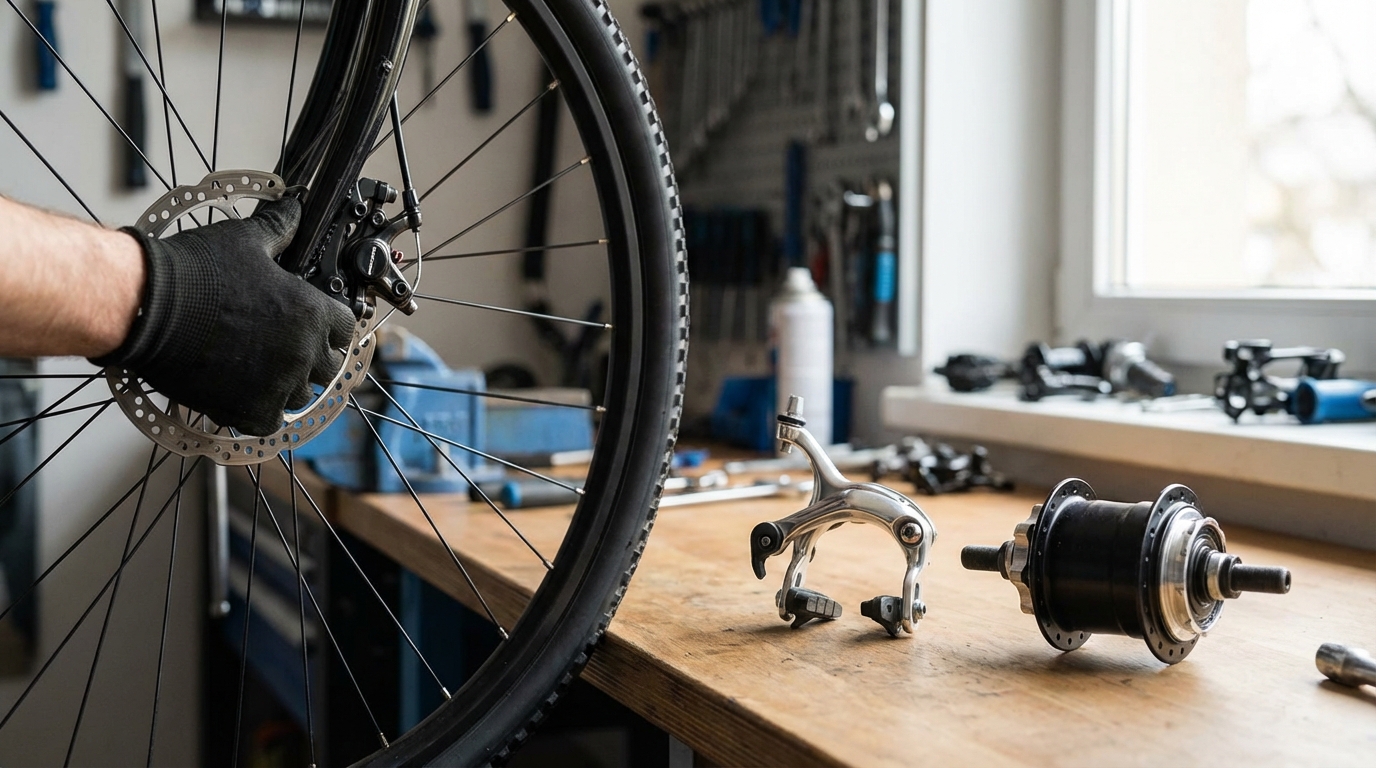
The ability to control speed and come to a safe stop is a fundamental aspect of cycling. Bicycle brakes, while seemingly simple components, employ various sophisticated mechanisms to achieve this crucial function. Understanding the different types of brake systems available can provide cyclists with valuable insight into their bicycle’s performance characteristics, maintenance requirements, and overall riding experience. Each brake type offers a distinct approach to converting kinetic energy into thermal energy, ultimately slowing or halting the bicycle.
This exploration will delve into the mechanics and general applications of the primary categories of bicycle brakes, providing an informative overview of how these essential components work to ensure rider safety.
Rim Brakes
Rim brakes operate by applying pressure directly to the bicycle’s wheel rim, creating friction that slows the rotation of the wheel. This category encompasses several common designs, each with unique characteristics regarding stopping power, modulation, and clearance.
Caliper Brakes
Caliper brakes are characterized by their arms that pivot from a single central point mounted on the frame or fork crown, arching over the tire to grip the rim. When the brake lever is pulled, a cable actuates the caliper arms, bringing the brake pads into contact with the rim’s braking surface on both sides.
- Mechanism: A single bolt attaches the caliper to the frame. The brake cable pulls a mechanism that causes both arms to swing inward, squeezing the rim.
- Variations: Historically, single-pivot calipers were common, offering adequate stopping but often requiring more lever force. Modern dual-pivot caliper brakes have an articulated design where each arm pivots independently but is linked, enhancing leverage and improving stopping power and modulation with less hand effort.
- Characteristics: They are typically lightweight and offer a clean aesthetic. Caliper brakes are widely found on road bicycles and some urban bikes.
Cantilever Brakes
Cantilever brakes utilize two separate arms, each pivoting on a dedicated boss (a small mounting post) brazed or bolted to the frame or fork. A transverse cable connects the two arms, and a main brake cable pulls this transverse cable upwards, causing the arms to pivot inward and the pads to press against the rim.
- Mechanism: Two independent arms are mounted on frame bosses. A short cable, often called a straddle cable, connects the top of the two arms. The main brake cable from the lever pulls this straddle cable upwards, forcing the arms and pads into the rim.
- Characteristics: Cantilever brakes generally provide good mud and tire clearance, making them suitable for bikes that might encounter varied terrain or wider tires, such as older touring bikes or cyclocross bicycles. Their stopping power can vary depending on the setup and pad type.
V-Brakes (Direct-Pull Cantilevers)
V-brakes, also known as direct-pull cantilevers, represent an evolution of the cantilever design. They also use two arms mounted on frame bosses, but the cable routing differs significantly. The main brake cable passes through one arm, attaching to the other, creating a direct pull action.
- Mechanism: The brake cable housing stops at one arm, and the bare cable then crosses over and attaches to the opposing arm. When the lever is squeezed, the cable pulls the arms together in a linear fashion, applying significant pressure to the rim.
- Characteristics: V-brakes are known for their powerful stopping force and are a common choice on mountain bikes, hybrid bikes, and some utility bicycles. They require specific brake levers designed for their longer cable pull.
Disc Brakes
Disc brakes operate by clamping a caliper onto a metal rotor that is securely attached to the wheel’s hub, rather than the rim itself. This design separates the braking surface from the wheel rim, offering distinct advantages, particularly in terms of performance consistency and power.
Mechanical Disc Brakes
Mechanical disc brakes are cable-actuated, similar to rim brakes in their control mechanism. When the brake lever is pulled, the cable directly pulls a lever arm on the caliper, which then presses the brake pads against the rotor.
- Mechanism: A standard brake cable pulls an actuator arm on the caliper. This arm engages a piston (or sometimes two, depending on the design) that pushes the brake pads against the rotor, creating friction.
- Characteristics: They offer consistent stopping performance in various weather conditions, as the braking surface (the rotor) is less exposed to water, mud, or grit compared to a rim. Mechanical disc brakes are generally simpler to maintain than their hydraulic counterparts and are found on a wide range of bicycles, including some mountain, road, and hybrid models.
Hydraulic Disc Brakes
Hydraulic disc brakes utilize a sealed system of fluid to transmit the force from the brake lever to the caliper. When the lever is squeezed, a master cylinder pushes hydraulic fluid through the brake line to the caliper, where it actuates pistons that press the brake pads against the rotor.
- Mechanism: The brake lever contains a master cylinder. Squeezing the lever compresses fluid, which travels through a hydraulic hose to the caliper. In the caliper, the fluid pressure forces pistons to extend, pushing the brake pads onto the disc rotor.
- Characteristics: These brakes are renowned for their powerful stopping force, excellent modulation (the ability to finely control braking power), and consistent performance with minimal lever effort. They are prevalent on high-performance mountain bikes, many modern road bikes, and electric bicycles, where their reliability and strength are highly valued.
Internal Hub Brakes
Internal hub brakes are fully enclosed within the bicycle’s wheel hub. This design protects the braking mechanism from external elements, contributing to their durability and low maintenance requirements. They are often associated with utility bikes, cruisers, and bicycles designed for urban commuting.
Coaster Brakes
Coaster brakes are activated by pedaling backward. This action engages an internal mechanism within the rear hub that expands brake shoes against the inside surface of the hub shell, creating friction.
- Mechanism: The hub contains a clutch mechanism. When the pedals are rotated backward, this clutch engages, pushing internal expander arms outwards. These arms then force brake shoes against the inner wall of the hub, causing deceleration.
- Characteristics: Coaster brakes are simple, highly durable, and require minimal maintenance because their components are sealed inside the hub, protecting them from dirt and weather. They are commonly found on children’s bikes, cruiser bikes, and some single-speed bicycles, offering a clean aesthetic without external cables or levers for the rear brake.
Drum Brakes
Drum brakes, similar in principle to those found in automobiles, also house their components within the hub. They are typically actuated by a standard brake cable and lever, rather than by pedaling backward.
- Mechanism: An internal cam or lever, actuated by a brake cable, forces two curved brake shoes outwards against the inner surface of a rotating drum, which is part of the wheel hub. The friction between the shoes and the drum slows the wheel.
- Characteristics: Like coaster brakes, drum brakes are an enclosed system, making them very reliable in wet and dirty conditions and requiring infrequent maintenance. They provide consistent stopping power and are often found on utility bicycles, cargo bikes, and some urban commuter bikes where durability and all-weather performance are prioritized.
Conclusion
The array of bicycle brake types reflects a continuous evolution in cycling technology, each designed to meet specific riding demands and conditions. From the traditional rim brakes found on many road and hybrid bikes to the robust all-weather performance of disc brakes and the sealed reliability of internal hub brakes, every system offers a distinct blend of stopping power, modulation, weight, and maintenance characteristics.
Understanding the fundamental operation of your bicycle’s brake system is paramount not only for appreciating its engineering but, more importantly, for ensuring your safety and enjoyment on every ride. Regular inspection and appropriate maintenance of your brakes, regardless of their type, are critical for optimal performance and rider confidence.
Frequently Asked Questions
Q1: How do I know when my brake pads need replacing?
A1: For rim brakes, inspect the pads for wear indicator lines or grooves; if these are gone, or the pad material is very thin (less than a few millimeters), they need replacement. For disc brakes, check the pad material thickness against the backing plate. If it’s less than 0.5-1mm, or if you hear a grinding noise, it’s time for new pads. Consistent squealing can also indicate wear.
Q2: What causes squealing noises from bicycle brakes?
A2: Squealing can be caused by several factors, including contaminated brake pads or rotors (oil, grease), worn pads, misaligned calipers or pads, loose components, or a lack of proper break-in for new pads. Sometimes, atmospheric moisture can also cause temporary squealing. Cleaning the braking surfaces and checking alignment are initial steps to address this.
Q3: Can I convert my bicycle from rim brakes to disc brakes?
A3: Converting a bicycle from rim brakes to disc brakes is generally complex and often not feasible or economical. It requires a frame and fork with disc brake mounts, as well as new wheels designed for disc rotors. Most frames and forks designed for rim brakes do not have the necessary mounts, and retrofitting them is usually not recommended for structural integrity reasons.
Q4: How do environmental conditions affect brake performance?
A4: Wet or muddy conditions can reduce the friction between brake pads and the braking surface (rim or rotor), leading to decreased stopping power and an increase in the distance required to stop. Rim brakes are generally more affected by wet conditions than disc brakes. Extremely cold temperatures can also impact hydraulic disc brake fluid viscosity, potentially altering lever feel. Proper maintenance, including clean pads and surfaces, helps mitigate these effects.
Q5: What is brake modulation and why is it important?
A5: Brake modulation refers to the ability to precisely control the amount of braking force applied, from a gentle slowdown to a complete stop, without locking up the wheels. Good modulation allows a rider to maintain control and traction, especially in varied terrain or slippery conditions. Hydraulic disc brakes are often praised for their excellent modulation, allowing riders to feather the brakes with great precision.

Diana Miller, is a dedicated nature enthusiast and an outdoor adventurer. She began leading groups for excursions in her teens and never stopped. Following her passion for nature, she gathers her friends for outdoor trips every now and then. And for the last 10 years, she has executed workshops on backpacking, snow kayaking and traveling that included her main motive of lightweight packing while outdoors. During leisure, she loves planning for her next adventure.