
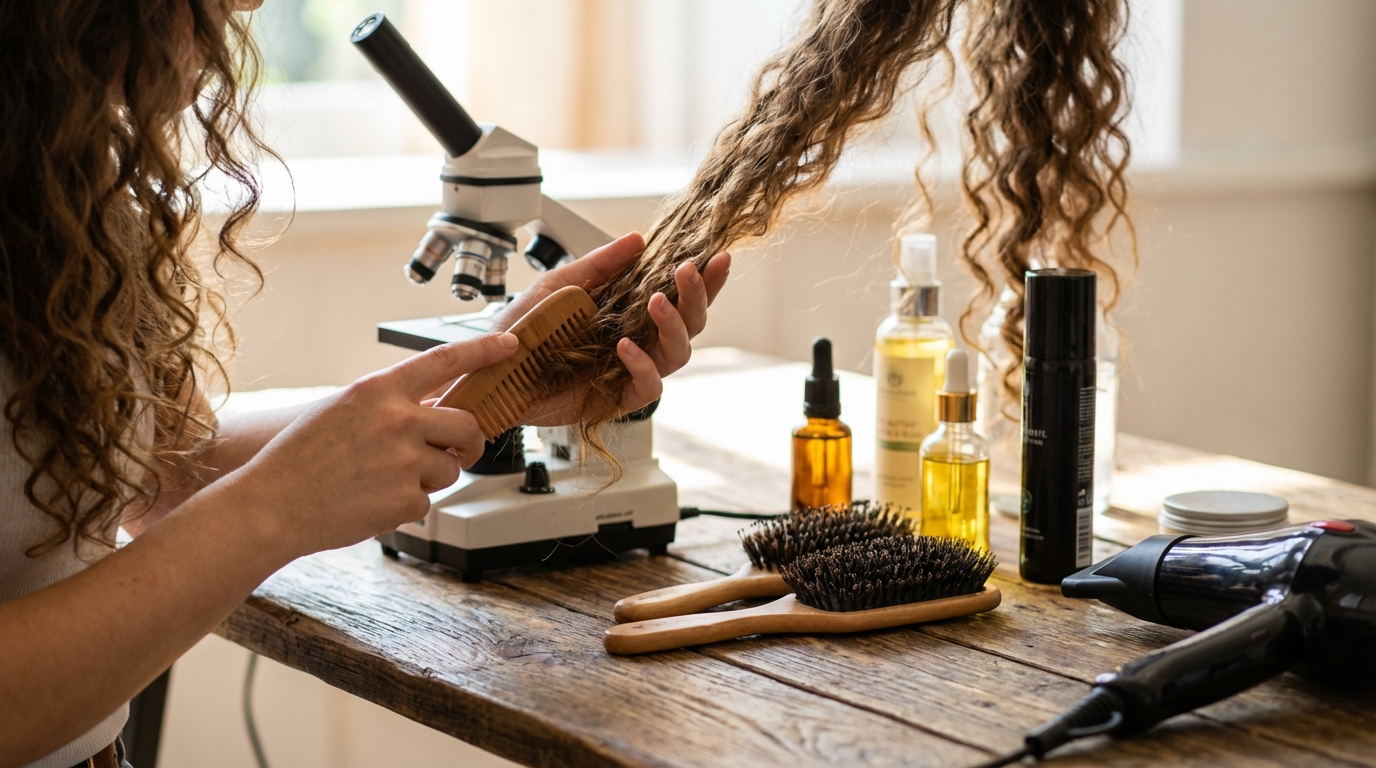
Hair is far more than just a collection of strands; it’s a complex biological structure with unique characteristics that profoundly influence its behavior. From how it absorbs moisture to its natural curl pattern, every aspect of hair’s inherent structure dictates how it responds to styling and maintenance efforts. Understanding these fundamental attributes is key to developing an effective hair care regimen and achieving desired styling outcomes.
This post will delve into the intricate world of hair anatomy and its various structural properties. We’ll explore how elements like porosity, elasticity, density, texture, and type each play a crucial role, providing insights into why different hair types require distinct approaches to care and styling.
Understanding Hair Anatomy
To appreciate how hair behaves, it’s helpful to understand its basic components. Each strand of hair originates from a follicle in the scalp and consists of several distinct parts.
The Hair Shaft
The visible part of the hair, known as the hair shaft, is primarily composed of a protein called keratin. It has three main layers:
- The Cuticle: This is the outermost protective layer, made up of overlapping, scale-like cells, similar to shingles on a roof. A healthy cuticle lies flat, reflecting light and making hair appear smooth and shiny. When the cuticles are raised or damaged, hair can feel rough, appear dull, and be prone to tangling and frizz. The state of the cuticle significantly impacts how well hair retains or loses moisture.
- The Cortex: Located beneath the cuticle, the cortex is the thickest layer of the hair shaft. It provides hair with its strength, elasticity, and determines its color, as it contains melanin, the pigment responsible for hair color. The cortex is also where chemical treatments like coloring, perming, and relaxing alter the hair’s structure.
- The Medulla: This is the innermost core of the hair shaft, though it’s not present in all hair types or all hair strands. Its exact function is not fully understood, but it is thought to play a role in maintaining hair’s structural integrity, particularly in thicker hair types.
Follicle Shape
The shape of the hair follicle embedded in the scalp is a primary determinant of a person’s natural hair type or curl pattern:
- Round follicles tend to produce straight hair.
- Oval follicles typically result in wavy hair.
- Flatter or more elliptical follicles produce curly or coily hair, with the degree of flatness often correlating with the tightness of the curl.
Key Structural Characteristics and Their Impact
Beyond basic anatomy, several inherent characteristics of hair structure dictate how it reacts to environmental factors, products, and styling techniques.
Hair Porosity
Hair porosity refers to your hair’s ability to absorb and retain moisture. It is primarily determined by the state of your hair’s cuticle layer.
- Low Porosity: Hair with low porosity has a tightly bound cuticle layer, which means it resists moisture penetration. Water and hair products tend to sit on the surface rather than being absorbed. This type of hair can be prone to product buildup and often takes longer to get thoroughly wet and dry. To aid moisture absorption, gentle heat (like from a steamer or warm towel) can help lift the cuticles.
- Medium Porosity: This hair type has a more relaxed cuticle layer, allowing for a balanced absorption and retention of moisture. It generally takes well to styling and chemical treatments and doesn’t require excessive effort to maintain moisture balance.
- High Porosity: Hair with high porosity has a raised or damaged cuticle layer, which allows moisture to be absorbed very quickly but also lost just as rapidly. This often results from chemical processing, heat damage, or environmental factors. High porosity hair is prone to frizz, dryness, and breakage, and requires products that help seal the cuticle to retain moisture.
Understanding porosity is crucial for selecting appropriate hydrating products and sealing agents to ensure your hair receives and retains adequate moisture.
Hair Elasticity
Hair elasticity is its ability to stretch and return to its original length without breaking. It’s an indicator of your hair’s internal protein structure and overall health.
- High Elasticity: Healthy hair with good elasticity can stretch considerably when wet and then bounce back. This resilience allows for greater flexibility in styling and reduces the likelihood of breakage during manipulation.
- Low Elasticity: Hair with low elasticity will stretch minimally and snap easily, indicating a lack of protein and moisture balance, or potential damage. This type of hair is often brittle, feels rough, and is more susceptible to breakage during brushing, styling, or detangling.
Hair with good elasticity is more pliable and can withstand styling techniques that involve pulling or bending, whereas hair with low elasticity requires very gentle handling.
Hair Density
Hair density refers to the number of individual hair strands on your scalp per square inch. It’s distinct from hair texture, which relates to the thickness of a single strand.
- Low Density: Individuals with low hair density have fewer hair strands, which can make their hair appear thinner or sparser. This type of hair often lacks volume and can be easily weighed down by heavy products.
- Medium Density: This represents an average number of hair strands and typically offers good coverage and versatility in styling.
- High Density: Those with high hair density have a large number of strands, which often makes their hair feel thick, full, or heavy. Managing volume and ensuring thorough drying can be common considerations.
Hair density influences the amount of product needed, the time it takes for hair to dry, and the type of styles that can be achieved, particularly regarding volume and fullness.
Hair Texture (Diameter of Individual Strand)
Hair texture, in this context, refers to the thickness or diameter of an individual hair strand, not its curl pattern.
- Fine Hair: Individual strands are very thin and delicate. Fine hair can be prone to tangling, easily weighed down by heavy products, and may struggle to hold styles. It also tends to break more easily.
- Medium Hair: This is the most common hair texture. Individual strands are neither fine nor coarse, offering a good balance of strength and manageability. Medium hair typically holds styles well and is versatile.
- Coarse Hair: Individual strands are thick and strong. Coarse hair is generally robust and less prone to breakage but can be resistant to styling, may take longer to dry, and often requires more hydration due to its larger surface area.
The thickness of individual strands affects product choice (lightweight vs. rich), the hair’s ability to hold a style, and its overall resilience.
Hair Type (Curl Pattern)
Hair type refers to the natural shape of the hair strand, ranging from straight to tightly coiled. This is determined by the shape of the hair follicle.
- Type 1 (Straight): Hair that grows straight from the scalp and has no natural curl. It tends to be shiny due to the oil easily traveling down the straight shaft. It can struggle with volume.
- Type 2 (Wavy): Hair that forms a gentle “S” shape. Wavy hair can range from loose waves (2A) to more defined waves that are close to curls (2C). It often has good volume but can be prone to frizz.
- Type 3 (Curly): Hair that forms distinct loops or spirals. Curly hair ranges from loose, bouncy curls (3A) to tight, corkscrew curls (3C). This type often needs more moisture as natural oils struggle to travel down the bends of the curls.
- Type 4 (Coily): Hair that forms very tight, small coils, sometimes in a zigzag pattern. Coily hair can appear shorter than its actual length due to the tight curl pattern and is often the most fragile and prone to dryness, requiring significant moisture and gentle handling.
The curl pattern significantly influences styling choices, detangling methods, frizz management strategies, and the need for specific moisturizing and defining products.
Tailoring Approaches to Hair Structure
Understanding these fundamental structural characteristics of your hair is the foundation for effective hair care. It moves beyond generic product recommendations and allows for a personalized approach. By knowing your hair’s porosity, elasticity, density, texture, and type, you can make informed decisions about the products you use, the styling techniques you employ, and the frequency of various treatments. This knowledge empowers you to select ingredients that truly benefit your hair, adopt routines that maintain its health, and achieve styling results that complement its natural attributes rather than working against them.
Conclusion
Hair structure is a profound determinant of how hair behaves, feels, and responds to care. The cuticle’s state, the cortex’s integrity, and the follicle’s shape collectively dictate porosity, elasticity, density, texture, and curl pattern. Recognizing these intrinsic qualities of your hair transforms the way you approach its maintenance and styling. Instead of fighting your hair’s natural tendencies, an informed understanding allows you to work with its unique structure, fostering healthier strands and more successful, predictable styling outcomes. Embracing your hair’s inherent nature is the first step towards a truly personalized and effective hair care journey.
Frequently Asked Questions
Q1: Can hair structure change over time?
A1: Yes, hair structure can change due to various factors. Aging can alter hair density and texture, often leading to finer, sometimes drier strands. Hormonal shifts (e.g., during pregnancy, menopause, or with thyroid conditions) can affect hair’s thickness, oiliness, and even curl pattern. Environmental damage, chemical treatments, and heat styling can also permanently alter the cuticle and cortex, impacting porosity and elasticity.
Q2: How can I determine my hair’s porosity?
A2: A common method is the water test. Take a few clean, product-free strands of hair and drop them into a glass of water. If your hair floats, it likely has low porosity. If it sinks slowly and floats in the middle, it’s typically medium porosity. If it sinks quickly to the bottom, it suggests high porosity.
Q3: Does heat styling affect hair structure?
A3: Yes, excessive or improperly applied heat styling can significantly impact hair structure. High heat can cause the cuticle scales to lift and eventually crack, leading to increased porosity and dryness. It can also denature the proteins in the cortex, weakening the hair’s internal structure and reducing elasticity, making it more prone to breakage.
Q4: Why is my hair so frizzy even when I use products?
A4: Frizz often occurs when the hair’s cuticle layer is raised, allowing moisture from the air to penetrate the hair shaft and cause swelling. This is particularly common in high porosity or curly/coily hair types. If your products aren’t helping, they might not be sealing the cuticle effectively. Look for products that provide good moisture and then seal with a light oil or silicone-based product to smooth the cuticle and lock in hydration.
Q5: Is it possible to change my natural hair type (e.g., from curly to straight permanently)?
A5: The natural hair type, determined by the shape of the follicle, cannot be permanently changed. While chemical treatments (like relaxers or perms) can alter the protein bonds in the hair shaft to make it temporarily straight or curly, these are not permanent changes to the follicle itself. New hair growing from the scalp will revert to its natural type. Heat styling can temporarily alter the appearance of your hair type, but it will return to its natural state after washing.

Diana Miller, is a dedicated nature enthusiast and an outdoor adventurer. She began leading groups for excursions in her teens and never stopped. Following her passion for nature, she gathers her friends for outdoor trips every now and then. And for the last 10 years, she has executed workshops on backpacking, snow kayaking and traveling that included her main motive of lightweight packing while outdoors. During leisure, she loves planning for her next adventure.