
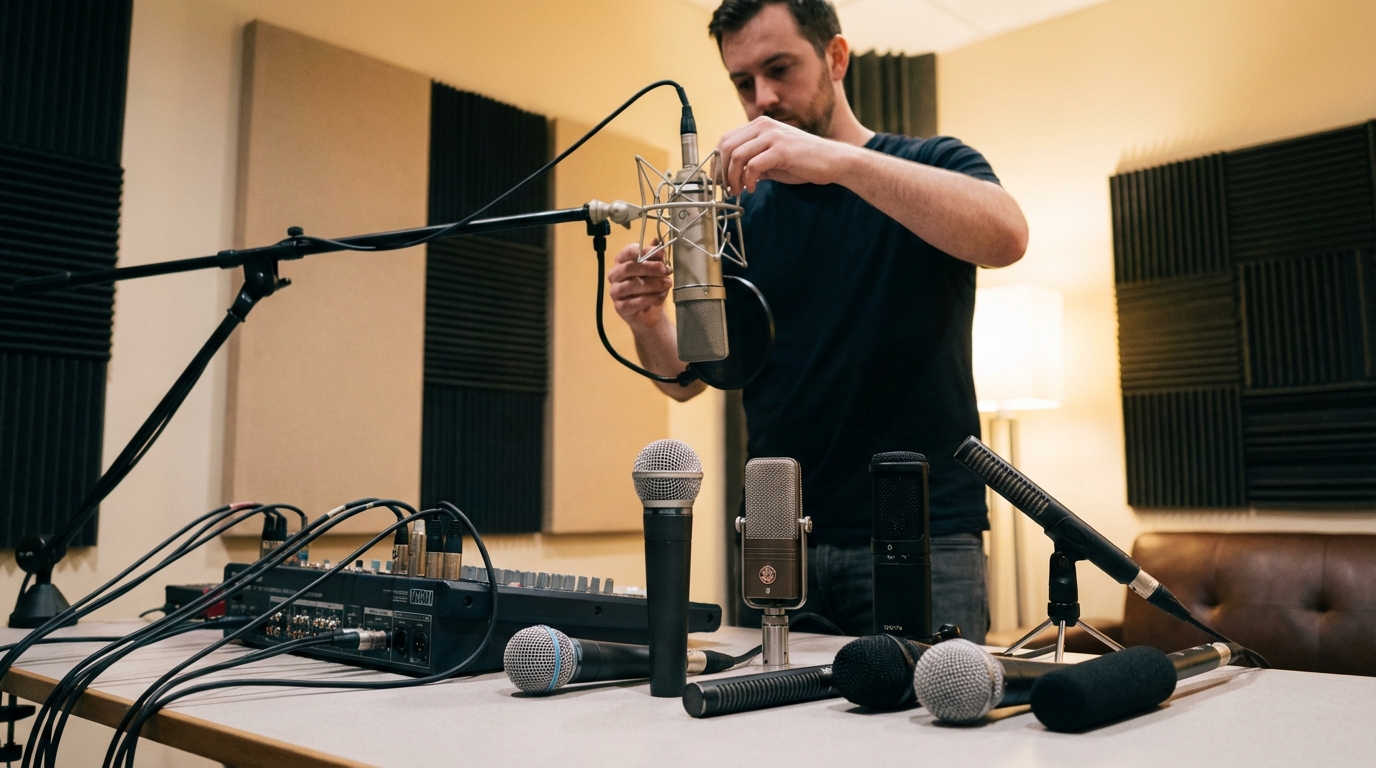
Understanding the Impact of Microphone Types on Voice Recording Quality
The quality of a voice recording is influenced by numerous factors, ranging from the acoustics of the recording environment to the performance of the speaker or singer. Among these, the type of microphone utilized plays a particularly significant role in shaping the final sound capture. Each microphone design possesses distinct characteristics that dictate how sound waves are converted into electrical signals, thereby directly affecting the tonal qualities, clarity, and overall fidelity of a recorded voice. Understanding these differences is fundamental for anyone aiming to achieve specific sonic outcomes in voice recording.Fundamental Principles of Microphone Operation
At its core, a microphone is a transducer, converting acoustical energy (sound waves) into electrical energy. This conversion process varies significantly across different microphone types, leading to their unique sonic signatures. Several key characteristics define a microphone’s performance:- Transduction Principle: The physical method by which sound pressure waves are converted into an electrical signal.
- Frequency Response: The range of frequencies a microphone can capture and how it responds to different frequencies within that range.
- Sensitivity: How efficiently a microphone converts sound pressure into an electrical output voltage.
- Polar Pattern: The microphone’s directional sensitivity, indicating from which directions it captures sound most effectively.
Dynamic Microphones
Dynamic microphones operate on the principle of electromagnetic induction. They typically feature a durable diaphragm attached to a coil of wire suspended within a magnetic field. When sound waves strike the diaphragm, the coil moves, generating an electrical current proportional to the sound.Characteristics Affecting Voice Recording:
- Robustness: Highly durable and capable of handling high sound pressure levels (SPL) without distortion.
- Lower Sensitivity: Generally less sensitive than other types, requiring more gain from a preamplifier. This can be advantageous in environments with significant background noise, as they are less prone to picking up distant sounds.
- Frequency Response: Often characterized by a somewhat contoured frequency response, which can impart a warm or punchy quality to voices. They might not capture the very highest frequencies with the same detail as other types.
- Proximity Effect: Many dynamic microphones exhibit a pronounced proximity effect, where bass frequencies increase as the sound source moves closer to the microphone. This can be used creatively to add warmth or fullness to a voice.
Typical Voice Applications:
Dynamic microphones are widely employed for live vocal performances due to their durability and ability to cut through a mix. They are also suitable for studio applications where a raw, powerful, or slightly less “polished” vocal sound is desired, or in untreated rooms where rejecting ambient noise is a priority.Condenser Microphones
Condenser microphones, also known as capacitor microphones, operate on an electrostatic principle. They consist of two plates: a thin, conductive diaphragm and a fixed backplate, forming a capacitor. When sound waves vibrate the diaphragm, the distance between the plates changes, altering the capacitance and, subsequently, the electrical charge when connected to a polarizing voltage (often phantom power).Characteristics Affecting Voice Recording:
- High Sensitivity: Highly sensitive and can capture subtle nuances and quieter sounds with great detail.
- Wide Frequency Response: Generally offer a wider and flatter frequency response, extending to both very high and very low frequencies, resulting in a very accurate and detailed reproduction of the voice.
- Requires Power: Most condenser microphones require external power (typically 48V phantom power) to operate the capacitor and internal preamplifier.
- Delicacy: Often more delicate than dynamic microphones and less tolerant of extreme handling or harsh environments.
Sub-Types:
Condensers are often categorized by diaphragm size:- Large Diaphragm Condensers (LDC): Known for their warmth, full sound, and ability to impart a “larger than life” quality to vocals. They are a staple in recording studios for lead vocals.
- Small Diaphragm Condensers (SDC): Offer exceptional transient response and consistent polar patterns, leading to a very accurate and natural sound. While often used for instruments, they can provide a very detailed and crisp vocal capture, particularly for spoken word.
Typical Voice Applications:
Condenser microphones are the preferred choice for studio vocal recordings, voiceovers, podcasting, and any application where capturing intricate vocal detail, clarity, and a broad frequency spectrum is paramount.Ribbon Microphones
Ribbon microphones operate on a principle similar to dynamic microphones but utilize a thin, corrugated metal ribbon (usually aluminum) suspended within a strong magnetic field. Sound waves vibrate the ribbon, which in turn generates a small electrical current.Characteristics Affecting Voice Recording:
- Natural and Smooth Sound: Known for a very natural, warm, and smooth sound, particularly in the high-frequency range, which can be less sibilant or harsh than some other types.
- Lower Output: Typically have a lower output level than dynamic or condenser microphones, often requiring a high-gain, low-noise preamplifier.
- Figure-8 Polar Pattern: Most traditional ribbon microphones inherently have a bidirectional (figure-8) polar pattern, picking up sound equally from the front and back while rejecting sound from the sides. This can be useful for capturing room ambiance or duets.
- Delicacy: The ribbon element is extremely delicate and susceptible to damage from strong air blasts (plosives), phantom power short circuits (in older passive ribbons), or dropping.
Typical Voice Applications:
Ribbon microphones are favored for broadcast, radio, and situations where a vintage or classic vocal sound is desired. Their smooth high-end can be particularly flattering for certain vocalists or for taming overly bright voices.Polar Patterns and Their Influence
A microphone’s polar pattern describes its sensitivity to sound coming from different directions. The choice of polar pattern significantly impacts how a voice recording interacts with its environment.- Omnidirectional: Picks up sound equally from all directions. Useful for capturing a natural room sound or when multiple voices around a single microphone are desired. Less susceptible to proximity effect.
- Cardioid: Heart-shaped pattern, sensitive to sounds from the front, with significant rejection from the rear. It’s the most common pattern for vocals, isolating the voice from background noise and room reflections. Exhibits proximity effect.
- Supercardioid/Hypercardioid: Tighter versions of cardioid, offering more rejection from the sides but with a small lobe of sensitivity directly behind the microphone. Useful for very precise vocal isolation in noisy environments. Exhibits strong proximity effect.
- Figure-8 (Bidirectional): Equally sensitive to sounds from the front and back, with maximum rejection from the sides. Ideal for capturing two vocalists facing each other or for blending direct vocal sound with room ambience. Exhibits strong proximity effect.
Frequency Response and Tonal Characteristics
The frequency response curve of a microphone illustrates how it reproduces different frequencies. A “flat” frequency response means the microphone captures all frequencies equally, resulting in a transparent and accurate sound. Many microphones, however, have sculpted responses:- Presence Boost: A rise in sensitivity in the upper mid-range (2-6 kHz) can enhance vocal clarity and intelligibility.
- Bass Roll-off: A reduction in sensitivity at lower frequencies can help to mitigate rumble, handling noise, and proximity effect.
- Warmth and Fullness: Subtle boosts in the lower mid-range can add depth and character to a voice, often associated with specific microphone types.
Sensitivity and Signal-to-Noise Ratio
A microphone’s sensitivity rating indicates the electrical output level for a given sound pressure input. High-sensitivity microphones produce a stronger signal, requiring less gain from the preamplifier. This can be advantageous in capturing quiet vocal performances without introducing excessive noise from the preamplifier itself. The microphone’s self-noise (or equivalent noise level) is also critical. This is the inherent electrical noise generated by the microphone’s internal circuitry. A low self-noise figure is particularly important for recording delicate or quiet vocal performances, ensuring that the microphone itself doesn’t introduce unwanted hiss or hum. The combination of high sensitivity and low self-noise contributes to a favorable signal-to-noise ratio, which is essential for clean, high-fidelity voice recordings.Environmental Factors and Microphone Choice
The acoustic environment significantly influences microphone selection. In a well-treated studio, a highly sensitive condenser might capture the desired vocal detail. In a less ideal room, or one with noticeable background noise, a less sensitive dynamic microphone with a tight polar pattern might be more appropriate to minimize unwanted ambiance. Understanding how each microphone type interacts with room reflections, background noise, and even handling noise is crucial for selecting the most suitable tool for the recording scenario.Conclusion
The type of microphone used for voice recording is not merely a technical detail; it is a fundamental choice that profoundly impacts the recorded sound. Dynamic, condenser, and ribbon microphones each offer distinct advantages and sonic characteristics, influencing everything from frequency reproduction and sensitivity to robustness and directional pick-up. By understanding these differences, along with the significance of polar patterns, frequency response, and sensitivity, engineers and vocalists can make informed decisions, selecting the appropriate microphone to capture the desired vocal performance with clarity, character, and fidelity, ultimately shaping the emotional impact and professional quality of the recording.Frequently Asked Questions (FAQs)
1. What is phantom power, and why do some microphones need it?
Phantom power is a direct current (DC) voltage, typically 48 volts, supplied through the same XLR cable that carries the audio signal. It is primarily required by condenser microphones to energize the capacitor plates within the microphone and to power its internal preamplifier. Without phantom power, most condenser microphones will not function. Dynamic and ribbon microphones generally do not require phantom power, and in some cases, applying phantom power to older or passively designed ribbon microphones can cause damage.2. How does a microphone’s polar pattern affect a voice recording?
A microphone’s polar pattern describes its directional sensitivity. It determines from which directions the microphone will pick up sound and from which it will reject it. For voice recording, this directly impacts how much background noise, room ambience, or off-axis sound is captured along with the voice. A cardioid pattern, for example, focuses on the sound directly in front of it, minimizing unwanted sounds from the sides and rear. An omnidirectional pattern, conversely, captures sound from all directions, which might be suitable for capturing a natural room sound or a group of speakers.3. Are more expensive microphones always superior for voice recording?
Not necessarily. While higher-priced microphones often incorporate superior components, advanced engineering, and meticulous construction, leading to excellent performance, the “superiority” for a specific voice recording depends on numerous factors. These include the vocalist’s voice characteristics, the acoustic environment, the desired tonal qualities, and the overall context of the mix. A less expensive microphone, when matched appropriately to the voice and recording situation, can often yield results that are perfectly suited and sometimes even preferred over a higher-priced alternative that might not complement the specific vocal tone or environment.4. What is the proximity effect, and how can it be managed?
The proximity effect is an increase in bass frequencies that occurs when a directional microphone (such as cardioid, supercardioid, or figure-8) is placed very close to a sound source. As the distance decreases, the low-frequency response becomes more pronounced, adding warmth and fullness to a voice. While often used creatively, excessive proximity effect can make a voice sound boomy or muddy. It can be managed by increasing the distance between the vocalist and the microphone, utilizing a microphone with a bass roll-off switch, or applying equalization during recording or mixing to attenuate the excessive low frequencies.5. Can the same microphone be used for both singing and spoken word recordings?
Yes, many microphones are versatile enough to be used effectively for both singing and spoken word recordings, particularly condenser microphones known for their broad frequency response and detail. However, the optimal choice might vary based on the specific requirements. For instance, a microphone chosen for its warmth and presence on a powerful singer might be less ideal for a crisp, highly intelligible voiceover that requires absolute clarity and minimal coloration. Conversely, a microphone excellent for a delicate spoken word performance might not handle the high SPLs of a loud singer as effectively. The key is to match the microphone’s characteristics to the specific demands of the vocal performance and desired sonic outcome.
Diana Miller, is a dedicated nature enthusiast and an outdoor adventurer. She began leading groups for excursions in her teens and never stopped. Following her passion for nature, she gathers her friends for outdoor trips every now and then. And for the last 10 years, she has executed workshops on backpacking, snow kayaking and traveling that included her main motive of lightweight packing while outdoors. During leisure, she loves planning for her next adventure.