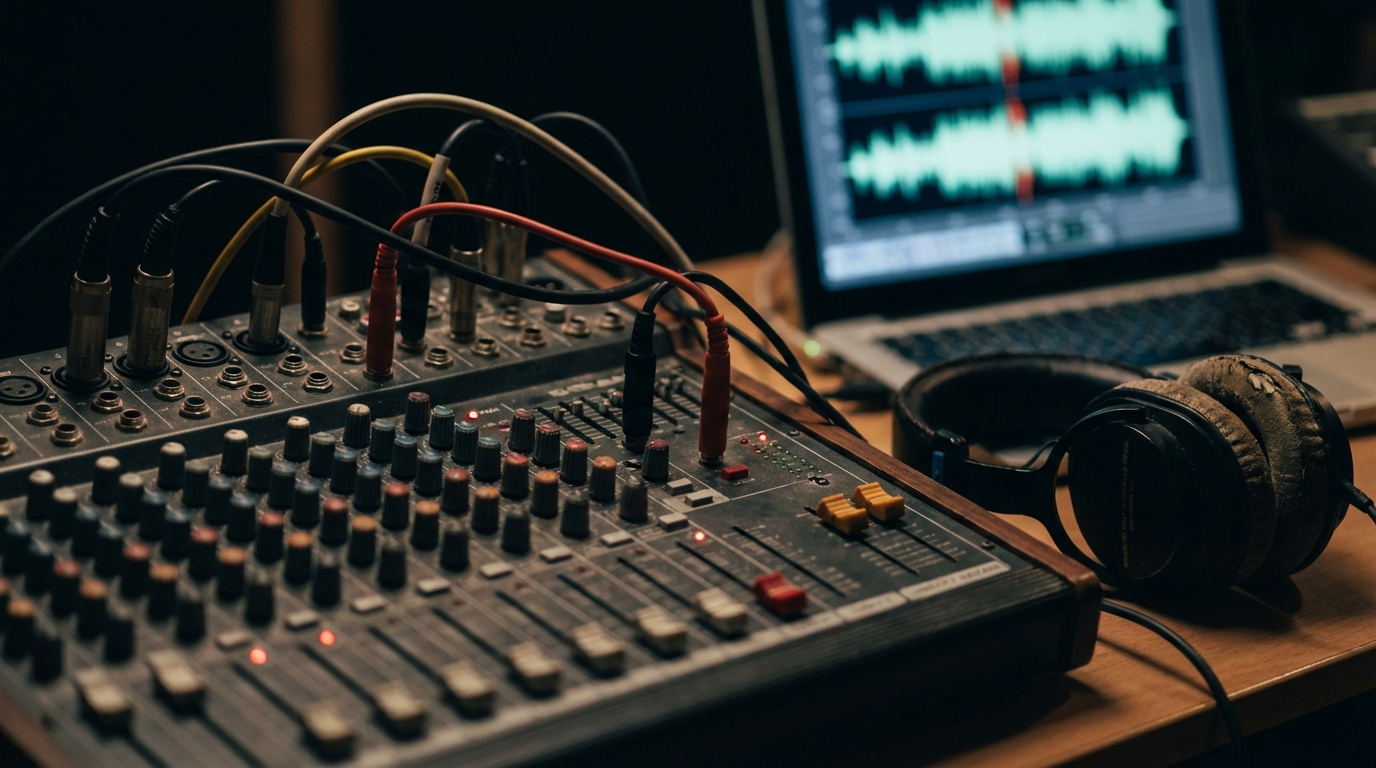
Audio distortion, an often unwelcome phenomenon in sound reproduction, represents an alteration of an audio signal that results in a departure from its original, intended sound. While sometimes employed creatively for artistic effect, unwanted distortion degrades audio fidelity, leading to a harsh, muddy, or otherwise unnatural listening experience. Understanding the fundamental causes of this signal degradation is crucial for anyone involved with audio, from casual listeners to professional engineers. By identifying where and why distortion occurs, it becomes possible to implement effective strategies to mitigate or eliminate it, thereby preserving the clarity and integrity of sound.
This exploration delves into the various forms of audio distortion, their common origins within the signal chain, and practical approaches to prevent their emergence. Maintaining a clean and accurate audio signal path is paramount for faithful sound reproduction, and this begins with a thorough comprehension of the challenges involved.
Understanding Audio Distortion
At its core, audio distortion is any modification of an audio signal’s waveform that was not present in the original signal. This alteration can manifest in numerous ways, affecting the signal’s frequency content, amplitude, or phase relationships. The perception of distortion varies depending on its type and severity, ranging from subtle coloration to severe, unlistenable noise.
Types of Audio Distortion
- Harmonic Distortion: This occurs when new frequencies are introduced that are integer multiples (harmonics) of the original signal’s frequencies. While low levels of even-order harmonics can sometimes be perceived as warmth or richness, excessive harmonic distortion often leads to a harsh or “brittle” sound.
- Intermodulation Distortion (IMD): IMD arises when two or more frequencies present in the original signal interact to create new frequencies that are not harmonically related to the original tones. These new frequencies can be sums or differences of the original frequencies and their harmonics. IMD is generally considered more unpleasant than harmonic distortion because the introduced frequencies are often dissonant.
- Clipping: Perhaps the most recognizable form of distortion, clipping occurs when an audio signal’s amplitude exceeds the maximum level that a piece of equipment can process or reproduce. The waveform’s peaks are “clipped” or flattened, creating a squared-off shape. This generates a large amount of harsh harmonic distortion.
- Digital Artifacts: In the digital realm, unique forms of distortion can arise. These include aliasing (when frequencies above the Nyquist limit are misrepresented as lower frequencies during sampling), quantization error (noise introduced by the approximation of analog signals into discrete digital values), and jitter (timing errors in the digital clock, leading to inaccuracies in sample timing).
- Phase Distortion: While not typically associated with harshness, phase distortion alters the phase relationships between different frequencies in a signal without necessarily changing their amplitude. This can affect the stereo image, transient response, and overall clarity of the sound.
Common Causes of Audio Distortion
Distortion can originate at virtually any point within an audio system, from the initial capture of sound to its final reproduction. Identifying the specific cause often requires a systematic approach.
Signal Level Management Issues
One of the most frequent culprits behind distortion is improper management of signal levels, commonly referred to as gain staging.
- Input Overload: Sending too strong a signal into an input stage can cause it to clip, even if subsequent stages have sufficient headroom.
- Output Overload: Conversely, attempting to drive an output stage (e.g., an amplifier) beyond its design limits will result in clipping.
- Insufficient Headroom: A lack of available dynamic range within any component of the signal chain means that even transient peaks can push the signal into distortion.
Impedance Mismatches
Impedance, the opposition to the flow of alternating current, plays a critical role in signal transfer. When the output impedance of one device does not align appropriately with the input impedance of the next, several issues can arise:
- Loss of Signal Level: A high output impedance connected to a low input impedance can lead to significant signal loss.
- Frequency Response Alteration: Mismatched impedances can also act as a filter, attenuating certain frequencies and altering the tonal balance.
- Noise Introduction: Inefficient power transfer and reflections caused by impedance mismatches can make the system more susceptible to picking up electromagnetic interference.
Cable Quality and Connectivity
The humble cable, often overlooked, is a vital link in the audio chain.
- Inadequate Shielding: Cables lacking proper shielding are prone to picking up electromagnetic interference (EMI) and radio frequency interference (RFI), introducing hum, buzz, or other forms of noise.
- Faulty Connectors: Loose, corroded, or poorly soldered connectors can lead to intermittent signals, crackling, or complete signal loss, often accompanied by noise.
- Excessive Cable Length: While modern cables are robust, extremely long runs can introduce capacitance, which can subtly degrade high frequencies, or make the cable more susceptible to interference.
Power Supply and Grounding Problems
A clean and stable power supply is foundational for accurate audio.
- Ground Loops: These occur when there are multiple paths to ground, creating unwanted current flow and often resulting in a noticeable hum (typically 50 or 60 Hz).
- Dirty Power: Electrical power can contain noise, spikes, and sags, which can directly affect audio equipment performance and introduce noise into the signal.
- Inadequate Power Supply: Equipment with an insufficient internal power supply might struggle to deliver clean power during high-demand peaks, leading to signal compression or distortion.
Component Limitations and Degradation
Every electronic component has operational limits.
- Overdriven Amplifiers: Pushing an amplifier beyond its rated power output will inevitably lead to severe clipping.
- Speaker Excursion Limits: Driving loudspeakers with too much power can cause their cones to move beyond their physical limits, resulting in mechanical distortion and potential damage.
- Aging or Faulty Components: Capacitors that lose capacitance, resistors that drift in value, or failing tubes and transistors can all introduce noise, hum, or distortion into the signal path.
Digital Domain Specifics
While digital audio offers many advantages, it introduces its own set of potential distortion points.
- Clipping in the Digital Converter: Exceeding 0 dBFS (decibels full scale) during analog-to-digital conversion results in hard digital clipping, which is particularly harsh and unrecoverable.
- Incorrect Sample Rate or Bit Depth: Using a sample rate too low can lead to aliasing, while insufficient bit depth can exacerbate quantization error, especially at low signal levels.
- Poor Clocking: In multi-device digital systems, a poorly synchronized clock can lead to jitter, introducing subtle but audible artifacts that degrade clarity.
Strategies for Avoiding Audio Distortion
Preventing distortion largely involves careful planning, proper setup, and attentive monitoring throughout the audio signal path.
Mastering Gain Staging
This is arguably the most critical step. Ensure that the signal level at each stage of your audio chain is robust enough to overcome noise but never so high as to cause clipping.
- Start with input gains set appropriately, aiming for a healthy signal level without peaking.
- Adjust levels at mixers, processors, and amplifiers sequentially, ensuring that each component receives and sends a signal within its optimal operating range (its “sweet spot”).
- Utilize meters but also trust your ears. Distorted sound often indicates an overloaded stage.
Addressing Impedance Considerations
While complex, understanding basic impedance principles can prevent issues.
- Connect low impedance outputs to high impedance inputs when possible for optimal signal transfer.
- Utilize DI (Direct Injection) boxes when connecting high-impedance instruments (like passive guitar pickups) to low-impedance microphone inputs.
- Ensure that speaker impedance matches the amplifier’s output impedance for maximum power transfer and to prevent amplifier stress.
Employing Quality Cabling and Connectivity
Invest in and maintain your physical connections.
- Use appropriately shielded cables for all audio connections, especially for balanced signals.
- Regularly inspect connectors for damage or corrosion and ensure they are securely seated.
- Keep cable runs as short as practically possible to minimize potential interference and signal degradation.
Ensuring Clean Power and Proper Grounding
Power quality directly impacts audio fidelity.
- Plug all audio equipment into the same electrical outlet or power conditioner to create a single point ground, which helps prevent ground loops.
- Utilize power conditioners or uninterruptible power supplies (UPS) to filter dirty power and provide stable voltage.
- Ensure all equipment is properly grounded according to manufacturer specifications.
Respecting Equipment Limitations
Understanding the capabilities of your gear is key.
- Avoid pushing amplifiers and speakers beyond their rated power or excursion limits.
- Regularly maintain and service older or tube-based equipment to ensure components are performing optimally.
- Recognize that some components, by design, introduce subtle coloration or distortion, and factor that into your expectations.
Adhering to Digital Best Practices
For digital audio, precision is paramount.
- Never allow digital signals to exceed 0 dBFS during recording or processing, as digital clipping is irrecoverable.
- Use appropriate sample rates and bit depths for your application; higher settings generally provide more headroom and accuracy.
- When using multiple digital devices, ensure they are synchronized to a single, stable master clock to avoid jitter.
Conclusion
Audio distortion, in its various forms, poses a significant challenge to achieving pristine sound. From the subtle nuances of impedance mismatches to the glaring harshness of digital clipping, unwanted signal alteration can compromise the listening experience. However, by understanding the common causes—ranging from improper gain staging and faulty cables to power issues and digital domain errors—individuals can proactively implement preventative measures. Adopting careful practices in signal management, selecting appropriate components, maintaining proper connections, and being vigilant in monitoring audio signals will lead to a cleaner, more faithful sound reproduction. A methodical approach to identifying and addressing these potential pitfalls is the foundation for preserving the integrity and clarity of any audio signal.
Frequently Asked Questions (FAQs)
1. What is the fundamental difference between analog and digital clipping?
Analog clipping occurs when an analog circuit’s voltage rails are exceeded, causing the waveform peaks to be rounded off relatively softly. This can sometimes be perceived as a “warm” or “musical” form of distortion, as it introduces predominantly even-order harmonics. Digital clipping, conversely, happens when a digital signal exceeds 0 dBFS. Since there are no values above 0 dBFS in the digital domain, the waveform is abruptly and completely flattened, creating sharp corners and introducing a broad spectrum of harsh, dissonant harmonics, making it generally considered much more unpleasant and unrecoverable.
2. Can poor grounding in an audio system cause audible distortion?
Yes, absolutely. Poor grounding is a primary cause of hum and buzz, which are forms of noise that can be considered distortion because they are unwanted additions to the audio signal. Ground loops, in particular, occur when there are multiple ground paths for electrical current, creating a closed loop that acts like an antenna for electromagnetic interference, resulting in a persistent low-frequency hum (typically 50 or 60 Hz, depending on the mains power frequency). Proper grounding ensures a stable reference voltage and minimizes such interference.
3. How does cable quality or length specifically affect audio clarity and distortion?
Cable quality impacts audio clarity primarily through its shielding and conductor purity. Poorly shielded cables are susceptible to picking up electromagnetic interference (EMI) and radio frequency interference (RFI) from nearby electrical devices or broadcast signals, introducing unwanted noise (hum, buzz, static) into the audio. Insufficient conductor purity can subtly degrade the signal over distance. While high-quality cables can carry signals over considerable distances, excessively long cables, especially unbalanced ones, can increase capacitance and resistance, leading to a subtle high-frequency roll-off or making the signal more vulnerable to picking up external interference, which contributes to a loss of clarity.
4. Is all audio distortion considered undesirable?
No, not all audio distortion is undesirable. While this blog focuses on unwanted distortion that degrades fidelity, certain types of distortion are intentionally used for artistic and aesthetic purposes. For instance, tube amplifiers often introduce specific harmonic distortion characteristics that are highly valued for their “warmth,” “richness,” or “grit” in music production. Guitarists frequently use overdrive and fuzz pedals, which are designed to create significant harmonic and clipping distortion, to achieve specific tones. The key distinction lies between unwanted distortion that detracts from the original signal’s integrity and intentional distortion used as a creative effect.
5. What is “gain staging” and why is it crucial for avoiding distortion?
Gain staging is the process of managing signal levels at each stage of an audio signal chain to ensure the signal is strong enough to avoid noise but not so strong as to cause clipping or overload. It involves setting input gains, internal processing levels, and output levels systematically. Proper gain staging is crucial because if any single stage in the chain is overloaded, distortion will be introduced and often cannot be fully removed by subsequent stages. Conversely, if levels are too low, the signal-to-noise ratio degrades, and noise becomes more prominent. Effective gain staging finds the “sweet spot” for each component, maximizing dynamic range and minimizing both noise and distortion throughout the entire system.

Diana Miller, is a dedicated nature enthusiast and an outdoor adventurer. She began leading groups for excursions in her teens and never stopped. Following her passion for nature, she gathers her friends for outdoor trips every now and then. And for the last 10 years, she has executed workshops on backpacking, snow kayaking and traveling that included her main motive of lightweight packing while outdoors. During leisure, she loves planning for her next adventure.