
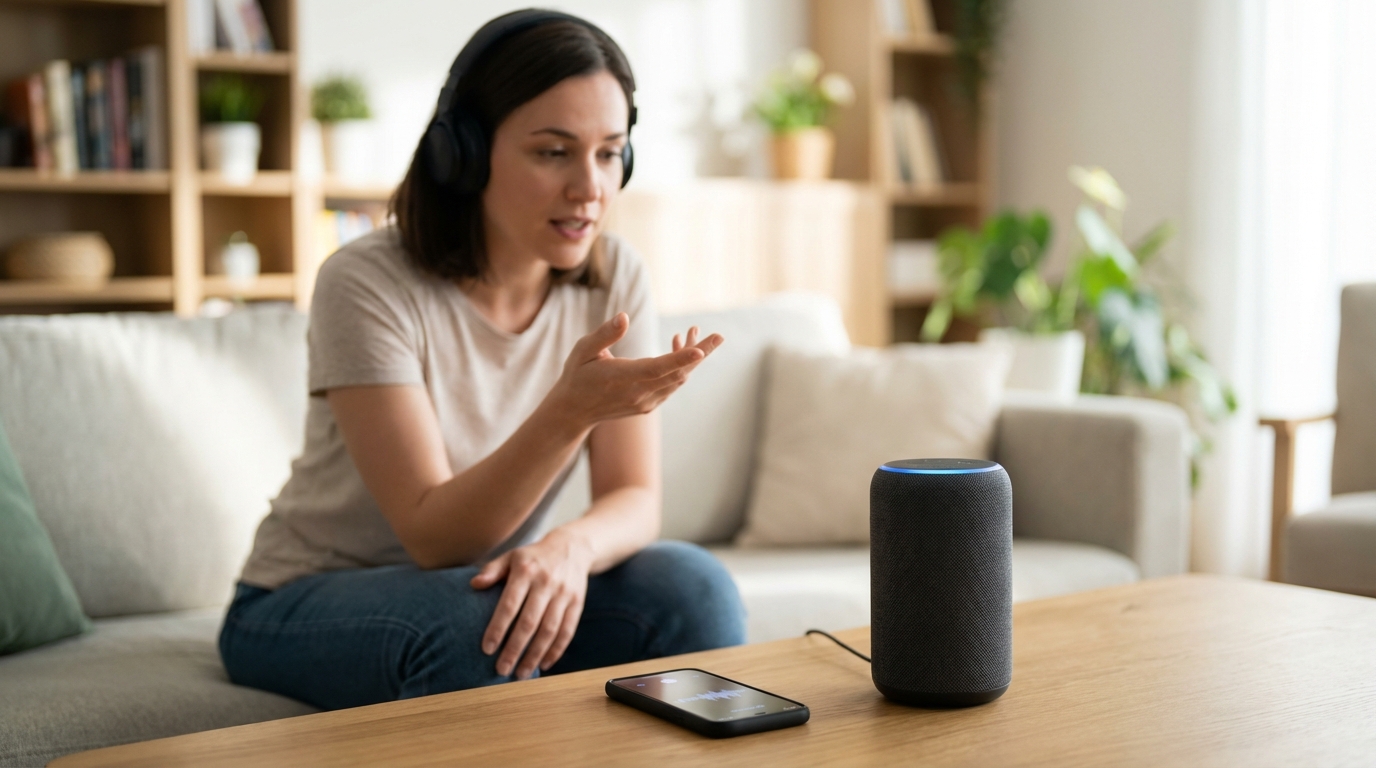
Understanding Voice Control Technology
Voice control technology, once primarily the realm of science fiction, has evolved into a pervasive and increasingly sophisticated aspect of daily life. From managing smart home devices to navigating complex software interfaces, the ability to interact with technology using spoken commands is transforming how individuals engage with the digital world. This technology offers a hands-free, intuitive method of interaction, making devices more accessible and operations more efficient. This post will delve into the fundamental principles, architectural components, diverse applications, and inherent challenges associated with modern voice control systems.The Core Principles of Voice Control
At its heart, voice control technology is a complex interplay of several advanced computational processes that enable machines to interpret and respond to human speech.Speech Recognition
The initial step in any voice control system is converting spoken words into a digital format that a computer can understand. This process, known as Automatic Speech Recognition (ASR), involves several stages:- Acoustic Modeling: This phase analyzes the raw audio input, breaking it down into small units of sound called phonemes. It identifies the unique acoustic properties of each phoneme and how they combine to form words. Machine learning algorithms are extensively used here to create models that map specific sound patterns to linguistic units.
- Language Modeling: Once phonemes are recognized, the system employs language models to predict the most probable sequence of words. This involves understanding grammar, syntax, and the statistical likelihood of certain word combinations occurring in a given language. Contextual clues play a significant role in resolving ambiguities.
- Feature Extraction: Raw audio signals are processed to extract relevant features, such as frequency, amplitude, and temporal characteristics, which are then used by acoustic models.
Natural Language Processing (NLP)
After speech recognition accurately transcribes spoken words into text, the system moves to Natural Language Processing (NLP). NLP is what allows the technology to move beyond mere transcription to understanding the meaning and intent behind the user’s words.- Semantic Analysis: This involves interpreting the meaning of words and phrases in context, identifying synonyms, and understanding relationships between concepts.
- Syntactic Analysis: The system analyzes the grammatical structure of sentences to correctly parse their components (e.g., subject, verb, object).
- Pragmatic Analysis: This considers the broader context and real-world knowledge to infer the user’s true intention, even if the literal words are ambiguous. For example, “play music” implies accessing a media library and initiating playback.
- Named Entity Recognition (NER): Identifies and classifies entities mentioned in the text, such as names of people, organizations, locations, and dates.
Text-to-Speech (TTS) Synthesis
To provide a conversational experience, voice control systems often need to respond verbally. This is achieved through Text-to-Speech (TTS) synthesis, which converts digital text back into human-like speech.- Concatenative Synthesis: Historically, this method involved stitching together pre-recorded speech segments (e.g., phonemes, diphones) to form complete utterances.
- Parametric Synthesis: More modern approaches generate speech from scratch using algorithms that simulate the human vocal tract, often powered by deep learning models. This allows for greater flexibility in controlling voice characteristics like pitch, tone, and speaking rate, resulting in more natural-sounding output.
Architectural Components of Voice Control Systems
The functionality of voice control is supported by a sophisticated architecture involving various hardware and software elements.Microphones and Audio Processing
The quality of the initial audio capture is paramount.- Transducers: Microphones convert sound waves into electrical signals.
- Noise Reduction: Algorithms actively filter out background noise, enhancing the clarity of the user’s voice.
- Echo Cancellation: Essential for two-way communication, this removes echoes caused by the system’s own output being picked up by the microphone.
- Beamforming: Advanced microphone arrays can focus on specific sound sources, isolating the user’s voice from other ambient sounds.
Cloud vs. Edge Processing
Where the heavy computational lifting occurs significantly impacts system performance and privacy.- Cloud-based Processing: Many voice assistants rely on powerful cloud servers for speech recognition and NLP. This allows access to vast computational resources, extensive language models, and continuous updates. However, it requires a stable internet connection and can introduce latency.
- Edge Processing: Some tasks, especially wake-word detection or simple commands, can be processed directly on the device (“at the edge”). This offers faster response times, enhanced privacy (data doesn’t leave the device), and offline capability for certain functions, but with limited computational power.
- Hybrid Approaches: Increasingly, systems combine both, with simpler tasks handled on-device and more complex queries offloaded to the cloud.
Application Programming Interfaces (APIs)
APIs serve as the communication bridge, allowing different software components and services to interact seamlessly. Voice control systems often leverage APIs to integrate with:- Third-party applications (e.g., for playing music from streaming services).
- Operating system functionalities (e.g., setting alarms, sending messages).
- Specialized AI services for specific knowledge domains.
Applications Across Various Domains
Voice control technology has permeated numerous sectors, streamlining operations and enhancing user experiences.Consumer Electronics
This is perhaps the most visible application domain for voice control.- Smart Home Devices: Users can control lighting, thermostats, door locks, and security systems with spoken commands.
- Mobile Devices: Voice assistants facilitate tasks like setting reminders, making calls, sending messages, and searching for information.
- Entertainment Systems: Voice commands allow for searching content, controlling playback, and switching channels on smart TVs and audio systems.
Automotive Sector
Voice control is integral to modern vehicle interfaces, promoting safer, hands-free operation.- Infotainment Systems: Controlling music, radio, and climate settings.
- Navigation: Entering destinations and requesting directions without touching the screen.
- Communication: Making and receiving calls or sending texts while keeping hands on the wheel.
Healthcare
Voice technology is finding significant utility in clinical and administrative settings.- Clinical Documentation: Dictation systems allow medical professionals to record patient notes and reports, reducing manual typing and improving efficiency.
- Remote Patient Monitoring: Voice interfaces can assist patients in reporting symptoms or requesting information from care providers.
- Surgical Assistance: In some advanced operating rooms, surgeons can use voice commands to control instruments or access patient data without breaking sterile fields.
Enterprise and Industry
Businesses are adopting voice control to improve productivity and safety.- Workflow Automation: In office environments, voice can trigger software commands, schedule meetings, or manage task lists.
- Inventory Management: In warehouses, workers can use voice-activated systems for hands-free picking, sorting, and inventory checks.
- Field Services: Technicians can access manuals or diagnostic tools using voice commands while performing repairs.
Challenges and Considerations
Despite its advancements, voice control technology still faces several hurdles.Accuracy and Robustness
Achieving universal accuracy remains a complex challenge.- Accent and Dialect Variation: Systems can struggle with diverse accents, speech patterns, and regional dialects.
- Background Noise: Performance can degrade significantly in noisy environments.
- Homophones and Complex Syntax: Differentiating between words that sound alike but have different meanings (e.g., “to,” “too,” “two”) or processing convoluted sentence structures can be difficult.
- Emotional Speech: Recognizing commands spoken with different emotions can also impact performance.
Privacy and Security
The nature of voice input raises significant privacy and security concerns.- Data Collection: Voice control systems often collect, transmit, and store audio recordings and transcriptions, raising questions about data retention policies and potential misuse.
- Unauthorized Access: The risk of unauthorized individuals issuing commands or accessing sensitive information through voice remains a concern.
- “Always-on” Microphones: Devices that continuously listen for wake words may inadvertently capture private conversations.
User Experience and Accessibility
Designing voice interfaces that are intuitive and inclusive is crucial.- Onboarding: Users need to understand the system’s capabilities and limitations.
- Error Handling: How systems respond to errors or misunderstandings greatly impacts user satisfaction.
- Accessibility for Diverse Needs: While voice control can enhance accessibility for some (e.g., those with mobility impairments), it may pose challenges for others (e.g., individuals with certain speech impediments).
- Cognitive Load: Remembering specific commands or engaging in lengthy verbal interactions can sometimes be less efficient than visual interfaces.
Conclusion
Voice control technology represents a remarkable convergence of acoustics, linguistics, artificial intelligence, and engineering. From the initial conversion of sound waves into digital data to the sophisticated processing of intent and the generation of spoken responses, each step is crucial for delivering a seamless user experience. As the technology continues to mature, addressing challenges related to accuracy, privacy, and user experience will be key to its further integration into daily life. The trajectory suggests an increasingly natural, responsive, and indispensable role for voice interfaces across virtually every domain.Frequently Asked Questions (FAQs)
1. How does voice control differentiate between different voices?
Voice control systems can differentiate between voices through a process called speaker recognition or voice biometrics. This involves analyzing unique acoustic patterns in a person’s voice, such as pitch, tone, cadence, and vocal tract shape, to create a voice print. Some systems require users to train the device by speaking specific phrases, creating a personalized profile that allows it to identify and respond to authorized voices, while ignoring others.2. Can voice control systems work offline?
The capability of voice control systems to work offline varies. Simpler functions, such as waking the device or executing predefined commands (e.g., turning on a flashlight), can often be processed on the device itself without an internet connection using on-device models. However, more complex queries requiring extensive data, advanced natural language processing, or access to external services (like web searches or music streaming) typically require a connection to cloud servers.3. What is the difference between speech recognition and natural language processing?
Speech recognition (ASR) is the process of converting spoken language into text. Its primary goal is accurate transcription. Natural Language Processing (NLP), on the other hand, takes that transcribed text and works to understand its meaning, intent, and context. ASR focuses on “what was said,” while NLP focuses on “what was meant.” Both are critical components of a functional voice control system.4. How do voice control systems learn and improve?
Voice control systems learn and improve primarily through machine learning and deep learning algorithms. They are trained on vast datasets of recorded speech and text. As more users interact with the systems, the data from these interactions (often anonymized and aggregated) can be used to further refine the acoustic and language models, leading to better accuracy in speech recognition and more nuanced understanding in natural language processing. Regular software updates also incorporate these improvements.5. Is voice control technology secure?
The security of voice control technology is a complex issue. While developers implement various security measures such as encryption for data transmission and storage, vulnerabilities can exist. Concerns include the potential for unauthorized access if voice prints are compromised, the privacy implications of “always-on” microphones, and the risk of data breaches involving recorded conversations. Users should review privacy policies and be aware of the data collection practices associated with their voice-enabled devices.
Diana Miller, is a dedicated nature enthusiast and an outdoor adventurer. She began leading groups for excursions in her teens and never stopped. Following her passion for nature, she gathers her friends for outdoor trips every now and then. And for the last 10 years, she has executed workshops on backpacking, snow kayaking and traveling that included her main motive of lightweight packing while outdoors. During leisure, she loves planning for her next adventure.