
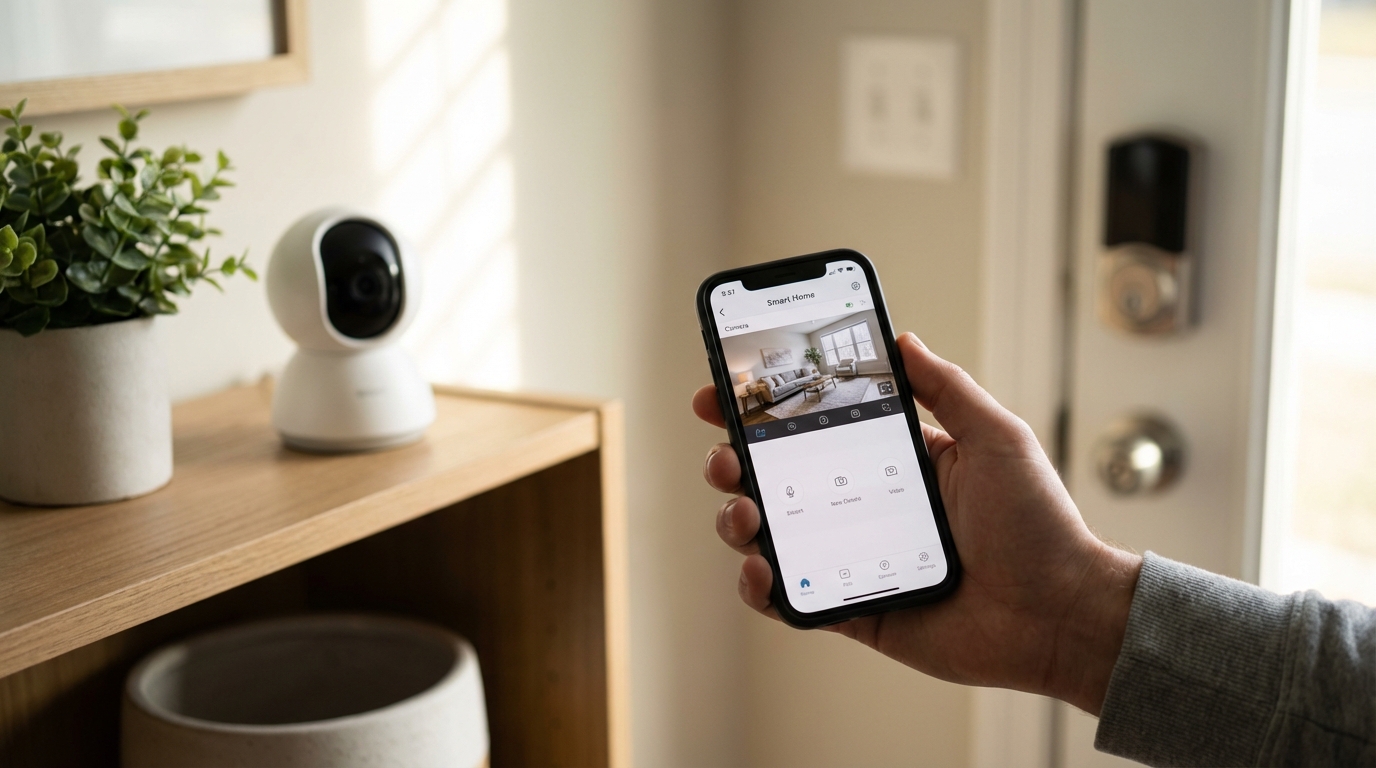
Understanding Smart Home Security Basics
The concept of home security has undergone a significant transformation, evolving from simple locks and alarms to sophisticated, interconnected systems powered by digital technology. Today, smart home security offers a comprehensive approach to protecting properties and their occupants, leveraging connectivity and automation to provide enhanced awareness and control. This shift represents a move towards more dynamic, responsive, and personalized security solutions. This guide aims to demystify the fundamental aspects of smart home security. We will explore the core components that make up these systems, delve into how they operate, and discuss essential considerations for anyone looking to understand the capabilities and implications of modern home protection. By understanding these basics, individuals can better grasp the potential and mechanics of intelligent security infrastructures.Core Components of Smart Home Security Systems
Smart home security systems are typically modular, comprising various interconnected devices that work in unison to monitor and protect a property. These components can be broadly categorized based on their function.Control Hub and Connectivity
At the heart of any smart security system is the control hub or panel. This central device acts as the brain, processing information from all connected sensors and cameras, orchestrating automations, and serving as the primary interface for users to manage their system. It is responsible for communication, often utilizing various wireless protocols to connect with other devices. * **Wireless Protocols:** * **Wi-Fi:** Commonly used for cameras and devices requiring higher bandwidth, connecting directly to the home’s internet router. * **Z-Wave and Zigbee:** Low-power wireless protocols specifically designed for home automation. They create a mesh network, allowing devices to relay signals to each other, extending the range and improving reliability. * **Bluetooth:** Used for close-range connections, often for initial setup or direct device pairing. * **Cellular:** Provides a crucial backup communication channel, allowing the system to send alerts even if the internet connection is disrupted.Sensors
Sensors are the eyes and ears of a smart security system, designed to detect various types of activity or environmental changes. * **Door and Window Sensors (Contact Sensors):** These small, two-piece devices are installed on entry points. When the connection between the two pieces is broken (i.e., a door or window is opened), the sensor triggers an alert. * **Motion Sensors:** Utilizing technologies like Passive Infrared (PIR) or microwave, these sensors detect movement within a designated area. Some advanced sensors can differentiate between humans and pets to minimize false alarms. * **Glass Break Sensors:** Designed to detect the specific sound frequencies associated with breaking glass, providing an early warning against forced entry through windows. * **Environmental Sensors:** * **Smoke and Carbon Monoxide (CO) Detectors:** Integral for life safety, these smart versions can send alerts to your phone and trigger integrated alarms throughout the home. * **Water Leak Sensors:** Placed in areas prone to leaks (e.g., basements, under sinks), they can detect the presence of water and send alerts, potentially preventing significant property damage.Cameras and Video Devices
Security cameras provide visual verification and monitoring capabilities, allowing users to see what’s happening at their property in real-time or review recorded footage. * **Indoor Cameras:** Used for monitoring living spaces, often featuring two-way audio, night vision, and motion detection. * **Outdoor Cameras:** Built to withstand weather elements, these typically offer wider fields of view, robust night vision, and sometimes floodlights for enhanced security. * **Video Doorbells:** Combine a doorbell with a camera, microphone, and speaker, enabling users to see and communicate with visitors from anywhere, and to monitor package deliveries. * **Features:** Many smart cameras offer cloud storage for recorded video, local storage options, advanced motion detection with object recognition, and customizable activity zones.Alarms and Sirens
When a threat is detected, the system needs to notify occupants and deter intruders. Smart sirens, often integrated into the control panel or as standalone units, emit loud audible warnings. These can be customized to trigger based on specific sensor activations or alarm events.Smart Locks
Replacing traditional deadbolts, smart locks allow for keyless entry using codes, smartphone apps, or even biometrics. They can be remotely locked or unlocked, grant temporary access to visitors, and provide logs of who has entered and exited the property.Other Integrated Devices
Smart security systems can often integrate with a broader ecosystem of smart home devices, enhancing both security and convenience. For example: * **Smart Lighting:** Can be programmed to turn lights on and off randomly when away, simulating occupancy. * **Smart Thermostats:** While not directly security devices, their integration into a unified system allows for centralized control and potential energy savings.How Smart Home Security Systems Operate
The operational mechanics of smart home security systems involve a blend of hardware, software, and communication technologies designed to provide continuous protection and user control.Data Collection and Communication
When a sensor is triggered – for instance, a door opens, or motion is detected – it sends a signal to the central control hub. This communication typically occurs wirelessly using the protocols mentioned earlier (Z-Wave, Zigbee, Wi-Fi). The hub then processes this information.Automation and Rules
A key feature of smart security is its ability to automate responses based on predefined rules or events. Users can set up “if-then” scenarios: * “If a window sensor is triggered while the system is armed, then sound the siren and send a notification.” * “If motion is detected outside at night, then turn on the outdoor floodlights and record video.” These automations enhance responsiveness and can be customized to fit specific needs and routines.Monitoring Services
Smart home security systems offer different approaches to monitoring: * **Self-Monitoring:** In this setup, the user is directly responsible for monitoring alerts. When an alarm or event occurs, the system sends notifications (via push notifications, SMS, or email) directly to the user’s smartphone or designated contacts. The user then decides on the appropriate action, such as contacting emergency services. This option typically involves lower or no monthly fees. * **Professional Monitoring:** With this service, the system is connected to a central monitoring station staffed by trained operators. When an alarm is triggered, the monitoring station receives the alert. Operators may attempt to contact the user or designated contacts to verify the alarm before dispatching emergency services (police, fire, ambulance) if necessary. This service usually involves a monthly subscription fee but provides an added layer of response.Alerts and Notifications
Regardless of the monitoring type, immediate alerts are a cornerstone of smart security. Users receive real-time notifications on their smartphones, informing them of events such as: * System armed/disarmed status changes. * Sensor triggers (e.g., door opened, motion detected). * Environmental alerts (e.g., smoke, water leak). * Low battery warnings for devices. * Camera motion detection events.Key Considerations for Implementing Smart Home Security
When considering a smart home security system, several factors warrant careful evaluation to ensure the chosen solution aligns with individual needs and circumstances.Scalability and Flexibility
An important aspect is the ability of the system to expand and adapt over time. A modular system allows users to start with essential components and add more devices as needs evolve or budgets permit. This ensures longevity and adaptability without requiring a complete system overhaul.Reliability and Redundancy
Reliability is paramount for a security system. Consider systems that offer: * **Power Backup:** Battery backups for the control hub and essential components ensure continued operation during power outages. * **Redundant Communication:** Cellular backup connectivity ensures the system can still send alerts even if the home’s internet service is interrupted. * **System Stability:** A robust and well-designed system minimizes glitches and ensures consistent performance.Privacy and Data Security
Given the nature of smart security involving cameras and personal data, privacy and cybersecurity are critical. * **Encryption:** Look for systems that employ strong encryption for data transmission between devices and to the cloud. * **Cloud Storage Security:** Understand how recorded video footage and other data are stored and protected in the cloud. * **Network Security:** Securing the home Wi-Fi network with strong passwords and robust router settings is essential to prevent unauthorized access. * **Camera Placement:** Be mindful of where cameras are placed to respect privacy, especially in shared spaces or areas that might capture neighbors’ property.Installation Process
Smart security systems can vary in their installation complexity: * **DIY (Do-It-Yourself):** Many systems are designed for easy self-installation, often involving wireless components that simply need to be mounted and paired with the hub via an app. This can save on installation costs. * **Professional Installation:** For more complex systems or those requiring hardwired components, professional installation ensures proper setup and optimization.User Interface and Ease of Use
The accompanying smartphone app and control panel interface should be intuitive and easy to navigate. A user-friendly interface simplifies arming/disarming the system, viewing camera feeds, managing devices, and customizing settings.Advantages of Smart Home Security
Smart home security systems offer a range of advantages over traditional security approaches. * **Enhanced Awareness and Remote Control:** Users can monitor their property from anywhere in the world via a smartphone, providing peace of mind and the ability to react quickly to events. * **Customization and Automation:** The ability to create personalized rules and schedules allows the system to adapt to specific lifestyles and needs, automating tasks that enhance security. * **Integration with Smart Home Ecosystems:** Seamless integration with other smart devices allows for a more cohesive and intelligent home environment, where security can interact with lighting, climate control, and more. * **Proactive Threat Detection:** Advanced sensors and analytics can detect potential threats earlier, sometimes even before a break-in occurs, through perimeter monitoring and activity analysis. * **Deterrence:** Visible cameras, yard signs, and loud sirens act as strong deterrents to potential intruders.Challenges and Limitations
While offering many benefits, smart home security systems also come with certain considerations. * **Internet Dependence:** Most smart security systems rely heavily on a stable internet connection for full functionality. Although cellular backup helps, a complete loss of power and internet can impair some features. * **Potential for False Alarms:** Improper sensor placement, pet movement, or environmental factors can sometimes trigger false alarms, which can be disruptive and potentially lead to charges from emergency services if not managed. * **Cybersecurity Risks:** As connected devices, smart security systems are susceptible to cyber threats if not properly secured. Regular software updates and strong network security practices are essential. * **Initial and Ongoing Costs:** There can be a significant initial investment in hardware, and many systems require ongoing subscription fees for features like cloud storage or professional monitoring.Conclusion
Smart home security represents a significant advancement in property protection, offering unparalleled levels of control, awareness, and automation. By understanding the core components, operational mechanisms, and key considerations, individuals can make informed decisions about implementing these systems. While challenges such as internet dependence and cybersecurity risks exist, the benefits of enhanced vigilance, remote control, and customization empower users to create a safer and more responsive living environment. A well-understood and properly implemented smart security system can provide substantial peace of mind in an increasingly connected world.Frequently Asked Questions (FAQs)
1. What is the fundamental difference between smart home security and traditional security systems?
The fundamental difference lies in connectivity and intelligence. Traditional systems are typically standalone, alarm-based, and may require manual arming/disarming. Smart home security systems, however, are interconnected, accessible remotely via apps, offer real-time notifications, can be automated, and often integrate with other smart home devices, providing a more dynamic and responsive approach to protection.2. Do smart home security systems always require an internet connection?
While many smart security features, such as remote access, cloud storage, and smartphone notifications, heavily rely on an internet connection, some systems offer cellular backup. This allows critical alerts to be sent to professional monitoring stations or users even if the home’s internet service is disrupted. Basic local functions and siren activation may still work without internet depending on the specific system.3. How is data secured in a smart home security system?
Data security in smart home security systems typically involves several layers, including encryption for data transmission between devices and to cloud servers, secure cloud storage, and user authentication protocols. It is also crucial for users to maintain strong Wi-Fi network security, use unique and complex passwords, and keep device firmware updated to protect against vulnerabilities.4. Can smart security systems be self-monitored?
Yes, many smart security systems offer self-monitoring as an option. In a self-monitored setup, the user receives direct alerts (e.g., push notifications, SMS) on their smartphone when an alarm or event occurs. The user is then responsible for assessing the situation and contacting emergency services if necessary, without the involvement of a professional monitoring center.5. What is a smart home security hub?
A smart home security hub, often referred to as a control panel or base station, is the central processing unit of a smart security system. It receives signals from all connected sensors and cameras, processes data, orchestrates automations, and facilitates communication with the user’s smartphone or a professional monitoring service. It acts as the brain that ties all the individual security components together.
Diana Miller, is a dedicated nature enthusiast and an outdoor adventurer. She began leading groups for excursions in her teens and never stopped. Following her passion for nature, she gathers her friends for outdoor trips every now and then. And for the last 10 years, she has executed workshops on backpacking, snow kayaking and traveling that included her main motive of lightweight packing while outdoors. During leisure, she loves planning for her next adventure.