
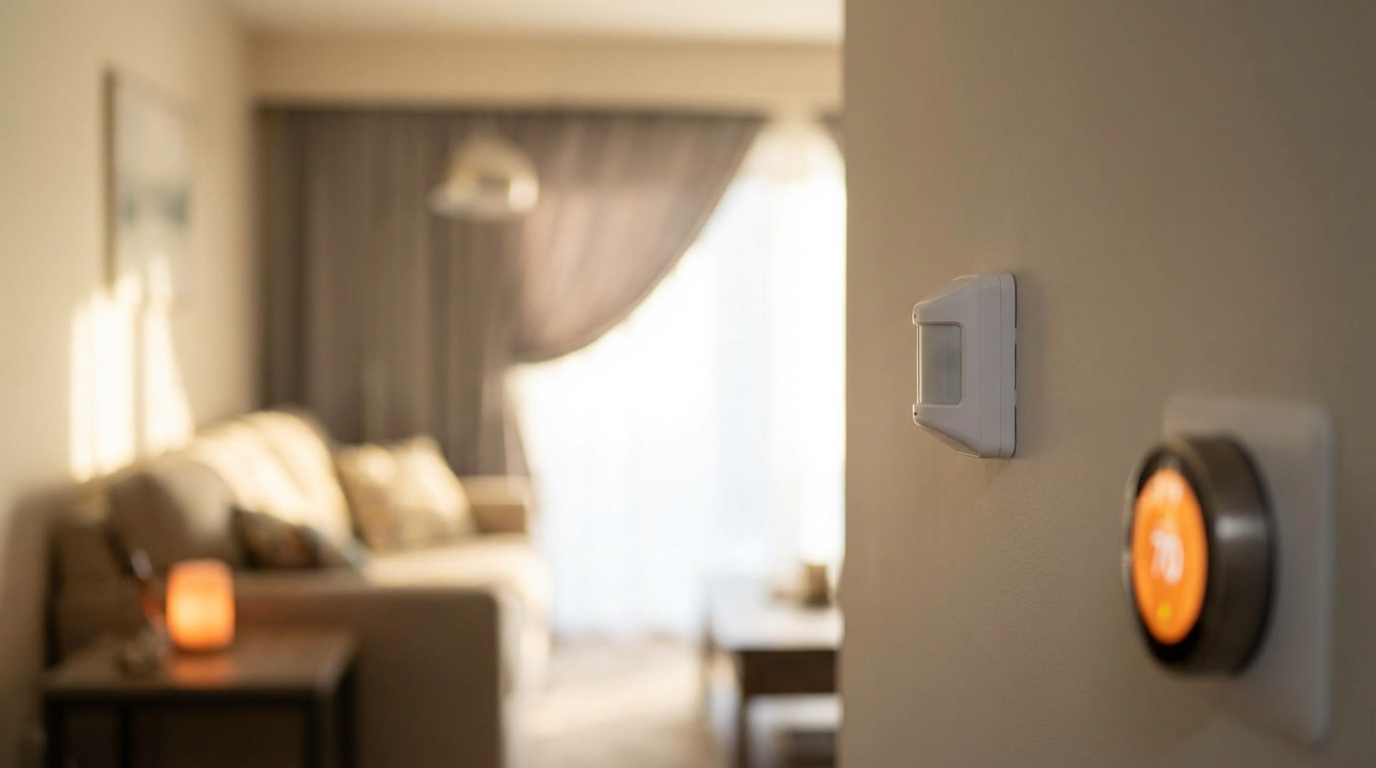
The concept of a smart home, once a vision confined to science fiction, has become an tangible reality for many. At the core of this transformation lies an often-unseen but indispensable component: sensors. These devices act as the sensory organs of a smart home system, constantly gathering information about its environment. Without sensors, smart homes would lack the fundamental ability to perceive changes, understand conditions, and respond intelligently. This post will explore the diverse types of sensors, their operational mechanisms, and how they collectively enable a home to become truly ‘smart’, offering unparalleled levels of automation, convenience, and efficiency.
The Foundational Role of Sensors in Smart Homes
A sensor, in the context of a smart home, is an electronic device designed to detect and respond to specific physical inputs from its surroundings. These inputs can range from movement and light intensity to temperature, humidity, and even the presence of certain gases. Once a sensor detects a specific stimulus, it converts that physical input into an electrical signal or data packet. This data is then transmitted to a central processing unit, often referred to as a smart home hub or controller.
The primary function of sensors is to provide real-time data about the home’s environment. This data forms the basis for all automated actions and informed decisions made by the smart home system. Essentially, sensors provide the “eyes and ears” that allow the smart home to understand its current state and react appropriately, moving beyond simple programmed schedules to dynamic, context-aware responses.
Diverse Sensor Types and Their Applications
Smart homes leverage a wide array of sensor types, each designed for a specific purpose. Their combined capabilities create a comprehensive network of environmental awareness.
Motion Sensors
Motion sensors detect movement within a specified area. Many utilize Passive Infrared (PIR) technology, which senses changes in infrared radiation caused by moving objects, typically people or large pets. Other types, such as microwave sensors, emit radio waves and detect disturbances in their reflection patterns.
- Applications:
- Lighting Automation: Automatically turning lights on when someone enters a room and off when it becomes vacant, saving energy.
- Security: Triggering alarms or notifications when unexpected movement is detected in restricted areas.
- Climate Control: Adjusting HVAC settings based on occupancy, ensuring comfort only where and when needed.
Contact/Door/Window Sensors
These sensors typically consist of two parts: a magnet and a sensor unit. When a door or window is closed, the magnet and sensor are in proximity, completing a circuit. Opening the door or window separates them, breaking the circuit and triggering a signal.
- Applications:
- Security Monitoring: Alerting homeowners to opened doors or windows, especially when armed.
- Climate Efficiency: Pausing HVAC operation if a window is left open, preventing energy waste.
- Automated Routines: Turning on an entryway light when the front door opens, or activating a welcome scene.
Temperature and Humidity Sensors
These devices measure the ambient temperature and moisture levels in the air. Temperature sensors often use thermistors, which change electrical resistance with temperature. Humidity sensors frequently employ capacitive elements that vary in capacitance with moisture absorption.
- Applications:
- Climate Control: Working with smart thermostats to maintain desired indoor temperatures and humidity levels for comfort and energy efficiency.
- Environmental Monitoring: Preventing conditions that lead to mold growth or protecting sensitive items like musical instruments or artwork.
- Health and Wellness: Ensuring optimal conditions for sleeping or for individuals with respiratory sensitivities.
Light Sensors (Ambient Light Sensors)
Light sensors, also known as photocells or ambient light sensors, measure the intensity of light in a given area. They typically use photodiodes or photoresistors, which produce an electrical current or change resistance proportional to the light they receive.
- Applications:
- Dynamic Lighting: Adjusting the brightness of smart lights based on natural light levels, dimming them when it’s bright outside and increasing them as it gets darker.
- Smart Blinds/Curtains: Automatically opening or closing window coverings to optimize natural light entry or provide privacy.
- Energy Efficiency: Ensuring lights are only on when necessary, complementing motion sensor input.
Environmental Quality Sensors (Air Quality, CO, Smoke)
These sensors detect various airborne substances. Air quality sensors often identify volatile organic compounds (VOCs) and particulate matter (PM2.5, PM10). Carbon Monoxide (CO) sensors use electrochemical technology, while smoke sensors typically use photoelectric or ionization methods.
- Applications:
- Health Protection: Alerting residents to dangerous levels of CO, smoke, or harmful pollutants.
- Ventilation Automation: Activating smart ventilation systems or air purifiers when poor air quality is detected.
- Early Warning: Providing crucial early detection for fire hazards.
Water Leak Sensors
Water leak sensors are designed to detect the presence of water in undesirable locations. They often work by sensing electrical conductivity between two probes when water bridges the gap, or by using float switches that rise with water levels.
- Applications:
- Damage Prevention: Alerting homeowners to leaks from pipes, appliances, or basements before significant damage occurs.
- Automated Shut-off: In advanced systems, triggering a smart water shut-off valve to prevent further flooding.
- Proactive Maintenance: Indicating potential issues with plumbing or appliance connections.
Presence/Occupancy Sensors
While related to motion sensors, presence sensors are often more sophisticated, designed to detect sustained human presence rather than just transient movement. They might use a combination of technologies, including passive infrared, ultrasonic, or even subtle changes in CO2 levels or radar to confirm continuous occupancy.
- Applications:
- Fine-Grained Climate Control: Optimizing HVAC settings for occupied rooms over longer periods, leading to greater energy savings.
- Automated Routines: Ensuring lights or entertainment systems remain on only as long as a person is genuinely present in a space.
- Workplace/Smart Building Integration: For more complex scenarios, optimizing resource allocation based on actual room usage.
Vibration/Glass Break Sensors
These sensors detect impacts or specific sound frequencies associated with breaking glass. Vibration sensors often use piezoelectric elements that generate a voltage when subjected to mechanical stress. Glass break sensors listen for distinct audio frequencies.
- Applications:
- Perimeter Security: Providing an additional layer of security by detecting attempts to force entry through windows or doors.
- Alerts: Triggering alarms or notifications immediately upon detection of a break-in attempt.
Data Flow and Automation: The Sensor-Hub Relationship
For a smart home to function intelligently, the data gathered by various sensors must be collected, interpreted, and acted upon. This is where the smart home hub or controller plays a central role.
Sensors communicate their data to the hub using various wireless protocols such as Wi-Fi, Zigbee, Z-Wave, Bluetooth, and Thread. These protocols are designed for low power consumption and reliable data transmission over short to medium distances within a home. The hub acts as a central translator, bringing together data from devices using different protocols into a unified system.
Upon receiving data, the hub processes it according to pre-configured automation rules. These rules are often expressed as “IF THIS THEN THAT” statements. For example, “IF motion is detected in the living room between sunset and sunrise, THEN turn on the living room lights to 50% brightness.” This allows for highly customized and responsive automation that adapts to the conditions reported by the sensors.
Some smart home systems perform all data processing and rule execution locally on the hub (edge computing), enhancing speed and privacy. Others leverage cloud computing for more complex analytics, data storage, and remote access, offering flexibility and advanced features.
The Benefits Sensors Bring to Smart Living
The integration of diverse sensors into a smart home system unlocks a multitude of advantages, enhancing various aspects of daily life.
- Enhanced Security: Sensors provide continuous monitoring, detecting unusual activity, open entry points, or environmental threats. This leads to proactive alerts and potentially automated security measures, offering greater peace of mind.
- Energy Efficiency: By understanding occupancy, light levels, and climate conditions, sensors enable precise control over lighting, heating, and cooling. This minimizes energy waste by ensuring resources are used only when and where necessary.
- Convenience and Comfort: Automation based on sensor data simplifies daily routines. Lights turn on as you enter, climate adjusts to your preference, and devices activate without manual intervention, creating a more comfortable and responsive living environment.
- Safety and Health: Environmental quality sensors provide early warnings for hazards like smoke, carbon monoxide, or poor air quality. Water leak sensors can prevent significant property damage, contributing to a safer and healthier home.
- Accessibility: For individuals with mobility challenges or specific needs, sensor-driven automation can provide significant assistance, allowing for easier control of their environment and increased independence.
In conclusion, sensors are the indispensable backbone of smart home functionality. They transform a static structure into a dynamic, responsive entity capable of perceiving, analyzing, and reacting to its surroundings. By providing real-time data on everything from occupancy to environmental quality, these devices enable the intricate web of automation that defines a smart home. As technology continues to evolve, the integration and sophistication of sensors will undoubtedly lead to even more intuitive, efficient, and personalized living spaces, making our homes not just intelligent, but truly intuitive.
Frequently Asked Questions (FAQs)
1. How do smart home sensors communicate with each other and the main hub?
Smart home sensors typically communicate wirelessly using various protocols such as Wi-Fi, Zigbee, Z-Wave, Bluetooth, or Thread. The smart home hub acts as a central translator, allowing devices using different protocols to communicate and operate as a unified system.
2. Are smart home sensors difficult to install?
Most modern smart home sensors are designed for user-friendly installation. Many are wireless and battery-powered, requiring only adhesive backing or simple mounting screws. Setup usually involves pairing them with a smart home hub or a dedicated app.
3. Do smart home sensors require a constant internet connection?
It depends on the system. Many basic automations (e.g., a motion sensor turning on a light) can operate locally without an internet connection if the smart home hub supports it. However, remote access, software updates, cloud-based features, and integration with external services usually require an active internet connection.
4. What is the typical lifespan of a smart home sensor?
The lifespan of a smart home sensor varies depending on its type, power source, and usage. Battery-powered sensors typically last anywhere from one to five years on a single set of batteries. The electronic components themselves are often designed for many years of operation, often exceeding five to ten years with proper care.
5. Can sensors truly help save energy in a smart home?
Yes, sensors play a significant role in energy conservation. By providing real-time data on occupancy, ambient light, and temperature, they enable automated systems to optimize lighting, heating, and cooling based on actual conditions rather than fixed schedules. This prevents unnecessary energy consumption in unoccupied rooms or during periods of sufficient natural light.

Diana Miller, is a dedicated nature enthusiast and an outdoor adventurer. She began leading groups for excursions in her teens and never stopped. Following her passion for nature, she gathers her friends for outdoor trips every now and then. And for the last 10 years, she has executed workshops on backpacking, snow kayaking and traveling that included her main motive of lightweight packing while outdoors. During leisure, she loves planning for her next adventure.