
Introduction
Electric bicycles, or eBikes, have transformed urban commutes and recreational rides, making cycling accessible to a wider demographic. At the heart of the eBike experience is its ability to provide motorized assistance, seamlessly augmenting human pedaling effort. This assistance isn’t a constant, static output; rather, it’s a dynamic and intelligent system that responds directly to the rider’s actions and the riding environment. The sophisticated interplay of various sensors is fundamental to how an eBike precisely controls its power output, ensuring an intuitive, efficient, and enjoyable ride.
Understanding these sensory inputs reveals the engineering behind the smooth power delivery that defines modern eBiking. From detecting the simple rotation of pedals to measuring the actual force applied, these tiny electronic components are the eyes and ears of the eBike’s motor system, translating rider intent into tangible assistance.
Understanding eBike Power Assistance
An eBike motor provides propulsion to assist the rider, reducing the physical exertion required to move the bicycle. Unlike motorcycles or mopeds, eBikes are designed to complement human power, not replace it entirely. This means the motor assistance needs to be intelligently applied, matching the rider’s input and respecting legal limitations.
The core principle is simple: when the rider pedals, the motor should activate; when the rider stops pedaling, the motor should cease assistance. However, the nuances of how much assistance to provide, and how quickly to engage or disengage, are dictated by a sophisticated electronic control unit that receives constant data streams from an array of sensors. These sensors are the critical interface between the rider’s physical actions and the eBike’s electrical power system, ensuring that the motor’s output is always synchronized with the rider’s needs.
Key Sensor Types and Their Functions
Pedal-Assist Systems (PAS)
The primary way an eBike detects rider input is through its Pedal-Assist System (PAS). This system relies on sensors to determine when and how much assistance the motor should provide. There are two main types of PAS sensors, each offering a distinct riding experience.
Cadence Sensors
Cadence sensors are the more straightforward of the two PAS types. They operate by detecting the rotation of the pedals. When the pedals are turning, the sensor signals the motor to provide assistance; when the pedals stop, the motor assistance cuts out.
- How they work: A magnetic disc is typically attached to the crank arm or bottom bracket spindle. As the rider pedals, this disc rotates past a fixed Hall effect sensor. Each rotation, or segment of a rotation, sends a pulse to the eBike’s controller.
- How they control power: Cadence sensors generally trigger power output based on whether the pedals are moving, rather than how much force is being applied. Once rotation is detected, the motor provides a predetermined level of power corresponding to the selected assistance mode (e.g., Eco, Sport, Turbo). The motor’s output is not directly proportional to the rider’s effort but rather to the chosen assistance level.
- Characteristics: These systems are simpler and typically found in more budget-friendly eBikes. They offer a “on/off” or “set level” feel to the assistance, meaning the motor might engage with a noticeable surge once pedaling begins, irrespective of how lightly or hard the rider is pedaling.
Torque Sensors
Torque sensors represent a more advanced and sophisticated approach to pedal assistance. Instead of merely detecting if the pedals are rotating, they measure the actual force, or torque, the rider is applying to the pedals.
- How they work: These sensors are usually integrated into the bottom bracket or the rear dropouts. They use strain gauges or other force-sensing technologies to detect the subtle deformation or strain caused by the rider’s pedaling effort. This deformation is then converted into an electrical signal proportional to the applied force.
- How they control power: The eBike’s controller uses the torque sensor data to proportionally match the motor’s power output to the rider’s effort. If the rider pedals harder, the motor provides more assistance; if the rider pedals gently, the motor provides less assistance. This creates a highly intuitive and natural riding experience, as the motor feels like an extension of the rider’s own legs.
- Characteristics: Torque sensor systems offer a smoother, more responsive, and more natural feel, making the eBike ride more like a traditional bicycle but with amplified power. They are typically found in mid-to-high-end eBikes and are often praised for their seamless power delivery.
Speed Sensors
Speed sensors are crucial for legal compliance, safety, and efficient power management in eBikes.
- How they work: A small magnet is usually attached to a wheel spoke, and a sensor is mounted on the frame or fork. As the wheel rotates, the magnet passes the sensor, generating a pulse. The frequency of these pulses allows the eBike’s controller to calculate the current ground speed.
- Function: The primary function of the speed sensor is to ensure the eBike adheres to legal speed limits for motor assistance. In many regions, eBike motors are required to cease assistance once a certain speed (e.g., 20 mph or 25 km/h) is reached. The speed sensor provides the critical data for the controller to enforce this cut-off. Beyond legal compliance, it also contributes to overall ride safety by preventing unintended acceleration at high speeds and can inform other aspects of motor control algorithms.
Brake Sensors
Brake sensors are a vital safety feature on many eBikes, designed to prevent the motor from working against the braking action and to ensure quick, safe stops.
- How they work: These sensors are integrated into the brake levers, often as small switches or magnetic sensors. When a brake lever is pulled, the sensor detects this action and sends a signal to the eBike’s controller.
- Function: Upon receiving a signal from a brake sensor, the controller immediately cuts power to the motor. This prevents the motor from continuing to propel the eBike forward while the rider is attempting to slow down or stop, which could lead to increased stopping distances or damage to the motor and drivetrain. It significantly enhances rider safety, especially in emergency braking situations.
Other Contributing Sensors
While cadence, torque, speed, and brake sensors are the most common and critical, some advanced eBikes may incorporate additional sensors to further refine the riding experience or enhance system longevity.
Gear Sensors: These sensors detect when the rider shifts gears. When a shift is initiated, the sensor signals the controller to momentarily reduce or cut motor power. This prevents excessive strain on the drivetrain components during gear changes, leading to smoother shifts and prolonged component life.
Battery Management System (BMS) Sensors: Although not directly controlling power output based on rider input, sensors within the BMS are crucial for monitoring battery voltage, current, and temperature. This data is vital for protecting the battery from overcharging, over-discharging, and overheating. Indirectly, if a battery condition is detected that could compromise safety or performance, the BMS can instruct the controller to reduce or cut motor power to protect the battery and the overall system.
The Control Unit (Controller): The Brain of the System
All the data generated by the various sensors converges at the eBike’s control unit, often simply called the controller. This unit acts as the central processing unit, interpreting the myriad signals it receives.
- Data Processing: The controller processes the sensor data in real-time, applying complex algorithms that take into account factors like the selected assistance level, the rider’s pedaling input (cadence or torque), the eBike’s speed, and whether the brakes are engaged.
- Motor Instruction: Based on its calculations, the controller then sends precise electrical signals to the motor, instructing it on how much power to deliver. This is a continuous feedback loop, with the controller constantly adjusting motor output to match the dynamic riding conditions and rider intent.
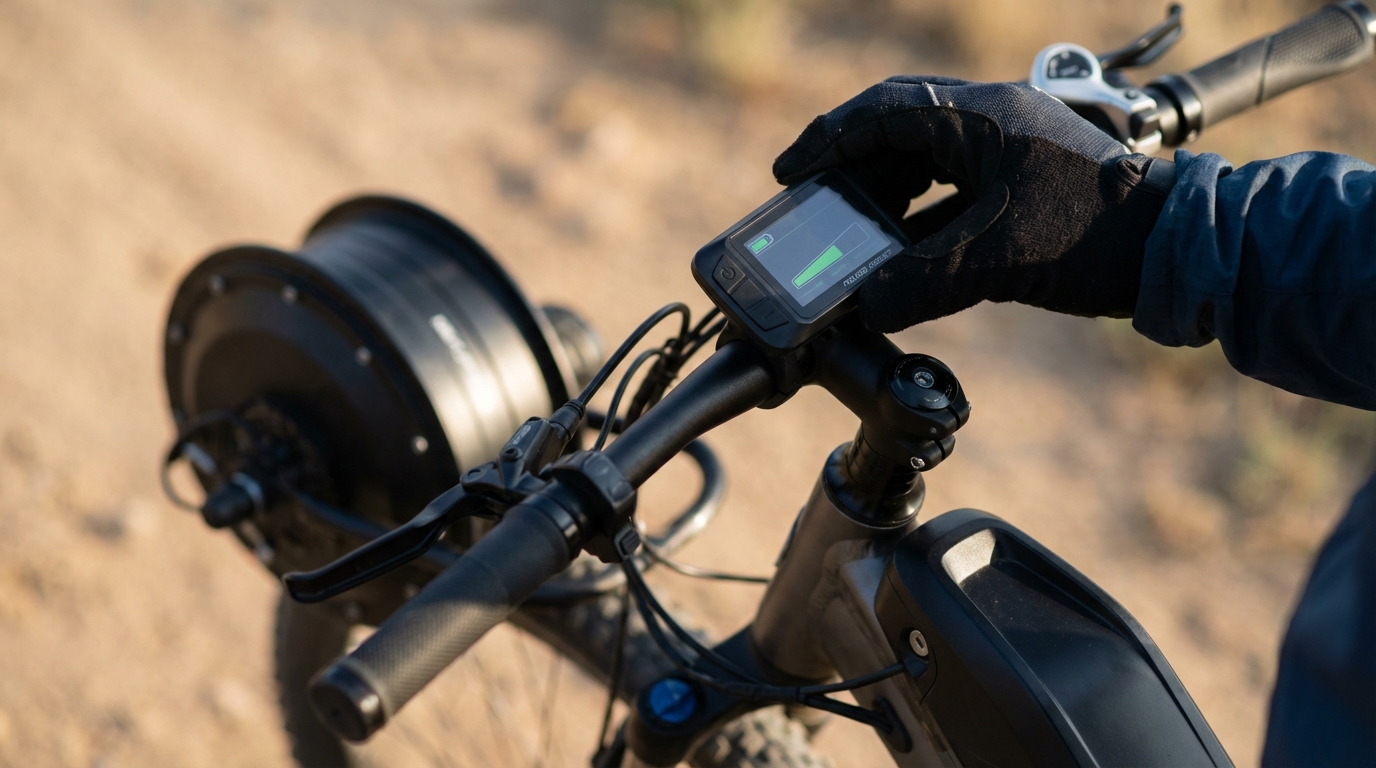
- Rider Interface: The controller also interfaces with the eBike’s display or user interface, allowing the rider to select different assistance modes (e.g., Eco for minimal assistance, Turbo for maximum assistance) and view information such as speed, battery level, and distance. These rider selections directly influence how the controller interprets sensor data and modulates motor power.
How Sensor Data Translates to Power Output
The translation of raw sensor data into refined power output is what makes an eBike ride so responsive. It’s a continuous, dynamic process:
- Rider Input: The rider begins to pedal, applying force to the pedals.
- Sensor Detection:
- A cadence sensor detects pedal rotation.
- A torque sensor measures the force being applied to the pedals.
- Data Transmission: The sensor converts this physical input into an electrical signal and sends it to the controller.
- Controller Calculation: The controller receives the signal and, based on the rider’s chosen assistance level and internal programming, calculates the appropriate amount of motor power needed. It also considers inputs from the speed sensor (to ensure legal speed limits are not exceeded) and brake sensors (to ensure power is cut when braking).
- Motor Activation: The controller sends a command to the motor, which then engages to provide the calculated level of assistance.
- Feedback Loop: This process happens continuously and almost instantaneously, creating a seamless feedback loop where the motor’s power output is always synchronized with the rider’s actions and the current riding conditions. Different assistance modes dictate how aggressively the controller interprets sensor input – a “Sport” mode will typically translate less pedal effort into more motor power compared to an “Eco” mode.
Importance of Integrated Sensor Systems
The integration of various sensors and their orchestration by the control unit offers several fundamental benefits:
- Enhanced Ride Experience: The primary advantage is a natural, intuitive, and less fatiguing riding experience. The motor assistance feels like an amplification of the rider’s own strength, rather than an independent propulsion system.
- Efficiency and Range: Precise power delivery, especially with torque sensors, means the motor only provides assistance when needed and in proportion to the effort. This optimizes energy consumption, extending the eBike’s range per charge.
- Safety: Speed sensors ensure legal compliance and prevent excessive motor assistance at high speeds, while brake sensors immediately cut power, significantly improving stopping safety and control.
- Component Longevity: Features like gear sensors contribute to protecting the eBike’s drivetrain from undue stress, prolonging the life of components.
Conclusion
The sophisticated network of sensors is the silent, yet essential, orchestrator of an eBike’s power output. These electronic components are far more than simple switches; they are the intelligent interface that translates human effort and environmental factors into a dynamic and responsive motorized assistance system. From the nuanced measurement of pedal force by torque sensors to the critical safety function of brake and speed sensors, each plays an indispensable role.
This intricate sensor technology is what transforms an eBike from a mere motorized bicycle into a seamless extension of the rider’s will, delivering power precisely when and how it’s needed. As eBike technology continues to evolve, these sensor systems will undoubtedly become even more refined, further enhancing the efficiency, safety, and joy of electric cycling.
FAQs
1. What is the fundamental difference between a cadence sensor and a torque sensor?
A cadence sensor detects whether the pedals are rotating and activates motor assistance based on a pre-set level for the chosen mode. It primarily acts as an on/off switch for assistance. A torque sensor, on the other hand, measures the actual force or effort the rider applies to the pedals and provides motor assistance proportionally to that effort, resulting in a more natural and intuitive ride feel.
2. Why do eBikes have speed sensors?
Speed sensors are included in eBikes primarily for legal compliance and safety. They measure the eBike’s ground speed and instruct the motor to cut off assistance once the bicycle reaches a legally mandated speed limit (e.g., 20 mph or 25 km/h in many regions). This prevents the motor from propelling the eBike beyond these regulatory thresholds.
3. How do brake sensors contribute to eBike safety?
Brake sensors enhance safety by immediately cutting power to the motor as soon as a brake lever is pulled. This prevents the motor from continuing to drive the eBike forward while the rider is attempting to slow down or stop, which could increase stopping distances or cause instability. This instantaneous power cut-off is crucial for effective and safe braking.
4. Can I adjust the sensitivity of my eBike’s sensors?
For most eBikes, direct adjustment of sensor sensitivity by the end-user is not typically an option. The eBike’s controller interprets sensor data based on its pre-programmed algorithms and the rider’s selected assistance mode (e.g., Eco, Tour, Sport). Some advanced systems might allow minor customization through companion apps, but fundamental sensor sensitivity is usually factory-calibrated for optimal performance and safety.
5. Do all eBikes use the same types of sensors?
No, not all eBikes use the exact same types or combinations of sensors. While speed and some form of pedal-assist sensor (cadence or torque) are almost universally present, the specific type of pedal-assist sensor (cadence vs. torque) varies significantly by model and price point. Advanced features like gear sensors or more sophisticated BMS monitoring may be found on higher-end eBikes, reflecting different design philosophies and performance goals.

Diana Miller, is a dedicated nature enthusiast and an outdoor adventurer. She began leading groups for excursions in her teens and never stopped. Following her passion for nature, she gathers her friends for outdoor trips every now and then. And for the last 10 years, she has executed workshops on backpacking, snow kayaking and traveling that included her main motive of lightweight packing while outdoors. During leisure, she loves planning for her next adventure.