
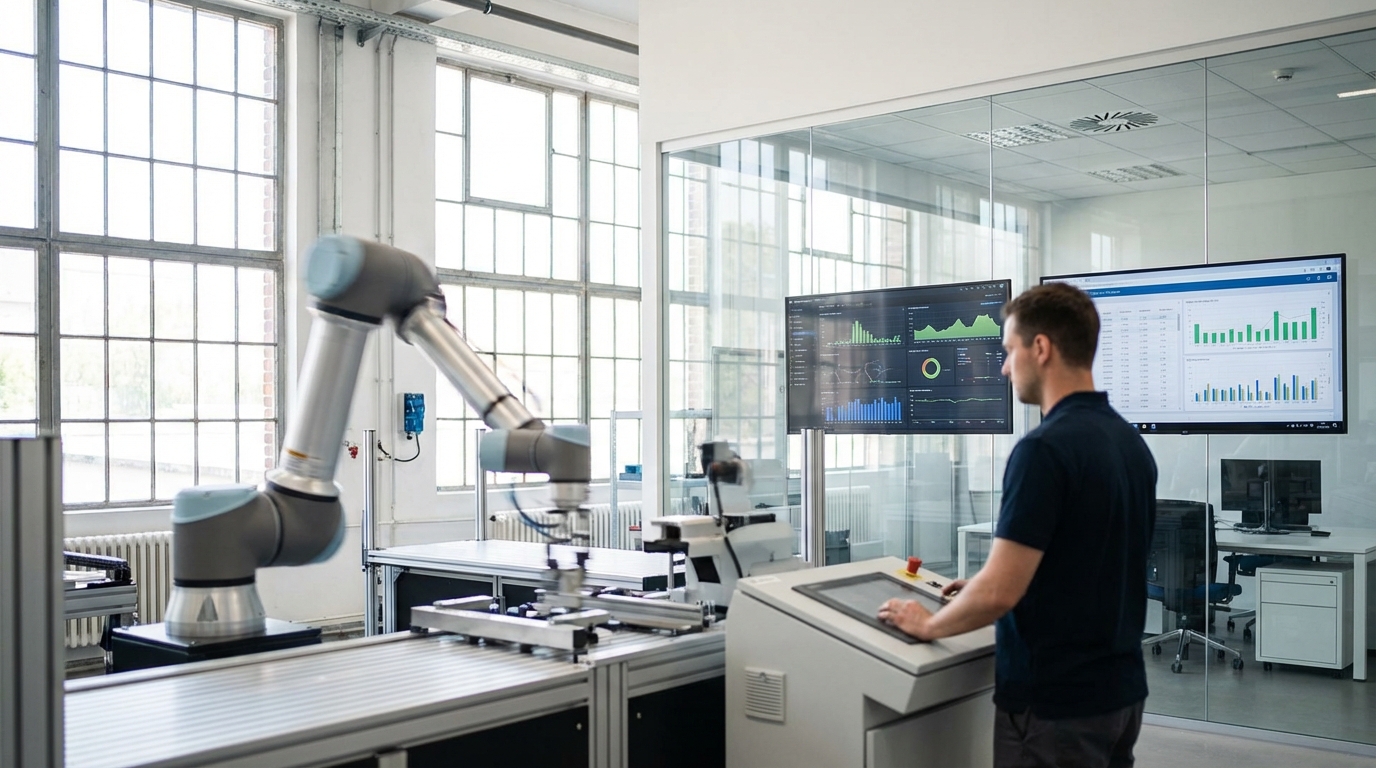
In an era defined by rapid technological advancement and increasing demands for productivity, automation has emerged as a pivotal force reshaping industries worldwide. From intricate manufacturing processes to complex financial operations and critical healthcare services, the integration of automated systems is fundamentally altering how work is performed. This technological evolution aims to streamline operations, enhance output, and reallocate human effort towards more strategic and creative endeavors. Understanding the mechanisms through which automation achieves these improvements is crucial for any organization looking to navigate the contemporary industrial landscape effectively.
Understanding Automation’s Core Principles
Automation refers to the application of technology to perform tasks or processes with minimal human intervention. It involves the use of control systems, robotics, software, and other information technologies to operate equipment, processes, and systems automatically. The primary motivation behind adopting automation is often to achieve greater efficiency, reliability, and speed in repetitive or complex operations.
At its heart, automation addresses tasks that are typically:
- Repetitive or monotonous
- High-volume
- Requiring high precision
- Performed in hazardous environments
Various forms of automation exist. These can range from fixed automation, designed for high-volume, continuous production, to programmable automation, which allows for changes in operation sequences. Flexible automation offers even greater adaptability for diverse product variations, while Robotic Process Automation (RPA) focuses on automating routine, software-based tasks.
Key Mechanisms of Efficiency Improvement
The impact of automation on efficiency is multifaceted, stemming from several core advantages over manual processes:
Reduced Manual Labor and Human Error
Automated systems perform tasks consistently and without fatigue, significantly reducing the reliance on manual labor for routine activities. This minimizes the potential for errors, inconsistencies, and variability inherent in manual processes. Machines follow programmed instructions precisely, leading to uniform output and fewer defects. This shift also allows human employees to focus on tasks requiring critical thinking, problem-solving, creativity, and interpersonal skills, thereby elevating the value of human contributions.
Increased Speed and Throughput
One of the most immediate benefits of automation is the acceleration of operational processes. Automated machinery can operate continuously, often at speeds far exceeding human capabilities, without needing breaks or experiencing fatigue. This constant operational capacity translates directly into higher production volumes and faster processing times for data or physical goods. For example, automated assembly lines can produce significantly more units, while automated systems can analyze vast datasets rapidly.
Enhanced Precision and Quality
Automation excels in tasks requiring high precision and repeatable actions. Robots and automated machinery execute movements and operations with high accuracy, ensuring each product or process output meets exact specifications. This consistency directly contributes to a significant improvement in product quality and reliability. Reduced variations mean fewer defects, less rework, and a decrease in wasted materials, all of which contribute to operational efficiency and cost savings.
Optimized Resource Utilization
Automated systems are often engineered to optimize the use of resources such as raw materials, energy, and time. Precise robotic movements can minimize material waste in manufacturing. Advanced control systems can manage energy consumption more effectively by operating machinery only when needed or at optimal power levels. Predictive maintenance technologies, enabled by automated data collection, can anticipate equipment failures, allowing for timely servicing and reducing costly unplanned downtime. This strategic allocation and management of resources contributes substantially to overall operational efficiency.
Improved Data Collection and Analytics
Many automated systems are equipped with sensors and monitoring capabilities that continuously collect vast amounts of operational data. This data, often too voluminous for manual processing, can be automatically aggregated, analyzed, and transformed into actionable insights. Through automated data analytics, organizations can identify bottlenecks, predict trends, understand equipment performance, and make informed decisions to further optimize processes. This data-driven approach fosters continuous improvement and more responsive operational management.
Automation’s Impact Across Diverse Industries
The principles of automation apply across a wide spectrum of industries, each realizing efficiency gains in unique ways:
Manufacturing and Production
- Assembly and Material Handling: Industrial robots perform repetitive tasks like welding, painting, and component assembly with precision and speed.
- Quality Control: Automated vision systems inspect products for defects, ensuring consistent quality.
- Supply Chain: Automated guided vehicles (AGVs) and warehouse management systems optimize inventory movement and storage.
Healthcare
- Laboratory Automation: Robotic systems handle samples, perform diagnostic tests, and prepare medications, reducing human error and speeding up results.
- Surgical Assistance: Robotic systems aid surgeons in performing delicate procedures with enhanced precision.
- Data Management: Electronic Health Records (EHR) systems automate patient data management, improving accessibility and reducing paperwork.
Finance and Banking
- Transaction Processing: Automated systems process millions of transactions daily with high speed and security.
- Fraud Detection: Algorithms automatically analyze transaction patterns to identify suspicious activities in real-time.
- Back-Office Operations: Robotic Process Automation (RPA) automates routine administrative tasks like data entry and report generation.
Retail and Logistics
- Inventory Management: Automated systems track stock levels, manage replenishment, and optimize warehouse layouts.
- Order Fulfillment: Automated picking robots and conveyor systems significantly speed up the process of locating, packaging, and shipping orders.
- Customer Service: Chatbots and AI-powered virtual assistants handle routine customer inquiries, providing instant support.
Information Technology and Software Development
- Automated Testing: Tools automatically execute vast numbers of tests to identify bugs and ensure software quality.
- Deployment Automation (CI/CD): Continuous Integration/Continuous Deployment pipelines automate the build, test, and release process of software.
- Infrastructure Management: Tools like Infrastructure as Code (IaC) automate the provisioning and management of IT infrastructure.
Challenges and Considerations
While automation offers substantial efficiency gains, its implementation is not without considerations. Initial investments in automated systems can be considerable, requiring careful financial planning. Furthermore, the successful integration and ongoing operation of these technologies demand a skilled workforce capable of programming, maintaining, and troubleshooting complex systems. Cybersecurity also presents a crucial challenge, as interconnected automated systems can become targets for malicious attacks, necessitating robust security measures. Addressing these aspects thoughtfully is essential for realizing the full efficiency potential of automation.
Conclusion
Automation stands as a transformative technology, fundamentally redefining operational efficiency across an expansive range of industries. By systematically reducing manual effort, enhancing speed and precision, optimizing resource utilization, and enabling sophisticated data analysis, automation empowers organizations to achieve high levels of productivity and quality. Its pervasive influence continues to drive innovation, allowing businesses to operate more leanly, reliably, and responsively. As technology progresses, the scope and sophistication of automation are only expected to grow, further cementing its role as an indispensable driver of industrial advancement and economic competitiveness.
Frequently Asked Questions
1. What is industrial automation?
Industrial automation refers to the use of control systems, such as computers, robots, and other information technologies, to handle processes and machinery in industries to replace or reduce human intervention. Its primary goals are to increase productivity, improve quality, reduce costs, and enhance safety in industrial operations.
2. How does automation contribute to quality improvement?
Automation improves quality by performing tasks with consistent precision and repeatability, minimizing variations and human errors. Automated systems execute exact sequences of operations every time, leading to uniform product characteristics, fewer defects, and adherence to stringent quality standards.
3. Can automation lead to job displacement?
While automation can change the nature of work and reduce demand for certain manual or repetitive tasks, it often leads to a reallocation of human labor rather than outright displacement. Automation can create new roles focused on system design, maintenance, data analysis, and oversight, and free human workers to concentrate on more complex, creative, or interpersonal aspects of their jobs.
4. What are some common types of automation?
Common types of automation include fixed automation (for high-volume, single-product production), programmable automation (for batch production with varied products), flexible automation (for adapting to product changes with minimal downtime), and Robotic Process Automation (RPA) for automating software-based, administrative tasks.
5. Is automation only for large corporations?
No, automation is not exclusively for large corporations. While large enterprises often have the resources for extensive automation, various scalable and accessible automation solutions exist for businesses of all sizes. Smaller businesses can benefit from targeted automation in areas like customer service (chatbots), accounting (software), or specific manufacturing processes, improving their efficiency and competitiveness.

Diana Miller, is a dedicated nature enthusiast and an outdoor adventurer. She began leading groups for excursions in her teens and never stopped. Following her passion for nature, she gathers her friends for outdoor trips every now and then. And for the last 10 years, she has executed workshops on backpacking, snow kayaking and traveling that included her main motive of lightweight packing while outdoors. During leisure, she loves planning for her next adventure.