
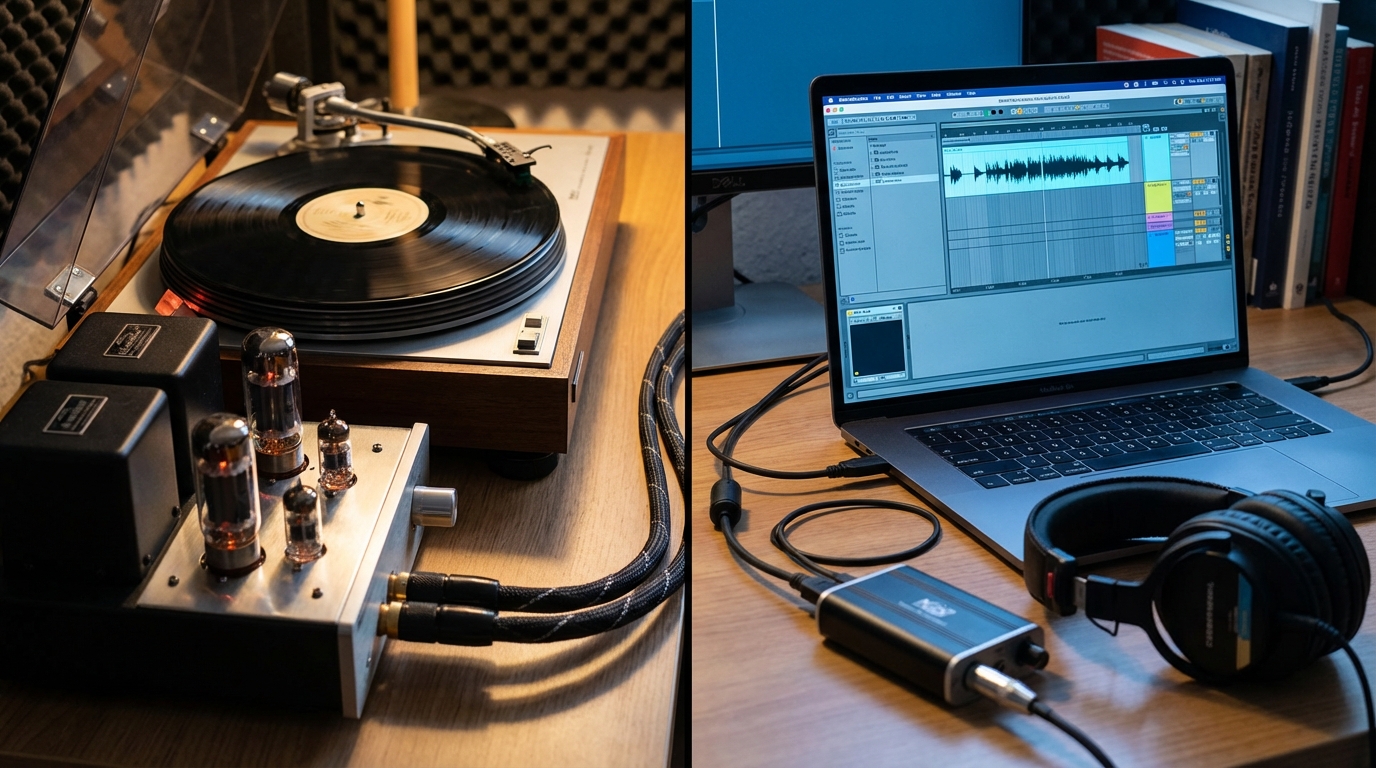
The sounds that fill our world, from a whispered conversation to a symphony orchestra, are fundamentally vibrations that travel through a medium, typically air. When we wish to capture, store, transmit, or reproduce these sounds, they must be converted into an electrical signal. This conversion gives rise to two primary forms of audio signals: analog and digital. While both aim to represent the original sound, they do so through entirely different mechanisms, each with unique characteristics and implications for how we interact with audio.
Understanding the distinctions between analog and digital audio is crucial for anyone interested in sound recording, music production, broadcasting, or simply appreciating the nuances of audio technology. This exploration will delve into how each signal type operates, its inherent qualities, and the processes involved in managing them.
What Are Analog Audio Signals?
Analog audio signals are a direct electrical representation of a sound wave. The term “analog” itself means “analogous to” or “corresponding to,” indicating that the electrical signal’s properties directly mirror the physical variations of the sound wave. If a sound wave fluctuates in air pressure, an analog electrical signal will fluctuate in voltage or current in a directly proportionate manner. This creates a continuous waveform that closely resembles the original sound’s amplitude and frequency variations.
Think of it like a ripple in a pond. The ripple’s shape and movement directly correspond to the disturbance that created it. Similarly, an analog audio signal continuously varies in strength (voltage) in response to the continuous variations in sound pressure that hit a microphone.
Characteristics of Analog Signals
- Continuous Waveform: Analog signals are characterized by their continuous nature. There are no gaps or discrete steps; the signal flows smoothly from one value to the next, reflecting the smooth, continuous changes in the original sound wave.
- Direct Representation: The electrical waveform of an analog signal is a direct physical analogy of the sound pressure wave. Higher sound pressure means higher voltage, and rapid pressure changes mean rapid voltage changes.
- Susceptibility to Noise: A significant characteristic of analog signals is their vulnerability to noise and degradation. Any interference, such as electrical hum, cable resistance, or magnetic fluctuations during recording, adds directly to the signal. When an analog copy is made, any noise present in the original signal, plus any new noise introduced during the copying process, is compounded.
- Fidelity to Original Sound: In an ideal, noise-free environment, analog signals can theoretically capture and reproduce the infinite detail of a sound wave. The quality is primarily limited by the recording and playback equipment.
How Analog Signals Are Processed
Processing analog signals typically involves physical manipulation of the electrical current or voltage. Examples include:
- Amplification: Increasing the voltage of the signal using devices like preamplifiers and power amplifiers.
- Filtering (Equalization): Selectively boosting or cutting certain frequency ranges using passive or active electronic components.
- Recording: Storing the signal by impressing its waveform onto a physical medium. For instance, vinyl records store sound as grooves of varying depth and width, and magnetic tapes store it as patterns of magnetic alignment.
Every time an analog signal is copied or transmitted over a distance, there is a potential for signal degradation and the introduction of additional noise, which can accumulate over generations of copies.
Understanding Digital Audio Signals
Digital audio signals represent sound not as a continuous wave, but as a series of discrete numerical values, typically binary code (0s and 1s). Instead of directly mimicking the sound wave, digital audio takes “snapshots” or “samples” of the analog waveform at regular intervals and then quantifies the amplitude of each sample into a numerical value.
This conversion from analog to digital is performed by an Analog-to-Digital Converter (ADC). Once converted, the sound exists as a stream of numbers, which can then be stored, transmitted, and processed as data.
Key Concepts in Digital Audio
Two fundamental parameters define the quality and resolution of a digital audio signal:
-
Sampling Rate: This refers to the number of samples taken per second from the continuous analog waveform. It is measured in Hertz (Hz) or kilohertz (kHz). A higher sampling rate means more snapshots are taken, resulting in a more accurate representation of the original waveform’s frequency components.
- According to the Nyquist-Shannon sampling theorem, the sampling rate must be at least twice the highest frequency present in the analog signal to accurately reconstruct it. For human hearing, which typically extends to approximately 20 kHz, a sampling rate of at least 40 kHz is required. Common sampling rates include 44.1 kHz (for CDs) and 48 kHz (for video production).
-
Bit Depth: This refers to the number of bits (binary digits) used to represent the amplitude of each sample. A higher bit depth allows for a greater number of possible amplitude values, providing a finer resolution and a wider dynamic range (the difference between the quietest and loudest sounds that can be represented).
- A 16-bit depth, for example, allows for 65,536 distinct amplitude levels per sample, while a 24-bit depth offers over 16 million levels. Higher bit depths result in a more precise representation of the original sound’s nuances and lower quantization noise (error introduced when converting a continuous amplitude to a discrete numerical value).
Advantages of Digital Audio
Digital audio offers several compelling advantages:
- Robustness Against Noise and Degradation: Since digital audio is represented by discrete numbers, it is highly resilient to noise and degradation during copying, storage, and transmission. As long as the binary data can be read accurately, each copy is identical to the original. Noise affects the signal only if it’s strong enough to alter the 0s and 1s themselves.
- Ease of Storage and Manipulation: Digital audio files can be stored on various media (hard drives, flash memory, cloud storage) and are easily transferable. They can be manipulated non-destructively using software, allowing for precise editing, mixing, and effects processing without altering the original data.
- Reproducibility: Digital audio can be reproduced flawlessly countless times. Every playback of a digital file is a perfect reconstruction of the original recorded data, unlike analog formats which suffer wear and tear.
- Compactness: Digital data can be compressed (e.g., MP3) to reduce file size, making storage and transmission more efficient, though often at the expense of some audio information.
Disadvantages of Digital Audio
Despite its advantages, digital audio also has considerations:
- Requires Conversion: Sound exists in the analog world. Therefore, an ADC is always needed to convert analog sound into digital data, and a Digital-to-Analog Converter (DAC) is needed to convert digital data back into an analog electrical signal that can drive loudspeakers. These conversions are points where potential errors or signal alteration can occur if the converters are not of adequate quality.
- Aliasing: If the sampling rate is too low relative to the frequencies present in the original analog signal, a phenomenon called aliasing can occur. This introduces spurious frequencies into the digital signal, which can manifest as unwanted sonic artifacts. Anti-aliasing filters are used during the ADC process to prevent this.
- Quantization Error: The process of assigning a discrete numerical value to an analog amplitude inherently involves some level of rounding, leading to quantization error. While high bit depths minimize this, it is a fundamental aspect of digital conversion.
Core Distinctions Between Analog and Digital Audio
The fundamental differences between analog and digital audio stem from their very nature of representation:
- Representation: Analog signals are continuous electrical waves that directly mirror the original sound wave. Digital signals are discrete samples of the original wave, represented as numerical data.
- Physicality vs. Abstraction: Analog audio often has a more direct physical manifestation (grooves, magnetic patterns). Digital audio is an abstract representation of sound as numbers, independent of a specific physical medium.
- Noise and Degradation: Analog signals are inherently susceptible to noise accumulation and degradation with each copy or transmission. Digital signals are highly resistant to noise and can be copied identically without loss of quality, provided the data integrity is maintained.
- Storage and Transmission: Analog storage typically involves physical imprints or magnetic patterns (vinyl, tape). Digital storage involves data files (CDs, hard drives, streaming). Transmission of analog signals can be impacted by cable quality and distance, whereas digital transmission relies on data protocols.
- Processing: Analog processing involves direct manipulation of electrical signals. Digital processing involves mathematical algorithms applied to numerical data.
- Conversion: Analog audio does not require conversion to be heard, only amplification. Digital audio always requires conversion (ADC and DAC) to move between the physical sound world and the digital data world.
The Convergence and Coexistence of Audio Formats
In the modern world, the lines between analog and digital audio are frequently blurred. Most contemporary audio systems, whether for recording, broadcasting, or home listening, involve a combination of both. For example, a musician might use an analog microphone to capture sound, which is then converted by an ADC into a digital signal for recording and mixing in a computer. This digital audio might then be streamed online or played back through a DAC and analog amplifier to drive speakers or headphones.
While digital audio has become the dominant format due to its robustness, convenience, and versatility, analog audio continues to hold a revered place among enthusiasts and professionals who appreciate its unique sonic characteristics, often described as warmth or richness, and the tangible experience of physical media like vinyl records.
Conclusion
The distinction between analog and digital audio signals lies at the heart of audio technology. Analog signals offer a continuous, direct electrical analogy of sound, susceptible to noise but potentially capturing infinite detail. Digital signals, conversely, represent sound as discrete numerical samples, offering unparalleled resilience to degradation, ease of manipulation, and perfect reproducibility. Each approach has its inherent characteristics, advantages, and limitations.
Understanding these fundamental differences helps to illuminate why various audio formats and technologies exist, and how they contribute to the diverse soundscapes we experience. Neither is universally superior; rather, they represent different engineering philosophies and approaches to preserving and transmitting the rich tapestry of sound.
Frequently Asked Questions (FAQs)
Q1: What is the main difference between analog and digital audio?
A1: The main difference is in their representation of sound. Analog audio represents sound as a continuous electrical waveform directly analogous to the original sound wave. Digital audio represents sound as a series of discrete numerical values (binary data) taken as samples of the analog waveform at regular intervals.
Q2: Can digital audio sound as good as analog audio?
A2: Modern digital audio, particularly with high sampling rates (e.g., 96 kHz or 192 kHz) and high bit depths (e.g., 24-bit), can capture and reproduce sound with an extremely high degree of fidelity, often exceeding the practical limitations of many analog systems in terms of dynamic range and signal-to-noise ratio. The perceived “quality” can be subjective, influenced by equipment, mastering, and individual preference.
Q3: Why do some people still prefer analog audio?
A3: Some individuals prefer analog audio for its perceived sonic characteristics, often described as “warmth,” “naturalness,” or a specific “vibe” that they find appealing. This can sometimes be attributed to the subtle imperfections, harmonic distortions, or frequency responses inherent in analog recording and playback equipment, which some listeners find aesthetically pleasing. There’s also a tactile and nostalgic appeal associated with physical analog formats like vinyl records.
Q4: What is the role of an ADC and DAC in audio?
A4: An Analog-to-Digital Converter (ADC) transforms continuous analog audio signals into discrete digital data. Conversely, a Digital-to-Analog Converter (DAC) takes this digital data and converts it back into a continuous analog electrical signal, which can then be amplified and sent to speakers or headphones to produce audible sound. These converters are essential bridges between the analog and digital domains.
Q5: Does converting analog to digital (and back) always degrade the sound?
A5: While any conversion process introduces some potential for alteration, modern high-quality ADCs and DACs are incredibly precise. With sufficient sampling rate and bit depth, the conversion process can be virtually transparent, meaning the reconstructed analog signal is extremely faithful to the original. Significant degradation typically only occurs with low-quality converters, insufficient sampling rates (leading to aliasing), or very low bit depths (leading to noticeable quantization error).

Diana Miller, is a dedicated nature enthusiast and an outdoor adventurer. She began leading groups for excursions in her teens and never stopped. Following her passion for nature, she gathers her friends for outdoor trips every now and then. And for the last 10 years, she has executed workshops on backpacking, snow kayaking and traveling that included her main motive of lightweight packing while outdoors. During leisure, she loves planning for her next adventure.