
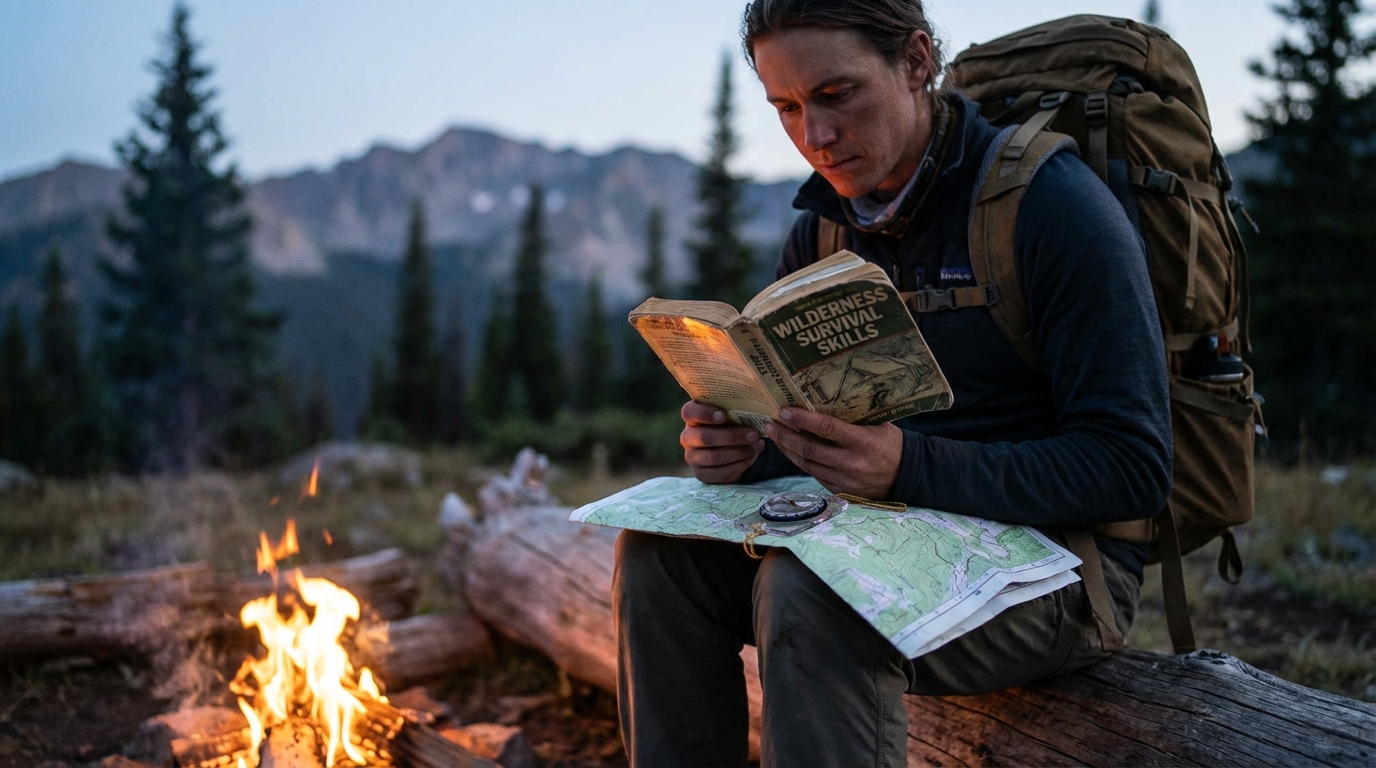
The Indispensable Role of Knowledge in Navigating Life’s Challenges
Survival often evokes images of wilderness, remote landscapes, or immediate threats to physical well-being. While these scenarios are certainly aspects of survival, the concept extends far beyond them, encompassing the daily navigation of complex environments, societal structures, and personal challenges. In this broader context, many tools and attributes contribute to an individual’s capacity to endure and thrive. Among these, knowledge stands out not merely as a valuable asset, but as arguably the most fundamental and versatile instrument available to humanity.
Knowledge provides the framework through which individuals understand their surroundings, anticipate potential problems, and formulate effective responses. It empowers informed decision-making, mitigates risk, and fosters resilience in the face of uncertainty. This discussion will explore the multifaceted ways in which knowledge acts as a primary survival tool, demonstrating its pervasive influence across various survival contexts, from the physically demanding to the intellectually intricate.
Knowledge as the Foundation for Problem-Solving and Adaptation
At its core, survival is an ongoing exercise in problem-solving. Whether confronted with a sudden environmental hazard, a complex social dilemma, or a personal health crisis, the ability to identify a problem, understand its parameters, and devise a workable solution is paramount. Knowledge serves as the bedrock for this process, providing the necessary information, principles, and methodologies.
Information Gathering and Analysis
Knowledge equips an individual with the capacity to observe, interpret, and analyze information from their environment. Without prior understanding, even the most obvious signs might go unnoticed or be misinterpreted. For example:
- Recognizing the tracks of an animal might indicate its presence and potential threat or opportunity.
- Understanding weather patterns allows for anticipation of storms or temperature changes.
- Interpreting body language or social cues can de-escalate conflicts or foster cooperation.
This analytical capability, born from accumulated knowledge, transforms raw data into actionable insights, providing a crucial advantage in dynamic situations.
Adapting to Unforeseen Circumstances
Survival rarely follows a script. Unpredictability is a constant. Here, knowledge provides not just specific solutions but also conceptual frameworks that enable adaptation. An individual with a deep understanding of principles – such as physics, biology, or psychology – can apply these principles to novel problems, rather than being limited to memorized responses. This flexibility is vital:
- Knowing the principles of heat transfer allows for improvised shelter construction using available materials.
- Understanding plant taxonomy enables identification of edible or medicinal flora, even if a specific species hasn’t been encountered before.
- Grasping economic principles can help navigate financial instability or resource scarcity.
Knowledge fosters innovation and resourcefulness, allowing individuals to transform challenges into opportunities for creative solutions.
Practical Applications of Knowledge Across Diverse Survival Scenarios
The utility of knowledge is not confined to a single domain; it is a universal asset, applicable to a vast spectrum of potential survival situations.
Wilderness and Environmental Survival
In environments far removed from modern infrastructure, knowledge becomes critically important for basic sustenance and safety. Here, theoretical understanding directly translates into life-sustaining practices:
- Navigation: Knowledge of celestial navigation (stars, sun), terrestrial navigation (topography, compass use), or even basic direction finding using natural indicators can prevent getting lost.
- Shelter Construction: Understanding insulation, windbreaks, and structural integrity informs the building of effective temporary shelters.
- Foraging and Water Purification: Knowledge of local flora and fauna is essential for identifying safe food sources and avoiding poisonous ones. Methods for purifying water, such as boiling or filtration, rely on scientific understanding.
- First Aid: Knowing how to treat injuries, recognize symptoms of illness, and administer basic medical care can be life-saving in remote settings.
Urban and Societal Survival
Even within structured societies, knowledge is essential for navigating complex systems and protecting personal well-being. “Survival” in this context often involves sustaining a livelihood, maintaining health, and interacting effectively with others:
- Financial Literacy: Understanding budgeting, savings, investments, and economic trends is vital for financial security and resilience against economic downturns.
- Health and Wellness: Knowledge of nutrition, exercise, disease prevention, and understanding medical information empowers individuals to maintain health and advocate for their own care.
- Social and Legal Understanding: Awareness of rights, responsibilities, societal norms, and communication strategies is crucial for navigating legal systems, employment, and interpersonal relationships effectively.
- Technical Competence: In an increasingly technological world, understanding how systems work, from transportation to communication networks, can be critical for functioning and responding to disruptions.
Disaster Preparedness and Response
Knowledge plays a crucial role in preparing for and responding to large-scale emergencies, whether natural disasters or other crises:
- Risk Assessment: Understanding local vulnerabilities to earthquakes, floods, wildfires, or other events allows for proactive measures.
- Emergency Planning: Knowledge informs the creation of emergency kits, communication plans, evacuation routes, and meeting points.
- Resource Management: Knowing how to conserve supplies, utilize alternative energy sources, and secure basic necessities during prolonged outages is crucial.
- Community Engagement: Awareness of local emergency services, community resources, and how to effectively coordinate with others can amplify collective survival efforts.
The Interplay of Knowledge and Other Survival Attributes
While knowledge is supremely important, it rarely operates in isolation. It forms a symbiotic relationship with other attributes commonly associated with survival:
- Knowledge and Skills: Knowledge provides the “what” and “why,” while skills provide the “how.” For instance, knowing the principles of fire building (knowledge) enables one to effectively start a fire (skill). One without the other is less effective; the synergy is potent.
- Knowledge and Resourcefulness: Resourcefulness is the ability to use what’s available in creative ways. Knowledge expands the perceived utility of items and environments. Knowing the properties of different materials allows for ingenious improvisations.
- Knowledge and Mental Fortitude: In stressful situations, fear and panic can be debilitating. Knowledge provides a sense of control and understanding, which can reduce anxiety and promote calm, rational thought. Knowing what to expect and how to react builds confidence and resilience.
Cultivating a Knowledge Base for Enduring Survival
The accumulation of survival-relevant knowledge is not a finite task but a continuous process of lifelong learning. To truly equip oneself, one must be proactive in seeking and processing information:
- Diverse Learning Sources: Engage with books, reputable online resources, educational courses, and documentaries. Seek out experienced individuals and mentors in various fields.
- Critical Thinking and Verification: Not all information is accurate or applicable. Develop the ability to critically evaluate sources, question assumptions, and verify facts.
- Practical Application and Practice: Theoretical knowledge solidifies when put into practice. Regularly practice skills related to navigation, first aid, or problem-solving to deepen understanding and build proficiency.
- Observation and Experience: Pay attention to the natural world, social dynamics, and personal experiences. Learning from successes and failures is a powerful form of knowledge acquisition.
Conclusion
Knowledge is far more than an academic pursuit; it is a profound and practical tool for navigating the complexities of existence. From the remote wilderness to the urban jungle, and across the spectrum of personal and societal challenges, knowledge empowers individuals to understand, adapt, and overcome. It acts as a compass in uncertainty, a blueprint for problem-solving, and a wellspring of resilience. Cultivating a diverse and robust knowledge base is therefore not merely a useful endeavor, but an essential strategy for enhancing one’s capacity for survival and flourishing in an ever-changing world. It is the enduring asset that no one can take away, capable of transforming any situation into a solvable challenge.
Frequently Asked Questions (FAQs)
Q1: Is knowledge alone sufficient for survival?
A: No, knowledge alone is not sufficient. While it is the foundational tool, it must be coupled with other attributes such as physical skills, mental fortitude, resourcefulness, and the ability to act decisively. Knowledge informs these attributes, making them more effective, but it does not replace the need for their development and application.
Q2: How does knowledge compare to physical strength in a survival situation?
A: Knowledge often holds a more critical role than mere physical strength. While strength can be advantageous, knowledge can leverage available resources, devise traps or tools, and create strategies that minimize the need for brute force. An individual with extensive knowledge can often out-maneuver or outlast someone who relies solely on physical prowess in many survival contexts.
Q3: Can intuition replace knowledge in a survival situation?
A: Intuition can be valuable, especially in fast-paced situations. However, true intuition is often built upon a vast store of past experiences and subconscious knowledge. While it can provide quick insights, it is less reliable and less adaptable than explicit, reasoned knowledge. Knowledge provides structured guidance and allows for deliberate, informed decision-making, which is generally more robust than relying solely on gut feelings.
Q4: What type of knowledge is most valuable for general survival?
A: The most valuable knowledge for general survival is diverse and interdisciplinary. Key areas include basic first aid, navigation skills, understanding of local flora and fauna (for food and medicine), water procurement and purification, shelter building principles, fundamental physics and chemistry, critical thinking, problem-solving methodologies, and basic social intelligence. A broad base allows for greater adaptability.
Q5: How can one acquire practical survival knowledge effectively?
A: Effective acquisition involves a multi-pronged approach: studying reliable sources (books, courses from reputable instructors), actively practicing skills in safe environments, seeking mentorship from experienced individuals, engaging in critical thinking to evaluate information, and learning from real-world observations and experiences. Combining theoretical understanding with practical application is crucial.

Diana Miller, is a dedicated nature enthusiast and an outdoor adventurer. She began leading groups for excursions in her teens and never stopped. Following her passion for nature, she gathers her friends for outdoor trips every now and then. And for the last 10 years, she has executed workshops on backpacking, snow kayaking and traveling that included her main motive of lightweight packing while outdoors. During leisure, she loves planning for her next adventure.