
The Indispensable Role of Improvisation in Survival Situations
In the face of an unexpected crisis, when familiar tools and planned strategies fall short, the ability to improvise often becomes the most critical asset for survival. Improvisation in a survival context is not merely about making do; it is a profound skill encompassing creativity, resourcefulness, adaptability, and an acute understanding of one’s surroundings. It involves leveraging existing knowledge and available materials to address immediate threats and long-term needs, transforming obstacles into opportunities for continuance. This adaptability is what often distinguishes those who overcome challenging circumstances from those who succumb to them.Understanding Improvisation in a Survival Context
Improvisation is fundamentally about dynamic problem-solving under pressure. It’s the capacity to assess a novel situation, identify available resources – no matter how unconventional – and rapidly devise a solution to a challenge that may not have been anticipated. This process goes beyond rote memorization of survival techniques; it demands a flexible mindset that can apply underlying principles to an infinite variety of scenarios. * **Adaptive Thinking:** The ability to pivot from a failed approach or adjust to changing environmental conditions. * **Resourcefulness:** Recognizing the potential utility of seemingly unrelated items or natural elements. * **Creative Application:** Devising new ways to use common objects or natural materials to fulfill a specific function. * **Rapid Assessment:** Quickly evaluating a situation to prioritize needs and potential solutions. While preparation, training, and carrying essential gear are crucial, no amount of planning can account for every possible variable. It is in these unforeseen gaps that improvisation shines, acting as a bridge between a dire predicament and a viable path forward.Key Areas Where Improvisation is Crucial
The demands of a survival situation are broad, covering basic human needs and immediate safety. In each of these areas, the capacity to improvise can be a game-changer.Shelter Construction and Enhancement
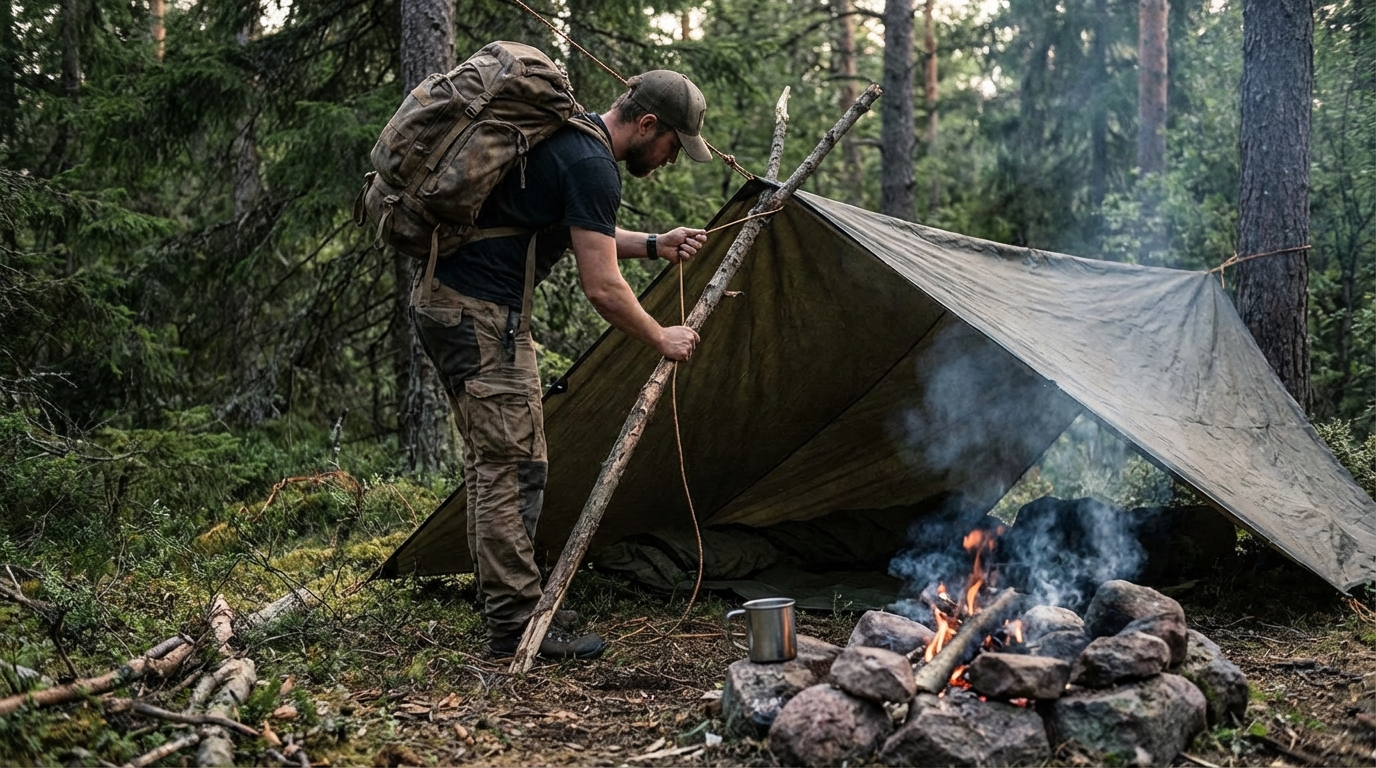
Finding or building a safe, protective shelter is paramount for protection against elements like extreme temperatures, wind, and precipitation. When a tent or predefined shelter is unavailable, improvisation is key. * **Natural Shelters:** Utilizing overhangs, rock crevices, or dense foliage. * **Material Sourcing:** Gathering branches, leaves, pine needles, bark, or even snow to construct lean-tos, debris huts, or snow caves. * **Insulation:** Using layers of dry leaves or moss for ground insulation and warmth. * **Windbreaks:** Arranging rocks or fallen logs to create barriers against wind exposure.Water Procurement and Purification
Access to safe drinking water is a top priority, as dehydration can rapidly incapacitate an individual. Improvising water solutions is a critical skill. * **Collection Methods:** Using large leaves, plastic sheets, or tarpaulins to collect rainwater or dew. Digging for groundwater in dry riverbeds. * **Simple Filtration:** Creating a layered filter from cloth, sand, charcoal, and gravel to remove larger particles from questionable water sources. * **Boiling:** Heating water over an improvised fire, using a heat-resistant container found or fashioned, to kill pathogens. * **Solar Still:** Constructing a solar still using a sheet of plastic, a container, and a hole in the ground to condense evaporated moisture.Fire Starting and Maintenance
Fire provides warmth, light, a means to cook food, purify water, and signal for help. Starting a fire without modern tools often requires significant improvisation. * **Friction Methods:** Employing bow drills, hand drills, or fire ploughs using specific types of wood found in the environment. * **Alternative Igniters:** Utilizing a magnifying glass or a clear piece of ice shaped into a lens to focus sunlight, or striking two specific types of rocks together to create sparks. * **Tinder and Kindling:** Identifying and gathering extremely dry, fibrous materials like shredded bark, bird nests, or dry grasses that can catch a spark.Food Acquisition and Preparation
While not as immediate as water, securing food is essential for sustained survival. Improvised methods can provide necessary nourishment. * **Trapping:** Fashioning simple snares or deadfall traps from vines, branches, or cordage found or made from natural fibers. * **Fishing:** Crafting hooks from bone, wood, or thorns, and lines from plant fibers or unravelled strands of fabric. * **Foraging:** Carefully identifying and collecting edible plants, berries, nuts, and insects, while strictly avoiding unknown or potentially toxic species. * **Cooking:** Roasting food directly over coals, wrapping it in large leaves, or boiling in an improvised container.First Aid and Medical Care
Injuries are common in survival scenarios, and immediate, effective first aid can prevent minor issues from becoming life-threatening. * **Wound Dressings:** Using clean cloth from clothing, large leaves, or sterilized moss as improvised bandages. * **Splints:** Stabilizing fractured limbs with straight branches, bark, or rolled-up clothing, secured with strips of fabric or cordage. * **Sling:** Creating a sling from a piece of cloth to support an injured arm or shoulder. * **Tourniquets:** Applying a wide strip of sturdy fabric to control severe bleeding on a limb, only as a last resort.Navigation and Signaling
Finding a way out of a survival situation or attracting the attention of rescuers often relies on ingenuity. * **Improvised Compass:** Using the sun and a stick to determine cardinal directions, or magnetizing a needle (if available) with static electricity or a natural magnet to create a makeshift compass. * **Trail Markers:** Creating cairns, broken branches, or specific ground markings to indicate direction or mark a path. * **Signal Fires:** Building a large fire with green, smoky fuel to create a visible column of smoke during the day. * **Reflective Surfaces:** Using shiny objects like a piece of foil, a mirror, or even a polished tin can lid to flash signals towards potential rescuers.Tool Creation and Repair
The right tool can make a task much easier, but in survival, tools often need to be created or repaired with whatever is at hand. * **Cutting Tools:** Fashioning crude knives or scrapers from sharp flakes of stone, bone, or even hard wood. * **Cordage:** Making rope or twine from plant fibers, leather strips, or unravelled clothing. * **Containers:** Weaving baskets from reeds or flexible branches, or hollowing out gourds or pieces of wood. * **Repair:** Using duct tape (if available), strips of cloth, or natural adhesives like tree sap to mend damaged gear.Developing an Improvisational Mindset
Improvisation is not merely a collection of techniques; it’s a way of thinking that can be cultivated. * **Observation:** Paying close attention to the environment, identifying all available resources, and understanding their properties. * **Curiosity and Experimentation:** Willingness to try new approaches and test the limits of materials. * **Problem Decomposition:** Breaking down a complex problem into smaller, manageable parts. * **Flexibility:** Not being rigid in one’s approach and being open to alternative solutions. * **Calm Under Pressure:** The ability to maintain composure, which allows for clearer thinking and effective decision-making. * **Prioritization:** Understanding which needs are most urgent and allocating resources accordingly. Regularly engaging in challenges that require creative problem-solving, even in everyday life, can help hone these cognitive skills, making them more accessible when faced with true survival demands.Conclusion
Improvisation stands as a cornerstone of survival, complementing preparedness and knowledge with ingenuity and adaptability. It underscores the profound truth that in nature, and in life, the ability to adapt is often the ultimate key to thriving. From fashioning a basic shelter from fallen branches to purifying water with a makeshift filter, the power to innovate with what’s available is what empowers individuals to navigate through dire circumstances. Cultivating an improvisational mindset – one rooted in keen observation, resourcefulness, and creative problem-solving – equips an individual with the mental resilience and practical skills to transform unexpected challenges into opportunities for resilience and ultimately, survival. —Frequently Asked Questions (FAQs)
**Q1: Is improvisation a substitute for proper survival training and gear?** A1: No, improvisation is not a substitute but rather a crucial complement to proper survival training and essential gear. While preparedness provides a foundational structure, improvisation equips an individual to handle situations where planned strategies fail or specific gear is lost or damaged. It allows for flexibility when the unexpected occurs. **Q2: How can an individual practice improvisation skills without being in a real survival situation?** A2: Individuals can practice improvisation by engaging in creative problem-solving exercises. This could include challenges like building something functional with limited household items, trying to navigate using only natural cues in a familiar park, or attempting to start a fire with non-conventional methods in a controlled environment. Observing the natural world and understanding the properties of various materials also enhances this skill. **Q3: What is the most important mindset aspect for effective improvisation in survival?** A3: The most important mindset aspect is a combination of calm under pressure, acute observation, and unwavering resourcefulness. Remaining calm allows for clear thinking, observation helps identify all potential resources, and resourcefulness is the ability to envision new uses for those items, no matter how unconventional. **Q4: Can anyone learn to improvise effectively, or is it an innate trait?** A4: While some individuals may have a natural inclination towards creativity, the ability to improvise effectively can absolutely be learned and developed. It involves understanding fundamental principles, practicing adaptive thinking, and building a mental catalog of potential solutions and material uses. Like any skill, it improves with intentional practice and experience. **Q5: What are some common pitfalls to avoid when attempting to improvise in a survival situation?** A5: Common pitfalls include panicking, which impairs judgment; overlooking readily available resources because they don’t fit preconceived notions of usefulness; making assumptions without testing them; attempting overly complex solutions when simpler ones might suffice; and neglecting basic safety precautions while improvising. A methodical, calm, and observant approach helps mitigate these risks.
Diana Miller, is a dedicated nature enthusiast and an outdoor adventurer. She began leading groups for excursions in her teens and never stopped. Following her passion for nature, she gathers her friends for outdoor trips every now and then. And for the last 10 years, she has executed workshops on backpacking, snow kayaking and traveling that included her main motive of lightweight packing while outdoors. During leisure, she loves planning for her next adventure.