
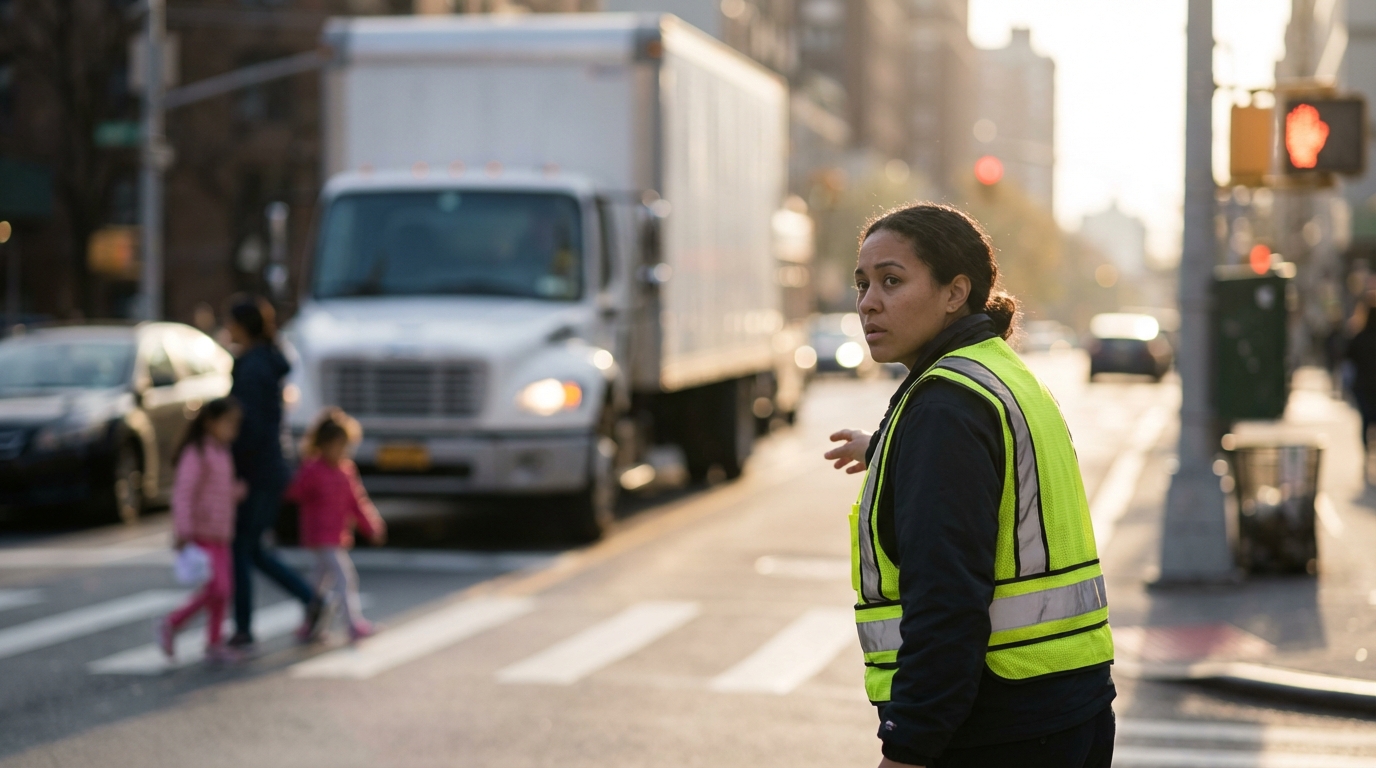
The Vital Role of Situational Awareness in Protecting Lives
In an increasingly complex world, the ability to understand and react to one’s surroundings is more critical than ever. This capability, known as situational awareness, is a fundamental human skill that profoundly impacts safety, decision-making, and ultimately, survival across a multitude of environments. It is not merely about seeing what is in front of you, but rather a dynamic process of perceiving, understanding, and anticipating events in a given context. From navigating daily commutes to responding in high-stakes professional settings, a developed sense of situational awareness can be the difference between safety and significant harm. This discussion will delve into the core components of situational awareness, explore why its development is so crucial, examine its application in various scenarios, and outline methods for enhancing this invaluable skill. Understanding its principles empowers individuals and groups to operate more effectively and securely, underscoring its profound life-saving potential.Defining Situational Awareness
Situational awareness is often described as the individual’s perception of the elements in the environment within a volume of time and space, the comprehension of their meaning, and the projection of their status in the near future. This definition breaks down into three key levels: *Perception of Elements
This is the foundational level, involving the sensory input received from the environment. It includes seeing objects, hearing sounds, feeling textures, and even processing subtle cues like body language or atmospheric changes. For instance, a driver perceives other vehicles, traffic signals, road conditions, and pedestrian movements. Without accurate perception, the subsequent stages of awareness cannot properly function. *Comprehension of the Current Situation
Once elements are perceived, the next step is to integrate them into a coherent understanding of the overall situation. This involves interpreting the perceived information, recognizing patterns, and understanding their significance. A driver not only sees a brake light but comprehends that the vehicle ahead is slowing down, possibly due to an obstacle or a turn. This comprehension is built upon experience, knowledge, and context. *Projection of Future Status
The highest level of situational awareness involves the ability to predict future events and their potential impact. Based on the perceived elements and their current comprehension, an individual can anticipate how the situation might evolve. The driver, understanding that the car ahead is slowing, might project the need to reduce speed and prepare for a potential stop or lane change. This proactive anticipation allows for timely and effective decision-making, which is paramount for safety. These three levels are not linear but rather an iterative and continuous process, constantly updating as new information becomes available and the environment changes.Why Situational Awareness is Crucial for Safety
The importance of situational awareness stems from its direct impact on decision-making and risk management. When individuals possess a high degree of situational awareness, they are better equipped to: * Identify potential threats and hazards early. * Understand the evolving nature of a situation. * Make informed and timely decisions. * Adapt to unexpected changes. * Prevent errors and accidents. * Respond effectively to emergencies. A lack of situational awareness, conversely, can lead to critical oversights, delayed reactions, poor judgments, and increased vulnerability to unforeseen dangers. This is evident in numerous incidents across various sectors, where a failure to accurately perceive, comprehend, or project the environment contributed significantly to negative outcomes.Situational Awareness Across Different Contexts
The principles of situational awareness are universally applicable, manifesting in unique ways depending on the environment and the stakes involved. *In Everyday Life
For the general public, situational awareness is vital for personal safety and well-being. * **Pedestrian Safety:** Being aware of traffic, cyclists, uneven surfaces, and the behavior of others around you can prevent accidents. * **Driving:** Monitoring surroundings, anticipating actions of other drivers, and adapting to changing road conditions are fundamental to accident prevention. * **Home Security:** Noticing unusual vehicles, unfamiliar individuals, or changes in neighborhood patterns can contribute to a safer living environment. * **Public Spaces:** Observing exits, recognizing potential dangers, and being aware of crowd dynamics can be crucial during incidents or emergencies. *In Professional Environments
Many professions demand a highly refined sense of situational awareness, where lapses can have severe consequences. * **First Responders:** Police officers, firefighters, and paramedics rely on acute awareness to assess volatile scenes, identify threats, locate victims, and ensure team safety. * **Healthcare:** Medical professionals must maintain awareness of patient conditions, equipment status, and the dynamics of surgical or emergency room environments to prevent errors and ensure positive patient outcomes. * **Aviation:** Pilots and air traffic controllers continuously monitor countless variables – weather, aircraft positions, system statuses – to maintain safe flight operations. * **Industrial Settings:** Workers in manufacturing, construction, or energy sectors must be aware of machinery, hazardous materials, and the movements of colleagues to prevent workplace accidents. * **Cybersecurity:** Analysts need to be situationally aware of network traffic, potential vulnerabilities, and evolving threat landscapes to protect digital assets. *During Emergency Scenarios
In times of crisis, situational awareness becomes an even more critical life-saving skill. * **Natural Disasters:** Understanding evacuation routes, monitoring weather updates, assessing structural integrity, and being aware of immediate environmental changes (e.g., rising water, falling debris) can guide safe actions. * **Active Threats:** In hostile situations, awareness of escape paths, potential hiding spots, and the location/actions of a threat can be crucial for survival and assisting others. * **Mass Incidents:** During large-scale events or gatherings, an understanding of crowd movement, potential choke points, and available exits is essential for personal safety.Developing and Enhancing Situational Awareness
While some individuals may possess a natural inclination towards higher awareness, it is a skill that can be consciously developed and improved through training and practice. *Key Techniques for Improvement
* **Active Observation:** Instead of passively seeing, actively scan your environment. Pay attention to details, notice anomalies, and look beyond the obvious. * **Anticipation:** Constantly ask “what if?” and mentally run through potential scenarios. This helps in projecting future states and preparing for them. * **Questioning and Verification:** Don’t assume. If something seems off, try to gather more information or verify your perceptions. * **Pattern Recognition:** Over time, with experience, you can learn to recognize patterns and deviations that signal potential issues. * **Mental Modeling:** Develop and refine internal mental representations of typical situations and how they should unfold. This provides a baseline against which to compare reality. * **De-escalation and Avoidance:** Use awareness to identify escalating situations early and take steps to avoid or de-escalate conflict before it becomes a threat. * **Practice and Feedback:** Engage in activities that require focused attention, and critically review your performance in various situations to identify areas for improvement. *Factors that Can Hinder Situational Awareness
Understanding obstacles is also crucial for overcoming them. * **Distraction:** Anything that diverts attention, such as mobile devices, engaging in complex thoughts, or unrelated conversations, can severely degrade awareness. * **Fatigue and Stress:** Both physical and mental exhaustion can impair cognitive functions, reducing the ability to perceive and comprehend information accurately. * **Overconfidence/Complacency:** Believing that “it won’t happen to me” or becoming too comfortable in familiar environments can lead to reduced vigilance. * **Tunnel Vision:** Focusing too narrowly on one aspect of a situation while neglecting broader environmental cues. * **Information Overload:** Too much data can overwhelm cognitive capacity, making it difficult to process and prioritize important information. * **Emotional State:** Strong emotions like fear, anger, or anxiety can distort perception and judgment.Conclusion
Situational awareness is far more than just “paying attention”; it is a sophisticated cognitive process involving constant perception, interpretation, and prediction of one’s environment. Its significance cannot be overstated, acting as a critical safeguard in preventing accidents, navigating emergencies, and enhancing personal and professional safety. By consciously cultivating this skill through active observation, anticipation, and continuous learning, individuals can significantly improve their ability to make sound decisions, avoid hazards, and respond effectively when circumstances demand it. Embracing the principles of situational awareness is an investment in personal security and a testament to the proactive measures that empower individuals to protect themselves and those around them.Frequently Asked Questions (FAQs)
What is the primary difference between simply “seeing” and having situational awareness?
Simply “seeing” is a passive act of receiving visual information. Situational awareness, conversely, is an active cognitive process that goes beyond seeing. It involves perceiving elements, comprehending their meaning within a given context, and then using that understanding to project how the situation might evolve in the near future. It’s about understanding the “why” and “what next” in addition to the “what.”Can situational awareness be learned, or is it an innate ability?
While some individuals may have a natural aptitude for higher awareness, situational awareness is fundamentally a skill that can be developed and enhanced through conscious effort, training, and practice. Techniques such as active observation, anticipation, and mental modeling can significantly improve one’s capacity for awareness over time.How does stress impact situational awareness?
Stress can significantly degrade situational awareness. High stress levels can lead to tunnel vision, where an individual focuses too narrowly on a perceived threat and misses broader environmental cues. It can also impair cognitive processing, making it difficult to comprehend information accurately or project future events effectively. Managing stress is therefore crucial for maintaining optimal awareness.Is situational awareness only relevant in high-risk professions or emergencies?
While critical in high-risk professions (e.g., aviation, military, emergency services) and during emergencies, situational awareness is equally relevant and beneficial in everyday life. It applies to tasks like driving, walking in public, being aware of one’s surroundings at home, and navigating social interactions, contributing to general safety and well-being.What role does experience play in developing situational awareness?
Experience plays a substantial role. As individuals encounter more situations, they build a library of mental models and patterns. This experience allows for faster and more accurate perception, more nuanced comprehension of complex situations, and more reliable projection of future events. It helps in recognizing subtle cues and understanding their implications more effectively.
Diana Miller, is a dedicated nature enthusiast and an outdoor adventurer. She began leading groups for excursions in her teens and never stopped. Following her passion for nature, she gathers her friends for outdoor trips every now and then. And for the last 10 years, she has executed workshops on backpacking, snow kayaking and traveling that included her main motive of lightweight packing while outdoors. During leisure, she loves planning for her next adventure.