
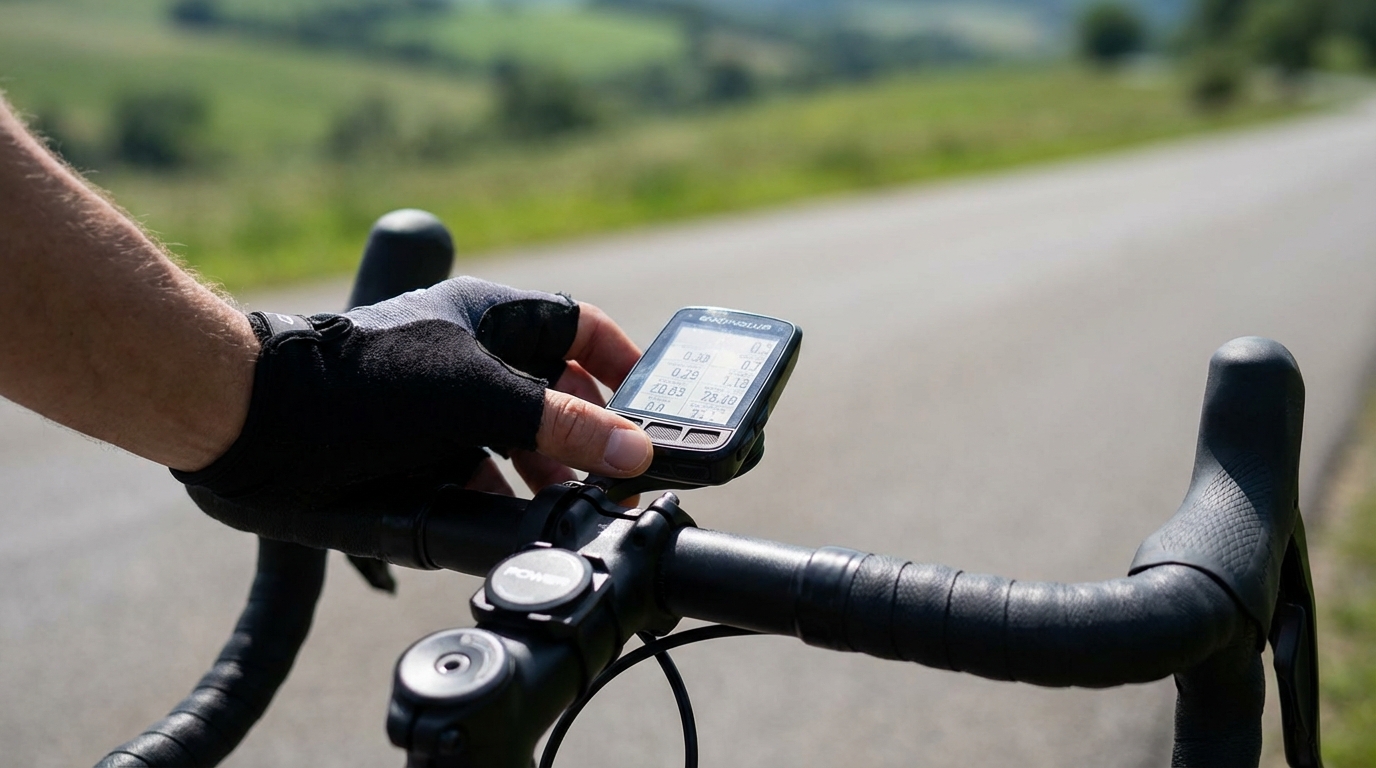
Cycling has long been a pursuit driven by feel and perceived effort. However, with advancements in technology, cyclists now have access to an objective and highly precise measurement of their effort: power output. Understanding how power is measured and what the resulting data signifies can revolutionize training, racing, and general riding, transforming subjective sensations into quantifiable metrics. This objective approach allows for more structured training, accurate performance tracking, and a deeper insight into a rider’s physiological capabilities.
What is Cycling Power?
At its core, power in cycling is the rate at which mechanical energy is generated and transferred to the drivetrain of the bicycle. In physics, power is defined as the product of force and velocity. For a cyclist, this translates to the force applied to the pedals and the speed at which those pedals rotate (cadence). The standard unit of measurement for power is the watt (W).
- Force: The push and pull exerted by the cyclist on the pedals.
- Velocity: The rotational speed of the crank arms (cadence).
Unlike heart rate, which is a physiological response influenced by numerous external and internal factors (stress, fatigue, temperature), or speed, which is heavily affected by terrain, wind, and aerodynamics, power output is a direct, objective measure of the work a cyclist is doing. This makes it an invaluable tool for precise training and performance analysis.
The Mechanics of Power Measurement
Power meters employ sophisticated technology to translate the physical effort of cycling into a measurable electrical signal that can be displayed as watts.
Strain Gauges and Data Acquisition
The primary component in almost all modern cycling power meters is the strain gauge. A strain gauge is a sensor whose electrical resistance changes proportionally to the amount of strain (deformation) applied to it. In a power meter, these gauges are strategically placed on a component that experiences flex or torsion directly related to the force applied by the cyclist.
- When a cyclist applies force, for example, to a crank arm or pedal spindle, the component subtly deforms.
- This deformation causes a change in the electrical resistance of the strain gauges.
- This change in resistance is converted into a voltage signal.
- An internal processor in the power meter then interprets this signal to calculate the applied torque.
Once the data is acquired, it is transmitted wirelessly, typically using ANT+ or Bluetooth protocols, to a compatible head unit (such as a cycling computer or smartphone app) for real-time display and recording.
Measuring Torque and Angular Velocity
To calculate power, two key components are required: torque and angular velocity.
- Torque: This is the rotational force applied to an object. In a power meter, the strain gauges measure the bending or twisting of a component, which is directly proportional to the torque being applied by the cyclist through the pedals.
- Angular Velocity: This refers to the speed at which the component is rotating. For cyclists, this is commonly known as cadence, measured in revolutions per minute (RPM). Power meters typically incorporate magnet-less accelerometers or other sensors to accurately determine the cadence.
The fundamental equation used by power meters is: Power (Watts) = Torque (Newton-meters) × Angular Velocity (Radians per second). By continuously measuring both torque and cadence, the power meter can provide a precise, real-time calculation of a cyclist’s power output.
Common Locations for Power Measurement
Power meters are integrated into various parts of the bicycle’s drivetrain, each offering distinct advantages and measurement characteristics.
Crank-Based Systems
Crank-based power meters are integrated into the crank arms or the spider (the part that connects the chainrings to the crank arm). These systems often measure the deflection in the crank arm or the spider itself. Many crank-based systems offer dual-sided measurement, providing separate data for left and right leg power output.
- Mechanism: Strain gauges are typically embedded within the crank arm or spider.
- Measurement Point: Close to where the primary force is applied to the drivetrain.
- Characteristics: Can provide highly accurate total power and often left/right balance. Integration means the component itself becomes the power meter.
Pedal-Based Systems
Pedal-based power meters integrate the measurement technology directly into the pedal spindles. This design allows for a direct measurement of the force applied at the foot, making them easily transferable between different bikes.
- Mechanism: Strain gauges are housed within the pedal spindle.
- Measurement Point: At the interface between the rider’s foot and the bicycle.
- Characteristics: Easy to install and move between bikes. Often provide dual-sided power measurement and advanced cycling dynamics data.
Hub-Based Systems
Hub-based power meters are built into the rear wheel hub. As the wheel rotates, the forces transmitted through the spokes from the drivetrain are measured, or internal strain gauges measure the torsion in the hub shell.
- Mechanism: Strain gauges measure deflection or torsion within the rear hub.
- Measurement Point: After power has been transmitted through the chain and cassette, but before it reaches the ground.
- Characteristics: Consistent measurement point regardless of crank or pedal changes. The power measured here accounts for some drivetrain losses.
Chainring-Based Systems
Chainring-based power meters incorporate strain gauges directly into the chainring spider. These systems measure the force being transmitted from the crank arms through the spider to the chainrings.
- Mechanism: Strain gauges are integrated into the spider of the chainrings.
- Measurement Point: Between the crank arms and the chain.
- Characteristics: Direct measurement at a crucial point of force transfer. May offer good accuracy, though dual-sided measurement can be less common in some designs.
Key Power Metrics and Terminology
Understanding the various metrics derived from power data is crucial for effective training and analysis.
Average Power (AP)
Average Power is the simple mathematical average of all power readings over a specific duration (e.g., an interval, a lap, or an entire ride). It provides a general overview of the effort but can sometimes be misleading, as it doesn’t account for variations and fluctuations in power output.
Normalized Power (NP)
Normalized Power is an algorithmically derived value that provides a more accurate representation of the physiological cost of a ride, particularly when power output is highly variable (e.g., during varied terrain, group rides, or interval training). It accounts for the fact that short bursts of high power are physiologically more taxing than a steady effort at the same average power.
Intensity Factor (IF)
Intensity Factor is a ratio that quantifies the intensity of a particular ride or training session relative to a rider’s Functional Threshold Power (FTP). It is calculated by dividing Normalized Power by FTP. An IF value of 1.0 indicates an effort equal to a rider’s FTP, while values below 1.0 indicate sub-threshold efforts, and values above 1.0 suggest suprathreshold efforts (for durations shorter than FTP tests).
Training Stress Score (TSS)
Training Stress Score quantifies the overall training load of a ride or workout, taking into account both duration and intensity. It helps athletes and coaches manage training volume and intensity, preventing overtraining and ensuring adequate recovery. TSS is calculated based on Normalized Power, Intensity Factor, and ride duration.
Functional Threshold Power (FTP)
Functional Threshold Power is arguably the most fundamental metric for power-based training. It is defined as the maximal power a cyclist can sustain for approximately one hour. FTP serves as the cornerstone for setting individualized training zones and is a strong indicator of current fitness levels. Regular FTP testing allows cyclists to track their progress and adjust their training parameters.
Power Zones
Power zones are specific ranges of power output, typically expressed as percentages of FTP, that correspond to different physiological adaptations. Training within these zones targets various energy systems and metabolic responses, enabling cyclists to structure their workouts precisely for specific goals (e.g., endurance, tempo, VO2 max, sprint).
Commonly recognized power zones include:
- Active Recovery
- Endurance
- Tempo
- Threshold
- VO2 Max
- Anaerobic Capacity
- Neuromuscular Power
The Role of Power in Cycling Training
The advent of power meters has fundamentally changed how cyclists approach training and performance analysis.
- Objective Measurement: Power provides an unambiguous and repeatable measure of physical effort, eliminating the subjectivity of perceived exertion or the variability of heart rate.
- Precision Training: Workouts can be structured with unparalleled precision, specifying exact power targets for intervals, allowing for highly focused physiological adaptations.
- Accurate Progress Tracking: By consistently monitoring power output across various metrics like FTP, peak power for specific durations, and ability to sustain efforts, cyclists can objectively track improvements or identify plateaus.
- Effective Pacing: For time trials, climbs, or longer events, power data allows riders to maintain an optimal, sustainable effort, preventing premature fatigue and maximizing performance.
- Performance Analysis: Detailed post-ride analysis provides insights into strengths, weaknesses, left/right power imbalances (if applicable), and how different environmental factors or equipment choices impact power output.
- Recovery Management: Metrics like TSS help athletes and coaches understand the cumulative training load, informing recovery strategies and preventing overtraining.
Conclusion
Power output measurement has transformed cycling from an activity primarily guided by feel into a data-driven sport. By providing objective, real-time feedback on a rider’s effort, power meters empower cyclists at all levels to train more effectively, track their progress accurately, and understand their physiological capabilities more deeply. The consistent evolution of power metering technology continues to enhance precision, accessibility, and the depth of data available, solidifying its place as an indispensable tool for anyone serious about improving their cycling performance and understanding their body’s response to effort.
Frequently Asked Questions (FAQs)
1. Why is power measured in watts?
Power is measured in watts because the watt is the standard international unit for power, which quantifies the rate at which energy is transferred or work is done. For cyclists, it represents an objective and consistent measure of mechanical work, making it universally comparable and scientifically rigorous.
2. How often should I test my Functional Threshold Power (FTP)?
The frequency of FTP testing varies based on an individual’s training phase and goals. Generally, testing every 4 to 8 weeks is a common practice to account for fitness improvements or declines. During intense training blocks or when preparing for specific events, more frequent testing might be beneficial, while off-season periods might require less frequent assessments.
3. Does temperature affect power meter readings?
Yes, temperature can affect the accuracy of strain gauges. As temperature changes, the properties of the materials and the gauges themselves can subtly shift. Most modern power meters incorporate automatic temperature compensation algorithms to counteract these effects and maintain consistent accuracy across a range of operating temperatures.
4. Can power meters measure left/right power balance?
Many dual-sided power meter systems, such as those integrated into both crank arms or both pedals, are capable of measuring and displaying left and right leg power output separately. This provides valuable insights into potential muscular imbalances or asymmetries in pedaling technique, which can then be addressed through targeted training or bike fit adjustments.
5. How does power output relate to speed?
While intuitively higher power output often correlates with higher speed, the relationship is not always direct or linear. Power represents the rate at which work is done to overcome resistance (aerodynamic drag, rolling resistance, gravity). Speed is the resulting rate of travel. Factors like a rider’s aerodynamic position, the type of bike, tire pressure, road surface, and especially gradients, significantly influence how a given power output translates into speed. For instance, maintaining a constant speed on an incline requires substantially more power than on a flat road due to gravity.

Diana Miller, is a dedicated nature enthusiast and an outdoor adventurer. She began leading groups for excursions in her teens and never stopped. Following her passion for nature, she gathers her friends for outdoor trips every now and then. And for the last 10 years, she has executed workshops on backpacking, snow kayaking and traveling that included her main motive of lightweight packing while outdoors. During leisure, she loves planning for her next adventure.