
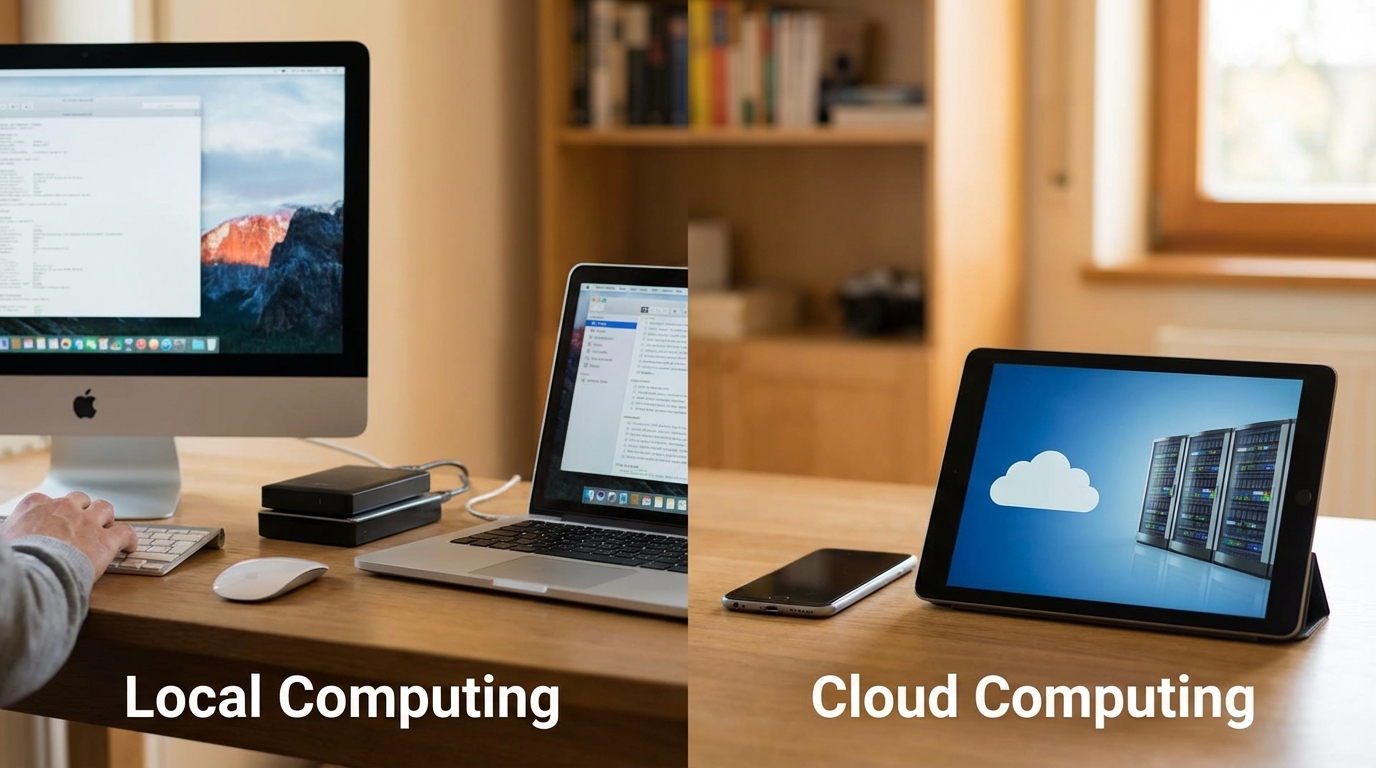
Understanding Local and Cloud Computing Architectures
The landscape of data storage and processing has fundamentally shifted over the past few decades. At its core, the primary methods for managing computing resources typically fall into two broad categories: local computing and cloud computing. While both aim to facilitate data processing and application delivery, they operate on distinct architectural principles, offering different models for ownership, management, and accessibility. Understanding these differences is crucial for individuals and organizations seeking to make informed decisions about their IT infrastructure.Local Computing Explained
Local computing, often referred to as on-premise computing, involves the hosting and management of all computing resources physically within an organization’s own facilities. This means that servers, storage devices, network infrastructure, and applications are installed, operated, and maintained directly by the user or organization.How Local Computing Works
In a local computing environment, an organization purchases, owns, and manages all hardware and software. This infrastructure is typically housed in a dedicated server room or data center within the company’s premises. IT staff are responsible for everything from hardware installation and configuration to software deployment, system updates, maintenance, and data backups. Users access these resources directly over the internal network.Characteristics of Local Computing
Local computing environments are distinguished by several key attributes: * **Infrastructure Ownership:** The organization owns all hardware and software licenses. * **Direct Control:** High degree of control over hardware specifications, software configurations, network topology, and data location. * **Security Responsibility:** The organization bears full responsibility for implementing and managing all security measures, including physical security, network firewalls, data encryption, and access controls. * **Cost Structure:** Requires significant upfront capital expenditure (CAPEX) for purchasing hardware, software licenses, and building the necessary infrastructure (e.g., power, cooling, physical space). Ongoing operational costs (OPEX) include power consumption, cooling, maintenance contracts, and IT staff salaries. * **Scalability:** Scaling resources (adding more storage, memory, or processing power) typically involves purchasing and installing new hardware, which can be a time-consuming and costly process. It is limited by physical capacity and budget. * **Maintenance and Management:** The organization is fully responsible for all aspects of system maintenance, including hardware repairs, software updates, patching, troubleshooting, and data backup and recovery. * **Accessibility:** Primarily accessed within the local network. Remote access usually requires additional setup, such as virtual private networks (VPNs), which can add complexity and potential latency. * **Performance:** Performance is directly dependent on the quality and capacity of the owned hardware and the efficiency of the local network. It can be highly predictable within the controlled environment.Cloud Computing Explained
Cloud computing represents the delivery of computing services—including servers, storage, databases, networking, software, analytics, and intelligence—over the internet (“the cloud”). Instead of owning their own computing infrastructure, organizations can access these resources as a service from a third-party cloud provider.How Cloud Computing Works
Cloud providers own and operate large data centers containing vast amounts of computing resources. Users access these resources via a web browser or API over the internet. The provider is responsible for maintaining the underlying infrastructure, while users pay for the resources they consume, typically on a pay-as-you-go or subscription basis. The cloud offers various service models, such as Infrastructure as a Service (IaaS), Platform as a Service (PaaS), and Software as a Service (SaaS), each providing different levels of management and control.Characteristics of Cloud Computing
Cloud computing offers a different set of characteristics: * **Infrastructure Ownership:** The cloud provider owns and manages the underlying physical infrastructure. Users lease or subscribe to services. * **Shared Control:** Users have control over their applications, data, and some configuration settings, but less direct control over the physical hardware or underlying network infrastructure. Control is managed through provider interfaces and service level agreements (SLAs). * **Security Responsibility:** Operates on a shared responsibility model. The cloud provider is responsible for the security *of* the cloud (e.g., physical security of data centers, underlying infrastructure), while the user is responsible for security *in* the cloud (e.g., securing their data, applications, and network configurations). * **Cost Structure:** Primarily an operational expenditure (OPEX) model. Users pay only for the resources they consume, avoiding large upfront capital investments. Costs can fluctuate based on usage patterns. * **Scalability:** Highly elastic and scalable. Resources can be provisioned or de-provisioned rapidly and automatically, allowing organizations to scale computing power, storage, or bandwidth up or down on demand to meet fluctuating needs. * **Maintenance and Management:** The cloud provider is responsible for maintaining the underlying infrastructure, including hardware repairs, power, cooling, network upkeep, and often operating system patching (depending on the service model). * **Accessibility:** Resources are accessible from anywhere with an internet connection, using various devices (laptops, tablets, smartphones). This enhances flexibility and supports remote work. * **Performance:** Performance can be highly optimized by cloud providers, often leveraging advanced technologies and global networks. However, performance can also be influenced by internet connectivity and network latency.Core Differences: A Detailed Exploration
While both local and cloud computing provide environments for data processing and storage, their fundamental operational models lead to significant differences across various dimensions.Infrastructure Ownership and Management
In local computing, an organization owns, operates, and manages all its IT infrastructure. This encompasses purchasing servers, storage arrays, networking equipment, and related software licenses. With cloud computing, the infrastructure is owned and managed by a third-party cloud service provider. Organizations consume these resources as a service without the burden of physical ownership or maintenance.Data Storage and Access
Local computing stores data on physical servers located within the organization’s premises. Access to this data is typically confined to the internal network, with remote access requiring additional, often complex, configurations. In contrast, cloud computing stores data on remote servers distributed across the cloud provider’s data centers, accessible over the internet from virtually any location and device.Cost Structure
The financial model is a major differentiator. Local computing involves substantial capital expenditures (CAPEX) for hardware, software, and infrastructure setup, followed by ongoing operational expenses for power, cooling, maintenance, and IT staff. Cloud computing predominantly follows an operational expenditure (OPEX) model, where costs are incurred as services are consumed, often on a pay-as-you-go basis, eliminating the need for large upfront investments.Scalability and Elasticity
Local computing environments offer limited scalability. Expanding resources typically necessitates purchasing, installing, and configuring new hardware, a process that can be costly and time-consuming. Cloud computing, conversely, offers immense elasticity and scalability, allowing organizations to rapidly provision or de-provision resources on demand, adapting quickly to fluctuating workloads without significant lead times.Security Paradigm
Security responsibilities differ significantly. In a local computing setup, the organization is solely responsible for all aspects of security, from physical access to data encryption and network protection. Cloud computing operates on a shared responsibility model: the cloud provider secures the underlying infrastructure (“security *of* the cloud”), while the user is responsible for securing their data, applications, and configurations within that infrastructure (“security *in* the cloud”).Maintenance and Updates
For local computing, the organization’s IT department is fully responsible for all maintenance tasks, including hardware repairs, software updates, patching, and ensuring system uptime. In cloud environments, the cloud provider handles the maintenance of the underlying physical infrastructure, including hardware repairs, power, cooling, and often operating system patches, reducing the operational burden on the user.Accessibility
Local computing resources are primarily accessible from within the organization’s physical network. Access from outside usually requires secure tunneling technologies like VPNs. Cloud computing offers universal accessibility; resources and applications can be accessed from any internet-connected device, anywhere in the world, fostering greater flexibility and supporting distributed workforces.Performance Considerations
Performance in a local computing environment is directly tied to the organization’s owned hardware and network infrastructure. It offers predictable performance within that controlled environment. Cloud computing performance depends on the cloud provider’s infrastructure and the user’s internet connection. While cloud providers often offer highly optimized and redundant networks, external network latency can be a factor.Regulatory Compliance
For organizations in highly regulated industries, local computing can offer a clearer path to demonstrating direct control over data and infrastructure for compliance purposes, although the full burden of proof lies with the organization. Cloud providers, however, often offer various industry certifications and compliance frameworks, but users remain responsible for ensuring their specific data and application usage within the cloud also adheres to relevant regulations.Factors Influencing Choice
The decision between local and cloud computing is not universal; it hinges on a variety of specific organizational needs and strategic considerations. Factors often influencing this choice include: * **Regulatory and Compliance Requirements:** Industries with strict data residency or compliance mandates might require specific configurations that are easier to control on-premise, or demand cloud providers with very specific certifications. * **Budget and Financial Strategy:** Organizations preferring a CAPEX model or with existing large infrastructure investments might lean towards local computing. Those favoring an OPEX model, or seeking to minimize upfront costs, often gravitate towards the cloud. * **Data Sensitivity and Control:** Organizations dealing with extremely sensitive data might prefer the direct control offered by local infrastructure, or they might seek private cloud solutions. * **Scalability Needs:** Businesses with highly variable workloads or rapid growth projections will find the elasticity of cloud computing particularly advantageous. * **Existing IT Infrastructure and Staff Expertise:** The presence of a skilled IT team capable of managing complex on-premise systems, or the lack thereof, can significantly sway the decision. * **Geographical Distribution of Users:** Organizations with distributed teams or a need for global accessibility will benefit greatly from cloud computing’s inherent reach.Conclusion
Both local and cloud computing represent valid and effective approaches to managing IT resources, each with a distinct set of operational characteristics and implications. Local computing provides a high degree of direct control, robust security under the organization’s purview, and predictable performance within a defined infrastructure, but demands significant capital investment and ongoing management. Cloud computing offers unparalleled scalability, accessibility, and a shift from capital to operational expenditure, offloading much of the infrastructure maintenance to a third party, but introduces a shared security model and reliance on internet connectivity. The choice between these models ultimately depends on an organization’s specific requirements, strategic objectives, financial models, and tolerance for operational responsibility and control.Frequently Asked Questions (FAQs)
1. What is the primary difference in where data is stored for local versus cloud computing?
In local computing, data is stored on physical servers and storage devices located within an organization’s own premises. In cloud computing, data is stored on remote servers in large data centers managed by a third-party cloud service provider, accessible over the internet.2. How do the cost structures differ between the two computing models?
Local computing typically involves significant upfront capital expenditures (CAPEX) for hardware and software, along with ongoing operational costs. Cloud computing primarily operates on an operational expenditure (OPEX) model, where costs are incurred on a pay-as-you-go basis, often eliminating large initial investments.3. Who is primarily responsible for security in each model?
For local computing, the organization is entirely responsible for all aspects of physical and cyber security. In cloud computing, security operates on a shared responsibility model: the cloud provider secures the underlying infrastructure, while the user is responsible for securing their data and applications within the cloud environment.4. Is one model more scalable than the other?
Cloud computing generally offers superior scalability and elasticity. Resources can be rapidly scaled up or down on demand to meet fluctuating needs. Local computing scalability is limited by the physical capacity of owned hardware and requires manual, often time-consuming, upgrades.5. Which model typically offers greater direct control over the computing infrastructure?
Local computing offers maximum direct control over hardware, software, and networking infrastructure, as all components are owned, operated, and managed directly by the organization. In cloud computing, control over the underlying physical infrastructure resides with the cloud provider, with users managing resources through provider interfaces.
Diana Miller, is a dedicated nature enthusiast and an outdoor adventurer. She began leading groups for excursions in her teens and never stopped. Following her passion for nature, she gathers her friends for outdoor trips every now and then. And for the last 10 years, she has executed workshops on backpacking, snow kayaking and traveling that included her main motive of lightweight packing while outdoors. During leisure, she loves planning for her next adventure.