
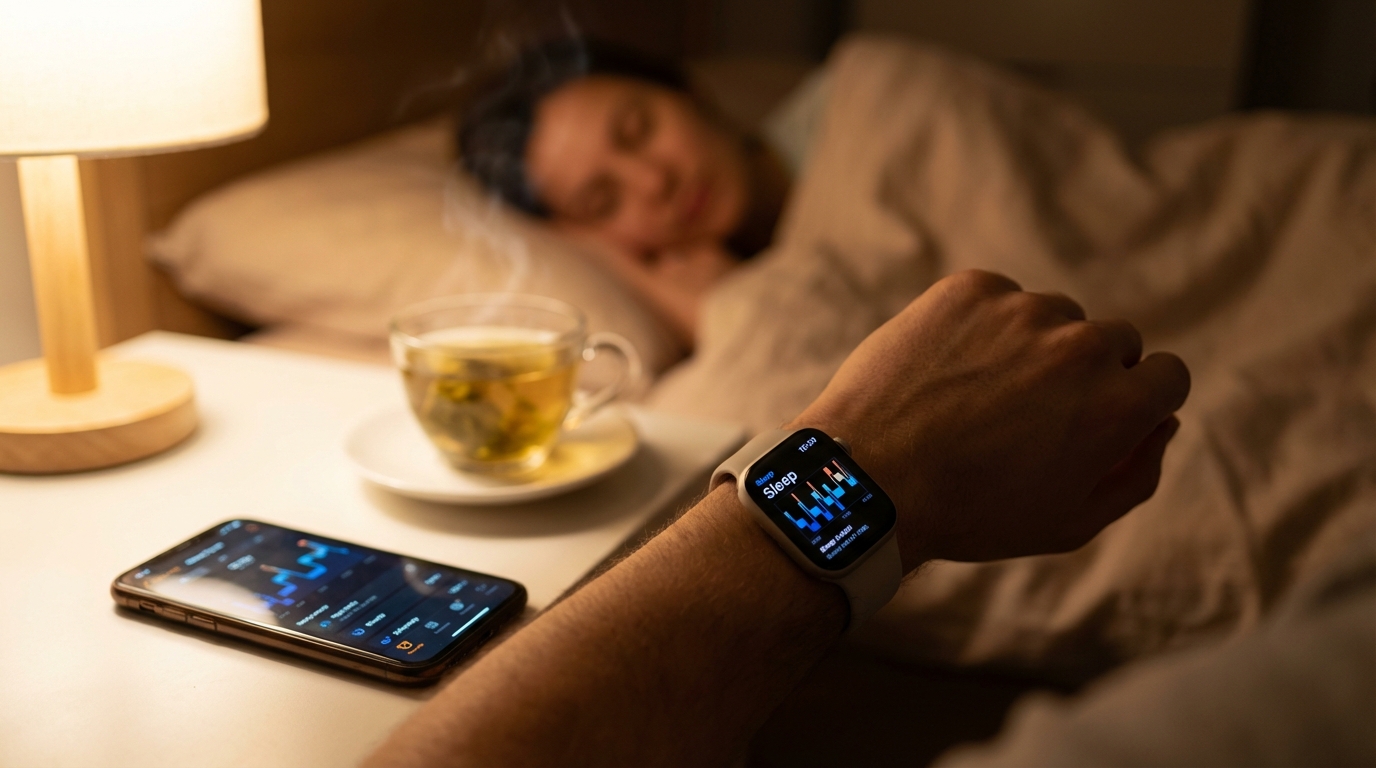
Sleep is a fundamental pillar of health, influencing everything from cognitive function and mood to physical restoration. In recent years, personal sleep tracking has surged in popularity, offering individuals insights into their nocturnal patterns. These insights are powered by sophisticated algorithms that attempt to translate raw physiological data into meaningful information about sleep quality and architecture. Understanding how these algorithms function can demystify the data presented by various devices and provide a clearer perspective on their utility and limitations.
At its core, sleep tracking involves collecting physiological data during periods of rest and then applying computational logic to infer sleep states. While medical-grade sleep studies, known as polysomnography (PSG), directly measure brain waves (EEG), eye movements (EOG), and muscle activity (EMG), consumer sleep trackers typically rely on indirect methods. These methods leverage a combination of sensors and advanced algorithms to approximate the stages and quality of sleep without requiring specialized medical equipment or professional supervision.
Core Principles of Sleep Tracking Algorithms
The foundation of most sleep tracking algorithms lies in processing data from various sensors. These sensors gather different types of physiological information that change predictably during sleep cycles.
Motion Detection (Actigraphy)
Accelerometers: Many sleep trackers incorporate accelerometers, which detect movement. Humans tend to be relatively still during deeper sleep stages and more active during lighter sleep or wakefulness. Algorithms analyze the frequency and intensity of these movements to distinguish between different states.
Movement Patterns: Specific patterns of immobility followed by small movements can be indicative of sleep onset or transitions between sleep stages. Conversely, sustained periods of significant movement often suggest wakefulness.
Heart Rate Variability (HRV) and Heart Rate (HR)
Photoplethysmography (PPG): Many devices use optical sensors (PPG) to measure heart rate by detecting changes in blood volume in the capillaries. Heart rate tends to decrease during sleep, particularly during deeper NREM (non-rapid eye movement) stages.
Heart Rate Variability (HRV): HRV measures the variation in time between consecutive heartbeats. It is influenced by the autonomic nervous system. During deep, restorative sleep, the parasympathetic nervous system often dominates, leading to an increase in HRV, while sympathetic activity (associated with stress or wakefulness) tends to decrease it. Algorithms use these shifts in HRV to help differentiate sleep stages.
Other Physiological Signals
Some advanced trackers integrate additional sensors to provide more data points for their algorithms:
Skin Temperature: Body temperature typically drops during sleep. Tracking these subtle changes can offer supplementary data.
Blood Oxygen Saturation (SpO2): Some devices monitor blood oxygen levels. While not directly indicating sleep stages, significant drops in SpO2 can point to potential sleep disturbances.
Respiration Rate: Inferred from heart rate or movement, changes in breathing patterns can also contribute to the algorithmic assessment of sleep.
How Algorithms Distinguish Sleep Stages
The human sleep cycle is broadly divided into two main categories: REM (Rapid Eye Movement) sleep and NREM (Non-Rapid Eye Movement) sleep. NREM sleep is further broken down into three stages: N1, N2, and N3 (often referred to as deep sleep or slow-wave sleep). Algorithms attempt to classify these stages based on the combined sensor data.
Wakefulness
This state is typically characterized by high levels of movement, a relatively higher and more variable heart rate, and often a higher skin temperature compared to sleep. Algorithms identify these patterns as periods when the user is awake, whether before sleep onset, during brief awakenings throughout the night, or after waking up in the morning.
NREM Sleep (Non-Rapid Eye Movement)
N1 (Light Sleep/Drowsiness): This is the transition stage from wakefulness to sleep. It’s often identified by a slight decrease in movement and heart rate, but still relatively responsive to external stimuli. Algorithms might look for a general slowing down of physiological activity.
N2 (Light Sleep): This stage accounts for the majority of total sleep time. Movement is minimal, and heart rate and temperature continue to decrease. Algorithms may detect longer periods of immobility and stable, lower heart rates.
N3 (Deep Sleep/Slow-Wave Sleep): This is the most physically restorative stage of sleep. It’s characterized by minimal to no movement, the lowest heart rate, and the most stable, lowest body temperature. Crucially, algorithms often rely on a significant decrease in heart rate variability and heart rate to infer this stage, as direct brain wave measurement (EEG slow waves) is not available to consumer devices.
REM Sleep (Rapid Eye Movement)
REM sleep is a distinct stage where dreaming typically occurs. Paradoxically, while the brain is highly active during REM, muscle activity is almost completely inhibited (atonia), except for the eyes and respiratory muscles. Algorithms identify REM sleep by:
Low Muscle Tone/Immobility: Despite the active brain, the body is largely immobile, which can be challenging to differentiate from deep N3 sleep solely based on movement.
Increased Heart Rate Variability: Compared to NREM, heart rate during REM can become more irregular and variable, sometimes even increasing, reflecting the brain’s activity. This is a key differentiator from N3 deep sleep where heart rate is generally very stable and low.
Indirect Inference: Without direct eye movement detection, algorithms infer REM based on a combination of reduced movement, specific heart rate and HRV patterns, and the typical cyclical nature of sleep (REM often follows periods of NREM).
Data Processing and Interpretation
Once the raw data is collected, algorithms employ sophisticated processing techniques:
Signal Filtering: Raw sensor data can be noisy. Algorithms first filter out irrelevant signals and artifacts (e.g., motion unrelated to sleep, electronic interference) to clean the data.
Feature Extraction: They then extract specific “features” from the cleaned data. For motion, this might be the amplitude or frequency of movement. For heart rate, it could be the average rate, variability, or specific patterns over time.
Machine Learning Models: Many modern sleep tracking algorithms utilize machine learning. These models are often trained on large datasets that include both consumer sensor data and corresponding PSG data. The algorithm “learns” to correlate specific patterns in sensor data with specific sleep stages validated by PSG. Common techniques include hidden Markov models, support vector machines, and neural networks.
Epoch-based Analysis: Sleep is typically analyzed in short time segments, often 30-second epochs. The algorithm classifies each epoch into a specific sleep stage (Wake, N1, N2, N3, REM) based on the combined features extracted from that period.
Consolidation and Reporting: Finally, these classified epochs are consolidated to provide an overall summary of the night’s sleep, including total sleep time, time spent in each stage, sleep onset latency, and awakenings.
Challenges and Limitations
While consumer sleep tracking algorithms have advanced significantly, they face inherent challenges and limitations:
Accuracy vs. Polysomnography (PSG): PSG remains the scientific gold standard for sleep staging because it directly measures brain electrical activity. Consumer trackers, relying on indirect physiological signals, cannot match the precision of PSG. They often perform well in identifying wakefulness and total sleep time but can vary in their accuracy for distinguishing between specific sleep stages, especially between light NREM and REM sleep.
Variability Across Devices: Different manufacturers use proprietary algorithms, sensor combinations, and training data. This means that two different devices worn simultaneously might report different sleep stage breakdowns for the same night, highlighting the algorithmic interpretation rather than absolute physiological truth.
Environmental Factors and Artifacts: External factors like a partner’s movement, ambient temperature changes, or even restless leg syndrome can generate data patterns that confuse algorithms. Minor movements that are not indicative of wakefulness might be misclassified.
Lack of Direct Brain Activity: The fundamental limitation is the absence of direct brain wave measurement. Algorithms must infer complex brain states from peripheral signals, which is an inherently less direct approach.
Interpreting Sleep Tracking Data
Given these challenges, it is crucial to interpret sleep tracking data with an informed perspective:
Focus on Trends: Rather than fixating on the exact duration of each sleep stage for a single night, look for patterns and trends over days, weeks, or months. Is your total sleep time consistently increasing or decreasing? Are there noticeable shifts in when you fall asleep or wake up?
Understand Metrics: Familiarize yourself with what each metric represents. “Sleep efficiency” (time asleep relative to time in bed) can be a useful indicator, as can the consistency of your sleep schedule.
Personal Insights, Not Diagnosis: Sleep trackers are tools for personal awareness and habit improvement. The data they provide can help identify lifestyle factors that impact your sleep. However, they are not diagnostic tools for sleep disorders. If you have concerns about a sleep disorder, consultation with a healthcare professional is essential.
Context is Key: Correlate your sleep data with how you feel. A night that an algorithm labels as “poor” might not feel that way to you, and vice-versa. Your subjective experience is a vital piece of the puzzle.
In conclusion, sleep tracking algorithms are sophisticated computational systems designed to provide insights into personal sleep patterns by analyzing physiological signals. While they offer a valuable window into our nocturnal habits and can empower individuals to make healthier lifestyle choices, it is important to understand their reliance on indirect measurements and their inherent limitations compared to clinical sleep studies. By focusing on trends and using the data for self-awareness rather than diagnosis, these algorithms can be a powerful tool in fostering greater sleep health.
Frequently Asked Questions (FAQs)
How do sleep tracking algorithms work without direct brain wave monitoring?
Sleep tracking algorithms primarily rely on indirect physiological signals. They use sensors like accelerometers to detect movement, photoplethysmography (PPG) to measure heart rate and heart rate variability (HRV), and sometimes skin temperature. By analyzing patterns in these signals—such as reduced movement, drops in heart rate, and changes in HRV—algorithms infer the various stages of sleep and wakefulness. These algorithms are often trained using machine learning techniques on datasets that correlate these indirect signals with actual brain wave data from polysomnography (PSG).
What is the difference between different sleep stages detected by algorithms?
Algorithms attempt to differentiate between Wake, NREM (N1, N2, N3/Deep sleep), and REM sleep based on distinct physiological markers. Wakefulness is characterized by higher movement and heart rate. NREM sleep stages show decreasing movement, heart rate, and temperature as sleep deepens, with N3 (deep sleep) being the most quiescent. REM sleep, despite a highly active brain, is marked by near-complete muscle immobility (except eyes and breathing) but often shows more variable heart rates and specific HRV patterns compared to deep NREM sleep.
Are consumer sleep trackers as accurate as medical sleep studies?
No, consumer sleep trackers are not as accurate as medical sleep studies, known as polysomnography (PSG). PSG is the gold standard because it directly measures brain waves (EEG), eye movements (EOG), and muscle activity (EMG). Consumer devices, relying on indirect methods, offer approximations. While they can be quite accurate for total sleep time and distinguishing wakefulness from sleep, their ability to precisely identify and quantify specific sleep stages, especially distinguishing between light NREM and REM, varies and is generally less precise than PSG.
What factors can influence the accuracy of sleep tracking?
Several factors can influence the accuracy of sleep tracking. These include individual physiological variations, how consistently and correctly the device is worn, the presence of restless sleep, environmental factors such as bed sharing or pet movement, and even the specific proprietary algorithm used by the device manufacturer. External movements or disturbances can sometimes be misinterpreted as wakefulness or a different sleep stage, leading to discrepancies in the reported data.
How should I use the data provided by sleep tracking algorithms?
Sleep tracking data is valuable for personal insight and awareness, not for medical diagnosis. It is advisable to focus on long-term trends rather than fixating on individual nights’ data. Use the information to identify potential correlations between your daily habits (e.g., exercise, caffeine intake, screen time) and your sleep patterns. If the data, combined with how you feel, suggests persistent sleep issues, it is important to consult a healthcare professional for a proper assessment and guidance.

Diana Miller, is a dedicated nature enthusiast and an outdoor adventurer. She began leading groups for excursions in her teens and never stopped. Following her passion for nature, she gathers her friends for outdoor trips every now and then. And for the last 10 years, she has executed workshops on backpacking, snow kayaking and traveling that included her main motive of lightweight packing while outdoors. During leisure, she loves planning for her next adventure.