
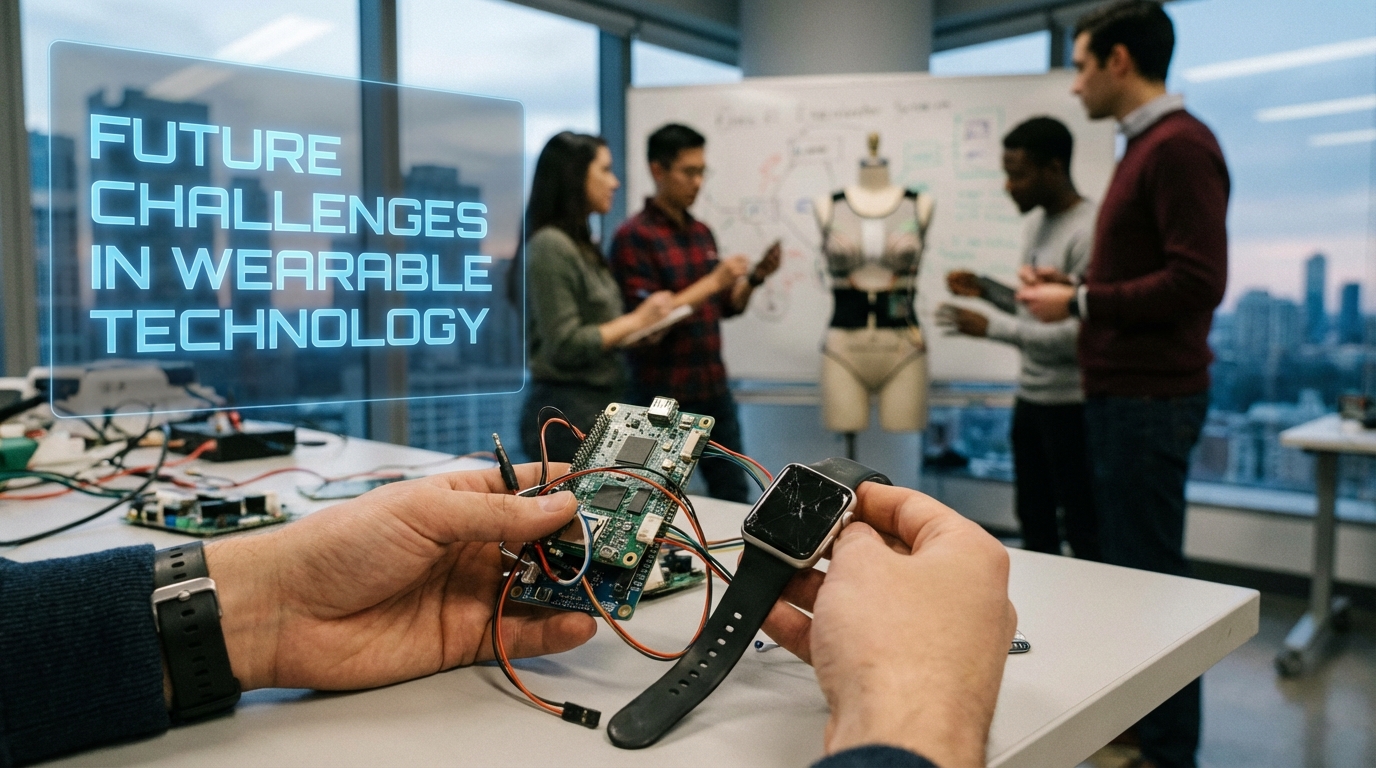
Future Challenges in Wearable Technology
Wearable technology has transitioned from speculative fiction to a tangible part of daily life for millions. From fitness trackers monitoring physical activity to smartwatches delivering notifications and even advanced medical devices providing continuous health insights, these technologies are rapidly evolving. They offer unprecedented opportunities for personal data collection, convenience, and health management. However, as the field matures and its integration into society deepens, a complex array of challenges emerges. Overcoming these hurdles will be pivotal for wearable technology to realize its full transformative potential and achieve widespread, sustainable adoption.Technical and Engineering Hurdles
The foundational elements of wearable technology—hardware, sensors, and power—continue to present significant engineering challenges that impact user experience and device capabilities.Power Management and Battery Life
A primary constraint for most wearable devices is their limited battery life. Users expect devices that can operate for extended periods, ideally days or even weeks, without constant recharging. Achieving this while maintaining powerful processing, vibrant displays, and numerous active sensors requires breakthroughs in:- Battery chemistry and energy density.
- Ultra-low-power components and efficient chip design.
- Novel energy harvesting techniques (e.g., kinetic, thermal, solar) to supplement traditional batteries.
Miniaturization and Form Factor
For wearables to be truly unobtrusive and seamlessly integrate into daily life, they must become even smaller, lighter, and more flexible. This challenge extends beyond just fitting components into a compact casing. It involves:- Developing microscopic sensors and flexible circuit boards.
- Designing durable and comfortable enclosures that can withstand daily wear and tear.
- Integrating components without creating bulk or discomfort, especially for devices meant for continuous skin contact.
Sensor Accuracy and Reliability
The value of wearable technology often hinges on the accuracy and reliability of its data. While current sensors can track basic metrics with reasonable precision, more advanced applications, particularly in health and medical contexts, demand higher fidelity. Challenges include:- Minimizing interference from motion artifacts, skin tone, hair, and environmental factors.
- Developing non-invasive sensors capable of measuring complex physiological parameters (e.g., blood glucose, blood pressure, hydration) with clinical-grade accuracy.
- Ensuring consistent performance across a diverse user population with varying anatomies and lifestyles.
Material Science and Durability
Wearables are subjected to various environmental stressors, including sweat, water, dust, impacts, and daily abrasion. The materials used must not only be durable but also biocompatible, aesthetically pleasing, and comfortable for prolonged skin contact. Future challenges involve:- Developing advanced polymers and composites that are resilient, lightweight, and hypoallergenic.
- Creating flexible electronics that can withstand repeated bending and stretching without degradation.
- Innovating manufacturing processes to produce complex, multi-material devices at scale.
Data Management and Security Concerns
Wearable devices generate a continuous stream of personal data, from heart rates and activity levels to location and even sleep patterns. Managing this vast amount of sensitive information presents a unique set of challenges.Data Privacy and Ownership
As wearables collect increasingly intimate details about individuals, concerns about data privacy and who owns this data become paramount. Key issues include:- Ensuring transparent data collection practices and clear consent mechanisms.
- Protecting sensitive health and biometric data from unauthorized access or misuse.
- Establishing clear legal frameworks regarding data ownership, particularly when data is shared with third-party applications or aggregated for research.
Cybersecurity Vulnerabilities
The proliferation of interconnected wearable devices creates new attack vectors for cybercriminals. Each device can potentially be an entry point into a user’s broader digital ecosystem. Challenges involve:- Implementing strong encryption and authentication protocols for data at rest and in transit.
- Securing the “edge” devices themselves from tampering and unauthorized access.
- Addressing vulnerabilities in the communication channels between wearables, smartphones, and cloud services.
Data Overload and Actionable Insights
Wearables can generate an overwhelming volume of data, often presented to users without adequate context or actionable advice. The challenge is to transform raw data into meaningful and useful insights. This requires:- Developing sophisticated algorithms and artificial intelligence to process, interpret, and personalize data feedback.
- Creating intuitive user interfaces that present information clearly and concisely.
- Focusing on providing actionable recommendations rather than just raw numbers, enabling users to make informed decisions about their health and lifestyle.
Interoperability and Ecosystem Integration
Currently, many wearable devices operate within closed ecosystems, making it difficult for users to consolidate data from various sources or switch between brands without losing their historical data. Future challenges include:- Establishing universal standards for data formats and communication protocols to enable seamless interoperability.
- Allowing users to easily share or migrate their data between different devices, platforms, and health service providers.
- Fostering an open ecosystem that encourages innovation while ensuring data security and user control.
User Experience and Acceptance
Beyond technical prowess, the long-term success of wearable technology hinges on how well it integrates into daily life, its comfort, and its ability to maintain user engagement.Comfort, Aesthetics, and Social Acceptance
For continuous wear, devices must be comfortable, lightweight, and discreet. Their aesthetic appeal also plays a crucial role in social acceptance. Challenges include:- Designing devices that are unobtrusive and complement various personal styles and fashion choices.
- Addressing potential skin irritation or discomfort from prolonged contact with device materials.
- Overcoming social stigmas or perceptions of intrusiveness that might arise from wearing certain types of technology.
Long-Term Engagement and Sustained Value
Many users abandon wearable devices after an initial period of novelty. Maintaining long-term engagement requires devices to offer sustained value and adapt to evolving user needs. This involves:- Providing personalized insights and feedback that evolve with the user.
- Integrating features that genuinely enhance daily routines rather than adding complexity.
- Developing adaptive interfaces that learn user preferences and offer relevant information proactively.
Cognitive Load and Intrusiveness
While designed to be helpful, poorly implemented notifications or overly complex interfaces can add to a user’s cognitive load and feel intrusive. The challenge is to:- Develop intelligent notification systems that deliver information at the right time and context, without being overwhelming.
- Design user interfaces that are minimalist, intuitive, and require minimal attention.
- Ensure that the technology augments human capabilities without becoming a distraction or creating dependence.
Ethical, Societal, and Regulatory Frameworks
The pervasive nature of wearable technology raises profound ethical questions and necessitates robust regulatory frameworks to ensure responsible development and deployment.Ethical Implications of Constant Monitoring
The ability of wearables to constantly monitor individuals raises concerns about privacy boundaries, surveillance, and the potential for psychological effects. Ethical considerations include:- Defining acceptable limits for data collection, particularly in sensitive environments like workplaces or public spaces.
- Addressing potential biases in data interpretation or algorithmic recommendations based on personal metrics.
- Understanding the psychological impact of continuous self-monitoring and the pressure to optimize performance based on data.
Algorithmic Bias and Fairness
The algorithms powering wearable insights are trained on vast datasets. If these datasets are not representative or contain inherent biases, the resulting insights and recommendations can be unfair or inaccurate for certain demographics. Challenges include:- Ensuring diverse and inclusive datasets for algorithm training.
- Developing transparent and auditable algorithms to identify and mitigate biases.
- Validating the fairness and accuracy of algorithmic outputs across all user groups, especially in health-related applications.
Regulatory Gaps and Standardization
The rapid pace of innovation in wearable technology often outstrips the development of comprehensive regulatory frameworks. This creates uncertainty for manufacturers and leaves consumers vulnerable. Challenges involve:- Establishing clear guidelines for data collection, storage, and usage, particularly for health-related data.
- Developing international standards for interoperability, device safety, and data security.
- Classifying wearables appropriately (e.g., consumer device vs. medical device) to apply relevant regulations and ensure user safety and efficacy claims are met.
The Digital Divide and Accessibility
As wearables become more sophisticated, their cost and the technical literacy required to use them effectively can exclude certain populations, exacerbating the digital divide. Challenges include:- Ensuring equitable access to wearable technology, regardless of socioeconomic status or geographical location.
- Designing devices and interfaces that are accessible to individuals with disabilities, including visual, auditory, and motor impairments.
- Addressing the potential for wearables to create new forms of social exclusion if participation in certain activities becomes dependent on their use.
Conclusion
Wearable technology stands at a pivotal juncture. While its promise for enhancing health, convenience, and connectivity is immense, a multitude of complex challenges must be addressed for it to truly flourish. From fundamental technical limitations like power and miniaturization to intricate issues of data privacy, user engagement, and ethical governance, the path forward requires concerted effort. Collaboration among engineers, designers, data scientists, policymakers, and ethicists will be essential to innovate responsibly, build user trust, and establish robust frameworks. Overcoming these future challenges will pave the way for wearable technology to mature into an indispensable and truly beneficial component of human experience.Frequently Asked Questions (FAQs)
What is a primary technical obstacle for wearable technology?
A significant technical obstacle for wearable technology is power management and extending battery life. Users desire devices that can operate for extended periods without frequent recharging, which is challenging to achieve given the demand for powerful processors, bright displays, and numerous active sensors within compact form factors.Why is data privacy a critical concern for wearable devices?
Data privacy is critical because wearable devices collect highly sensitive personal information, including health metrics, location data, and behavioral patterns. Ensuring transparent data collection, obtaining clear user consent, and protecting this intimate data from unauthorized access or misuse are paramount to building and maintaining user trust.How do comfort and aesthetics influence the adoption of wearable technology?
Comfort and aesthetics significantly influence adoption because devices are intended for prolonged, often continuous wear. If a wearable is uncomfortable, bulky, or clashes with a user’s personal style, it is likely to be abandoned. Social acceptance also plays a role, as users prefer devices that are discreet and integrate seamlessly into their daily lives without drawing undue attention.What role do regulations play in the future development and use of wearables?
Regulations play a crucial role by establishing standards for data handling, device safety, and consumer protection. They help define how personal data can be collected, stored, and used, especially in health-related applications. Clear regulatory frameworks are necessary to build consumer confidence, ensure product efficacy, and foster fair competition within the industry.Can wearable technology contribute to a digital divide, and if so, how?
Yes, wearable technology can contribute to a digital divide. Factors such as the cost of advanced devices, the need for accompanying smartphone apps, and the technical literacy required for effective use can create barriers for individuals with limited financial resources, internet access, or technological proficiency. This could lead to unequal access to the health and convenience benefits offered by these technologies.
Diana Miller, is a dedicated nature enthusiast and an outdoor adventurer. She began leading groups for excursions in her teens and never stopped. Following her passion for nature, she gathers her friends for outdoor trips every now and then. And for the last 10 years, she has executed workshops on backpacking, snow kayaking and traveling that included her main motive of lightweight packing while outdoors. During leisure, she loves planning for her next adventure.