
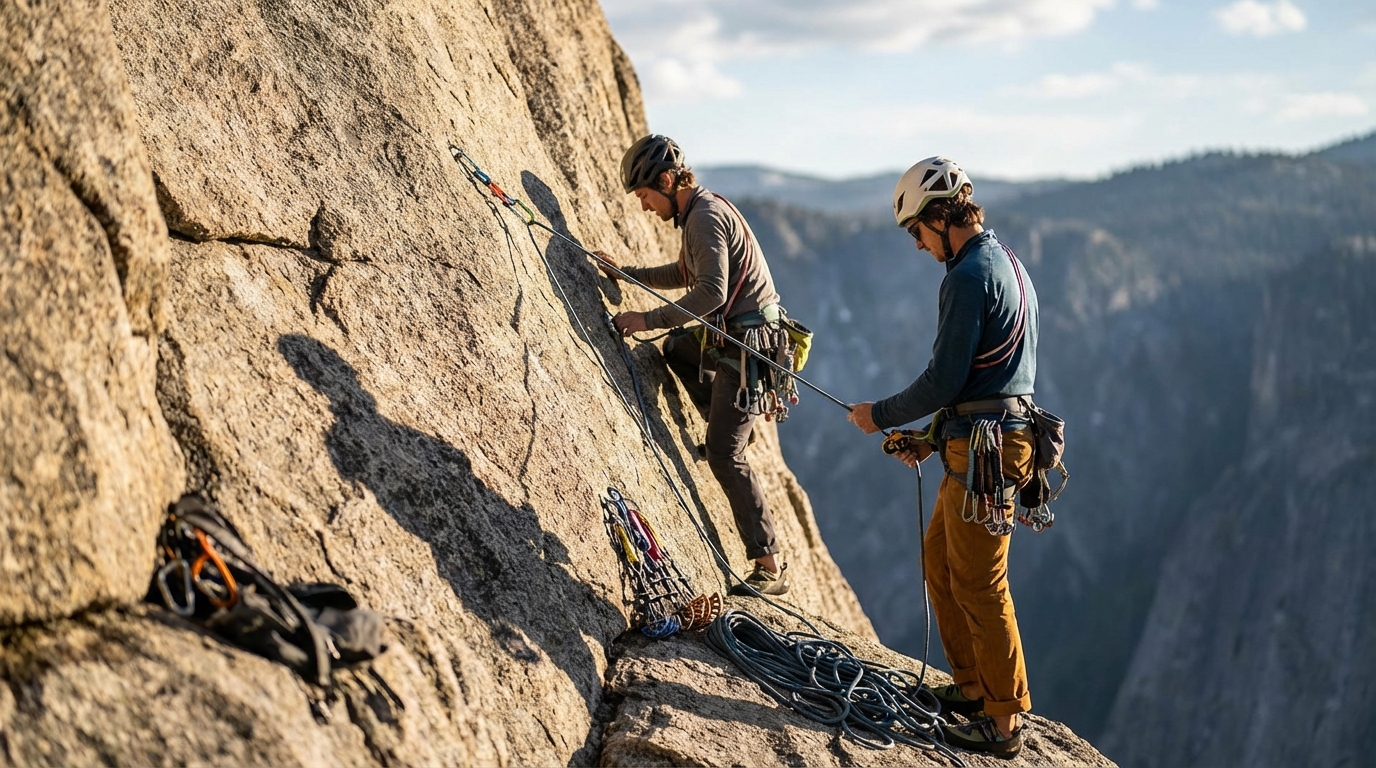
Climbing, in its various forms, offers a unique blend of physical challenge and mental engagement. Integral to the enjoyment and longevity of this pursuit is a profound understanding of safety principles. Among these, the concept of the “fall factor” stands as a foundational element, directly influencing the forces exerted on a climber, their equipment, and the entire safety system during a fall. Far from being a mere abstract calculation, grasping fall factors is essential for making informed decisions, employing proper techniques, and ultimately ensuring a safer experience for everyone involved in rope-based activities.
This discussion aims to demystify fall factors, explain their implications for impact forces, and outline practical strategies for mitigating risks in climbing. By exploring the mechanics behind falls and the role of equipment, climbers can cultivate a deeper appreciation for the dynamics at play and enhance their approach to safety on the rock.
What is a Fall Factor?
A fall factor is a dimensionless ratio that quantifies the severity of a fall in relation to the length of rope available to absorb the energy of that fall. It is calculated by dividing the length of the fall by the length of rope deployed between the climber and the belayer. The formula is:
- Fall Factor (FF) = Length of Fall (L) / Length of Rope Out (R)
It’s crucial to understand that the fall factor is not simply about how far a climber falls. Instead, it indicates the proportion of rope that is stressed during a fall. A higher fall factor signifies a more severe fall in terms of the impact force generated, regardless of the absolute distance fallen. For instance, a 2-meter fall on 1 meter of rope produces the same fall factor (FF 2) as a 20-meter fall on 10 meters of rope (FF 2), but the absolute energy released and absorbed would be different.
Understanding Fall Factor Zero (FF 0)
A fall factor of zero typically occurs in scenarios where the climber is falling less than the amount of rope out, and often when the rope runs directly from the belayer to the anchor above the climber. The most common example is top-roping, where the rope passes through an anchor at the top of the climb and back down to the belayer. If a climber falls while top-roping, the fall distance is usually minimal, often just the slack in the system, resulting in a very low or near-zero fall factor. The impact forces in these situations are generally quite low, making it a relatively controlled and safer climbing method.
Understanding Fall Factor One (FF 1)
A fall factor of one occurs when the length of the fall is equal to the length of rope out between the belayer and the last piece of protection. A common example is when a lead climber falls just after clipping the first piece of protection from the belay station. If 5 meters of rope are out from the belayer to the first quickdraw, and the climber falls 5 meters (e.g., 2.5 meters above the quickdraw and 2.5 meters below it), the fall factor is 1 (5m fall / 5m rope out = FF 1). This is a common fall factor in lead climbing, producing moderate impact forces.
Understanding Fall Factor Two (FF 2)
A fall factor of two is the theoretical maximum fall factor in a typical climbing system with a dynamic rope. It occurs when the length of the fall is twice the length of rope out. This can happen in several critical situations:
- Falling onto the belayer: If a lead climber falls directly onto the belayer at the anchor before clipping the first piece of protection, and there is, for example, 3 meters of rope out, the fall would be 6 meters (3m to reach the belayer’s level + 3m below). The fall factor would be 2 (6m fall / 3m rope out = FF 2).
- Falling from the belay: If a climber is establishing a belay and falls before adequately securing themselves or placing protection, the fall could involve the full length of the rope to the previous anchor, potentially resulting in a high fall factor if the rope out is minimal.
Falls with a factor of two generate the highest impact forces in a standard climbing system, placing significant stress on the climber, belayer, and all gear involved.
Impact Force and the Climbing System
The primary reason fall factors are so critical is their direct correlation with impact force. Impact force refers to the maximum tension experienced by the climbing rope and, consequently, transmitted to the climber, belayer, and protection points during a fall. Higher fall factors result in higher impact forces. This force is what the rope, harness, and belay system must absorb without failing and without causing excessive trauma to the climber.
Dynamic climbing ropes are specifically engineered to stretch and absorb the energy of a fall. Their elasticity is crucial for mitigating impact forces. When a climber falls, the rope elongates, converting the kinetic energy of the falling body into elastic potential energy within the rope. This stretching action spreads the deceleration over a greater distance and time, thereby reducing the peak force exerted on the system.
In contrast, static ropes, which have very little stretch, are unsuitable for lead climbing because they would generate dangerously high impact forces in a fall. These forces could injure the climber, damage gear, or even cause anchor failure.
Mitigating Fall Factor Risks
Understanding fall factors empowers climbers to adopt practices that reduce risks and manage potential impact forces effectively. Several strategies contribute to a safer climbing environment:
Proper Belaying Techniques
- Active Belaying: A vigilant belayer who pays close attention to the climber and manages slack appropriately can significantly reduce fall distances and, by extension, fall factors and impact forces.
- Soft Catches: In lead climbing, an experienced belayer can perform a “soft catch” by allowing a small, controlled amount of rope slippage through the belay device or by jumping slightly at the moment of a fall. This technique increases the effective stretch of the rope, further reducing the peak impact force on the system and the climber.
- Minimizing Slack: Keeping only the necessary amount of slack in the system helps to limit fall distances. Excessive slack can dramatically increase the length of a fall, even if the distance to the last piece of protection remains the same.
Strategic Protection Placement
The placement of protection points is fundamental in managing fall factors, especially in lead climbing:
- Clipping Early and Often: Placing protection frequently and clipping the rope into quickdraws as soon as possible reduces the potential fall distance. The shorter the distance to the last piece of protection, the lower the maximum potential fall factor.
- Minimizing Runouts: Avoiding long distances between protection points (known as runouts) is critical. While sometimes unavoidable on certain routes, recognizing and actively minimizing runouts whenever possible directly impacts safety.
- Considering Terrain: Evaluating the terrain below and around potential fall zones helps in placing protection strategically. Avoiding falls onto ledges, loose rock, or features that could cause pendulum swings is paramount.
Understanding Gear Limitations
While dynamic ropes are designed to absorb energy, every component of the climbing system has its limits:
- Rope Properties: Different dynamic ropes have varying elongation characteristics and rated impact forces. Understanding these specifications for the rope in use is important, though often standardized within certified climbing ropes.
- Anchor Strength: Belay anchors and protection pieces must be robust enough to withstand the maximum anticipated impact forces. Redundant anchor systems are a cornerstone of safe climbing.
- Quickdraws and Carabiners: These components facilitate rope movement and manage the path of the rope. Ensuring they are properly clipped and oriented reduces potential hazards like gate flutter or cross-loading.
Climber Awareness and Communication
Beyond technical skills, effective communication and a strong awareness of one’s surroundings are invaluable:
- Clear Communication: Belayer and climber must communicate clearly and consistently about intentions, protection placement, and fall risks.
- Risk Assessment: Climbers should continuously assess the risks associated with the current situation, considering the difficulty of the move, the quality of protection, and the potential fall factor.
- Knowing When to Bail: Recognizing when conditions or personal limits make further ascent unsafe is a critical judgment. A safe retreat is always preferable to an uncontrolled fall.
The Human Element
Ultimately, the effectiveness of fall factor mitigation strategies relies heavily on the human element. Experience, training, and sound judgment are crucial. Climbers and belayers must continuously hone their skills, understand the nuances of their equipment, and approach each climb with a thoughtful and safety-conscious mindset. Trust between partners, built on competence and clear communication, forms the bedrock of a safe climbing partnership.
Every decision, from choosing a route to placing a piece of protection, can influence the potential fall factor and its consequences. Developing a deep intuition for these dynamics is an ongoing process that comes with practice and a commitment to learning.
Conclusion
The concept of fall factors serves as a fundamental principle in understanding the mechanics of climbing falls and their potential impact. It moves beyond simply considering the height of a fall to analyzing the proportion of energy that the rope must absorb. By grasping how fall factors are calculated and their relationship to impact forces, climbers can make more informed choices on the rock.
Implementing strategies such as active belaying, strategic protection placement, and a thorough understanding of equipment capabilities are not just technical skills but essential practices for managing risk. Coupled with clear communication and sound judgment, these approaches contribute to a significantly safer climbing experience for all participants. A continuous commitment to education and practice ensures that climbers can enjoy the vertical world with confidence and minimize the inherent risks.
Frequently Asked Questions
Q1: Is a higher fall factor always more dangerous?
A1: Generally, yes. A higher fall factor indicates that a greater proportion of the fall’s energy must be absorbed by a relatively short length of rope, resulting in higher impact forces. While a fall factor of 2 theoretically generates the highest impact force for a given fall distance relative to rope out, the absolute force also depends on the mass of the climber and the dynamic properties of the rope.
Q2: Can I get a fall factor greater than 2 in a typical climbing scenario?
A2: In a standard lead climbing scenario with a dynamic rope running through protection, a fall factor greater than 2 is theoretically impossible. This is because the maximum fall distance is twice the length of rope out (falling from just above the protection down to the belayer’s level or the previous piece). However, in highly unusual or extremely unsafe situations, like falling with a static rope or having no protection at all, the forces could be catastrophic and not accurately described by the fall factor formula.
Q3: How does rope stretch relate to fall factor and safety?
A3: Rope stretch, or elongation, is a key safety feature of dynamic climbing ropes. It directly helps to mitigate the impact force generated during a fall. A rope that stretches more effectively dissipates the kinetic energy of a fall over a longer distance, reducing the peak force experienced by the climber and the gear, regardless of the fall factor. This is why static ropes are not used for lead climbing.
Q4: Does the weight of the climber affect the fall factor?
A4: The weight of the climber does not affect the fall factor itself, as the fall factor is a ratio of fall length to rope length. However, climber weight significantly influences the absolute impact force generated by a fall. A heavier climber will generate a higher absolute impact force for the same fall factor compared to a lighter climber.
Q5: What is a “soft catch” and how does it relate to fall factors?
A5: A “soft catch” is a belaying technique used by an experienced belayer to reduce the peak impact force of a fall. By dynamically feeding out a small amount of rope, taking a small jump, or allowing a controlled slip of the rope at the moment of the fall, the belayer effectively increases the distance over which the fall is arrested. This effectively lengthens the deceleration time, thereby lowering the maximum impact force on the climber and the system, even though the theoretical fall factor remains the same for the given fall distance and rope out.

Diana Miller, is a dedicated nature enthusiast and an outdoor adventurer. She began leading groups for excursions in her teens and never stopped. Following her passion for nature, she gathers her friends for outdoor trips every now and then. And for the last 10 years, she has executed workshops on backpacking, snow kayaking and traveling that included her main motive of lightweight packing while outdoors. During leisure, she loves planning for her next adventure.