
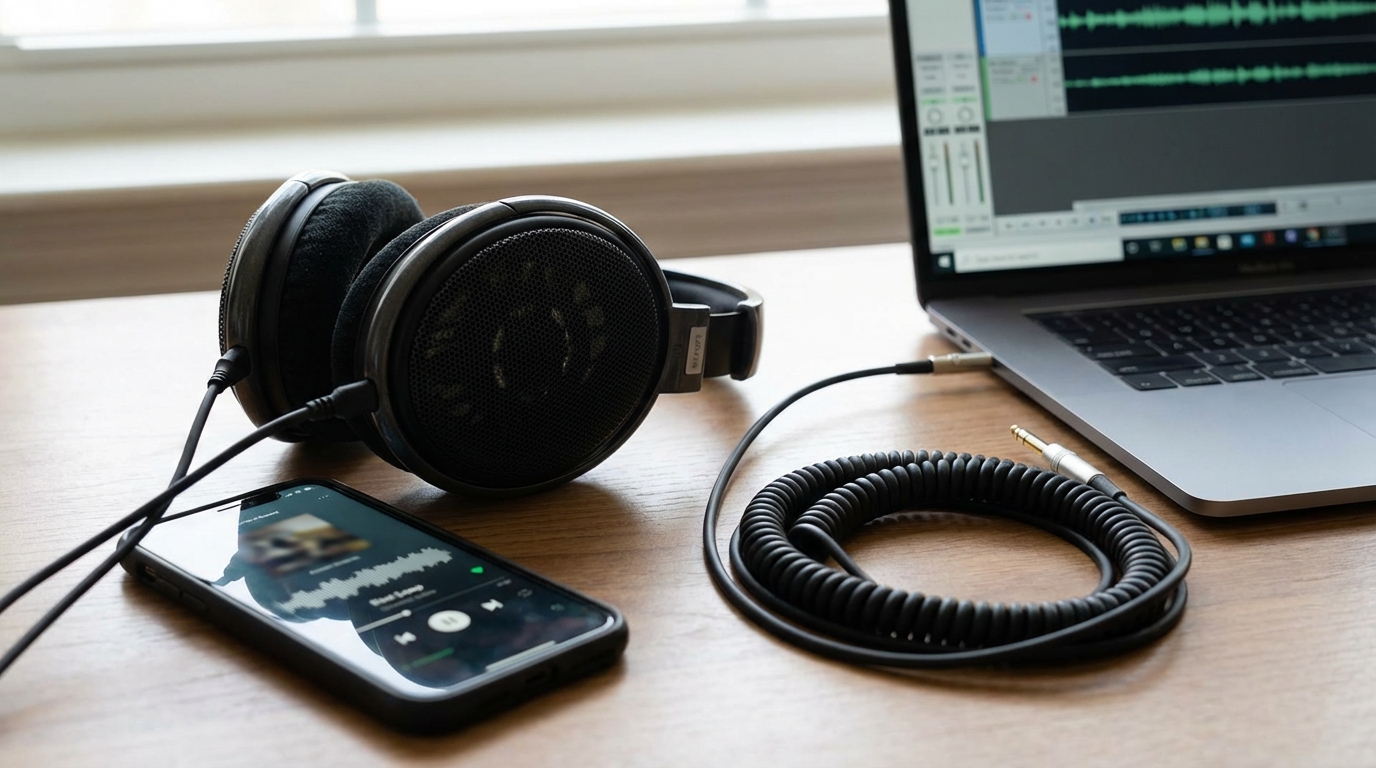
In the vast landscape of digital media, streaming services have revolutionized how we consume audio and video content. From music libraries to movie platforms and podcasts, the ability to access content on demand relies heavily on efficient data management. At the heart of this efficiency for audio lies a critical technology: the audio codec.
Audio codecs, short for coder-decoders, are algorithms designed to compress and decompress digital audio data. Without them, the high bandwidth demands of uncompressed audio would make seamless streaming to multiple devices incredibly challenging, if not impossible. This post will delve into the world of audio codecs, explaining their function, the types commonly employed by streaming services, and the factors that influence their selection and implementation.
What Are Audio Codecs?
An audio codec is essentially a set of rules or a program that encodes (compresses) and decodes (decompresses) digital audio signals. The primary goal of a codec is to reduce the file size of audio data while preserving as much of the original sound quality as possible. This compression is crucial for transmitting audio over networks with limited bandwidth and for storing vast amounts of data efficiently.
Audio compression can be broadly categorized into two main types:
- Lossy Compression: This method achieves significant file size reductions by removing certain audio information deemed less perceptible to the human ear. While some data is permanently lost, the aim is to do so in a way that minimizes noticeable degradation in sound quality. Most streaming services utilize lossy codecs due to their efficiency.
- Lossless Compression: In contrast, lossless codecs compress audio data without discarding any information. When decompressed, the audio is an exact bit-for-bit replica of the original source. This results in larger file sizes but guarantees no loss of audio fidelity, making it suitable for archiving or high-fidelity audio applications.
Why Are Codecs Essential for Streaming?
The importance of audio codecs in the context of streaming services cannot be overstated. They are fundamental to delivering a smooth, high-quality user experience:
- Bandwidth Management: Uncompressed audio files are massive. For instance, a single minute of CD-quality stereo audio can be over 10 megabytes. Streaming such data in real-time to millions of users would overwhelm internet infrastructure. Codecs dramatically reduce the data rate required.
- Storage Efficiency: Streaming services host enormous libraries of content. Compressed audio files require significantly less server space, leading to reduced operational costs.
- Faster Loading and Playback: Smaller file sizes mean quicker downloads and buffering, leading to near-instantaneous playback and fewer interruptions.
- Adaptability: Many modern codecs support adaptive bitrate streaming, allowing services to dynamically adjust the audio quality (and thus file size) based on the user’s network conditions, ensuring continuous playback even on slower connections.
- Device Compatibility: Codecs enable audio to be played back across a wide array of devices, from smartphones and tablets to smart TVs and desktop computers, each with varying processing capabilities.
Common Lossy Audio Codecs in Streaming
Lossy codecs form the backbone of most mainstream streaming services due to their excellent balance of compression efficiency and perceived audio quality. Here are some prominent examples:
MPEG-1 Audio Layer III (MP3)
MP3 is perhaps the most widely recognized audio codec globally. Developed in the early 1990s, it revolutionized digital music distribution. MP3 utilizes perceptual coding, an algorithm that identifies and discards sounds that are less likely to be heard by humans due to phenomena like psychoacoustic masking. While older, its widespread compatibility and reasonable efficiency mean it is still present in some streaming workflows, particularly for podcasts or lower-quality streams.
Advanced Audio Coding (AAC)
AAC was developed as a successor to MP3, offering improved compression efficiency and better sound quality at similar bit rates. It achieves this through more sophisticated psychoacoustic modeling and a greater number of coding tools. AAC has become a dominant codec across many digital platforms and streaming services. It supports various profiles:
- AAC-LC (Low Complexity): The most common profile, offering a good balance of quality and efficiency.
- HE-AAC (High-Efficiency AAC): Includes Spectral Band Replication (SBR) and Parametric Stereo (PS) tools to further enhance perceived quality at very low bit rates, often used for radio streaming or mobile applications.
Opus
Opus is an open and royalty-free audio codec developed by the Xiph.Org Foundation and the Internet Engineering Task Force (IETF). It is designed to handle both speech and general audio efficiently, making it highly versatile. Opus excels in low-latency applications like real-time communication but also performs exceptionally well for streaming music. Its key advantages include:
- Excellent sound quality across a wide range of bit rates.
- Support for both constant bit rate (CBR) and variable bit rate (VBR) encoding.
- Low algorithmic delay, crucial for interactive applications.
- Adaptability to different bandwidths.
Dolby Digital (AC-3) and Dolby Digital Plus (E-AC-3)
While often associated with surround sound and home theater systems, Dolby Digital (AC-3) and its enhanced version, Dolby Digital Plus (E-AC-3), are widely used by video streaming services for their audio tracks. These codecs are capable of delivering multichannel audio (e.g., 5.1 or 7.1 surround sound), providing an immersive audio experience for movies and TV shows. E-AC-3 offers better efficiency and supports more channels at lower bit rates than AC-3.
Lossless Audio Codecs in Streaming (High-Fidelity Services)
For audiophiles and services aiming to deliver the highest possible audio fidelity, lossless codecs are employed. These preserve every detail of the original recording, often described as “CD quality” or “high-resolution audio.”
FLAC (Free Lossless Audio Codec)
FLAC is an open, royalty-free lossless audio codec. It is highly popular for archiving audio and is supported by a growing number of high-fidelity streaming services. FLAC files can typically reduce the size of uncompressed audio by 30-60% without any loss of data, making it a robust option for delivering uncompromised sound.
ALAC (Apple Lossless Audio Codec)
ALAC is a proprietary lossless audio codec developed by Apple Inc. It functions similarly to FLAC, offering bit-for-bit perfect copies of the original audio. While initially closed-source, Apple later made ALAC open-source, increasing its compatibility. It is extensively used within Apple’s ecosystem and by services offering lossless options.
MQA (Master Quality Authenticated)
MQA is a technology that encapsulates high-resolution audio files into smaller, streamable formats. It’s designed not just for lossless compression but also to preserve the temporal accuracy of the original recording, aiming to deliver “studio master” quality. MQA requires specific decoding, either through software or compatible hardware, to fully “unfold” the high-resolution audio. It has been adopted by some services specializing in premium audio experiences.
Factors Influencing Codec Choice and Implementation
Streaming services consider several factors when deciding which audio codecs to implement:
- Target Audience and Content Type: A service focused on podcasts might prioritize efficiency and broad compatibility, while a high-fidelity music service will lean towards lossless options. Video streaming often requires codecs that support multichannel audio.
- Bandwidth Availability: The average internet speeds of the target regions play a significant role. Services in areas with slower internet might favor highly efficient lossy codecs.
- Device Compatibility: Codecs need to be widely supported by various playback devices (smartphones, TVs, gaming consoles, web browsers). Proprietary codecs can sometimes limit reach.
- Licensing and Royalties: Some codecs involve licensing fees, which can impact operational costs for large-scale services. Open-source and royalty-free codecs like Opus and FLAC offer attractive alternatives.
- Computational Complexity: The processing power required for encoding and decoding can vary between codecs. More complex codecs might require more robust server infrastructure or more powerful user devices.
- Quality vs. Efficiency Trade-off: The core decision often boils down to balancing desired audio quality with file size and bandwidth requirements.
Conclusion
Audio codecs are unsung heroes of the digital streaming age, making it possible to access vast amounts of audio content with remarkable ease and quality. Whether through the efficient data reduction of lossy codecs like AAC and Opus, or the uncompromised fidelity of lossless options such as FLAC and ALAC, these technologies continuously evolve to meet the growing demands of users and the capabilities of modern networks. Understanding their principles reveals the intricate engineering behind the seamless audio experiences we enjoy every day, highlighting the ongoing effort to balance sound quality, data efficiency, and universal accessibility.
Frequently Asked Questions (FAQs)
1. What is the main difference between lossy and lossless codecs?
Lossy codecs achieve smaller file sizes by permanently removing some audio data that is deemed less perceptible to human hearing. While this results in data loss, it is designed to be minimally noticeable. Lossless codecs, on the other hand, compress audio without discarding any data, meaning the decompressed audio is an exact copy of the original source, resulting in larger file sizes but perfect fidelity.
2. Do all streaming services use the same audio codecs?
No, streaming services often use a combination of different audio codecs depending on their specific goals, target audience, and the type of content they offer. Some may use AAC for standard quality streams and FLAC or ALAC for high-fidelity options, while video services often incorporate Dolby Digital codecs for surround sound. Compatibility, licensing, and desired audio quality all influence their choices.
3. Can I choose which codec my streaming service uses?
Generally, users do not directly choose the audio codec. Streaming services typically manage this automatically, often based on your subscription tier (e.g., standard vs. high-fidelity), your device capabilities, and your current network conditions. However, many services allow you to select a quality setting (e.g., “high quality,” “standard quality,” “data saver”), which indirectly influences the codec and bitrate used.
4. Does a higher bitrate always mean better audio quality?
While a higher bitrate generally correlates with better audio quality within the same codec, it’s not the sole determinant. The type of codec used is also crucial. For example, a modern, highly efficient lossy codec like Opus at 128 kbps might sound comparable to or even better than an older codec like MP3 at 192 kbps. For lossless codecs, bitrate variations often reflect the complexity of the audio, but the fidelity remains perfect regardless.
5. What impact does network speed have on audio codec performance?
Network speed significantly impacts the streaming experience. Slower network speeds necessitate the use of lower bitrate audio streams, which means the codec will have compressed the audio more aggressively, potentially reducing perceived quality. Faster network speeds allow streaming services to deliver higher bitrate streams, often utilizing more advanced codecs or even lossless options, providing superior audio quality without buffering issues.

Diana Miller, is a dedicated nature enthusiast and an outdoor adventurer. She began leading groups for excursions in her teens and never stopped. Following her passion for nature, she gathers her friends for outdoor trips every now and then. And for the last 10 years, she has executed workshops on backpacking, snow kayaking and traveling that included her main motive of lightweight packing while outdoors. During leisure, she loves planning for her next adventure.